AI + Vulnerability Hunting: A Beginner's Roadmap for SRC and Bug Bounty
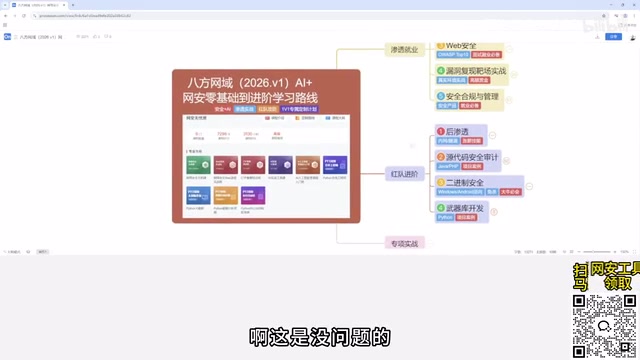
A clear zero-to-one roadmap for vulnerability hunting with AI — covering SRC, containers, and cloud-native security.
This article distills a livestream on beginner vulnerability hunting and SRC participation, mapping out the AI + cybersecurity learning path and real-world use cases. The roadmap progresses from penetration basics to external security, lab practice, and lateral advancement. Skills can be applied through SRC freelance bounties or enterprise security roles with performance tied to vulnerabilities found. A key insight is that modern labs and production environments run on containers, so learners must fill gaps in Docker and Kubernetes knowledge. The article also offers a grounded reality check on "7-day mastery" claims — this field requires sustained study and hands-on practice.
The cybersecurity field has seen a growing trend in recent years: combining AI capabilities with traditional penetration testing and vulnerability hunting. This article is distilled from a livestream on "getting started with SRC and vulnerability hunting from scratch." It organizes the genuinely valuable learning paths and practical takeaways to help interested beginners build a clear mental map — and avoid unnecessary detours.
What Does Vulnerability Hunting Actually Involve?
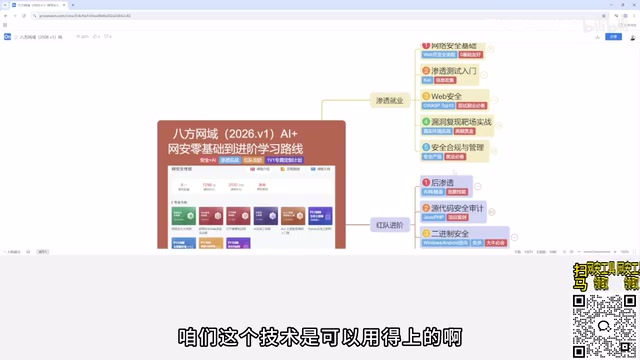
Looking at the course outline structure, the AI + cybersecurity learning path is roughly divided into several stages: penetration testing fundamentals, external security, vulnerability lab implementation, and lateral advancement. Vulnerability hunting mainly falls under the "penetration employment" track — one of the directions where you can generate real-world value relatively quickly after getting started.
Penetration testing and vulnerability hunting essentially refer to the same type of work: using technical means to discover security flaws in systems or products. "Using AI for vulnerability hunting" is fundamentally about introducing AI tools into this workflow to assist with information gathering, vulnerability identification, and validation — boosting efficiency rather than replacing foundational skills.
For beginners with no prior experience, the very first lesson is often the hardest to navigate. The presenter candidly acknowledged that many people search through countless videos online and end up "more confused than when they started," getting lost in a sea of fragmented information. The key at the entry stage is to first establish a clear main thread — not to rush out and collect a massive pile of tutorials.
Where Can You Apply These Skills?
A recurring theme throughout the livestream was a practical question: is there actually a place to use this skill set? The answer lands on two scenarios.
The first is freelance / side-income work. Once you've covered penetration testing basics, external security, and hands-on lab practice, you'll have the foundational ability to participate in SRC (Security Response Center) vulnerability submissions. SRC platforms are vulnerability collection channels maintained by major companies, where white-hat researchers can earn rewards for submitting valid vulnerabilities. This means you don't need to join a security firm — you can participate on a freelance basis. The presenter used a relatable analogy: you can study cybersecurity on the side while working as a security guard, but you can't juggle it while delivering food — emphasizing the importance of sustainable time and energy.
The second is full-time employment. In practice, many teams don't have a thorough understanding of their own product's security posture — flaws exist to varying degrees. Companies therefore arrange internal penetration testing tasks, where security staff perform vulnerability hunting on their own products, with performance metrics tied to the number of vulnerabilities found. This shows that vulnerability hunting skills have clear, concrete applications in enterprise settings with defined evaluation mechanisms.

SRC (Security Response Center) is a vulnerability collection mechanism that companies open to external security researchers. Major Chinese internet companies like Alibaba, Tencent, ByteDance, and Baidu all operate their own SRC platforms, with some offering cash rewards or point-based gift redemption. White-hat researchers — security professionals operating within legally authorized boundaries — can submit vulnerability details according to platform rules after discovering security flaws in a target company's products. Once verified by the company's security team, the researcher receives the corresponding reward. Vulnerabilities are typically classified into four tiers: low, medium, high, and critical, with significant differences in payout — high-severity vulnerabilities and above can often earn anywhere from a few hundred to several thousand yuan. For beginners, SRC serves both as a practice arena and a real feedback channel for validating your skills, providing a more authentic sense of hands-on experience than simply grinding through lab environments.
Containerization and Cloud-Native: A New Attack Surface
One technically noteworthy point from the livestream is the shift in how vulnerability labs are run. Early labs operated in relatively simple ways, but today's large-scale labs are commonly deployed using containerization — which aligns with how enterprise production environments have evolved.
More and more production workloads now run on containers, orchestrated and scheduled via Kubernetes (referred to phonetically in the talk as "kbass"). This has a direct consequence: security learners can't just focus on traditional web vulnerabilities — they also need to understand Docker, container orchestration, and cloud-native fundamentals.
The presenter noted that these tools are relatively straightforward for operations engineers, but often represent a knowledge blind spot for security professionals focused on offense and defense. If a vulnerability emerges at the container or orchestration layer, lacking that background makes it very difficult to assess and respond. The talk mentioned that a livestream from just a few days prior had discussed a case where two vulnerabilities were simultaneously discovered in a container/orchestration component — one of which was found by Tencent's security team. Real-world events like these are both learning material and a testament to the value of this work.

Practical Advice for Beginners
Drawing from the livestream content, here are several actionable starting points:
- Build the main thread before filling in details: Progress in order — penetration basics → external security → hands-on lab practice — and avoid getting derailed by fragmented tutorials.
- Take lab environment setup seriously: Learn to run labs using containerization. It mirrors real enterprise environments and lays the groundwork for future advancement.
- Fill the cloud-native knowledge gap: Get familiar with operations-side tools like Docker and Kubernetes to address the common blind spots among offensive security practitioners.
- Follow real-world vulnerability events: Track recently disclosed high-value vulnerabilities (such as container/orchestration component flaws) — useful both for learning reproduction techniques and for connecting findings to SRC submissions.
Docker is currently the most mainstream container runtime. It packages applications and their dependencies into images and runs them in isolated container environments, solving the classic "it works on my machine" problem. Kubernetes (commonly abbreviated as K8s) is a container orchestration platform that manages the scheduling and lifecycle of large numbers of containers across multiple servers. From a security perspective, containerization introduces new attack surfaces: images themselves may include components with known vulnerabilities; the container runtime (such as the Docker daemon) can be exploited through misconfiguration to achieve "container escape" and gain host machine access; and a Kubernetes API Server that is exposed with weak authentication can lead to complete cluster takeover. For penetration testers, understanding the isolation mechanisms between container boundaries and the host, and being familiar with common misconfiguration patterns — such as privileged containers, mounted host directories, and unauthenticated open ports — are foundational prerequisites for discovering high-value vulnerabilities in cloud-native environments.
A Realistic Take on "Learn It in 7 Days" Marketing
It's worth flagging that this type of content often uses hooks like "learn it in 7 days" or "job-ready after completion." The actual learning curve is far longer than the marketing suggests. Vulnerability hunting spans multiple layers of knowledge — network protocols, web security, system internals, and containers — and independent proficiency cannot realistically be achieved through a short-term sprint.
The core message delivered in this livestream is genuinely valuable: a clear roadmap, realistic scenarios, and tools that keep pace with industry evolution. But treating it as a shortcut to "fast money" isn't realistic. The more pragmatic approach is to use this roadmap as a long-term learning guide, combining extensive hands-on lab practice with retrospectives on real-world vulnerabilities, and gradually building the skills that can generate meaningful value on SRC platforms or in enterprise security roles.
Related articles
Capsule: Pack Web Apps and Data into a Single SQLite File
Capsule is a Rust/Tauri 2.0 tool that packs HTML web apps and data into a single SQLite file — privacy-first, local storage, portable sharing, with AI support.
DSH-SUBAGENT-UI Plugin: The Ultimate Sub-Agent Manager for DeepSeek Harness
DSH-SUBAGENT-UI is a DeepSeek Harness browser plugin offering sub-agent overview, search, local categorization, and completion snapshots — install with one command.
RTX 5090 Scalped for $9,000 in the US? Flying to Taipei to Buy One Might Actually Be Cheaper
RTX 5090 scalped for $9,000 in the US — a Reddit user did the math and found flying to Taipei to buy one is actually cheaper. A look at the real supply-demand crisis behind the joke.