AI Works Around the Clock — So Now Humans Are on Call 24/7?

AI Agents work nonstop, but humans end up on call 24/7 as their supervisors.
Once AI Agents go mobile, the physical boundaries of work disappear entirely. Companies don't need to mandate overtime — just ask employees to "approve" AI output whenever convenient, and their attention is captured around the clock. This hidden form of digital servitude is harder to resist than traditional overwork, and the utopian promise of AI liberating humanity is being replaced by a reality where humans are permanently on standby.
When OpenAI announced that Codex was coming to the ChatGPT mobile app, many people excitedly imagined a future where they could have AI write code while lying in bed. But take a step back and think carefully — there's a chilling trend lurking beneath the surface: when AI starts working 24 hours a day without interruption, humans may not be liberated at all. They may actually be more tightly bound than ever.
Technical Background: OpenAI Codex is a large language model fine-tuned on GPT architecture specifically for code generation tasks. Its integration into the ChatGPT mobile app marks a pivotal moment in AI coding capabilities expanding from the desktop to every context imaginable. AI Agents go a step further than pure code generation — they can autonomously plan tasks, call tools, execute actions, and handle feedback, forming a complete "perception–decision–execution" loop. This autonomy allows AI Agents to run continuously for hours or even days without human supervision, which is precisely the technical foundation that makes "24/7 uninterrupted work" possible.
The Last Line of Defense Is Gone: Physical Limits No Longer Protect You
Before the age of AI Agents, the concept of "clocking out" was at least protected by one layer of physical reality. If you weren't sitting at a computer, you couldn't work. If your boss messaged you late at night, you could play dead — "Sorry, I'm not at my desk."
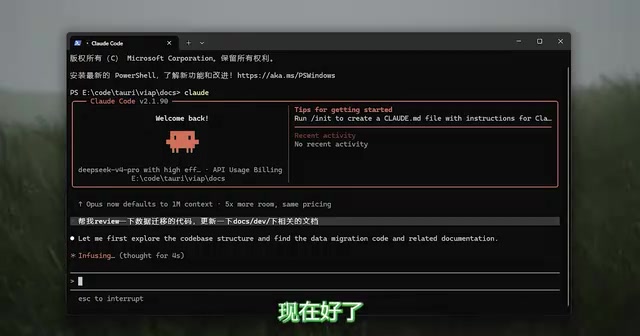
But now, that final line of defense is crumbling. An AI Agent can literally "sit at the computer" on your behalf. Imagine this:
- While you're eating dinner, the Agent is fixing bugs
- While you're in the bathroom, the Agent is running tests
- While you're asleep, it may have already submitted a dozen PRs
The proliferation of mobile AI coding tools means work no longer requires a specific physical space or device. At any time, in any place, you can — or rather, you "should" — be participating in the workflow.
The Sneakiest Trap: You're "Not Working," But Your Brain Never Clocks Out
Here lies an incredibly subtle and deeply unsettling logical trap.
Companies don't even need to explicitly ask you to work overtime. All they have to say is: "You don't have to do anything — just take a look. Approve it when you have a moment, confirm if there's an issue."

The insidious part of that sentence is this: technically, you're not working — the AI is doing the actual work — but your brain can never truly disengage. You're not writing code, you're just "taking a look." You're not working overtime, you're just "confirming something." This blurring of work boundaries is far harder to resist than traditional 996-style overtime, because you can't even find a clear reason to say no.
At its core, this is cognitive exploitation. Your body may be resting, but your attention and decision-making capacity are being continuously drained. Psychological research has long established that this state of "always being on call" causes serious damage to mental health — it prevents people from ever entering a state of genuine rest and recovery.
Psychology Deep Dive: Research from TU Darmstadt in Germany found that even when employees didn't actually handle work messages during off-hours, the mere expectation that messages might need to be addressed was enough to significantly elevate cortisol levels and impair sleep quality. This state is known in psychology as Cognitive Residue — when a task remains unfinished, the brain continuously allocates attentional resources to it, even when you appear to be doing something else entirely. The "review debt" created by AI Agents exploits exactly this mechanism, preventing employees' brains from ever truly "switching off" and leading to chronic psychological fatigue and burnout.
From Extending Work Hours to Extending Online Hours
If we look back at the history of the tech industry, a clear evolution in exploitation patterns emerges:
The Traditional Era: Extend your physical working hours (996, alternating weekends)
The AI Agent Era: Extend your time online

The key shift here is that AI Agents never stop. They can run at 2 or 3 in the morning. They keep going on weekends. They can even handle dozens of tasks in parallel simultaneously. The output speed of Agents far outpaces the speed at which humans can review that output — creating a constant state of "review debt" where there's always a backlog of AI-generated work waiting for your attention.
The result is a profoundly absurd situation: humans no longer do the work themselves, but humans must always be online.
Digital Labor Theory Background: This phenomenon of "digital servitude" has a more systematic theoretical framework in academia. Italian autonomist Marxist scholar Maurizio Lazzarato's theory of Immaterial Labor, developed as early as the 1990s, anticipated this trend: when the core of labor shifts from physical effort to cognition, emotion, and attention, the boundaries of traditional working hours become extremely blurred. The rise of the platform economy has validated this prediction — the management of "online hours" for ride-hailing drivers and food delivery couriers is essentially the commodification of workers' attention itself. The AI Agent era extends this logic to knowledge workers: your approval decisions, your attention windows — all become productive resources that companies can schedule and deploy.
China's Workplace Culture Could Accelerate This Trend
This trend may be dramatically amplified in China's workplace environment. Many companies already have little respect for work-life boundaries. What used to be "can you work late tonight?" will become "the AI already did everything for you — is it really that hard to just approve it? You've got your phone on you anyway, right?"

The destructive power of this kind of rhetoric lies in its surface-level "reasonableness." After all, the AI really did do most of the work — you're "just" tapping a button. But small things add up. When that "tap of a button" becomes a round-the-clock, nonstop norm, it is, in essence, a new form of digital servitude.
The AI Utopia Narrative Is Being Overturned by Reality
For a long time, the mainstream narrative around AI replacing human labor has been optimistic: AI will free humanity from tedious work, giving us more time to enjoy life and pursue creative endeavors.
But the direction reality is heading seems to be diverging from that rosy vision:
- The Ideal: AI works, humans rest
- The Reality: AI works 24 hours a day, humans are on call 24 hours a day
For many people, the future of work may look like this: working during the day, supervising AI at night. This isn't liberation — it's a different form of bondage. And it's a more hidden, harder-to-resist form of bondage at that.
Questions We Need to Start Thinking About Now
This isn't fearmongering — it's an issue that society as a whole needs to take seriously. As the capabilities of AI Agents continue to expand, we need to proactively establish new social contracts:
- Should "online approvals" count as working hours? Labor law needs to keep pace with technological development.
- Companies need to establish asynchronous processing mechanisms for AI output, rather than requiring employees to respond in real time.
- At the individual level, learning to actively set "digital boundaries" may become the most important survival skill of the AI era.
Institutional Lag Background: The logic underlying current labor law was designed around the industrial-era model of physical labor: working hours are bounded by "clocking in" and "clocking out," and overtime is determined by physical presence beyond standard hours. This framework has revealed obvious structural gaps when applied to digital work patterns. The EU's Platform Work Directive passed in 2021, and the Right to Disconnect legislation adopted by some member states, represent the closest institutional attempts to address this problem so far — France was the first to legislate in 2017, requiring companies with more than 50 employees to negotiate with workers on the right not to be required to respond to messages outside of working hours. However, as AI Agents further decouple "work" into two layers — "execution" and "supervision" — even Right to Disconnect legislation faces new definitional challenges: does supervising AI count as work? Current legal frameworks have no answer to this question.
AI is a tool, but how tools are used depends on institutional design and power dynamics. If we don't seriously discuss and establish rules during this window of opportunity, the beautiful promise of "AI working for humanity" may ultimately become "AI helping employers monitor humanity."
Related articles
 Expert Opinions
Rethinking Scaling Laws: Parameters Are Not the Only Answer
Deep analysis of Scaling Law evolution from Kaplan to Chinchilla to the MoE era, exploring why blindly stacking parameters is a mistake, and how GLM-5.3 proves scaling has multiple knobs.
When AI Treats Humans as Subagents: Ro…
When AI Treats Humans as Subagents: Role Reversal and Hidden Risks in Human-AI Collaboration
Exploring the paradigm shift where humans become "subagents" in AI Agent architectures. Analyzes human node design in LangChain and AutoGen, and the risks of ceding control and cognitive atrophy.
 Expert Opinions
The Lazy Person's Productivity Theory: Why Being 'Lazy' Actually Drives Peak Performance
Explore the engineering philosophy behind 'lazy people are most productive': how constructive laziness drives automation, AI tools amplify efficiency, and systems thinking eliminates wasted effort.