AI Workspace Session and Cache Leaks: A Complete Analysis of Multi-Tenant Isolation Security Risks

Deep analysis of cross-tenant session and cache leak risks in AI workspaces with practical multi-tenant isolation defenses.
AI workspaces carry high-density sensitive data, making multi-tenant isolation critical. This article examines how session and cache leaks occur across CDN, application, inference (KV Cache), and vector database layers, explores AI-specific risks like prefix cache reuse and HNSW side-channels, and provides actionable guidance on cache key design, RLS implementation, and automated cross-tenant testing for both enterprise buyers and engineering teams.
Incident Overview
A Hacker News discussion about potential session and cache leaks between AI workspace instances has recently attracted widespread attention from the security community. Though modest in scale, the post precisely targets the core vulnerability of current AI SaaS service architectures—multi-tenant isolation.
As more enterprises deploy AI assistants and collaboration tools to cloud workspaces, whether data boundaries between different workspace instances—and even between consumer accounts—are sufficiently robust has become an unavoidable security topic. If session or cache data experiences "crosstalk" between different tenants, the consequences range from users seeing history that doesn't belong to them, to the exposure of sensitive business data and identity credentials.
Background: What is Multi-Tenant Architecture? Multi-tenancy is the foundational design pattern of SaaS architecture, where a single software instance simultaneously serves multiple customers (tenants). Its core challenge lies in achieving logical or even physical data isolation on shared infrastructure. The industry typically divides multi-tenant isolation into three tiers: database layer (independent databases, shared database with independent schemas, shared schema with row-level isolation), application layer (namespace isolation for sessions and caches), and network layer (VPC, subnet isolation). In modern cloud-native architectures, Kubernetes namespaces, service meshes (like Istio), and similar technologies are also introduced to strengthen tenant boundaries. Understanding this layered model is the foundational prerequisite for assessing any multi-tenant security risk.
The Technical Essence of the Problem
What Are Session and Cache Leaks
In a typical SaaS architecture, a "workspace instance" represents an independent tenant space that should theoretically be completely isolated from other tenants. Session leaks occur when a user's login state, identity tokens, or temporary data are incorrectly associated with another user or workspace; cache leaks occur when a cache layer that should be isolated (such as CDN cache, in-memory cache, Redis, etc.) incorrectly returns Tenant A's data in response to Tenant B's request.
The caching hierarchy in modern SaaS systems typically spans multiple layers: CDN edge caches (like Cloudflare, Fastly) accelerate static resources and some dynamic responses; reverse proxy caches (like Nginx, Varnish) handle application-layer response reuse; in-memory caches (like Redis, Memcached) provide fast reads for database query results, session data, and other hot data. Each cache layer requires independently designed tenant isolation strategies—any gap in any layer can become an entry point for unauthorized data access.
At the CDN layer, HTTP cache control mechanisms are the first line of defense against sensitive responses being incorrectly cached. Core directives of the Cache-Control response header include: private (allows only browser local caching, prohibits CDN/proxy caching), no-store (prohibits any cache storage), no-cache (allows storage but requires origin server validation before each use), and public (allows all cache layers to store). For dynamic responses containing user data and session information, Cache-Control: no-store, private should be enforced. Additionally, CDN-layer cache key configuration is equally critical—by default, many CDNs use only the URL path as the cache key. If Cookies, Authorization Headers, or custom tenant identifier headers are ignored, personalized responses for different users will be conflated. Mainstream CDNs like Cloudflare and Fastly provide Cache Key customization features that allow request header fields to be incorporated into cache key calculations, and the Vary response header can instruct CDNs to store separate cache entries based on differences in specific request headers—these are essential configurations for enterprise AI SaaS to prevent CDN-layer cross-tenant leaks.
These issues often don't stem from a single vulnerability, but rather from broken isolation assumptions in architectural design. Common causes include:
- Cache keys not including tenant identifiers, causing different tenants to share the same cache entry;
- Reverse proxy or CDN misconfiguration that caches responses containing sensitive information and returns them to other users;
- Session storage scope designed improperly, sharing the same session pool across workspaces.
Why AI Workspaces Face Higher Risk
AI workspaces are more sensitive than traditional SaaS because they carry extremely high data density. What users input into AI assistants is often raw, unsanitized business information—code snippets, internal documents, customer data, strategic discussions, and other core content. Once cross-tenant leaks occur, what's exposed isn't just metadata but potentially complete conversation contexts and private knowledge bases.
Furthermore, AI services typically rely heavily on caching to reduce inference costs and shorten response latency. There's an optimization mechanism unique to large language models—KV Cache (Key-Value Cache)—which caches the computed intermediate states of attention layers in Transformer models to avoid redundant computation on identical prefix content, significantly reducing inference latency and computational costs.
Deep Dive: The Engineering Nature of Transformer Architecture and KV Cache Since Google proposed the "Attention is All You Need" paper in 2017, the Transformer architecture has become the unified foundation for modern large language models (GPT, Claude, Gemini, etc.). Its core self-attention mechanism captures semantic dependencies between any positions in an input sequence through linear transformations and dot-product calculations across three matrix groups: Query, Key, and Value. During auto-regressive generation, the model needs to recompute attention over all historical tokens for each new token generated, with computational cost growing at O(n²) with sequence length. KV Cache persistently stores the Key and Value matrices corresponding to historical tokens, so incremental generation only needs to compute the interaction between new tokens and historical KVs, reducing complexity to O(n) incremental operations. This mechanism is completely safe in single-user scenarios, but in multi-tenant shared inference services, if requests from different tenants share the same system prompt, the framework may physically reuse corresponding KV Cache blocks across tenants—if the reuse strategy is implemented incorrectly, it could trigger context contamination.
Specifically, in the Transformer architecture, each Attention Head computes Key and Value matrices when processing input sequences. KV Cache preserves these intermediate computation results so that when subsequent requests share the same prefix (such as a system prompt) with previous requests, the cached state can be directly reused, dramatically reducing inference latency from O(n²) to incremental O(n) computation. This mechanism is entirely safe in single-user scenarios, but in multi-tenant shared inference services, if requests with the same system prompt but different contexts inappropriately share KV Cache, one tenant's conversation context may contaminate another tenant's inference state.
Mainstream inference frameworks (such as vLLM's PagedAttention) currently implement fine-grained KV Cache isolation through paged memory management. PagedAttention borrows the paging concept from operating system virtual memory, dividing KV Cache into fixed-size physical blocks and implementing dynamic allocation and deallocation through logical-to-physical block mapping tables. This not only solves the fragmentation problem caused by contiguous memory allocation in raw KV Cache, but also provides a foundation for memory lifecycle management in multi-tenant scenarios. However, when vLLM's Prefix Caching feature is enabled, if the deployer hasn't correctly configured a tenant-aware cache key strategy, requests from different tenants sharing system prompts may reuse the same physical blocks, potentially causing information leakage under extreme boundary conditions. Misconfiguration remains a high-risk scenario, and production deployments must verify the tenant isolation semantics of prefix sharing strategies at the framework level.
The Evolution of Multi-Tenant Isolation in Inference Services As LLM inference services evolve from single-machine deployment to distributed clusters, isolation challenges extend from traditional database and cache layers to entirely new dimensions including GPU memory management, batch scheduling, and distributed KV Cache synchronization. Inference frameworks represented by vLLM have introduced Continuous Batching technology, allowing requests from different users to be processed in parallel within the same GPU batch—while improving throughput, this also makes memory boundary management between requests more delicate. PagedAttention's design goal is to eliminate memory fragmentation, but its physical block sharing mechanism requires framework-level tenant-aware scheduling strategies in multi-tenant prefix caching scenarios. In distributed inference scenarios, KV Cache may also be transferred across multiple GPU nodes via network (such as in Disaggregated Prefill architectures), where tenant isolation of the transfer links also needs to be incorporated into security design. Engineering teams should list "whether there is clear documentation guaranteeing isolation semantics for multi-tenant prefix caching" as a key evaluation criterion when selecting inference frameworks.
In AI products using RAG (Retrieval-Augmented Generation) architecture, the complexity of security isolation is even more pronounced. The RAG workflow includes: splitting private documents into text chunks, converting them to high-dimensional vectors through Embedding models, storing them in vector databases (such as Pinecone, Weaviate, Milvus, pgvector), and retrieving semantically similar document fragments as context injected into the LLM during inference. In multi-tenant scenarios, isolation must span the entire pipeline: the vector index layer needs independent namespaces or Collections per tenant ID; retrieval must include tenant filter conditions (Metadata Filtering) to prevent cross-tenant semantic retrieval; Embedding result caches must also carry tenant identifiers.
Deep Dive: Vector Database Isolation Strategies and the Hidden Risks of HNSW Algorithms Vector databases are the core component of RAG systems, and mainstream solutions offer different isolation granularities: Pinecone provides native Namespace isolation with physically separated vector storage within the same index; Weaviate supports multi-tenancy Class configuration with independently managed data shards per tenant; Milvus achieves two-level isolation through Collections and Partitions; pgvector relies on PostgreSQL Row-Level Security (RLS) for soft isolation within a relational framework. What warrants vigilance is that when using the HNSW (Hierarchical Navigable Small World) algorithm to build a globally shared graph index, the search path itself traverses nodes belonging to different tenants—even if final results are correctly isolated through Metadata filtering, minute differences in search latency could theoretically serve as a medium for side-channel inference.
Side-Channel Attacks are a class of attacks that don't directly target access control logic, but instead infer sensitive information by observing timing, power consumption, or cache access characteristics during system execution. In the HNSW graph index scenario, an attacker could use carefully crafted query vectors to infer the distribution characteristics of other tenants' datasets through minute differences in response latency—this is a typical Timing Side-Channel variant. While such attacks require quite precise measurement conditions in practice, in high-security scenarios like finance and healthcare, physically isolating independent Collections or independent database instances is the only reliable approach to eliminate such risks. The trade-off is higher storage costs and operational complexity, but this is a necessary consideration in mature security architecture design.
It's worth noting that vector similarity search itself is a semantic-level operation. Once document vectors from different tenants are mixed into the same index, even with filter conditions added, extreme cases may cause minor information leakage risks due to the graph structure characteristics of approximate search algorithms (like HNSW). Therefore, physically isolating indexes is the choice for higher security levels. Engineering teams may cache Embedding results, retrieved content, and even model outputs—any of these cache layers, if improperly isolated, become high-risk areas for data leakage.
Common Pitfalls in Multi-Tenant Isolation
Cache Key Design Flaws
The most typical failure is omitting the tenant or user dimension when designing cache keys. When developers use content hashes or URL paths as cache keys, if two different tenants request logically "identical" resources, the system may return the same cached copy, triggering unauthorized access.
The correct approach is to mandatorily introduce isolation factors like tenant ID and user ID into cache keys, and to list this as a hard requirement during architecture reviews rather than patching it after the fact. For in-memory caches like Redis, key name prefix conventions (such as tenant:{tenant_id}:cache:{resource_key}) can enforce isolation semantics through encoding; for CDN caches, Cache Key customization features should be used to incorporate tenant identifier request headers into cache key calculations.
Blurred Boundaries in Shared Infrastructure
To control costs, most SaaS vendors use shared infrastructure to host multiple tenants. This model is efficient, but it also means that any configuration oversight at any layer—load balancers, proxies, caches, database connection pools—could become a channel for cross-tenant leaks. Many developers note that such issues are particularly prominent in fast-iterating startup products: security isolation is often "retrofitted" rather than being built into the design from day one.
Mixing Consumer and Enterprise Accounts
The post title specifically mentions leaks between "consumer accounts" and workspace instances. This suggests that some products may share the same backend logic and storage between personal free tiers and enterprise paid tiers without strict account type isolation. The security models and data sensitivity of these two account types should be fundamentally different—mixing them is precisely a high-incidence scenario for isolation failures.
Practical Recommendations for Enterprises and Developers
Due Diligence When Procuring AI Services
For enterprises planning to adopt AI workspace tools, this risk reminds us that multi-tenant isolation must be listed as a core evaluation criterion in procurement decisions. Enterprises should proactively ask vendors:
- Are cache and session data strictly isolated by tenant?
- Are there independent third-party security audit and penetration testing reports?
- Have any data breaches occurred historically, and what are the response mechanisms?
Compliance certifications like SOC 2 and ISO 27001 aren't panaceas, but they at least reflect a vendor's maturity in security governance and can serve as baseline screening criteria.
Compliance Certification Reference: SOC 2 and ISO 27001 SOC 2 (Service Organization Control 2) is a security audit standard developed by the American Institute of Certified Public Accountants (AICPA) for service organizations, focusing on evaluating a service provider's controls across five dimensions: security, availability, processing integrity, confidentiality, and privacy. It's divided into Type I (design effectiveness assessment at a point in time) and Type II (sustained operational effectiveness assessment over a period), with the latter typically providing more reference value. ISO 27001 is an international standard for Information Security Management Systems (ISMS) published by the International Organization for Standardization, requiring organizations to establish systematic risk identification and management processes. Both require certification by independent third-party auditing firms and can reflect a vendor's security governance maturity to a certain degree—but it's important to note that certifications themselves cannot substitute for in-depth examination of specific technical implementation details (such as cache key design and tenant isolation strategies). For AI SaaS products, enterprises can also request vendors to provide specialized AI security assessment reports, focusing on three AI-specific risk layers: the inference layer (KV Cache isolation), the vector retrieval layer (vector database namespace isolation), and the data storage layer (RLS policies).
Architectural Defenses for Development Teams
For engineering teams building AI SaaS products, preventing such risks requires establishing multiple layers of defense-in-depth at the architectural level:
-
Isolation by Default: All cache keys and session scopes must mandatorily carry tenant identifiers from the very beginning of design, never relying on the optimistic assumption that "upper-layer logic won't make mistakes."
-
Defense in Depth: Even if isolation fails at one layer, database-level Row-Level Security (RLS) can serve as the ultimate safety net. RLS is a fine-grained access control mechanism provided by modern relational databases (such as PostgreSQL, MySQL 8.0+) that allows the database engine to automatically append tenant filter conditions when executing queries, ensuring that even if application-layer logic has vulnerabilities, the database layer can still prevent cross-tenant data access. In PostgreSQL, for example, RLS defines row-level access policies for each table through
CREATE POLICYstatements, combined withSET app.current_tenant_idsession variables—the database automatically appendsWHERE tenant_id = current_setting('app.current_tenant_id')conditions when executing any SELECT/INSERT/UPDATE/DELETE operation. Modern Database-as-a-Service (DBaaS) platforms like Supabase and Neon already recommend RLS as the default architecture for multi-tenant SaaS.Critical Pitfall: The Coordination Problem Between RLS and Connection Pools There's a widely overlooked coordination trap between PostgreSQL's RLS mechanism and connection pools (especially PgBouncer): PgBouncer is the most widely used connection pooling solution in the PostgreSQL ecosystem, and its Transaction mode achieves efficient reuse by reclaiming connections immediately after transactions end. However, this fundamentally conflicts with PostgreSQL RLS's mechanism of passing tenant context through session-level settings. Each database connection is reused in rotation by multiple application requests in Transaction mode, and the cleanup behavior of tenant ID session variables injected via
SET LOCALafter a transaction ends depends on the specific connection return timing—if cleanup isn't timely, subsequent requests will inherit the wrong tenant identity, rendering RLS policies completely ineffective. Secure solutions include: using Session mode connection pools (at the cost of reduced connection reuse rates); explicitly executingRESETcommands to clear session variables at the beginning of each request in the application layer; or adopting the JWT claims passing mechanism provided by platforms like Supabase, where database functions extract tenant IDs directly from JWT payloads by callingauth.uid(), completely circumventing the session variable cleanup problem—this is currently one of the most elegant engineering solutions. This detail is the most common source of security misconfiguration in production-grade RLS deployments and must be incorporated into connection pool selection decisions during the architecture design phase.It's important to note that RLS needs to be used in conjunction with session-level isolation in connection pools (like PgBouncer)—if the connection pool resets session variables at transaction boundaries, RLS policies may be rendered ineffective. Treating RLS as the bottom-layer safeguard in defense-in-depth, rather than a silver bullet replacing application-layer isolation logic, is the correct posture for mature architectures.
-
Response Header Auditing: Carefully review HTTP response headers like Cache-Control to prevent sensitive responses from being incorrectly cached and propagated by intermediate layers. For all dynamic responses carrying user data, enforce
Cache-Control: no-store, private, and use theVaryheader to guide CDNs in correctly distinguishing cache entries for different tenants. -
Continuous Automated Testing: Make "Can Tenant A read Tenant B's data?" a routine check in CI pipelines, continuously verifying cross-tenant isolation effectiveness through automated testing. Test suites should cover four dimensions: CDN cache layer (verifying response independence by requesting the same URL with different tenant accounts), API layer (verifying complete data isolation after switching Authorization Headers), database layer (verifying RLS policy effectiveness under connection reuse scenarios), and AI inference layer (verifying that different tenants' conversation contexts don't cross-reference each other).
Conclusion
This discussion may have limited traction, but it's a microcosm of enterprise data security in the AI era. When AI workspaces carry an enterprise's most sensitive core information, multi-tenant isolation is no longer an optional engineering optimization—it's the lifeline of product security.
For vendors, performance and cost compression should never come at the expense of tenant boundaries; for enterprise users, understanding and proactively inquiring about underlying isolation mechanisms is becoming essential risk awareness in the digital age. Session and cache leaks may seem like technical details, but they could determine the distance between a serious data incident and the collapse of user trust. From Cache-Control configuration at the CDN edge, to KV Cache physical block management in inference frameworks, to HNSW graph index isolation in vector databases, any oversight at any technical layer could escalate into an irreversible data security incident in multi-tenant AI systems.
Key Takeaways
- Multi-tenant isolation is the security cornerstone of AI SaaS, requiring defense-in-depth across CDN, application, inference, vector retrieval, and database layers—any single-layer oversight can trigger cross-tenant data leaks.
- AI-specific KV Cache and RAG architectures introduce novel isolation challenges: Inference framework prefix cache reuse strategies and vector database global graph indexes are high-risk areas not covered by traditional SaaS security frameworks; as distributed inference (Disaggregated Prefill) becomes prevalent, cross-node KV Cache transfer links also need to be incorporated into security design.
- Cache key design is the first line of defense: Keys across all cache layers must include tenant identifiers, and the CDN layer needs Cache Key customization combined with the Vary response header to strengthen isolation semantics.
- RLS is the safety net at the database layer, but beware of its coordination failure trap with connection pool Transaction mode; Supabase's JWT payload extraction approach is the optimal engineering practice for circumventing session variable cleanup issues—isolation effectiveness across the entire connection reuse chain must be verified before production deployment.
- Side-channel risks cannot be ignored: The timing side-channel of HNSW global graph indexes constitutes a real threat in high-security scenarios, and physically isolating independent indexes is the only reliable means to eliminate such risks.
- Continuous automated testing is the only reliable guarantee of isolation effectiveness—cross-tenant access tests should be mandatory CI pipeline checks covering all four dimensions of the full chain.
Related articles
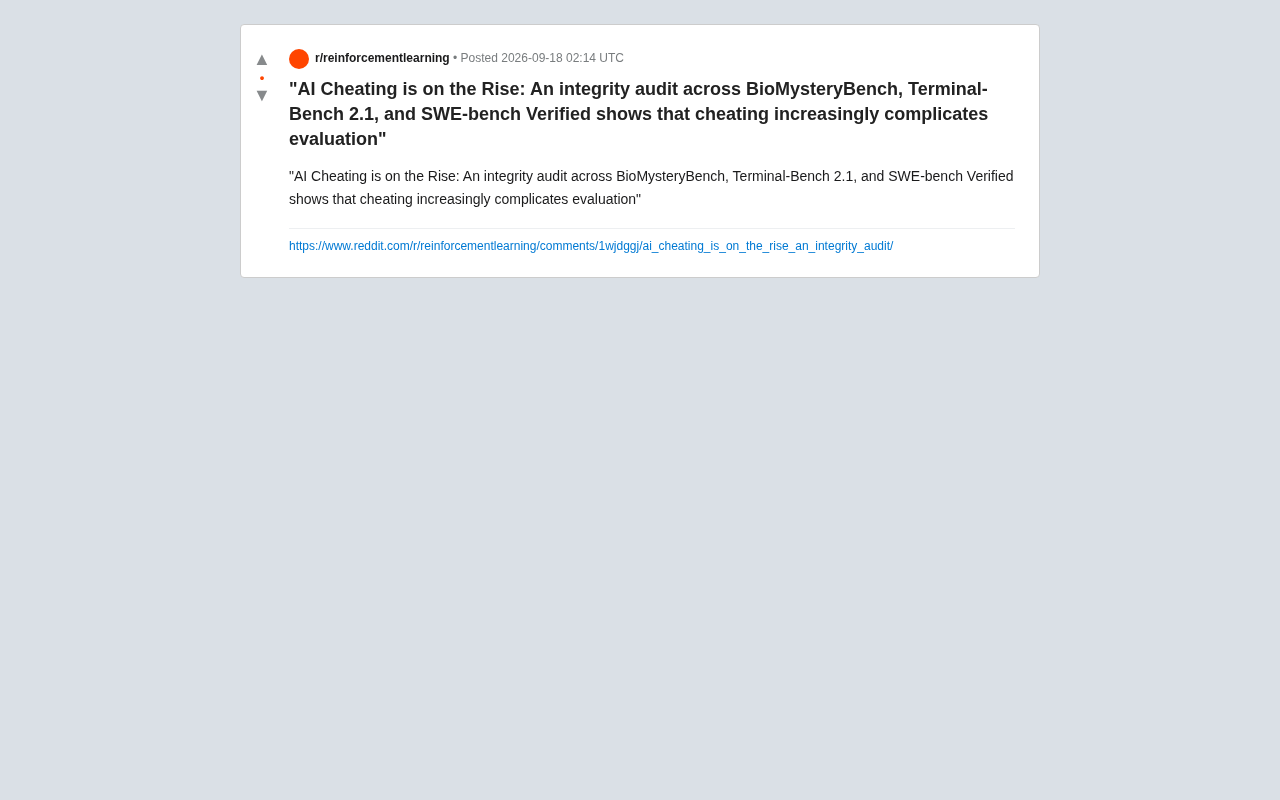
AI Cheating on the Rise: Integrity of Three Major Benchmarks Under Threat
An integrity audit of BioMysteryBench, Terminal-Bench 2.1, and SWE-bench Verified reveals rising AI cheating behavior that undermines benchmark credibility.
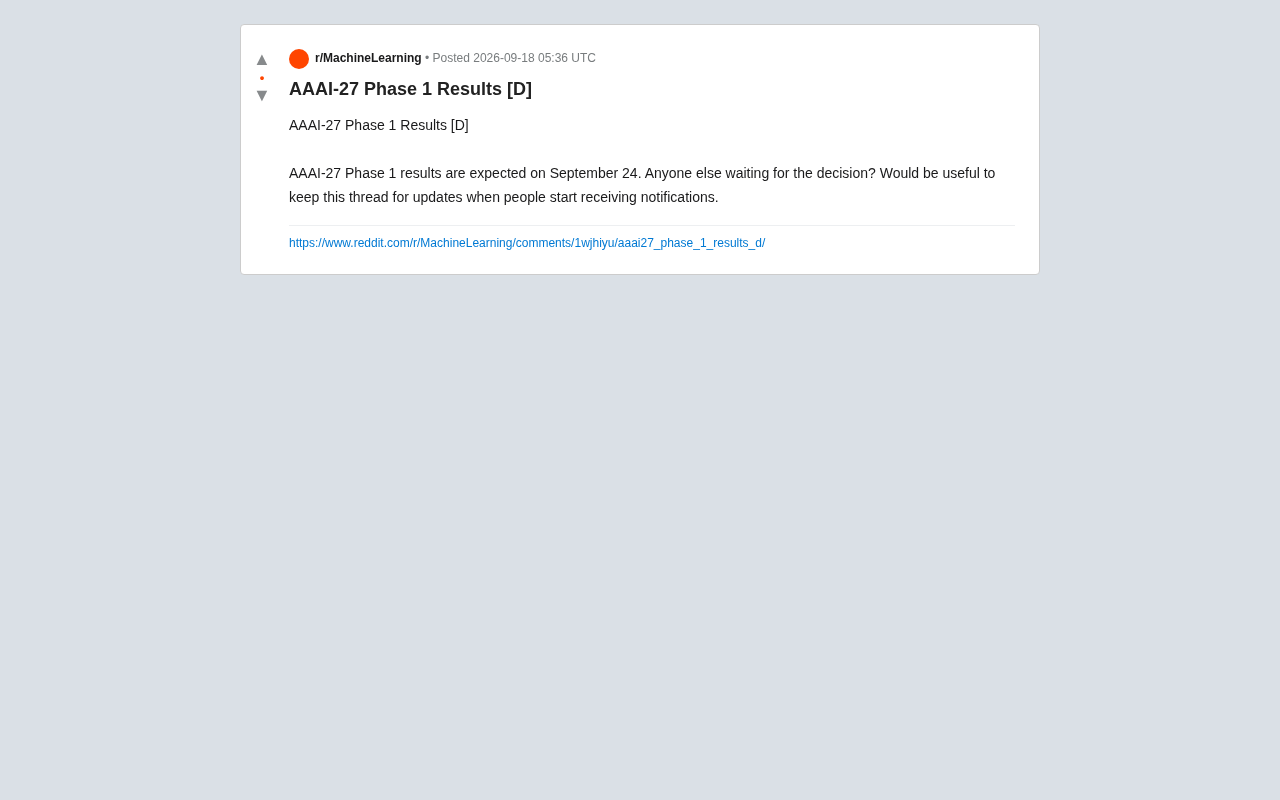
AAAI-27 Phase 1 Review Results Approaching: What Submitters Need to Know
AAAI-27 Phase 1 review results are expected on September 24. This article breaks down the phased review mechanism, what results mean for submitters, and tips for the waiting period.
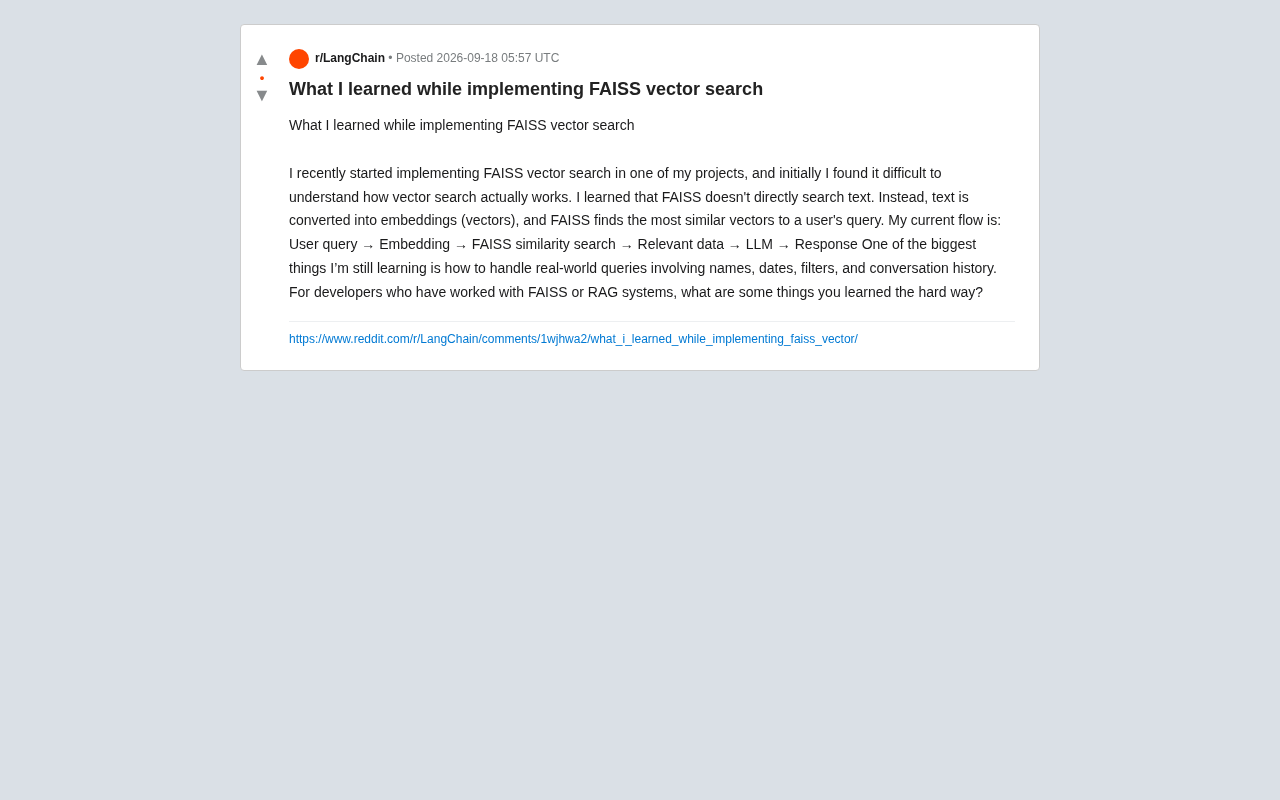
FAISS Vector Search in Practice: Lessons Learned From Embeddings to RAG
A developer shares hands-on lessons building FAISS vector search and RAG pipelines, covering embeddings, metadata filtering, query rewriting, and hybrid retrieval.