Airuncode: A Deep Dive into the Local Multi-Agent Collaborative Coding Tool
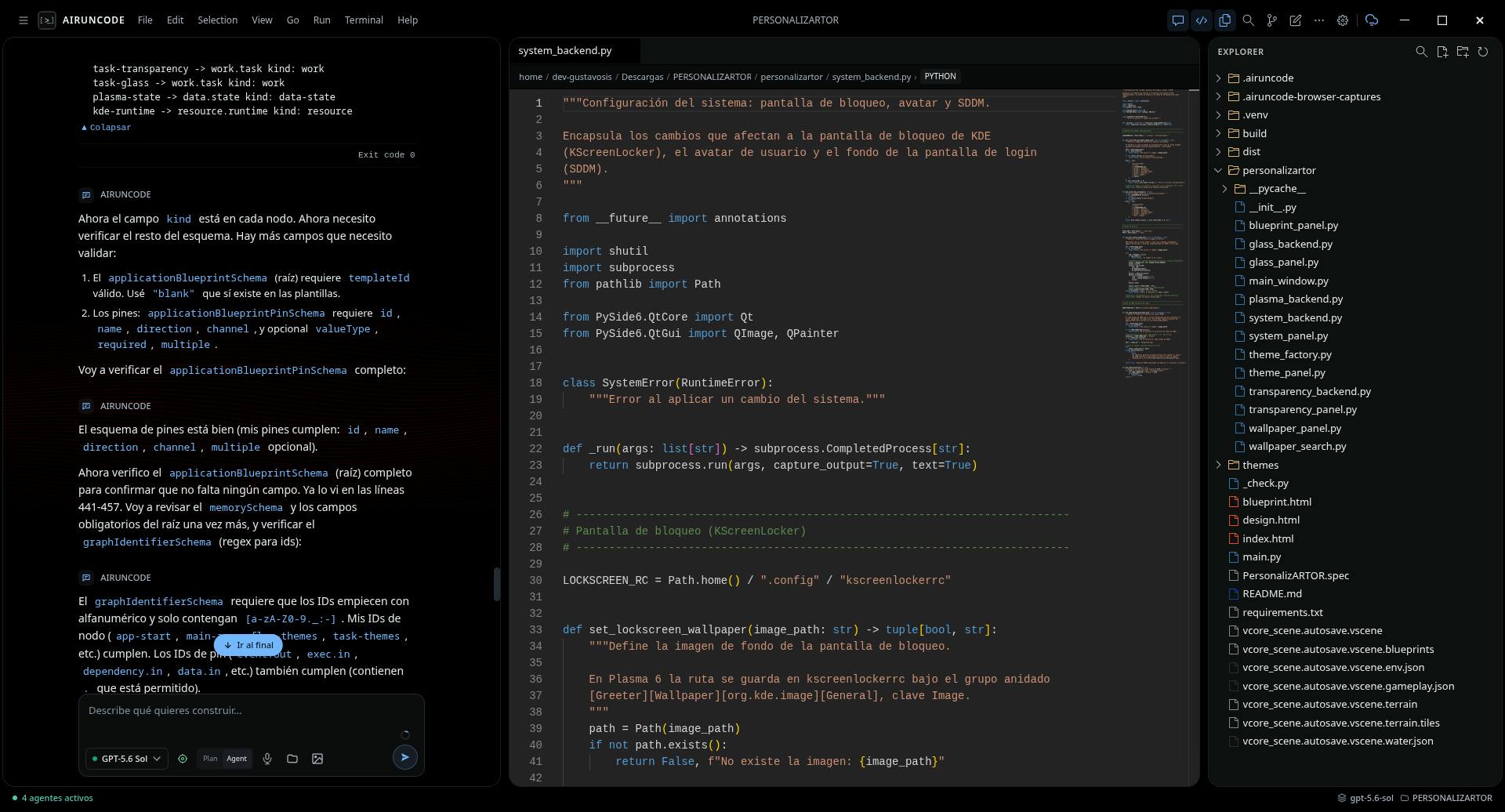
Airuncode is a local-first AI coding tool featuring multi-agent collaboration and zero token markup billing.
Airuncode is a local-first AI coding tool that runs multiple coding agents on developers' own machines. It features BYOK (Bring Your Own API Keys) for zero-markup billing, multi-agent debate workflows for code review and self-healing, seamless cloud/local model switching, and a built-in Vulkan-based 3D runtime called V-CORE for game development. Supporting Windows, macOS, and Linux, it targets privacy-conscious teams and cost-sensitive developers.
In today's fiercely competitive AI coding tool landscape, a product called Airuncode has emerged on Product Hunt, landing 5th on the daily leaderboard with 103 upvotes.
Background on Product Hunt: Product Hunt is one of the world's largest product discovery community platforms, founded in 2013. It uses a daily leaderboard system where new products compete for rankings through community upvotes. A top-10 placement typically generates tens of thousands of impressions, making it critical for cold-starting new products. In the AI coding tool space, well-known products like Cursor and Replit both launched on Product Hunt and acquired large numbers of early users. Ranking 5th with 103 votes means Airuncode received significant community attention on its launch day.
Airuncode's core philosophy stands in stark contrast to mainstream cloud-based AI coding assistants — it's local-first, designed to run multiple coding agents on the developer's own machine, protecting privacy while achieving zero token markup cost control.
Local-First: Airuncode's AI Coding Runtime Architecture
Airuncode positions itself as a local agent runtime built for serious software engineering. Unlike GitHub Copilot, Cursor, and other AI coding solutions that heavily depend on cloud infrastructure, Airuncode allows developers to run multiple AI coding agents directly on their local machines, emphasizing control over code assets and privacy at the architectural level.
How Cloud-Based AI Coding Assistants Work: Mainstream tools like GitHub Copilot and Cursor use cloud architectures: code snippets are sent to remote servers, processed by large models, and suggestions are returned. The advantages of this approach include centralized compute and fast model updates, but it comes with three major pain points: 1) Code privacy risks — enterprise code may violate confidentiality agreements; 2) Opaque pricing — subscription fees include significant token markups, meaning heavy users may pay 3-5x the actual per-unit cost of direct API access; 3) Network dependency — the tools are unusable offline or in low-connectivity environments. These limitations have created market demand for local-first solutions.
One of its key selling points is the BYOK (Bring Your Own API Keys) model. Users can pay model providers (such as OpenAI, Anthropic, etc.) directly using their own API keys, with Airuncode taking zero token markup in between.
Token Economics and Markup Models: Large model APIs charge by the token, where 1 token roughly equals 0.75 English words. OpenAI's GPT-4 API is priced at approximately $0.03/1K tokens (input), but the subscription prices of tools like Copilot ($10-20/month) include significant markups — providers need to cover infrastructure, R&D, and profit. For heavy developers consuming millions of tokens daily, direct API access might cost only $50-100/month, while subscription-based tools could effectively cost $200-300/month. The BYOK model lets users pay model providers directly, bypassing intermediary markups — this is the core of Airuncode's cost advantage.
This means developers can escape the premium pricing of subscription tools and pay based on actual usage. For heavy developers who frequently call large models, this direct billing approach could yield considerable cost savings over time.
Furthermore, Airuncode supports seamless switching between cloud models and local models. Developers can call cloud-based large models when strong reasoning capabilities are needed, and switch to locally deployed open-source models when handling sensitive code or seeking low latency.
The Current State of Local Model Ecosystems: Since 2024, open-source local models have advanced rapidly: Meta's Llama 3.1 (70B) and Mistral's larger models have approached GPT-3.5-level performance in code generation. Combined with quantization techniques (such as 4-bit quantization), consumer-grade hardware with 32GB of RAM can now run these models. The advantages of local models include zero API costs, complete offline capability, and no privacy concerns. The downsides are slower inference speeds (1-5 tokens/sec vs. 50+ on the cloud) and a lower ceiling on model capability. The value of a hybrid architecture lies in using local models for routine, repetitive tasks and cloud-based large models for complex reasoning or first attempts, achieving an optimal balance of cost and performance.
This flexible hybrid architecture is one of the core demands from today's developer community when it comes to AI coding tools.
Multi-Agent Collaboration: From Single Assistant to Team Coordination
The most imaginative aspect of Airuncode is its multi-agent collaboration mechanism.
Agent Technology Explained: In AI, an agent refers to an AI system capable of perceiving its environment, making autonomous decisions, and executing actions — as opposed to traditional single-turn Q&A models. Coding agents have three core capabilities: 1) Tool calling — executing file operations, running terminal commands, calling APIs; 2) Planning — decomposing complex tasks into executable steps; 3) Reflection and correction — adjusting strategies based on execution results. Projects like AutoGPT and MetaGPT have demonstrated the viability of agents in software development, but single agents can easily fall into cognitive ruts. Multi-agent systems simulate collective human intelligence through role specialization and collaboration.
According to the official description, it can scan an entire codebase, have multiple agents "debate" different solutions to the same problem, then edit files, run tests, and ultimately self-heal failures.
Multi-Agent Workflow in Detail
Traditional AI coding assistants mostly operate in a single-agent, question-and-answer mode. Airuncode aims to build a collaboration model that more closely resembles a human development team:
- Codebase Scanning: Agents first understand the project context and overall structure
- Solution Debate: Multiple agents propose and evaluate different implementation paths, filtering for better solutions through mutual questioning
- Execution and Verification: Directly editing files and running tests to create a complete development loop
- Self-Healing Repair: When tests fail, agents automatically analyze errors and attempt corrections
This "debate → execute → verify → repair" workflow essentially simulates the code review and continuous integration (CI) processes in software engineering.
Code Review Process: Code review is a core practice in software engineering: after a developer submits code, team members review its design soundness, potential bugs, code style, and more. In traditional workflows, a single feature might require 2-3 engineers to each spend 30 minutes reviewing, generating 10-20 comments. Multi-agent debate attempts to automate this process: different agents play roles such as architect, security expert, and performance optimizer, raising concerns from their respective perspectives. The theoretical foundation of this mechanism is "red team" thinking — discovering blind spots through adversarial reasoning. The challenge, however, is whether AI's critical depth can match that of human experts, and how to prevent agents from falling into meaningless circular arguments.
Continuous Integration (CI) and Self-Healing: Continuous Integration is a cornerstone of modern software development: every code commit automatically triggers compilation, testing, and static analysis. When tests fail, developers must manually analyze logs, locate the issue, and fix the code. Airuncode's self-healing mechanism attempts to automate this cycle: after an agent makes code changes, it immediately runs tests; if they fail, it parses the error stack, traces back to the problematic code segment, attempts a fix, and retests. This may work well in simple scenarios (such as type errors or null pointers), but complex logic bugs or performance issues still require human intervention. The real challenges are avoiding "fix-fail-fix" infinite loops and controlling token consumption.
If the implementation delivers on its promise, it could dramatically reduce the debugging effort requiring human intervention. Of course, multi-agent debate also introduces practical engineering challenges such as exponentially increased token consumption and solution convergence speed — all of which still need continuous validation in real-world projects.
V-CORE: Built-in Vulkan 3D Runtime for AI Game Development
Beyond general coding capabilities, Airuncode also includes a rather distinctive component — V-CORE, a native 3D runtime based on Vulkan, specifically designed for AI-assisted game development scenarios.
Vulkan Graphics API Technical Background: Vulkan is a next-generation graphics API developed by the Khronos Group, released in 2016 as a successor to OpenGL. It stands alongside Direct3D 12 as a modern low-level graphics standard. Its key characteristics include: 1) Explicit control — developers manually manage memory, synchronization, and command submission in exchange for maximum performance; 2) Multi-threading friendly — rendering commands can be recorded in parallel across multiple CPU cores; 3) Cross-platform — a unified API from Android phones to Windows PCs. However, Vulkan has a steep learning curve: rendering a single triangle requires 500-1000 lines of code (compared to just 50 in OpenGL). Integrating it into an AI tool means agents need to understand complex graphics pipelines, memory management, and synchronization mechanisms, placing extremely high demands on AI's code comprehension abilities.
Vulkan is a cross-platform, low-level graphics API known for high performance and fine-grained hardware control. Integrating a native 3D runtime directly into an AI coding tool means developers can perform 3D game logic and graphics development with real-time preview, all assisted by AI agents. This is quite rare among similar AI coding tools and demonstrates Airuncode's ambition to carve into vertical creative scenarios.
For indie game developers or teams looking to accelerate prototype iteration with AI, V-CORE could be a differentiating reason to choose Airuncode. That said, the complexity of the Vulkan ecosystem also means this feature's real-world maturity needs to be validated through more practical use cases.
Cross-Platform Support and Target User Groups
Airuncode already supports Windows, macOS, and Linux — the three major platforms — covering the vast majority of developers' working environments. This full-platform strategy complements its "local-first" philosophy: if the tool is meant to run locally, it must cater to developers across different operating systems.
From a product positioning standpoint, Airuncode targets several clearly defined user groups:
- Teams that prioritize privacy and code security: Local execution avoids uploading code to the cloud
- Cost-sensitive heavy users: BYOK with zero markup direct billing significantly reduces usage costs
- Developers seeking flexibility: Free switching between cloud and local models meets different scenario requirements
- AI game development explorers: V-CORE's 3D runtime offers a unique differentiating capability
Is Local Agent the Next Direction for AI Coding Tools?
The emergence of Airuncode reflects a noteworthy trend in the AI coding tool space: as local model capabilities improve and hardware compute becomes more accessible, an increasing number of developers are seeking solutions that break free from cloud dependency.
The Local-First Software Movement: Local-first is a new paradigm in distributed systems, proposed by the Ink & Switch lab in 2019. Its core principles: data is stored on the user's device first, applications run locally by default, and the cloud serves only for synchronization and backup. This is the opposite of traditional cloud applications (where data is stored on servers). In the AI tool space, local-first means: model inference runs on the local GPU, code never leaves the machine, and the tool remains functional even when the network is disconnected. Its technical foundations include: 1) Improved local model capabilities (70B models can run locally as of 2024); 2) Growing consumer GPU compute power (RTX 4090 reaches 82 TFLOPS); 3) Maturation of offline collaboration technologies like CRDTs. This trend reflects a renewed awareness of data sovereignty among users.
Local-first is not just about privacy and cost — it represents developers' pursuit of control over their tools.
As a newly launched product, Airuncode's community feedback on Product Hunt is still in its early stages. The actual effectiveness of its multi-agent debate, the reliability of its self-healing capabilities, and the maturity of V-CORE all await deeper validation from more developers. However, the "local multi-agent runtime" product paradigm it demonstrates undeniably provides an inspiring direction for the evolution of AI coding tools.
Key Takeaways
Related articles
LGOS: A Self-Hosted Deployment Solution That Disguises LangGraph Workflows as OpenAI Models
LGOS (langgraph-openai-serve) is an open-source project that lets developers register LangGraph workflows as OpenAI models through API compatibility, enabling plug-and-play integration with Open WebUI, Chainlit, and other clients, with support for streaming, HITL, and PostgreSQL checkpoints.

Flock AI Surveillance Faces Bipartisan Opposition: Why License Plate Recognition Technology Sparks Privacy Controversy
Flock Safety's AI license plate recognition surveillance system faces rare bipartisan opposition in the US. From Republican defection to uncontrollable cross-jurisdictional data sharing risks, an in-depth analysis of the privacy crisis and political backlash triggered by AI surveillance technology.
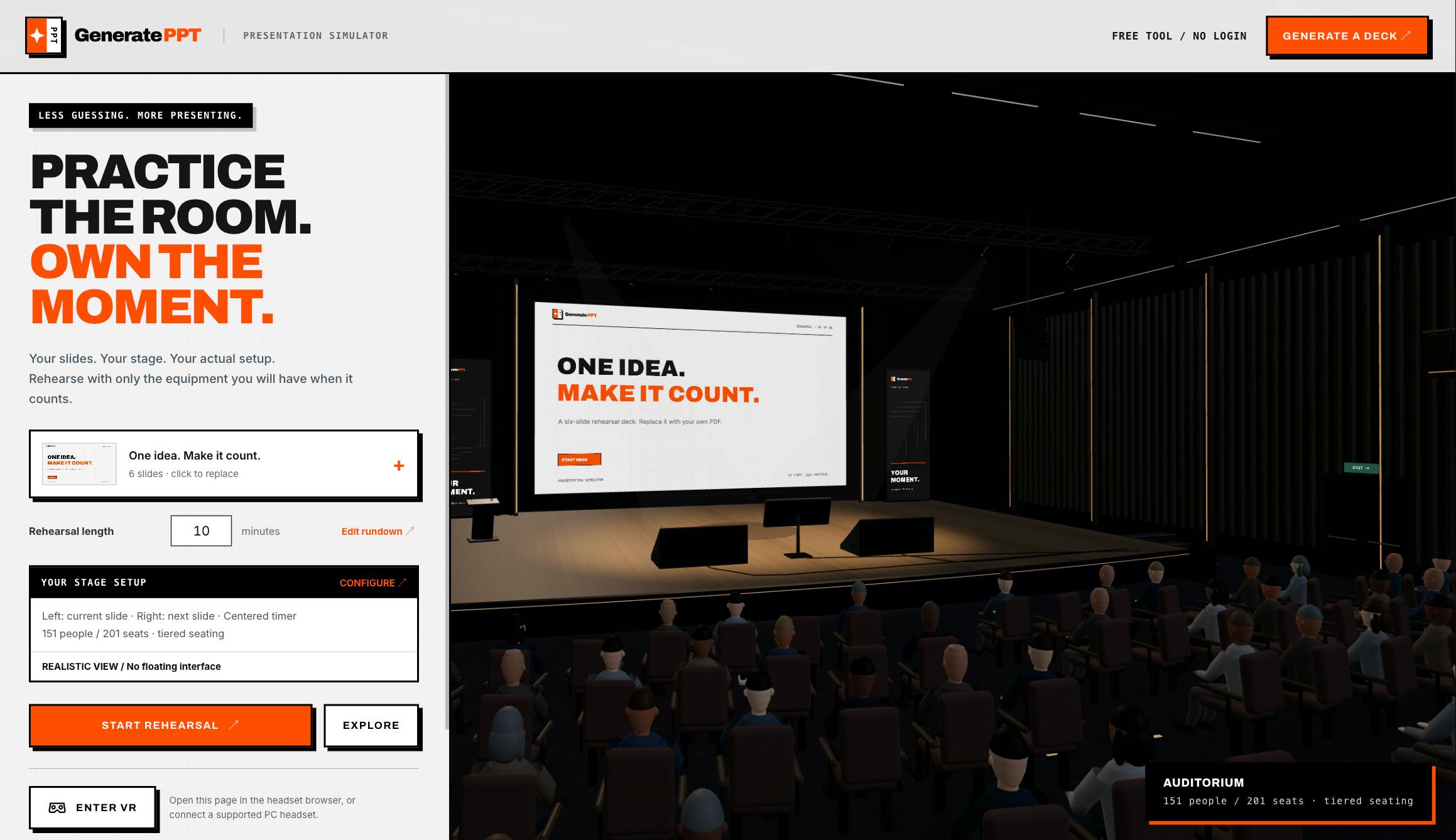
VR Public Speaking Simulator: Practice Your Presentation Skills Right in Your Browser
Public Speaking VR Simulator is a WebXR-based speech practice tool supporting both browsers and VR headsets. Upload slides and rehearse on configurable virtual stages to effectively reduce speaking anxiety.