Akai and Moog Embrace Vibe-Coded Mods: Music Hardware Makers Open Up Their Toolboxes

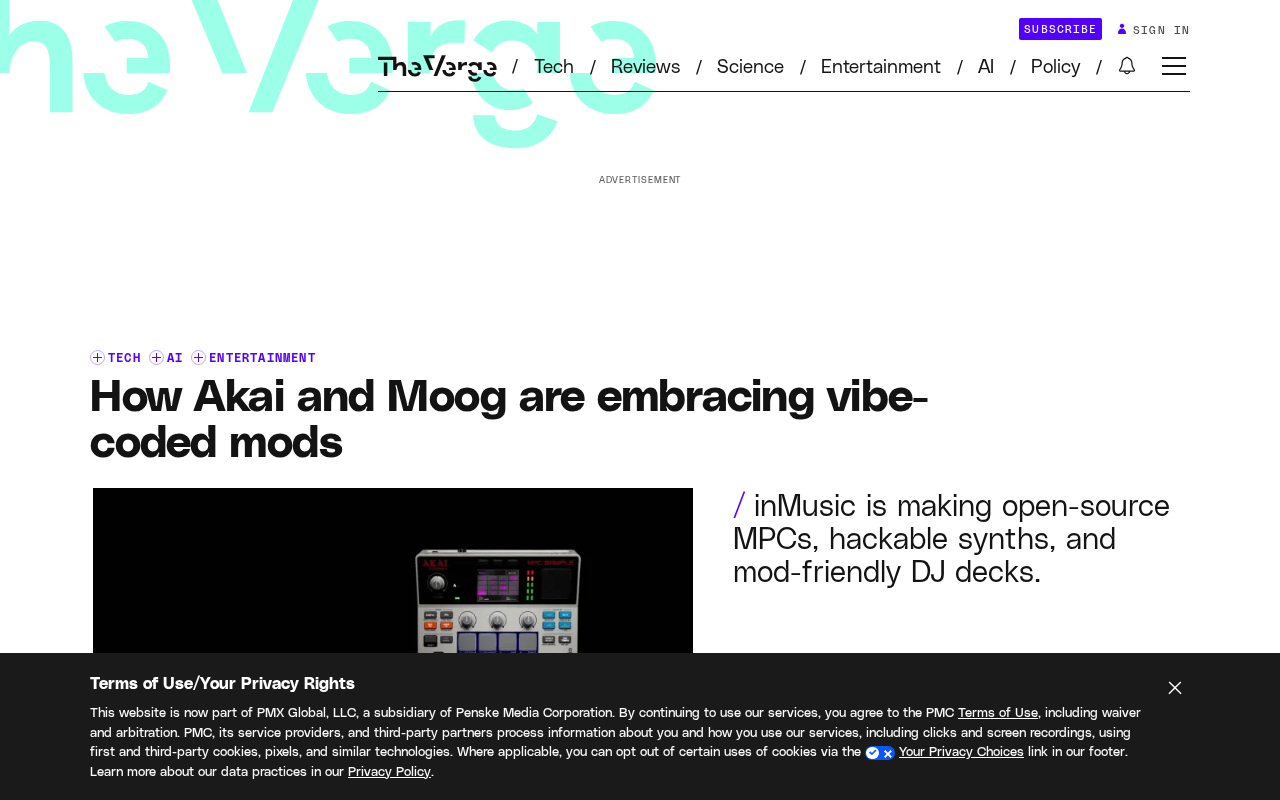
inMusic opens the inner workings of devices like the MPC to the community, formally embracing vibe-coded mods.
inMusic (parent company of Akai, Moog, and Native Instruments) CEO Jack O'Donnell announced that the company will provide the modding community with a toolbox, opening up the inner workings of products like the MPC and Sample and formally embracing community-driven unofficial modifications (vibe-coded mods). The move aims to extend product lifecycles, boost user stickiness, and compete with software and AI tools. The article analyzes the benefits and risks of an open modding ecosystem and notes that it could trigger an industry chain reaction. Specific implementation details are yet to be announced, but the direction is clear: the future of music hardware will be written jointly by manufacturers and the community.
The music hardware world is undergoing a community-driven transformation. inMusic, the parent company of well-known brands such as Akai, Moog, and Native Instruments, recently announced that it will open its doors to the modding community. This move could redefine the relationship between music equipment manufacturers and their users.
According to The Verge, inMusic CEO Jack O'Donnell made it clear in an interview: "We're going to provide the community with a toolbox, offering the inner workings of products like the MPC or Sample, so that people can..." This statement marks traditional hardware manufacturers' formal acceptance of "vibe-coded mods"—unofficial but highly creative modifications driven by community enthusiasm.
From Closed to Open: inMusic's Community Toolbox
inMusic owns several highly influential brands in the music production space, including Akai Professional, Moog, and Native Instruments. For a long time, the firmware and software ecosystems of these hardware devices have been relatively closed, with users limited to officially provided features. But O'Donnell's remarks suggest the company is changing that strategy.
"Providing the inner workings" means inMusic may open up some APIs, development documentation, or firmware interfaces, allowing community developers to create custom features or modifications for devices like the MPC and Sample. This is similar to the modding ecosystem in the gaming industry, but in the hardware space.
Behind this decision is a recognition of community creativity. Vibe-coded mods are typically developed by enthusiasts based on real-world usage needs, and they often solve pain points that the official developers overlooked—or bring unexpected innovations.
What Firmware and Mods Mean in the Hardware Context
Firmware is the low-level software burned into a hardware device's non-volatile memory, responsible for controlling the device's basic operations and hardware interaction logic. In music hardware, firmware determines core behaviors such as audio processing, MIDI response, and interface interaction. Traditionally, firmware is fully controlled and closed-source by the manufacturer, and users can only get feature changes through official updates. A mod refers to unofficial modifications made by users or the community to device software (including firmware, official applications, or companion software) to achieve custom functionality, interface adjustments, or performance optimization. In the hardware world, mods are usually more complex than software mods, involving firmware flashing, reverse engineering, or exploiting undocumented interfaces. That's why a manufacturer's openness—such as providing development documentation or APIs—is crucial to legitimizing and scaling a modding ecosystem.
Why Embrace the Modding Community Now?
Opening up a modding ecosystem is not without risks for hardware manufacturers—security, warranty, and brand consistency are all concerns. But inMusic clearly believes the benefits outweigh the risks.
Community mods can extend a product's lifecycle, increase user stickiness, and even inspire official development. When users can freely modify their devices, they are more likely to stay in that ecosystem long-term. Moreover, an active community is itself a marketing force that can attract more creators.
From an industry perspective, music hardware is facing competition from software and AI tools. Opening up a modding ecosystem can help traditional hardware manufacturers stay relevant and accelerate innovation through co-creation with the community.
The Role of APIs in Hardware Openness
An API is a set of predefined rules and protocols that allow different software components to communicate with each other. In the music hardware context, opening an API means the manufacturer allows external developers to access some of the device's features or data through standardized interfaces—for example, reading sensor states, sending control commands, or retrieving audio streams. For devices like the MPC and Sample, APIs might include MIDI control interfaces, audio processing callbacks, or read/write access to project file formats. Offering an API rather than directly open-sourcing firmware is a common compromise manufacturers make between openness and security: developers can extend functionality without touching the core low-level code, while manufacturers retain control over critical systems and reduce warranty risks. This model has precedents in game modding and smart home, but it is still an emerging practice in music hardware.
Potential Impact on the Music Production Ecosystem
If inMusic successfully implements this plan, it could trigger a chain reaction. Other hardware manufacturers may be forced to follow suit or risk losing users. The modding community, meanwhile, could gain more official support and move from the margins to the mainstream.
For music producers, this means they can customize their devices more deeply and build tools that truly match their personal workflows. For developers, it could open up new creative and career opportunities.
Of course, the specific implementation details have yet to be announced. Key questions—how open the toolbox will be, the legal terms, technical support—will determine the ultimate success of this initiative. But the direction is clear: the future of music hardware may no longer be defined unilaterally by manufacturers, but written together with the community.
(This article is based on The Verge's interview with inMusic CEO Jack O'Donnell.)
One-line Summary
inMusic announces it will open the inner workings of devices like the MPC to the community, formally embracing vibe-coded mods.
Paragraph Summary
inMusic (parent company of Akai, Moog, and Native Instruments) CEO Jack O'Donnell announced that the company will provide the modding community with a toolbox, opening up the inner workings of products like the MPC and Sample and formally embracing community-driven unofficial modifications (vibe-coded mods). The move aims to extend product lifecycles, boost user stickiness, and compete with software and AI tools. The article analyzes the benefits and risks of an open modding ecosystem and notes that it could trigger an industry chain reaction, pushing more hardware manufacturers to follow suit. Specific implementation details—such as the degree of openness, legal terms, and technical support—are yet to be announced, but the direction is clear: the future of music hardware will be written jointly by manufacturers and the community.
Related articles
 Tech Frontiers
Google Omni 1.2 Flash: 15-Second AI Video at Just $0.07 per Second
Google DeepMind releases Gemini Omni 1.2 Flash: 15-second video, 720p at $0.07/sec (30% cheaper), multi-turn editing without regeneration, draft upscaling to 4K.
 Tech Frontiers
No AI Ghostwriting: Writer's Quarter Reinvents Novel Writing with a Visual Workbench
The Writer's Quarter is an AI-free novel writing and planning tool that unifies character building, story planning, and manuscript writing in one visual workbench. This article analyzes its positioning, target users, and differentiated value amid the rise of AI writing tools.
 Tech Frontiers
Fleeep: A Unified Inspiration Collection Notes App for Creatives
Fleeep is a notes app for creatives that unifies screenshots, bookmarks, saved posts, and inspiration into one calm, cross-device, offline-capable space. This article analyzes its positioning, differentiation, and target users.