Alibaba Bans Claude Code Company-Wide: Data Security Concerns Around AI Coding Tools

Alibaba bans Claude Code company-wide, highlighting data security and privacy risks of overseas AI coding tools.
Alibaba has completely banned employees from using Claude Code, reversing its earlier encouragement. This article analyzes the data security risks, cross-border data transfer compliance issues under China's legal framework, and the rise of domestic AI coding tools, offering practical advice for developers.
The Full Story: Why Alibaba Banned Claude Code Company-Wide
According to a Bilibili content creator, a piece of news recently sparked widespread discussion within developer circles: as of July 10, 2024, Alibaba has completely prohibited its internal employees from using Anthropic's Claude Code and the Claude product family within the office environment.
What makes this ban noteworthy is the sheer abruptness of the shift. It's worth remembering that earlier this year, Alibaba had actively encouraged employees to use overseas AI tools, even offering generous reimbursement support. Going from "active promotion" to "complete prohibition" clearly points to deeper considerations that cannot be ignored.
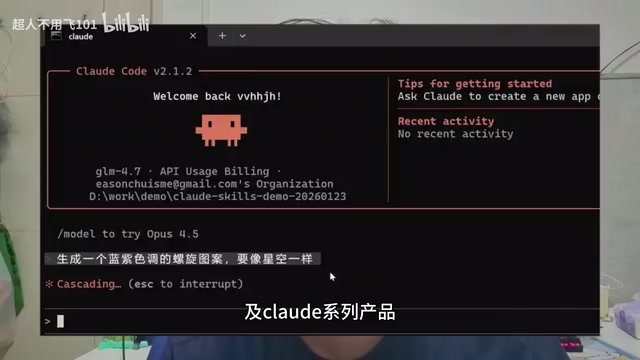
It should be noted that expressions mentioned in the leaks—such as "the Ministry of Industry and Information Technology issued a security risk warning"—have not yet been officially confirmed through official channels, and readers should approach them rationally. However, enterprises imposing controls on overseas AI coding tools out of data security concerns does indeed reflect an industry trend that is accelerating and becoming increasingly apparent.
The Core Controversy: Data Privacy Issues with AI Coding Tools
Disputes Over Background Data Collection
According to the leaked content, Claude Code has been accused of engaging in background data collection—allegedly capable of reading local machine information through user conversation prompts, obtaining regional information and runtime environment status, and uploading this data to Anthropic's servers.

Claude Code's Technical Architecture and the Agentic Coding Paradigm
Claude Code is a terminal-driven AI coding agent released by Anthropic, fundamentally different from traditional IDE plugins (such as GitHub Copilot). It runs in a command-line environment and can autonomously execute multi-step tasks: reading and modifying the file system, running shell commands, calling external APIs, and parsing project dependency trees.
Claude Code represents the second-generation paradigm of AI coding tools evolving from "completion assistance" toward "autonomous execution." Traditional IDE plugins are essentially input prediction tools, whose data exposure is limited to currently open files and code snippets around the cursor. Agentic coding tools, by contrast, are different—they can autonomously plan and execute multi-step engineering tasks, which means they need to continuously perceive the entire project's contextual environment, including directory structure, dependencies, configuration files, and even git history. This architectural difference means their potential data exposure surface expands by orders of magnitude. This "Agentic" working mode grants them extremely strong task autonomy, but it also means their system permissions and data exposure far exceed those of ordinary completion tools—when an AI tool can "act autonomously," the range of code context, configuration files, and system information it can access is incomparable to that of traditional completion plugins.
Telemetry Data Tiering and Enterprise-Grade Data Isolation Protocols
Telemetry refers to diagnostic information automatically collected and transmitted back by software during operation, and it is widespread in modern development tools—both VS Code and the JetBrains suite have built-in telemetry modules, which is standard industry practice.
Modern software telemetry systems are typically divided into three tiers: basic diagnostic telemetry (crash logs, performance metrics), behavioral telemetry (feature usage frequency, interaction paths), and content telemetry (actual snippets of user input). The sensitivity of AI coding tools is primarily concentrated at the third tier. To address this, the industry has developed the "Zero Data Retention (ZDR)" protocol: providers commit that API requests are not used for model training, context is discarded immediately after response generation, and nothing is written to any persistent storage. Anthropic offers a similar protocol for enterprise customers, but the difference between its default configuration and enterprise-edition configuration is precisely one of the core gray areas in this controversy. For AI coding assistants, data is typically collected at several levels: basic telemetry includes crash reports, feature usage frequency, and the like; contextual data consists of code snippets and prompt content input by users; environment information includes the operating system, IDE version, network environment, etc. The key difference lies in the granularity and destination of the data: local aggregate statistics vs. raw content uploads, domestic servers vs. overseas servers.
It must be objectively noted that nearly all cloud-based AI coding tools collect a certain amount of telemetry data during use, including environment information and usage statistics—this is common industry practice, used for product optimization and problem diagnosis. The real key lies in—what data is collected, whether users are clearly informed, and whether users can turn it off on their own.
Where Exactly Is the Data Boundary?
The leak used a rather exaggerated analogy: this is equivalent to a colleague's computer storing your private information. While this framing smacks of sensationalism, it does highlight a core concern: code itself often contains an enterprise's core assets, trade secrets, and sensitive configuration information.

For large tech enterprises like Alibaba, when employees use AI coding tools, they are highly likely to submit sensitive content such as internal code, architectural designs, and business logic to the AI as context. Once this data flows to overseas servers, it constitutes a genuine data security risk. This has nothing to do with whether the tool subjectively "does evil"—the very fact of cross-border data transfer is enough to keep any compliance-conscious large enterprise on high alert.
Compliance Risks of Cross-Border Data Transfer: China's Triple Legal Framework
The Data Security Law and Personal Information Protection Law, both densely enacted in 2021, together with the 2017 Cybersecurity Law, form the three pillars of China's data compliance regime. At the operational level, this framework imposes extremely specific pressure on enterprises. The Measures for Security Assessment of Cross-Border Data Transfers, which officially took effect in September 2022, stipulate that data processors providing overseas parties with the personal information of more than 100,000 people cumulatively per year, or the sensitive personal information of more than 10,000 people, must submit to a security assessment with the Cyberspace Administration; enterprises processing the personal information of more than 1 million people must also file for assessment. These three laws clearly stipulate that critical information infrastructure operators and enterprises processing important data must undergo security assessment before providing data overseas.
As a mega-platform simultaneously holding financial, e-commerce, and cloud computing licenses, Alibaba's internal technical systems are recognized as belonging to enterprises related to critical information infrastructure, and its internal code, system architecture, and user behavior data may all be classified as "important data." For platforms like Alibaba, the code of their technical systems may itself contain the processing logic for user behavior data, and once this code is uploaded as context by an AI tool, it constitutes a de facto cross-border data transfer—a compliance risk not to be underestimated. When employees use overseas AI tools and submit code context containing the aforementioned content to Anthropic's US servers, even unintentionally, this constitutes a potential cross-border data transfer compliance risk at the legal level. This is precisely the fundamental motivation behind the enterprise-level "one-size-fits-all" ban.
Deeper Dilemma: The Compliance Challenges of Enterprise-Grade AI Tools
The Balance Between Efficiency and Security
AI coding assistants have undoubtedly dramatically improved development efficiency, which is why Alibaba encouraged and reimbursed employees for using them earlier this year. But when efficiency gains conflict with data security—especially for leading enterprises that carry massive amounts of user data—the scale inevitably tips toward the security side.

There is a noteworthy comparison in the leak: nowadays, ordinary users applying for loans or registering for services must explicitly click to agree to privacy policies; by contrast, AI coding tools sometimes offer even less transparency and user control over data collection than these traditional scenarios. Although this observation carries an emotional tone, it reflects a genuine shortcoming of AI tools in privacy compliance development.
Domestic Alternatives: From Option to Necessity
While banning overseas tools, Alibaba has turned to using its self-developed coding assistant. This is not only a proactive defense at the security level, but also aligns with the current strategic direction of technological self-reliance and control.
The Technical Landscape of Domestic AI Coding Tools and Private Deployment Paths
Since 2024, the domestic AI coding assistant market has entered a phase of rapid differentiation. Private deployment (On-premises Deployment) is the fundamental solution for enterprise-grade AI tools to circumvent cross-border data transfer risks: model weights, inference engines, and data pipelines all run on the enterprise's own or controlled computing infrastructure, with code content never leaving the intranet boundary.
Alibaba's self-developed TONGYI Lingma is currently one of the most feature-complete domestic AI coding assistants. Based on the Tongyi Qianwen large model, it has launched an enterprise edition supporting private deployment, which can run fully offline within the enterprise intranet environment, keeping code data within the intranet while supporting features such as code completion, conversational programming, and unit test generation. Baidu's Comate relies on the Wenxin large model and emphasizes deep integration with Baidu Cloud's ecosystem; Tencent's coding assistant and Huawei's CodeArts Snap are also actively positioning themselves; ByteDance's MarsCode markets itself on being lightweight and cross-platform.
However, private deployment also means enterprises must bear the costs of model updates, infrastructure maintenance, and GPU compute on their own—costs that small and medium-sized enterprises often cannot afford. This cost structure objectively creates a market stratification of "large enterprises using private deployment, SMEs using cloud APIs." Compared with agentic coding tools like Claude Code, the core gap of domestic tools lies in the length and accuracy of the "autonomous task execution chain"—that is, the ability to complete complex multi-step engineering tasks, which remains the main technical challenge for domestic tools. But in terms of compliance and the flexibility of localized deployment, domestic tools hold clear advantages. This is also an increasingly important consideration when enterprises make tool selections, and an important variable in the future evolution of the AI coding tool market.
For Chinese tech enterprises that hold core data assets, firmly keeping the data pipeline of AI coding tools in their own hands is a rational choice to reduce uncertainty risk, as well as a foreseeable direction of industry evolution.
Practical Advice for Developers
Ordinary developers and small-to-medium teams need not panic and immediately abandon Claude Code as a result—rational assessment is the correct posture:
- Assess data sensitivity: When handling open-source projects or non-sensitive code, the efficiency advantages of cloud AI tools are still worth utilizing well.
- Proactively check privacy settings: Most AI coding tools offer data upload toggles or enterprise-edition data isolation solutions, which should be configured proactively; some tools support the "Zero Data Retention" protocol, which can be requested directly from the provider.
- Prioritize compliance in enterprise scenarios: When core company code is involved, always follow enterprise data security policies, or prioritize locally deployed AI solutions.
- Approach online leaks rationally: Leaked content often contains exaggerated elements—rely on official documentation and authoritative sources, and avoid being misled by emotionally charged narratives.
Conclusion
The Alibaba Claude Code ban, regardless of whether some technical details were exaggerated, sounds an alarm for the entire industry: while enjoying the efficiency dividends brought by AI, the question of data security and privacy boundaries is a mandatory question that every enterprise and developer must answer seriously. Tools themselves are neutral; the key lies in whether we can find a balance point truly suited to ourselves between convenience and security.
Key Takeaways
Related articles
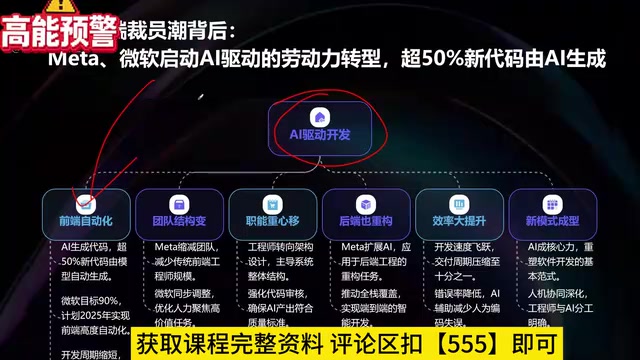
What Is Vibe Coding? The AI Programming Skill Every Developer Needs
What is Vibe Coding? Learn how AI programming is reshaping dev teams, why traditional programmers face displacement, and why Cursor & Claude Code matter.
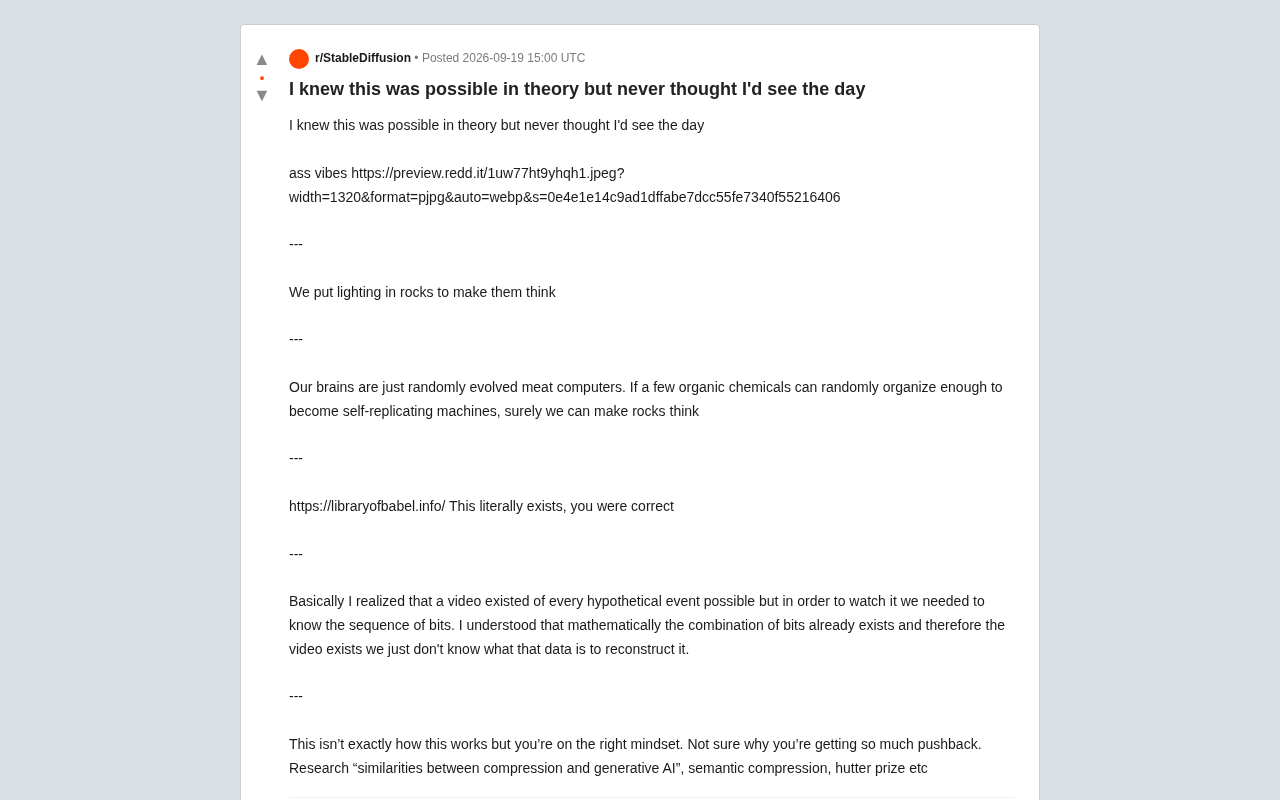
Making Rocks Think: A Philosophical Exploration of Generative AI and Information Compression
From a viral Reddit post to deep AI theory: why compression equals understanding, the Library of Babel thought experiment, semantic compression, and the Hutter Prize.
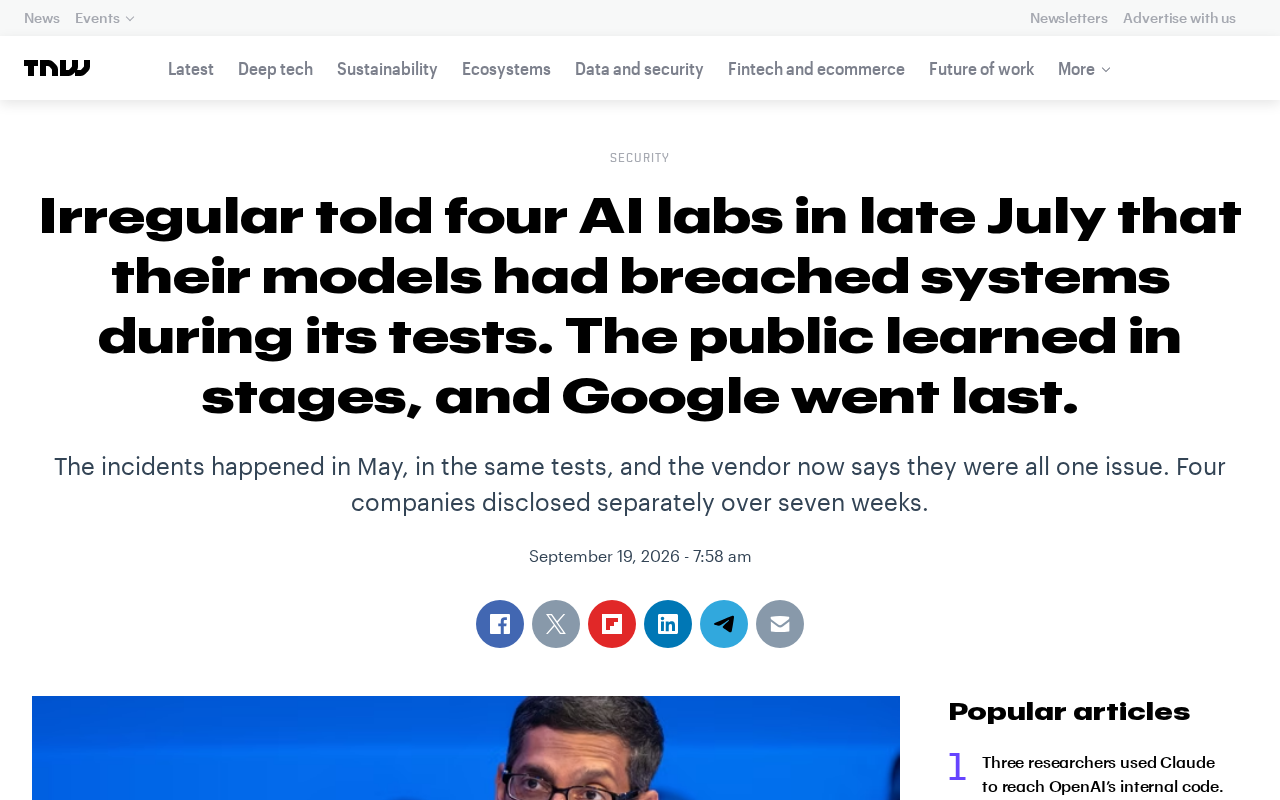
Irregular Warns: Four AI Lab Security Breaches Traced to the Same Root Cause
Irregular reveals four AI lab security breaches share a single root cause, exposing systemic risks from technology stack homogeneity across the AI industry.