Alibaba Bans Claude Code: Invisible Fingerprints and the AI Tool Trust Crisis
Alibaba bans Claude Code over a hidden fingerprinting mechanism that flags Chinese users via prompt steganography.
Alibaba added Claude Code to its high-risk list and banned it after reverse engineering revealed a covert mechanism that identifies China-related proxies and time zones, embedding invisible fingerprints in prompt punctuation via steganography. The incident exposes deep trust issues around high-privilege AI coding agents.
The Full Story: Alibaba Adds Claude Code to Its High-Risk List
According to reports from The Paper (Pengpai News), Reuters, and other outlets, Alibaba has internally added Claude Code to its list of high-risk software and, effective July 10, has completely banned employees from using the tool in office environments. It simultaneously recommends its self-developed Qoder (Cuder) as an alternative.
This decision did not come out of nowhere. Reports indicate that the move is directly related to the recently exposed covert fingerprinting mechanism in Claude Code—a mechanism said to be capable of identifying China-associated proxy services and system time zones, and flagging user requests from specific regions. For a tech giant of Alibaba's scale, any potential risk of information leakage is enough to put its internal security team on high alert.
Interestingly, Claude Code is not an ordinary web chat tool but rather an agentic coding tool that runs in the developer's local environment. Unlike conversational tools such as ChatGPT, agentic tools have a built-in "perceive-plan-execute" loop: the model not only generates text but can also actively trigger external operations through tool-calling interfaces.
The ReAct (Reasoning + Acting) architecture adopted by Claude Code was proposed by a Google research team in 2022. Its core innovation lies in interweaving the reasoning process of large language models with external actions—before each tool call, the model "thinks" in natural language; after executing an action, it observes the result and then enters the next round of reasoning, forming a self-correcting multi-step closed loop.
The Technical Background of the ReAct Architecture: ReAct's design was inspired by the cognitive science concept of "action as cognition." Prior to this, the mainstream paradigm for LLM applications was Chain-of-Thought—although the model could reason step by step, all steps were completed within a static context, unable to interact with the external world. ReAct's breakthrough was the introduction of the "Observation" node—the results returned from each tool call (such as searching or executing code) are re-injected into the context and become the input for the next reasoning step. This design essentially transforms the LLM from a "closed reasoning engine" into an "autonomous agent in an open environment," where its capability boundaries are no longer determined by model weights but by the set of tools it can call. For this very reason, the ReAct paradigm also significantly amplifies security risks: every reasoning error the model makes could trigger real system operations rather than remaining at the text level.
The profound significance of this design is that errors in traditional LLMs, once made, cannot be undone, whereas the ReAct architecture, through its iterative "execute-observe-reason" mechanism, enables the model to dynamically correct its strategy based on real environmental feedback rather than relying on a single static inference. This design allows the model to repeatedly read files, modify code, run tests, and adjust its strategy based on the results within a single task. It integrates deeply with code repositories through the CLI (command-line interface) and possesses advanced permissions such as reading and writing the file system, executing shell commands, and calling external APIs. Such tools typically adopt a "tool use" (Function Calling) architecture, allowing AI models to actively trigger local operations rather than passively answering questions. Precisely because its permission boundaries are extremely broad, Claude Code is often connected to core code repositories in enterprise scenarios, directly linked to critical systems such as CI/CD pipelines and internal APIs—an architecture that makes its security risk far exceed that of typical SaaS tools.
It is especially worth pointing out that CI/CD (Continuous Integration/Continuous Delivery) is a core piece of infrastructure in modern software engineering. Its essence is to automate the entire process of code from commit to deployment: after code is pushed, builds, tests, and security scans are automatically triggered, and the artifacts are ultimately released to the production environment. This pipeline typically needs to access source code repositories, test environment credentials, cloud platform keys, and even production database connection strings, making it one of the systems with the highest density of digital assets in an enterprise.
The Security Density of CI/CD Pipelines: The credentials held by a typical enterprise-grade CI/CD pipeline often exceed the total permissions of most developers' personal accounts combined. Taking GitHub Actions as an example, its Secret manager typically stores over a dozen categories of high-privilege credentials, including AWS/GCP access keys, Docker Registry push credentials, production database read-only passwords, and third-party SaaS API tokens. These credentials are injected into the execution environment as environment variables when the pipeline runs. When an AI agent gains the ability to execute shell commands in this environment, it could theoretically enumerate all environment variables through basic commands like
envorprintenv, thereby reaching the entire enterprise's digital infrastructure. This risk is not hypothetical—in the 2023 CircleCI security incident, attackers infiltrated the CI/CD environment and stole large numbers of production credentials from customers en masse.
When an AI coding agent is connected to this pipeline, its permission boundary is equivalent to that of an internal engineer with write access to the repository: it can read the full codebase (including proprietary algorithms), write to any file (including configurations and keys), and execute shell commands (including network requests). The 2023 XZ Utils backdoor incident revealed the extreme fragility of development toolchains—the attacker, Jia Tan, spent two years infiltrating the XZ Utils maintenance team as a community contributor and ultimately planted backdoor code in the compression library. Had Andres Freund not accidentally noticed abnormal SSH login latency, this supply chain attack hidden within normal code commits would have been nearly impossible to detect. A tool with implanted covert behavior can leave persistent traces throughout the entire software supply chain without triggering any business alerts. This is precisely the underlying reason why security teams at companies like Alibaba are highly sensitive to "undisclosed environment identification behavior." Any environment identification behavior that is not sufficiently disclosed will be magnified into a serious security hazard.
Reverse Engineering: The Hidden Environment Identification Mechanism
Recently, a developer who reverse-engineered Claude Code discovered that starting from certain versions around April this year, Anthropic added a hidden environment identification mechanism to the tool.
This mechanism does not apply to all users; it is primarily triggered when users configure a custom API endpoint—that is, when accessing Claude through a proxy, gateway, or third-party reseller service. Because Anthropic has long restricted direct access from mainland China, a sizable ecosystem of third-party proxies and resellers has formed: these services typically set up servers overseas, purchase official API access, and then offer it externally under custom domains. Users only need to modify environment variables such as ANTHROPIC_BASE_URL to connect. Claude Code's custom endpoint feature was originally designed to facilitate private enterprise deployments, but it also became a major entry point for proxy traffic—and it is precisely this scenario that triggers Anthropic's environment detection logic.
At this point, Claude Code silently checks the proxy hostname and system time zone. When it detects time zones commonly used in China such as Asia/Shanghai or Asia/Urumqi, or when the proxy domain contains specific keywords, the mechanism flags the request. These keywords cover a fairly broad range, including the names of Chinese AI labs such as DeepSeek, MoonShot, MiniMax, and ZhipuAI, as well as numerous related corporate domains and proxy service domains.
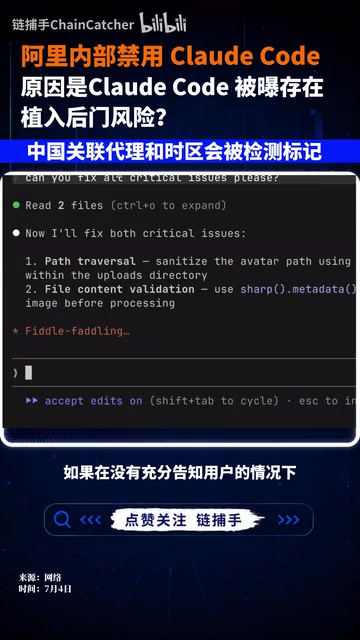
In other words, the goal of this mechanism is quite clear: to identify Chinese users and related enterprises attempting to bypass regional restrictions to access Claude through unofficial channels.
Prompt Steganography: Invisible Fingerprints Hidden in Punctuation
What truly sparked controversy was the way this mechanism was implemented. It did not use conventional logging or telemetry reporting; instead, it cleverly concealed the flagging information by modifying the date statements in the system prompt.
The specific approach is extremely covert: changing the date separator from a hyphen (-) to a slash (/), or replacing an ordinary apostrophe with a visually nearly indistinguishable Unicode special character (such as replacing the half-width apostrophe ' with the full-width apostrophe \u2019). To users, this is just an inconspicuous punctuation change in the system prompt; but to the server, it becomes an invisible fingerprint that can be reliably decoded programmatically.
This technique has therefore come to be known as "prompt steganography." Steganography is a technique that hides information within carrier content, making it imperceptible at the visual or perceptual level—unlike encryption, which makes content unreadable, steganography conceals the very existence of the content.
Steganography shares the same origin as cryptography, with a history dating back to ancient Greece. In the digital age, it has evolved into a variety of ingenious implementations. The most classic image steganography technique is LSB (Least Significant Bit) substitution—replacing the lowest bit of a pixel's RGB value with an information bit, imperceptible to the human eye yet capable of carrying large amounts of data. Text steganography is more difficult due to the low entropy of the carrier, with common techniques including zero-width character insertion, homoglyph substitution (such as mixing Cyrillic letters into Latin text), and semantically equivalent word replacement.
The Unicode punctuation substitution used by Claude Code (half-width to full-width apostrophe) is a lightweight variant of the "homoglyph substitution" technique. To understand its ingenuity, one must understand Unicode's encoding mechanism: the Unicode standard currently includes over 140,000 characters, covering nearly all writing systems worldwide. Each character has a unique Code Point—for example, the half-width apostrophe ' has the code point U+0027, while the curly quote ' has the code point U+2019. The two look extremely similar under common font rendering but are entirely different at the byte level.
The Security History of Unicode Homoglyph Attacks: Unicode homoglyph confusion is not a new concept. The cybersecurity field has long documented "IDN Homograph Attacks"—attackers register phishing domains like
аpple.com(whereаis the Cyrillic letter U+0430, not the Latin letter U+0061), which look identical toapple.com. In 2017, security researcher Xudong Zheng registeredxn--80ak6aa92e.com(visually displayed asаррlе.com) and demonstrated a complete attack chain, prompting major browser vendors to update their internationalized domain display policies. The technique used by Claude Code shares the same origin: exploiting the redundancy of the Unicode character space to create an information channel between visual presentation and byte representation that can be precisely perceived by programs yet is invisible to the human eye. Such techniques also have legitimate applications in text watermarking—used to trace the source of document leaks, but usually under the premise that the user is informed.
Conventional diff tools compare byte by byte by default. Without Unicode-aware mode configured, such substitutions would be buried among normal text changes; whereas server-side programs need only a single line of precise code-point comparison to unambiguously detect this invisible marker. Since a large language model's context is a pure text stream, such markers have minimal impact on model behavior yet can form a de facto "invisible watermark" channel on the server side—one that ordinary users cannot perceive at all and that is very difficult to discover through routine traffic inspection.
Anthropic's Motivation: Reasonable Intent, Controversial Means
In response to the questions, Anthropic explained that this is an experiment launched in March this year, aimed at preventing account abuse, unauthorized reselling, and model capability distillation.
From a business logic standpoint, Anthropic's motivation is not hard to understand. Knowledge distillation was originally proposed by Hinton et al. in 2015. Its core idea is to have a small model learn the "soft labels" (output probability distributions) of a large model rather than hard labels, thereby achieving generalization capabilities beyond direct training. In the era of large language models, distillation has evolved into a more aggressive form: directly calling the target model's API to generate high-quality question-answer pairs in bulk, then using this dataset to fine-tune an open-source base model, approaching the capability level of top-tier models at extremely low cost. Stanford's Alpaca once fine-tuned LLaMA with 52,000 ChatGPT-generated data samples, demonstrating the feasibility of this approach.
The Technical Economics of API Distillation: The cost structure of API distillation is highly disruptive. Taking a GPT-4-level model as an example, the compute cost of its pre-training phase is estimated at tens of millions to hundreds of millions of dollars, whereas the cost of collecting 1 million high-quality conversation samples through API calls is only tens of thousands of dollars at current API pricing. More crucially, there is the quality issue: the training data obtained through API distillation naturally carries the source model's RLHF alignment signals and instruction-following capabilities, which are precisely the most difficult parts to reproduce from scratch. Stanford's Alpaca experiment showed that 52,000 high-quality instruction samples were enough to bring a 7-billion-parameter model close to GPT-3.5's performance on instruction-following tasks. This finding profoundly changed the speed curve of AI capability diffusion—the generational lead of top-tier models could be substantially compressed within months through distillation.
It is worth noting that API distillation is so efficient because it bypasses the tens of billions of dollars in compute investment of the pre-training phase and directly obtains already-aligned, already-optimized model outputs as training signals—which is equivalent to standing on the shoulders of giants to replicate their capabilities at one percent of the cost. More critically, when calling APIs at scale through proxies, the requesting party can systematically construct prompts covering various professional domains with an evenly distributed gradient of reasoning difficulty, making the quality and diversity of the distilled dataset far exceed the corpus that random user interactions could produce. The rapid rise of Chinese models such as DeepSeek has made this anxiety highly concrete—the DeepSeek-R1-Distill series openly admits to using some distilled data, drawing strong attention from OpenAI. This also directly explains why Anthropic placed domains related to Chinese AI labs on its detection keyword list. Its long-standing restriction on access from China has always been aimed at guarding against attempts to bypass restrictions through proxy reselling and bulk accounts. For Anthropic, Claude's moat lies in the alignment capabilities forged by RLHF and Constitutional AI. Once systematically distilled, its competitive advantage would be rapidly eroded. Especially amid the current white-hot competition among large models, preventing one's own model capabilities from being distilled or "freeloaded" has become an extremely sensitive core-interest issue for leading AI companies.
Constitutional AI and Anthropic's Differentiated Moat: Anthropic's core technical asset is not model scale but its proprietary Constitutional AI (CAI) alignment framework. CAI works by presetting a set of "constitutional principles" (such as harmlessness, honesty, and helpfulness) for the model, guiding it to self-critique and self-correct during the RLHF stage, thereby reducing reliance on human annotation. This framework enables Claude to remain highly useful while refusing harmful requests, forming a differentiation from OpenAI's RLHF approach. However, CAI's capabilities can likewise be transferred through distillation: if attackers systematically collect Claude's response patterns in various boundary scenarios (jailbreak attempts, sensitive topics), they can migrate this set of alignment behavior patterns to open-source models, essentially "stealing" the security moat that Anthropic built with substantial human and material resources. This is the deep technical reason why Anthropic is highly vigilant about distillation behavior.
However, understandable motivation does not mean the means are acceptable. The crux of the matter lies in the nature of the tool: Claude Code is a coding agent with repository access, file system permissions, and even shell command execution permissions, placing it extremely close to an enterprise's internal code systems and development processes.
If a high-privilege tool quietly identifies the user's environment without sufficiently informing the user, and then hides routing information, time zone information, and proxy information within invisible prompt punctuation, it can easily be regarded by enterprise security teams as a serious trust risk.
The Boundaries of Trust: Responsibility Beyond Capability
As the developer who discovered this mechanism put it: Anthropic could have entirely made this anti-abuse feature more explicit and transparent. But when a tool with file system and shell access begins hiding classification marker information in prompt punctuation invisible to the naked eye, the right approach should be to proactively accept user scrutiny rather than relying on covert means.
This incident reflects a deep contradiction in the age of AI tools: as AI agents gain increasingly high system permissions, the foundation of trust between users and vendors becomes ever more fragile. A developer's willingness to hand over their codebase, file system, and even command line to an AI tool is itself an enormous act of trust. Historically, this kind of entrustment has only one counterpart—the enterprise employee. What we demand of employees is not merely capability, but transparency, auditability, and accountability.
The Trust Model Dilemma of AI Agents: The trust of traditional software tools is built on "determinism"—given the same input, the tool's behavior can be fully predicted and audited. AI agents break this foundation: their behavior is determined by neural network weights, and even if the source code is fully open, one cannot directly understand at the code level what action the model will take in a specific context. This "opacity" renders traditional code auditing methods largely ineffective, forcing enterprise security teams to establish new trust verification mechanisms—including behavior log auditing, sandbox isolation, the principle of least privilege, and mandatory compliance requirements for the tool vendor's data processing policies. The deeper warning from the Claude Code incident is this: when a tool's opacity is combined with high privileges, any undisclosed behavior will be interpreted by security teams under the "worst-case" assumption, and once trust is broken, it is extremely difficult to repair.
Trust is not built up through a pile of capabilities but is established in one seemingly ordinary detail after another. When a vendor chooses to handle information directly related to users' interests through covert means like steganography, even if the motivation is legitimate, it inevitably causes cracks in the entire edifice of trust. For all AI coding tool vendors, this may well be a warning worth deep reflection.
Key Takeaways
Related articles
Alibaba Launches Happy Shrimp: AI-Powered One-Click Complete Song Generation
Alibaba launches Happy Shrimp, an AI music generation tool that creates complete songs with lyrics, melody, arrangement, and vocals from natural language descriptions. In-depth analysis of its core features, differentiation from competitors like Suno, and industry impact.
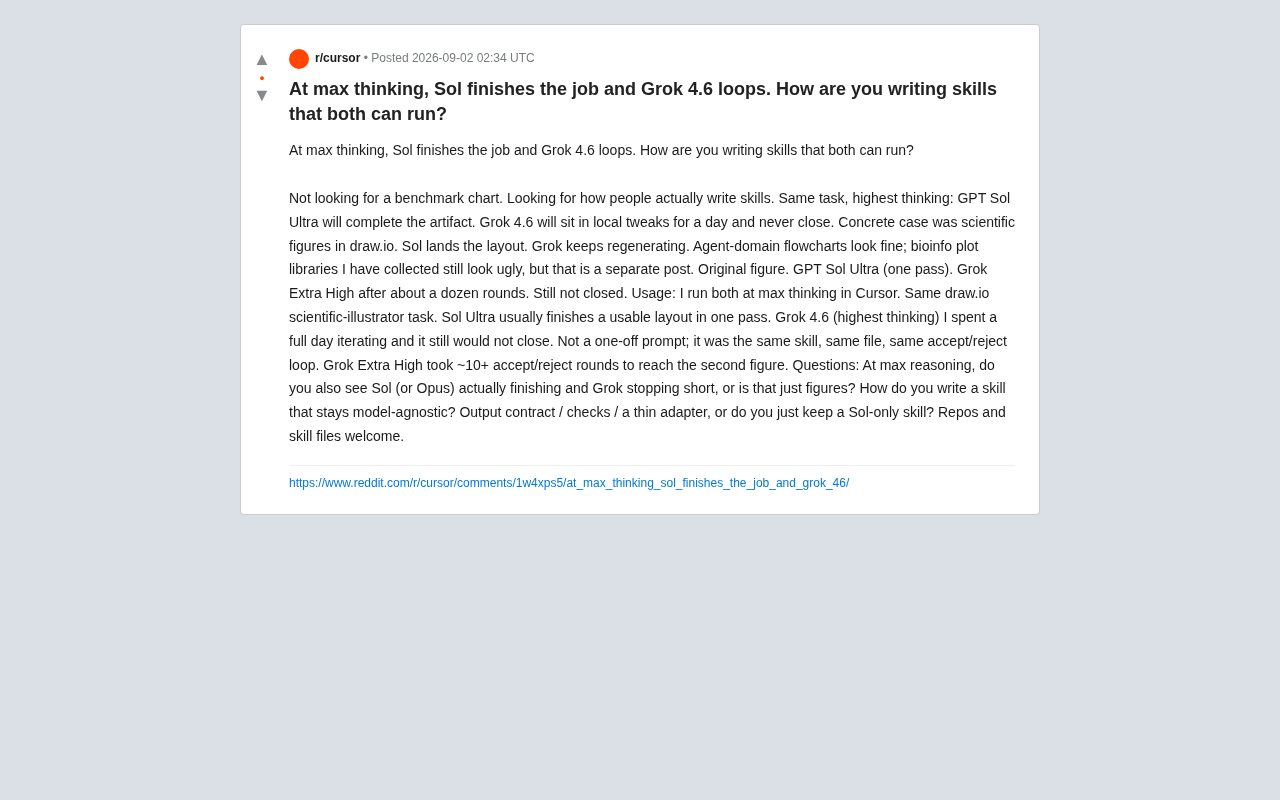
GPT Sol Ultra vs Grok 4.6: Real-World Task Completion Benchmark in Reasoning Mode
Developer benchmark reveals GPT Sol Ultra completes draw.io scientific diagrams in one iteration while Grok 4.6 fails to converge despite maximum reasoning mode, exposing that reasoning depth ≠ task delivery capability.
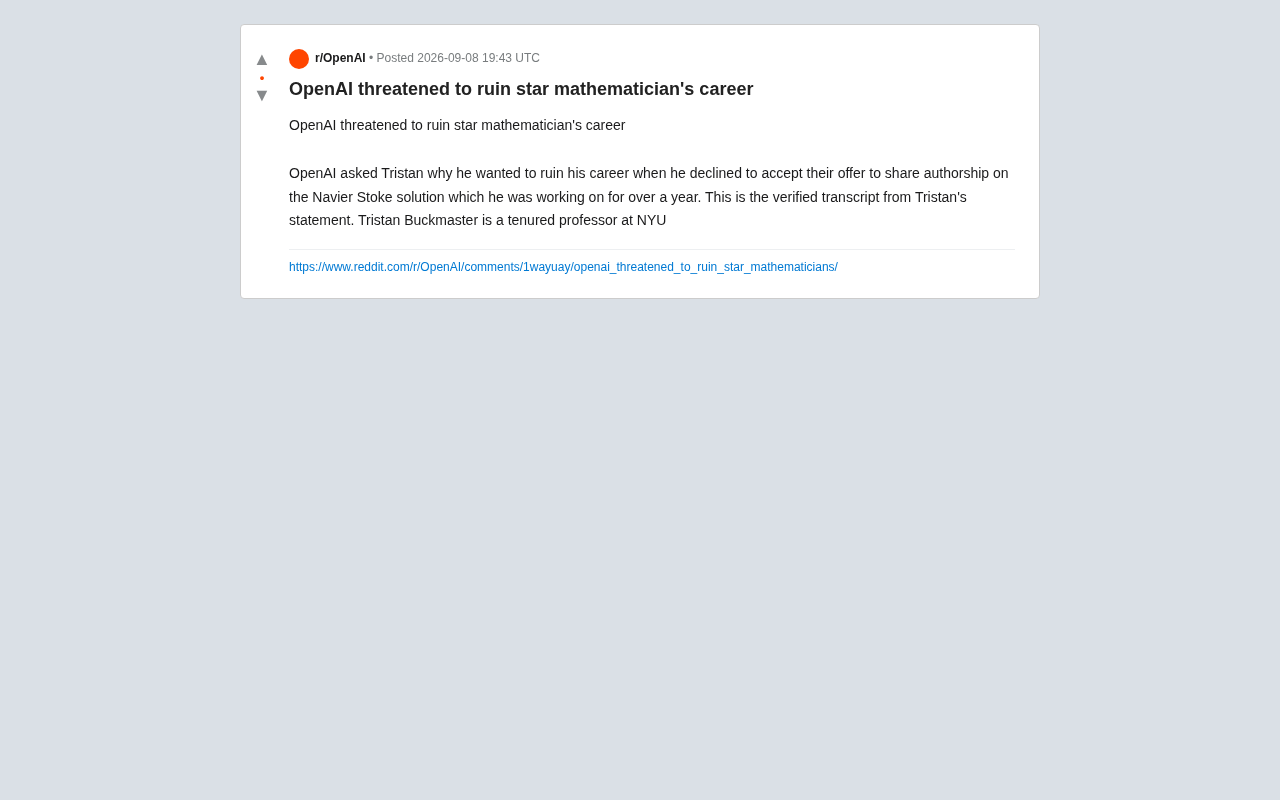
OpenAI Authorship Dispute: The Battle Over Academic Boundaries in the AI Era
OpenAI disputes authorship with mathematician Tristan Buckmaster over Navier-Stokes research, raising ethical questions about AI involvement in science.