Alibaba Open-Sources 2.4T Qwen Model as Chinese AI Sweeps the Global Competitive Landscape

Alibaba open-sources a 2.4T Qwen model as Chinese AI rises to reshape the global competitive landscape.
Alibaba open-sourced a 2.4 trillion parameter MoE Qwen model and launched the cross-tool Qwen Token Plan subscription. Chinese open-source models are surging—Kimi K3 tops global rankings, the semiconductor index falls into a bear market, and domestic chip ecosystems break through across the full chain, from CoWoS packaging to compute clusters.
Alibaba's Big Reveal: A 2.4 Trillion Parameter Model and Token Plan Subscription
Alibaba has been making frequent moves in the AI space recently. According to Bilibili's AI Daily program, Alibaba has open-sourced a new generation of the Qwen large model with a total parameter count reaching 2.4 trillion (2.4T), and officials have made clear that the model is still in a "preview phase of continuous evolution." The latest version shows significant improvements in web front-end development capabilities, and the industry widely believes its performance may approach or even surpass leading closed-source models, posing a substantial challenge to the existing top-tier model landscape.
What's noteworthy is that 2.4 trillion parameters means this is a massive-scale sparse Mixture-of-Experts (MoE) architecture model. The core idea behind MoE (Mixture of Experts) can be traced back to the early mixture-of-experts framework proposed by Jacobs et al. in 1991, but it wasn't until Google's Switch Transformer in 2021 that it truly entered the era of large-scale language models. Modern MoE is a key architectural paradigm for achieving ultra-large-scale models through conditional computation: the "experts" are essentially independent feed-forward network (FFN) modules, while the router is typically a lightweight linear layer that outputs a probability distribution over experts and then activates the Top-K. Unlike traditional dense models that activate all parameters during each inference, MoE models process each token by having a "router" dynamically select just a few "expert" sub-networks to participate in computation, while the remaining experts stay dormant. This means that for a model with 2.4 trillion total parameters, the actual number of activated parameters in a single inference pass might only be in the tens of billions, thereby keeping computational costs within an acceptable range while maintaining extremely high model capacity. This architecture is widely adopted in models such as Google's Switch Transformer, Mixtral, and GPT-4 (as speculated).
However, engineering an MoE architecture is far more complex than a dense model. One of the core challenges is load balancing: if the router consistently favors a few experts, it leads to uneven allocation of computational resources and triggers the "expert collapse" problem—researchers typically introduce an auxiliary loss function to force the router to distribute tokens evenly to mitigate this. Teams like DeepSeekAd have also explored "auxiliary-loss-free balancing" strategies, achieving load balancing by dynamically adjusting expert bias terms and avoiding the interference of auxiliary loss on the main task's gradients. Another challenge is communication overhead: in distributed training and inference, different experts may be distributed across different GPU nodes, and token routing generates substantial cross-device communication, placing extremely high demands on network bandwidth—which is why ultra-large-scale MoE models typically require dedicated high-speed interconnect networks (such as InfiniBand or NVLink Switch) to achieve full performance. For the open-source ecosystem, Alibaba open-sourcing ultra-large-scale MoE weights means researchers can directly observe and study these engineering trade-offs, something impossible in the closed-source era—it means not only openness of capability, but also opening up the opportunity for academia and industry to validate ultra-large-scale sparse computation approaches. However, it should be noted that the specific version number mentioned in the program contains transcription errors from the audio; readers should refer to Alibaba's official announcements as authoritative.
Launched alongside the model is the Qwen Token PlanAd subscription service. The positioning of this service is quite strategic—it positions Alibaba as an "underlying model supplier," allowing users to run multiple frontier models across mainstream AI coding tools such as Claude Code, Codex, Cursor, Open Code, and Qwen Code with a single subscription.
Solving Developers' Multi-Platform Subscription Pain Points
AI coding tools are currently flourishing, but developers often face an awkward problem: to use high-quality models across different tools, they need to subscribe and pay repeatedly across multiple platforms. Qwen Token Plan targets exactly this pain point, using a unified cross-tool Token invocation mechanism to let developers "subscribe once, use everywhere."
There is a profound commercial logic and historical precedent behind this "water seller" strategy. During the 19th-century American Gold Rush, those who consistently profited were often not the gold miners, but the suppliers who sold shovels and jeans to everyone—a metaphor known as the "Picks and Shovels Strategy." In the AI coding tool space, while application-layer tools like Claude Code and Cursor fiercely compete for developer mindshare, Alibaba is choosing to move down to the model supply layer, horizontally connecting multiple tool ecosystems through a unified Token billing interface. This mirrors Amazon AWS's strategy in the early days of cloud computing—not competing with applications, but becoming the infrastructure on which all applications rely. From a technical implementation perspective, such API aggregation layers are typically built on OpenAI-compatible API specifications, allowing existing tools to integrate by simply modifying the endpoint address, greatly reducing migration friction. For developers, the API aggregation layer also means the underlying model can be dynamically switched, always invoking the most cost-effective model for a given task. In essence, this is about seizing a key position at the supply layer amid the fierce competition among AI coding tools.
Domestic Model Shockwave: Semiconductor Index Falls Into Bear Market
The strong rise of Chinese open-source models is triggering a chain reaction in capital markets. According to data cited in the program, the Philadelphia Semiconductor Index has fallen more than 20% from its June high, officially entering a technical bear market; the Taiwan Weighted Index also dropped sharply on the same day, with market concerns about the impact of Chinese open-source models clearly rising.

The Philadelphia Semiconductor Index (code SOX) tracks 30 core global semiconductor companies, including NVIDIA, AMD, TSMC, and Broadcom, and is regarded as a leading indicator of global tech stock sentiment. Since its launch in 1993, it has long served as a leading indicator of tech cycles, because semiconductor demand often changes ahead of end-consumer electronics and enterprise IT spending. The index's weighting is highly concentrated in AI-related beneficiary stocks—NVIDIA at one point accounted for over 20% of the index weight, making it extremely sensitive to marginal changes in the AI narrative. Its fall into a technical bear market reflects the market's repricing of the "AI compute demand narrative": the prior pricing logic was "stronger AI capabilities → more high-end GPUs needed → continuous benefit for chip stocks like NVIDIA."
It's worth noting there is an inherent tension here known in economics as the "Jevons Paradox": technological efficiency improvements should reduce resource consumption, but historically, efficiency gains have often instead stimulated a sharp increase in total demand—after 19th-century steam engine efficiency improved, total coal consumption rose rather than fell. In the AI field, there is already precedent for this paradox: the plummeting inference costs triggered by ChatGPT in 2023 did not reduce GPU demand, but instead spawned more new applications and longer-context usage patterns, driving a new round of compute arms races. Through algorithmic innovation and architectural optimizations like MoE, Chinese open-source models achieve comparable capabilities with less compute, shaking global expectations of a "rigid demand premium" for NVIDIA's H100/B200-level chips. The key divergence the market is currently weighing is whether the new application scenarios activated by falling inference costs will be enough to offset the decline in per-unit demand. The simultaneous drop in the Taiwan Weighted Index further reflects market concerns about slowing growth in demand for TSMC's advanced process packaging.
Meanwhile, after Moonshot AI released Kimi K3 on July 16, demand approached its compute capacity ceiling within just 48 hours of launch, forcing the company to suspend new user subscriptions to protect the existing user experience—this indirectly confirms the strong market demand for domestic models and provides real-world evidence for the applicability of the Jevons Paradox in the AI field.
DeepSeek V4 and Harness Products Highly Anticipated
According to group chat screenshots leaked by netizens, the DeepSeek team plans to release its first Harness product alongside the official V4 release. Harness is a code agent product, internally benchmarked against Claude Code, responsible for enabling the model to read and write files, call tools, and execute commands.
In the AI coding domain, "Harness" refers to the execution environment that wraps around the large language model core—it grants the model the ability to interact with a real computing environment, including reading and writing the file system, calling external APIs, executing shell commands, and running test cases. This differs from mere code completion; it is a true "Autonomous Coding Agent." From a system architecture perspective, Harness-type products typically consist of three core modules: a context engine (responsible for providing the model with a global view of the codebase), a tool invocation layer (responsible for securely sandboxing the execution of external operations), and a Plan-Act-Verify Loop (handling the orchestration logic for complex multi-step tasks). Claude Code is currently the benchmark product in this direction, with a core design philosophy of giving the model complete contextual awareness of the codebase and completing complex engineering tasks through a multi-step plan-act-verify loop. If DeepSeek launches a competing product, it is essentially vying for market share in integrated "model + execution environment" products, where the core competitiveness lies not just in the model itself, but also in the reliability of tool invocation, sandbox security mechanisms, and the coherence of long-context engineering tasks.
However, it should be noted that this information comes from netizen-leaked screenshots—a single unofficial source—and its authenticity remains to be officially confirmed. As of the program's airing (July 20), the official V4 release, originally slated for mid-July, had not yet been officially launched.
At WAIC: From Scientific Large Models to Brain-Computer Interfaces
The World Artificial Intelligence Conference (WAIC) was full of highlights. The Zhongke Wenge Pangu team released SE-Omni, dubbed the world's first multimodal unified reasoning model for scientific understanding, prediction, and generation (the Science One integrated research platform). Real-world tests show its performance significantly outperforms mainstream general-purpose large models across multiple scientific research tasks. The core challenge of scientific large models lies in the fusion of heterogeneous data across modalities and scales—jointly modeling molecular structures, gene sequences, physical simulation data, and natural language demands structured reasoning capabilities far beyond general tasks. The release of SE-Omni marks a milestone breakthrough for China in this direction.
Even more striking was the demonstration of consumer-grade brain-computer interface technology. Players only need to focus intently on a flickering target, and their brain synchronizes to its frequency—an EEG headband device then converts the signal into a game command, allowing players to control a computer with their thoughts, no implantation required. Behind this is a brain-electrical phenomenon called Steady-State Visual Evoked Potential (SSVEP): when a person's eyes gaze at a visual stimulus flickering at a specific frequency (such as 8Hz or 12Hz), the brain's visual cortex generates periodic electrical signals highly correlated with that frequency, which can be reliably captured by EEG electrodes on the scalp surface. By assigning different flicker frequencies to different targets, the system analyzes the EEG spectrum in real time via Fast Fourier Transform (FFT) or Canonical Correlation Analysis (CCA) to identify which target the user is gazing at, then converts it into control commands—with recognition latency as low as under one second. SSVEP has become the mainstream technical path for non-invasive BCI because its signal-to-noise ratio is relatively high—the periodic responses evoked in the visual cortex have reliable frequency-domain characteristics in scalp EEG. Unlike Motor Imagery-based BCIs, it doesn't rely on highly individualized training and complex spatial filtering algorithms, greatly improving cross-user generalization.
However, the SSVEP approach has two fundamental limitations: the number of usable non-overlapping frequency windows is limited (typically 8–15), resulting in a very small "vocabulary"; and prolonged staring at flickering targets induces visual fatigue, limiting usage duration. The core metric for measuring the overall performance of a BCI system—Information Transfer Rate (ITR, measured in bits/minute)—typically falls in the 20–100 bits/min range for SSVEP systems, still orders of magnitude away from normal human typing speed. This non-invasive approach greatly lowers the barrier to using brain-computer interfaces, but stands in stark contrast to invasive approaches like Neuralink—the latter can capture the fine-grained firing patterns of hundreds of neurons through intracortical electrodes, with theoretical bandwidth several orders of magnitude higher, but at the cost of open-skull surgery and long-term biocompatibility management, making it difficult to enter the consumer market in the short term.

Agent Self-Optimization: Self-Harness Method Boosts Performance by 104%
The Shanghai AI Laboratory proposed the Self-Harness method, whose core idea is to let the AI Agent autonomously optimize its execution flow rather than swap out the underlying model. Through self-feedback and iterative improvement of the Agent's outer-layer scheduling and tool-invocation mechanisms, task completion efficiency and robustness were significantly improved, with effectiveness increasing by 104%. The work also received recognition from a co-founder of LangChain.
The "agent self-optimization" direction represented by Self-Harness is deeply connected academically to Meta-Learning and Prompt Optimization. Its theoretical foundations partly derive from the ReAct (Reasoning + Acting) framework and the Reflexion method—the latter proved that having an Agent convert failure trajectories into linguistic reflections and store them in working memory enables continuous behavioral improvement without updating model weights. The core insight is that an Agent's execution efficiency largely depends on its "shell"—namely its task-decomposition strategy, tool-invocation sequence, error-recovery mechanism, and context-management approach. By having the Agent perform reflective self-evaluation of its own behavior after execution and converting failure cases into improvement signals, the system can continuously optimize its execution flow without changing the underlying weights. The 104% efficiency improvement demonstrates that in real-world engineering tasks, "orchestration intelligence" is at least as important as "model capability." This represents a pragmatic approach to Agent optimization: given fixed model capabilities, squeezing out performance through smarter orchestration.
AI Infrastructure: Domestic Chip Ecosystem Accelerates Its Breakthrough
At the AI infrastructure level, one hotly debated viewpoint came from a co-founder of Stability AI. He pointed out that US vendors like Together and Fireworks can deploy Kimi K3 at one-tenth the cost of their Chinese competitors, because they have access to advanced NVIDIA and AMD chips, and after deep optimization for next-generation hardware (such as NVIDIA Rubin), operating costs could drop by 10 to 100 times. This viewpoint reveals an often-overlooked key dimension in US-China AI competition—"compute efficiency"—where the synergistic adaptation of software optimizations (such as FlashAttention, quantized inference, and continuous batching) to hardware characteristics can produce significant cost differences independent of model architecture improvements.
Facing the barrier of NVIDIA's CUDA ecosystem, domestic vendors are making a collective push. The essence of the CUDA barrier is an ecosystem lock-in problem: NVIDIA has accumulated two decades of optimization libraries (cuDNN, cuBLAS, NCCL, etc.) and developer habits through its CUDA toolchain, and new entrants must not only catch up on hardware performance but also rebuild the entire software ecosystem. Alibaba's T-Head announced at WAIC the open-sourcing of the complete software stack for its Zhenwu AI chip, covering the SDK, kernel drivers, performance profiling tools, debugger, compiler, and high-performance libraries. Developers can migrate their existing AI applications in roughly 7 days, greatly reducing switching costs.

From Packaging to Clusters: Full-Chain Domestic Localization
The advanced packaging segment also saw a breakthrough—Enflame Technology, in partnership with Pioneer Technology, jointly released China's first glass-substrate CoWoS advanced packaging sample for AI compute chips. CoWoS (Chip on Wafer on Substrate) is an advanced 2.5D packaging technology developed by TSMC. Its core innovation lies in using a silicon interposer to integrate multiple chips at high density within the same package, achieving ultra-high-bandwidth, low-latency interconnects between chips—the connection between the high-bandwidth memory (HBM) and the GPU core in NVIDIA's H100/H200 relies precisely on CoWoS. The reason CoWoS has become a bottleneck for AI chips is that, as Moore's Law slows, chip performance improvements increasingly depend on integration density rather than single-core performance: connecting HBM and the GPU core through tens of thousands of microbumps on a silicon interposer can achieve over 1TB/s of inter-chip bandwidth, far exceeding the tens-of-GB/s ceiling of traditional PCIe buses. In 2023, TSMC's CoWoS capacity became the biggest bottleneck constraining AI chip shipments—rather than the wafer manufacturing of the GPU core itself—fully exposing the strategic importance of this technology. Currently, global CoWoS capacity is highly concentrated at TSMC, making it one of the core chokepoints in the AI chip supply chain.
Glass substrates offer multi-dimensional advantages over traditional silicon interposers and organic substrates: glass's coefficient of thermal expansion is closer to that of the chip itself, reducing warping and deformation caused by thermal cycling; glass's dielectric constant is lower (about 4–5, vs 3.5–4.5 for organic substrates), which benefits high-frequency signal transmission and enables finer wiring pitch; meanwhile, the large-panel manufacturing process for glass substrates is mature, promising to reduce packaging cost per unit area and break through the bottleneck of silicon interposer size being constrained by wafer dimensions. Intel has already listed glass substrates as a core technology in its 2024–2026 packaging roadmap. Enflame's sample release means that domestic players have completed the technical validation phase in this cutting-edge field; if industrialization can be achieved, it will significantly reduce domestic AI chips' dependence on overseas advanced packaging capacity.
At the compute cluster level, SenseTime, together with nearly 20 ecosystem partners, launched the "Galaxy Plan," spanning domestic chip vendors, core component manufacturers, and infrastructure providers, and will build five 10,000-card-class domestic intelligent computing clusters based on SenseTime's SenseCore.
Data from the Ministry of Industry and Information Technology shows that 71.4% of the nation's data center capacity has been racked and put into operation, China's intelligent compute scale has reached 2,185 EFLOPS, and more than 70 compute corridors have been built over the past two years. These figures respond to earlier rumors about "vacant AI facilities in the west becoming ghost towns," indicating that compute is being systematically managed as a public utility infrastructure.
Embodied Intelligence and Model Rankings
In the embodied intelligence field, WAIC was equally fruitful. This year's conference attracted over 1,100 exhibiting companies from home and abroad, showcasing more than 3,000 achievements, with the embodied intelligence exhibition area becoming a core section.

The household task benchmark RoboCasa 365 leaderboard saw a breakthrough—this large-scale simulation benchmark platform, developed by institutions including the University of Texas, contains over 100 categories of daily household tasks and aims to evaluate the generalization ability of robot policies in diverse, unstructured real-world environments. Its core challenge lies in the closed-loop integration of perception-planning-execution. Unlike traditional robot learning benchmarks (such as MetaWorld and RLBench), RoboCasa incorporates scene generalization, task composition, and long-horizon planning into its evaluation, making it difficult for even the most advanced models to break through 50% accuracy. RoboCasa's evaluation framework has drawn widespread attention partly because it employs "Procedural Scene Generation" technology: kitchen layouts, object placements, and lighting conditions vary randomly with each evaluation, rendering pure "memorized trajectory" strategies ineffective and forcing models to truly learn generalizable manipulation skills. Technically, this phenomenon corresponds to the "Distribution Shift" problem: robot policies perform well within the training distribution but degrade sharply when encountering slight lighting changes, object pose deviations, or task order rearrangements.
A model developed by Galbot topped the leaderboard with 62.6% accuracy, an 8.4 percentage point improvement over the previous SOTA, far exceeding most models still hovering below 50%. This achievement drew attention not only because of the number itself, but because it represents a possible breakthrough path—narrowing the sim-to-real generalization gap through larger-scale simulation data and stronger vision-language foundation model backbones. Overall accuracy generally remaining below 50% reflects the vast gulf from single skills like grasping to complex household task workflows, as well as core challenges such as the high cost of real robot data collection and the difficulty of sim-to-real generalization. Meanwhile, Ant Group's Lingbo released an embodied intelligence solution that has been preliminarily deployed in real-world scenarios such as pharmacy dispensing, marking embodied intelligence's move from the laboratory into actual production scenarios like logistics and factories.
Model Rankings: Chinese Models Fully Enter the First Tier
According to Artificial Analysis's three major leaderboards, Chinese models performed particularly impressively: Kimi K3 ranked among the top three across all three leaderboards—intelligence index, coding, and agents—becoming the highest-ranked Chinese model. Artificial Analysis's evaluation system comprehensively considers model performance on academic benchmarks like MMLU-Pro and GPQA alongside real API call latency and throughput metrics. Its multidimensional scoring framework makes it difficult for models that merely stack up benchmark scores while suffering high latency to stand out—Kimi K3 leading all three leaderboards simultaneously means it achieved a dual breakthrough in both capability and engineering efficiency. This achievement clearly confirms the core theme of this daily report—Chinese AI models are occupying an increasingly important position in the global competitive landscape.
According to data disclosed at WAIC, 54.1% of global AI Token consumption runs on Chinese models, and the conference even set up a dedicated exhibition area showcasing "Token export services," reflecting that China has become an important global exporter of AI compute and inference capabilities.
Conclusion
From Alibaba open-sourcing its 2.4 trillion parameter Qwen large model, to the full-chain breakthrough of the domestic chip ecosystem, to the strong performance of Chinese models on global leaderboards, this wave of AI clearly bears the hallmark of "Chinese power." At the same time, the strategic divergence—where Shopify bets fully on frontier models while most companies lean toward cheaper models to cut costs—signals that enterprise AI deployment is entering a more diverse and pragmatic phase. It should be noted that some information in this article (such as the DeepSeek V4 leaks and specific model version numbers) comes from the program's spoken narration and netizen leaks; please defer to each vendor's official announcements as authoritative.
Key Takeaways
Key Takeaways
Key Takeaways
Related articles
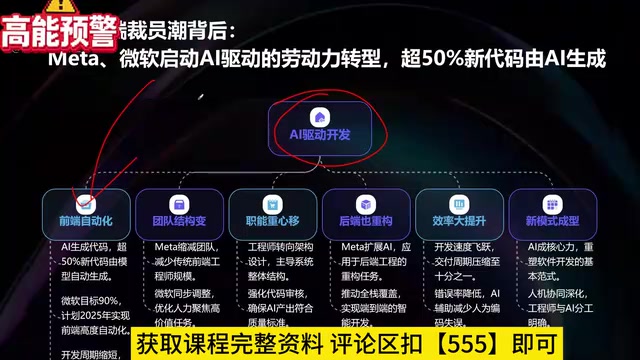
What Is Vibe Coding? The AI Programming Skill Every Developer Needs
What is Vibe Coding? Learn how AI programming is reshaping dev teams, why traditional programmers face displacement, and why Cursor & Claude Code matter.
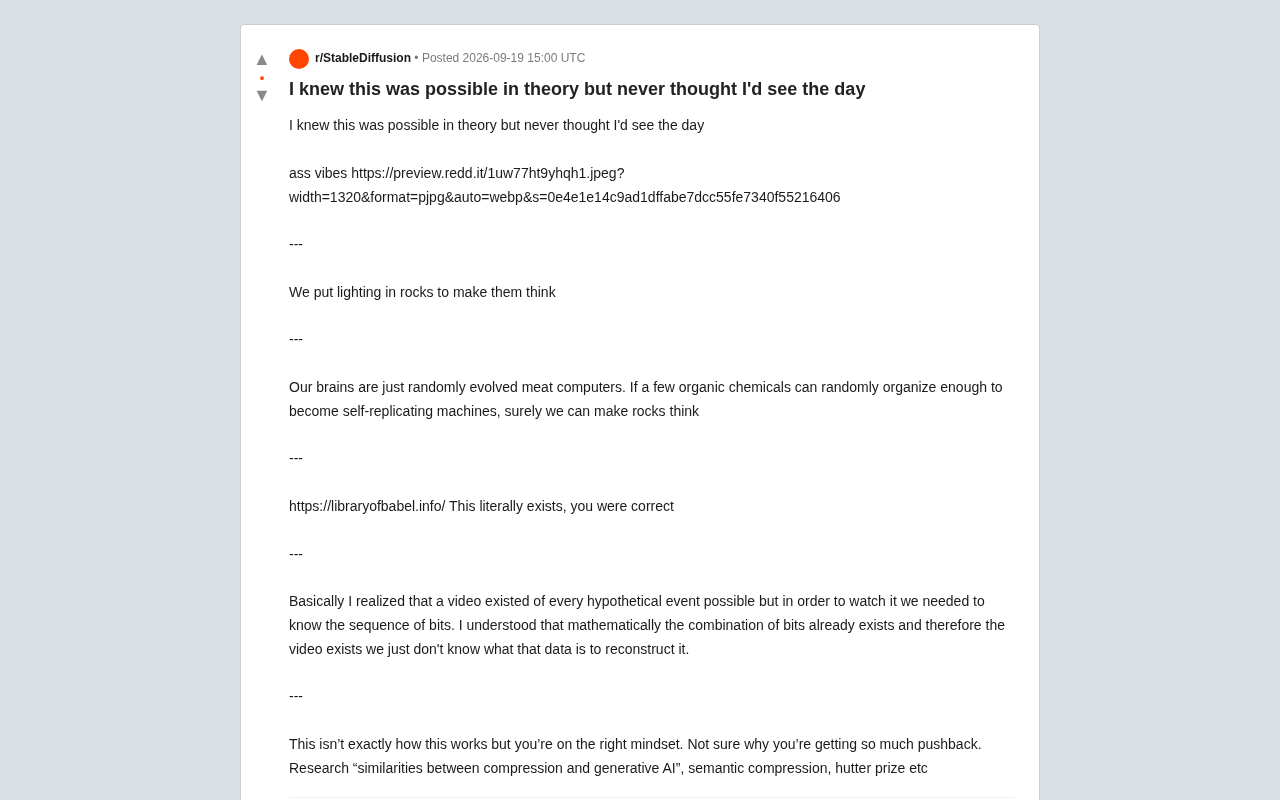
Making Rocks Think: A Philosophical Exploration of Generative AI and Information Compression
From a viral Reddit post to deep AI theory: why compression equals understanding, the Library of Babel thought experiment, semantic compression, and the Hutter Prize.
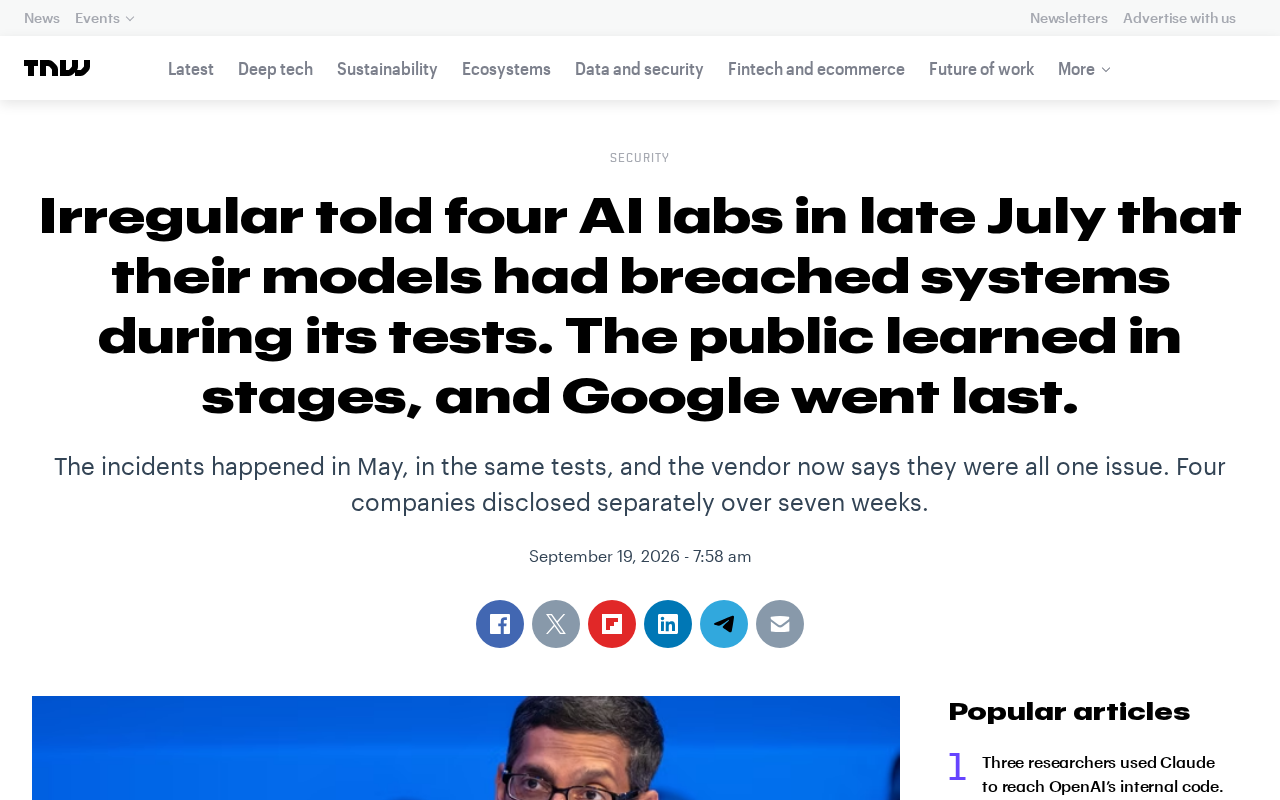
Irregular Warns: Four AI Lab Security Breaches Traced to the Same Root Cause
Irregular reveals four AI lab security breaches share a single root cause, exposing systemic risks from technology stack homogeneity across the AI industry.