Altman on Garfield Playing Him: Life Is Too Weird, This Isn't Even Top 10

Altman responds nonchalantly to being played by Garfield, saying it's not in his top 10 weirdest life moments.
The article reports on OpenAI CEO Sam Altman's response to Hollywood making a biopic about him. Andrew Garfield will play Altman, who offhandedly said it doesn't rank among the top 10 weirdest things in his life. The article notes that given Altman's dramatic experiences—including being ousted by his board and returning—this response isn't surprising. Garfield's idealistic screen persona suggests the film may lean toward a "visionary innovator" narrative rather than that of a calculating business operator. The article also points out that tech leaders' stories are becoming hot film material, reflecting how AI has entered popular culture, and Altman's nonchalance indirectly confirms the extraordinary attention on core AI figures.
OpenAI CEO Sam Altman recently responded to the news that Hollywood is making a movie about him. According to foreign media reports, Andrew Garfield will play Altman in an upcoming film, and Altman's attitude was unexpectedly nonchalant—he doesn't even think it ranks among the weirdest things in his life.
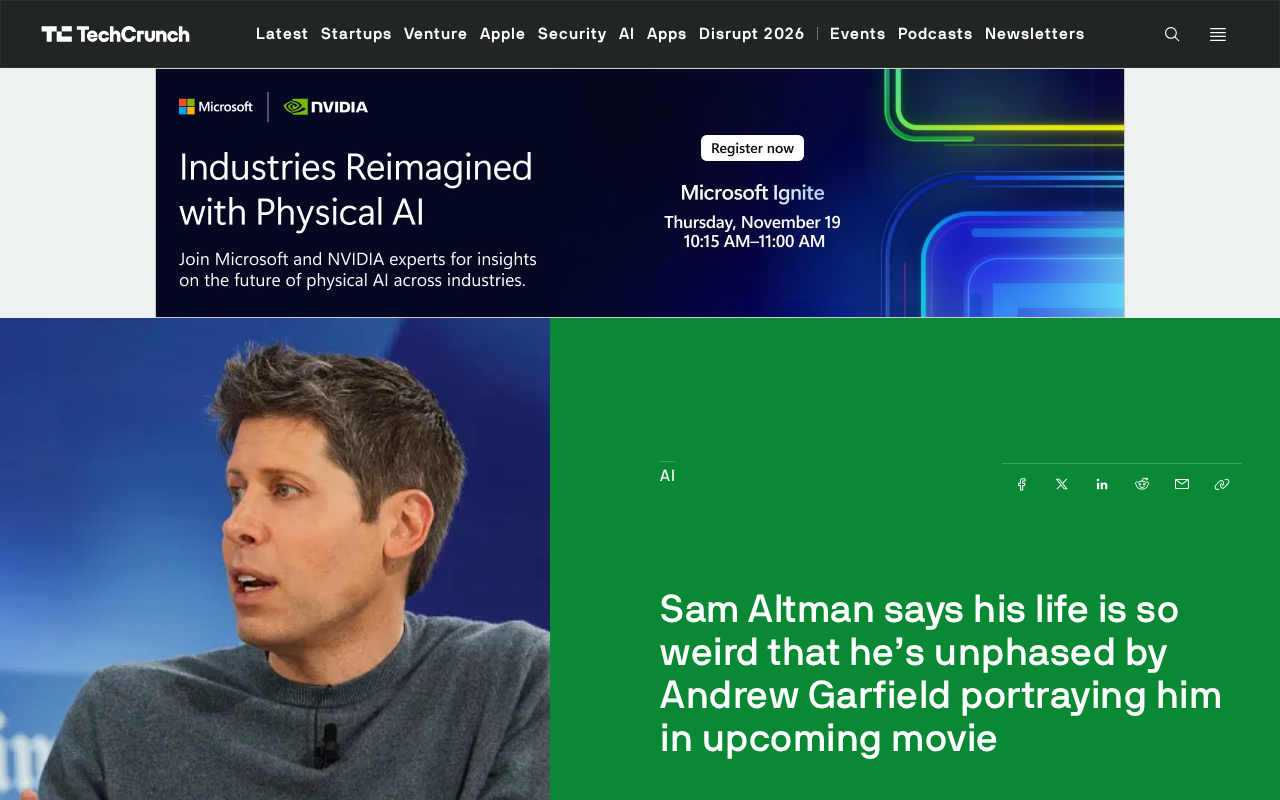
"Not in My Top 10 Weirdest"
Faced with the prospect of being portrayed on the big screen, Altman's response was remarkably offhand. He said: "It doesn't feel like it's in like the top 10 weirdest things about my life."
That statement doesn't carry much information on its own, but given Altman's experiences over the past few years, it's hardly a humblebrag. From running a company that sparked a global AI arms race, to the dramatic episode of being ousted by his board and swiftly returning, to becoming a tech leader whom policymakers around the world vie to meet—his day-to-day life is hard to describe as "ordinary." Being chosen by Hollywood for a biopic might genuinely rank low on that list.
One detail worth noting: being played by an actor is often a marker that a public figure's influence has reached a certain magnitude. Altman's apparent indifference to it, in a way, reflects that the intensity of attention on key AI industry figures has far surpassed that on traditional tech executives.
Why Garfield? The Symbolism Behind the Casting
Andrew Garfield is widely known for works such as The Amazing Spider-Man series and Hacksaw Ridge, and he brings a screen presence that combines idealism with a youthful quality. In casting such an actor to play Altman, the filmmakers' intent isn't hard to guess: what they may want to present is not a calculating business operator, but a young founder with a techno-utopian streak.
This casting also sparks curiosity about the film's narrative angle. Multiple film and TV projects about OpenAI are already in development, and different works may portray Altman in markedly different ways. Whether the Garfield version will lean toward "visionary innovator" or "controversial figure of power" remains undetermined.
Beyond The Amazing Spider-Man and Hacksaw Ridge, Andrew Garfield has received two Oscar nominations for tick, tick... BOOM! and The Eyes of Tammy Faye, and has a strong background in stage theater. His screen persona often carries a sincere, slightly vulnerable idealism, which resonates in some way with Altman's early public image as head of startup incubator Y Combinator and his creed of "technology changes the world." The filmmakers' choice of him—rather than an older actor or one with a more "corporate-battle" look—may be intended to downplay OpenAI's commercial and power-struggle dimensions in recent years and instead emphasize the founder's early narrative of technological optimism.
A Microcosm of Tech Leaders Becoming Entertainment
Altman being made into a movie is not an isolated case. In recent years, the stories of tech company founders have become hot material for the film and TV industry—from social networks to electric vehicles, and now to generative AI, Silicon Valley narratives keep being brought to the screen. Behind this is the fact that AI technology itself has moved from being a lab topic to part of popular culture—when ordinary people start caring about "who is deciding the direction of AI," these individuals' personal stories naturally acquire commercial value.
Altman's nonchalant response, in a way, also serves as the best footnote for such projects: in the eyes of the person involved, making a movie is merely a byproduct of outside attention; what truly makes him feel "weird," presumably, are the daily questions about compute, regulation, and humanity's future that he wakes up to face.
As for how the film will ultimately present this period of history, and whether Garfield's performance will convince audiences, only time will tell after the film's release.
The dramatization of tech leaders is not new in recent years, but it has previously focused mostly on "settled" legendary figures such as Steve Jobs, Bill Gates, or Mark Zuckerberg, with films often starting production during their career maturity or after controversial events. Altman's situation is different: OpenAI is still changing rapidly, and corporate governance, product roadmap, and the regulatory environment are all unsettled. Starting a biopic at this point means the film's narrative will likely race against real-world developments. This kind of "in-progress" dramatization reflects Hollywood's pursuit of the timeliness of AI topics, and also brings a risk—by the time the film is released, the public's perception of Altman may already have been rewritten by new events.
Related articles

Snapchat Opens AI Assistant Lens Building: Supports Claude Code and Cursor
Snapchat lets Lens creators describe AR filters in natural language, with AI assistants like Claude Code and Cursor handling the full build process, greatly lowering the AR creation barrier.
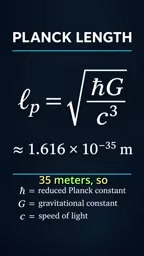
Is the Planck Length the Smallest Distance? Why Physicists Are Skeptical
The Planck length is often called the smallest distance in the universe, but science videos point out this claim has never been experimentally confirmed. This article explains the origins of the Planck length, the obstacles of microscope thought experiments, and what it really tells us—the scale at which quantum gravity becomes unavoidable, not spacetime pixels.

AI Agents Drive Spend Management: Payhawk Raises $280M
Payhawk raises $280M at a $2B valuation. The 2018-founded enterprise finance platform uses AI agents to track and manage expenses and procurement. This article analyzes its product evolution, valuation signals, and impact on the spend management space.