Snapchat Opens AI Assistant Lens Building: Supports Claude Code and Cursor

Snapchat lets developers build AR lenses in natural language with AI assistants like Claude Code and Cursor, shifting the barrier from coding to describing requirements.
Snapchat announced that Lens creators can describe desired AR filters in plain language, with AI assistants handling the full build process, explicitly supporting professional AI coding assistants like Claude Code and Cursor rather than a closed proprietary tool. This moves the AR development entry point from manual setup and scripting in Lens Studio to a single requirement description. For veterans it saves boilerplate work; for creatives without coding backgrounds it may be the first time they can independently publish AR effects. The article argues this will expand Lens supply but also bring quality divergence—AI output quality depends on the describer's engineering judgment; meanwhile, how far lens project formats and debugging interfaces open up to general AI tools will determine how far this model can go. Official information remains directional for now, with actual usability yet to be verified.
From Writing Code to "Describing Requirements": Snapchat Hands AR Lens Development to AI Assistants
Developing AR lenses has always had a barrier to entry—you need to understand Snapchat's Lens Studio, scripting logic, and interaction flows. Snapchat's latest move is to let developers describe the lens they want in natural language, with AI assistants handling the build from start to finish. According to the company, Lens creators can "describe the Lens they want in plain language," and the AI assistant will handle the entire process from start to finish.
More importantly, Snapchat explicitly names support for mainstream AI coding assistants like Claude Code and Cursor, rather than building only a closed, proprietary tool. This means the barrier to AR creation is shifting from "can you write code" to "can you explain your requirements clearly."
What This Update Actually Changes
Natural Language as the Development Entry Point
Traditional lens development requires creators to manually build scenes, write scripts, and debug interactions in Lens Studio. The new approach moves the entry point forward to a single description: you explain clearly what effect you want, and the AI assistant translates it into a runnable lens project. Snapchat's phrasing is that it "handles the process from start to finish"—the AI takes over the build process entirely.
This means different things for two groups. For creators with existing development experience, it saves time on repetitive setup and boilerplate code; for creatives with no programming background at all, this may be the first time they can independently turn an idea into a publishable AR effect.
Lens Studio is the official AR lens development environment provided by Snapchat. It is essentially a visual editor based on a scene graph, paired with a JavaScript/TypeScript scripting system to drive interaction logic. Creators manually add 3D objects, materials, and particle systems, write scripts to respond to events like face tracking and gesture recognition, and then repeatedly debug through preview tools. Lens Studio also provides a simulator and on-device preview, a performance analysis panel, and a submission process for publishing to Snapchat. Understanding this is necessary to grasp the weight of "natural language as the development entry point": what the AI assistant needs to do is not bypass Lens Studio, but rather complete on a person's behalf the entire process of manually building projects, writing scripts, and tuning parameters in Lens Studio—the final output is still a standard lens project.
Why Claude Code and Cursor
What's worth pondering is Snapchat's choice of partners. Claude Code and Cursor are both AI coding tools aimed at professional developers, not "one-click generation" apps for ordinary users. This reveals Snapchat's positioning judgment: AR lenses are still fundamentally software engineering, just with the writing phase handed to AI agents that are good at reading and writing code.
In other words, Snapchat didn't create a separate DSL or visual generator, but plugged lens development into the AI workflows developers already use. For engineers accustomed to Cursor, the learning cost is close to zero.
The key difference between AI coding agents and "one-click generation" apps lies in how they work. Claude Code is a command-line coding agent released by Anthropic that can read and write local files, execute commands, run tests, and self-correct based on errors; Cursor is a VS Code-based editor with built-in AI completion and agent mode that can modify code across files. What they share is that they operate on real codebases and file systems, with multi-step reasoning and tool-calling capabilities, rather than single-shot text generation. That's exactly why Snapchat chose them—a lens project is essentially a collection of code and asset files, requiring AI to continuously read, write, iterate, and debug. Conversely, this also means users still need to understand project structure and debugging feedback; the boundary of what can be generated into a fully publishable lens from a single sentence depends on how well these agents master the lens project format.
Potential Impact on the AR Content Ecosystem
Snapchat's lens ecosystem has always depended on creator supply. Lowering the development barrier directly results in an expansion on the supply side: more small and mid-sized creators, indie developers, and even brands can quickly experiment and validate at low cost whether an AR idea holds up.
But a lower barrier also brings quality divergence. Natural language descriptions are inherently ambiguous, and whether AI-generated lenses meet standards in interaction details and performance still depends on the describer's engineering judgment. People who can write precise requirements will produce significantly higher quality than those who only say "make a fun filter."
Another observation point is workflow standardization. When tools like Claude Code and Cursor become the front end of lens development, whether the file structure and debugging interfaces of lens projects will be opened up more to general-purpose AI coding tools will determine how far this model can go. Snapchat's currently disclosed information focuses on "can build with AI assistants"; the specific degree of openness and limitations have not yet been elaborated.
The supply side of the AR lens ecosystem has always been central to platform competition. Snapchat's lenses number in the millions, and creators include both professional studios and a large number of individual developers; the platform incentivizes supply through lens challenges, creator revenue sharing, and other means. AR lenses are characterized by "high-frequency consumption and rapid iteration"—average usage cycles are short, and creators need to constantly release new effects to maintain exposure, so development efficiency directly determines supply density. When the development barrier drops from "can write lens scripts" to "can describe requirements," the number of entrants will rise noticeably, but whether the platform's content review, performance standards, and discovery mechanisms can absorb the surge in supply is another question. Beyond quality divergence, homogenized competition may also intensify, because natural language descriptions tend to converge, and AI-generated lenses may not be more distinctive creatively than hand-written ones.
How Developers Should View This
In the short term, this is an efficiency tool: hand scene setup, script writing, and basic debugging to AI, and focus on creativity and acceptance. In the medium term, it may change the skill structure of AR creators—the ability to express requirements and judge the quality of AI output will matter more than hand-writing scripts.
For developers currently using Cursor or Claude Code, it's worth watching whether Snapchat later announces more specific integration methods and capability boundaries. The official information so far remains at the level of directional description, and actual usability will need to be verified once the tools land.
The "promptification" of AR creation has only just begun. Snapchat is not the only platform trying this, but its choice to bring professional AI coding assistants directly into the creation chain is a relatively aggressive step at present.
Related articles
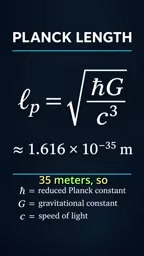
Is the Planck Length the Smallest Distance? Why Physicists Are Skeptical
The Planck length is often called the smallest distance in the universe, but science videos point out this claim has never been experimentally confirmed. This article explains the origins of the Planck length, the obstacles of microscope thought experiments, and what it really tells us—the scale at which quantum gravity becomes unavoidable, not spacetime pixels.

AI Agents Drive Spend Management: Payhawk Raises $280M
Payhawk raises $280M at a $2B valuation. The 2018-founded enterprise finance platform uses AI agents to track and manage expenses and procurement. This article analyzes its product evolution, valuation signals, and impact on the spend management space.

Lenovo Legion Go Beam Leak: Could Be the Most Affordable Handheld
Lenovo Legion Go Beam handheld leaks, possibly positioned more affordably. This article analyzes Lenovo's current handheld pricing, the potential positioning of the Legion Go Beam, and why cheap handhelds are a key market gap.