Altman Speaks Out: OpenAI IPO Won't Happen Before 2027 at the Earliest
Altman tells Fortune that OpenAI's IPO won't happen before 2027, setting a floor for AI market expectations.
OpenAI CEO Sam Altman told Fortune that the company will not go public before 2027 — the clearest signal yet from leadership on its IPO timeline. Three factors are driving the delay: private funding offers more flexibility without the pressure of quarterly earnings; OpenAI's unique capped-profit and nonprofit governance structure needs restructuring before it can meet public market standards; and the company wants its business model and revenue trajectory to be mature enough to convince public investors. As the leader of the generative AI wave, OpenAI's listing pace will benchmark peers like Anthropic and shape valuation expectations across the sector. Altman's statement is best read as a floor, not a firm commitment.
OpenAI's IPO Timeline Comes Into Focus
OpenAI CEO Sam Altman revealed in an interview with Fortune magazine that the world's most closely watched AI company will not go public before 2027. This marks the first time OpenAI's leadership has sent a relatively clear public signal about its listing timeline, giving the long-running speculation about the company's path to capital markets a concrete reference point.
For a company whose valuation has climbed into the hundreds of billions of dollars and is deeply intertwined with giants like Microsoft, the decision of when to ring the opening bell is far more than a financial calculation — it shapes capital expectations across the entire AI industry. Altman's statement essentially tells the market to be patient.
Why 2027, and Not Sooner
OpenAI is currently in a phase of rapid cash burn running in parallel with rapid fundraising. Training frontier large models, expanding compute infrastructure, and maintaining deep partnerships with cloud providers all require a continuous injection of massive capital. In this context, private funding rounds are often far more flexible than a public listing — they bring in capital without immediately exposing the company to the scrutiny of quarterly earnings reports and public shareholders demanding profitability.
Pushing the IPO past 2027 signals that OpenAI wants to refine its business model, and grow its revenue scale and growth trajectory to levels that can genuinely convince public markets. For a company still investing heavily in R&D with a not-yet-fully-defined path to profitability, going public too early could subject its stock price to severe volatility.
The Complex Corporate Structure Is a Prerequisite
OpenAI's unique "capped-profit" structure and the governance arrangements of its nonprofit parent have always been a critical variable on the road to public markets. Any IPO demands a clear ownership and governance structure that regulators and investors can understand. OpenAI has been working to restructure its corporate architecture over the past year to clear the way for potential future capital events.
This also partly explains why the timeline has been extended — restructuring governance and balancing the tension between mission-driven priorities and commercial returns is inherently a time-consuming process. Altman's 2027 reference point is, in some sense, a window reserved for exactly these internal adjustments.
OpenAI's capped-profit structure is notably unconventional: its commercial operating entity is a for-profit limited partnership, but above it sits a nonprofit board that retains ultimate control over the company's strategic direction and mission. Investor returns are capped at a fixed multiple of their initial investment (roughly 100x for early investors, with lower multiples for later-stage investors), with anything beyond that cap flowing back to the nonprofit parent. This arrangement was designed to prevent commercial interests from overriding OpenAI's AI safety mission — but it also introduces significant legal and financial complexity for a traditional IPO, since public market investors are accustomed to standard equity structures and clear residual claims on earnings, which sit in fundamental tension with a profit cap mechanism. Since 2024, OpenAI has signaled its intention to transition away from the nonprofit structure toward something closer to a conventional for-profit company, but this process involves regulatory approvals, nonprofit asset valuations, and stakeholder negotiations — a complex procedure that cannot be completed quickly.
What This Means for the AI Industry
As the defining company of the generative AI wave, every move OpenAI makes carries significant signal value. Its IPO timing will directly influence how investors assess valuations across the entire AI sector and will serve as a reference point for peers like Anthropic. If OpenAI is choosing to wait until after 2027 to enter public markets, it suggests that leading AI companies broadly prefer to remain in private markets longer — buying themselves more time to validate their commercial models.
It's worth noting that this information comes from Altman's remarks in a Fortune interview and represents a forward-looking statement about plans, not a formal filing. "No earlier than 2027" reads more like a floor than a commitment, and the actual timeline will continue to shift with the company's operating results, market conditions, and regulatory progress.
Anthropica is currently OpenAI's most direct competitor among top-tier large model companies, and it has adopted its own non-standard governance arrangement (a "public benefit corporation" structure) while relying heavily on Amazon's strategic investment and cloud compute support. The similar capital paths of the two companies suggest that top AI labs broadly face the same governance dilemma — balancing mission-driven priorities against capital returns — and both are choosing to work through it in private markets over a longer horizon. For secondary market investors, OpenAI's IPO timeline also indirectly shapes the narrative around upstream infrastructure companies like NVIDIA and Microsoft. A successful OpenAI public listing at a high valuation would reinforce the investment thesis across the AI compute and application stack; conversely, if the listing runs into valuation discounts or governance questions, it could cool sentiment across the broader AI sector.
Closing Thoughts
Altman's remarks have temporarily tempered the high expectations the outside world has placed on an OpenAI IPO. For observers watching AI capital markets, 2027 is a date worth marking on the calendar — but what's even more worth tracking is how this company navigates the dual challenge of commercial execution and governance restructuring in the years before it gets there.
Related articles

Spotit: Turn Every Mac App into a Real-Time Interactive Tutorial
Spotit is an AI-powered interactive tutorial tool for Mac. Press a shortcut, ask in plain language, and it highlights exactly where to click next — guiding you through any Mac app as you learn by doing.
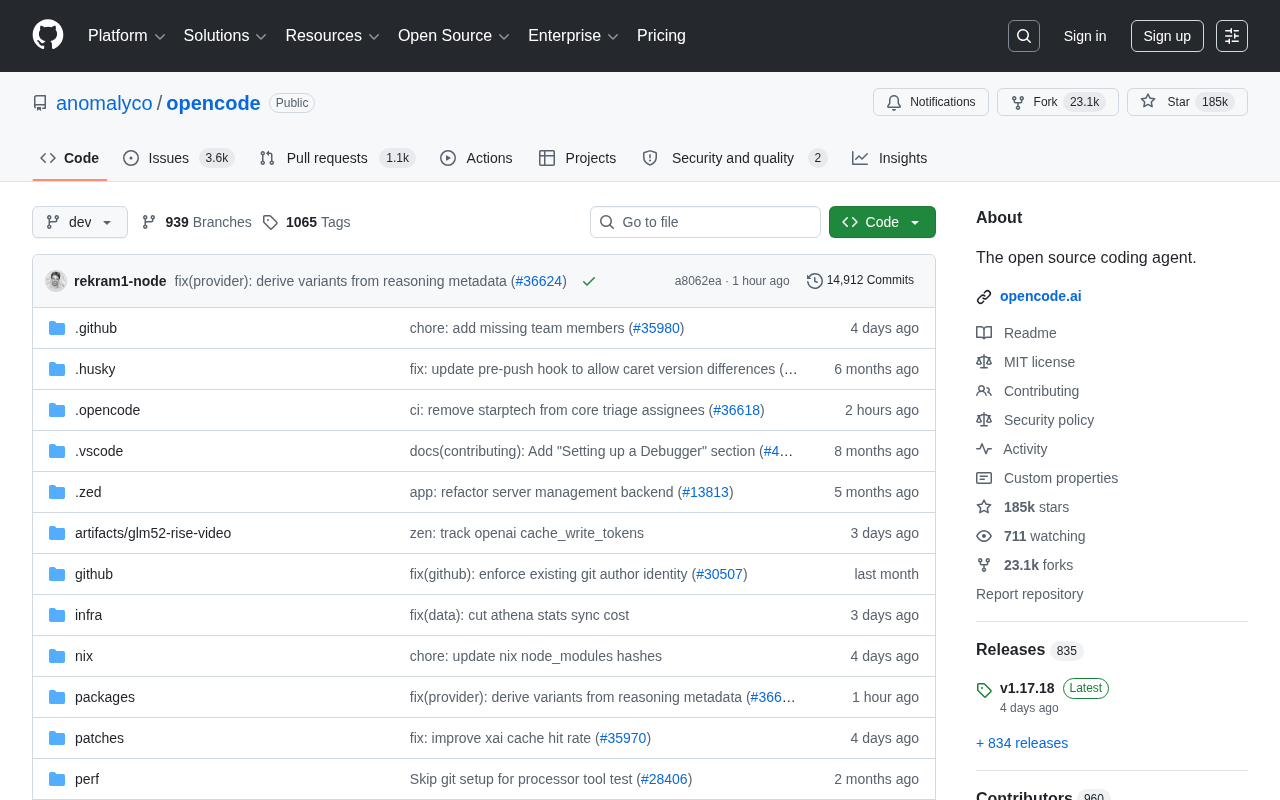
OpenCode: The Open-Source Coding Agent That Hit 150K GitHub Stars
OpenCode is an open-source TypeScript coding agent with 150K+ GitHub stars. Learn about its features, advantages, and use cases for AI-powered development.
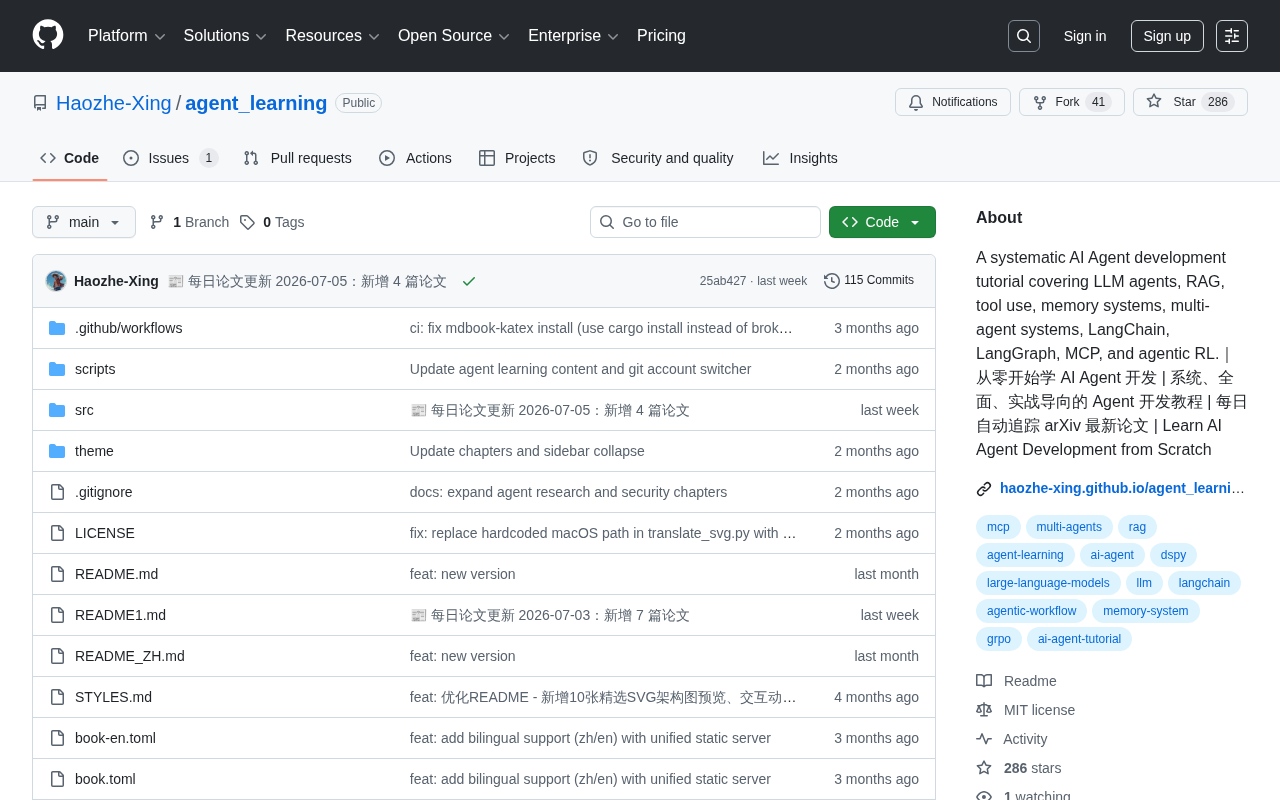
Learning AI Agent Development from Scratch: An Open-Source Tutorial Worth Bookmarking
Haozhe-Xing/agent_learning is a systematic, hands-on open-source tutorial for learning AI Agent development from scratch, with daily arXiv paper tracking built in.