OpenCode: The Open-Source Coding Agent That Hit 150K GitHub Stars
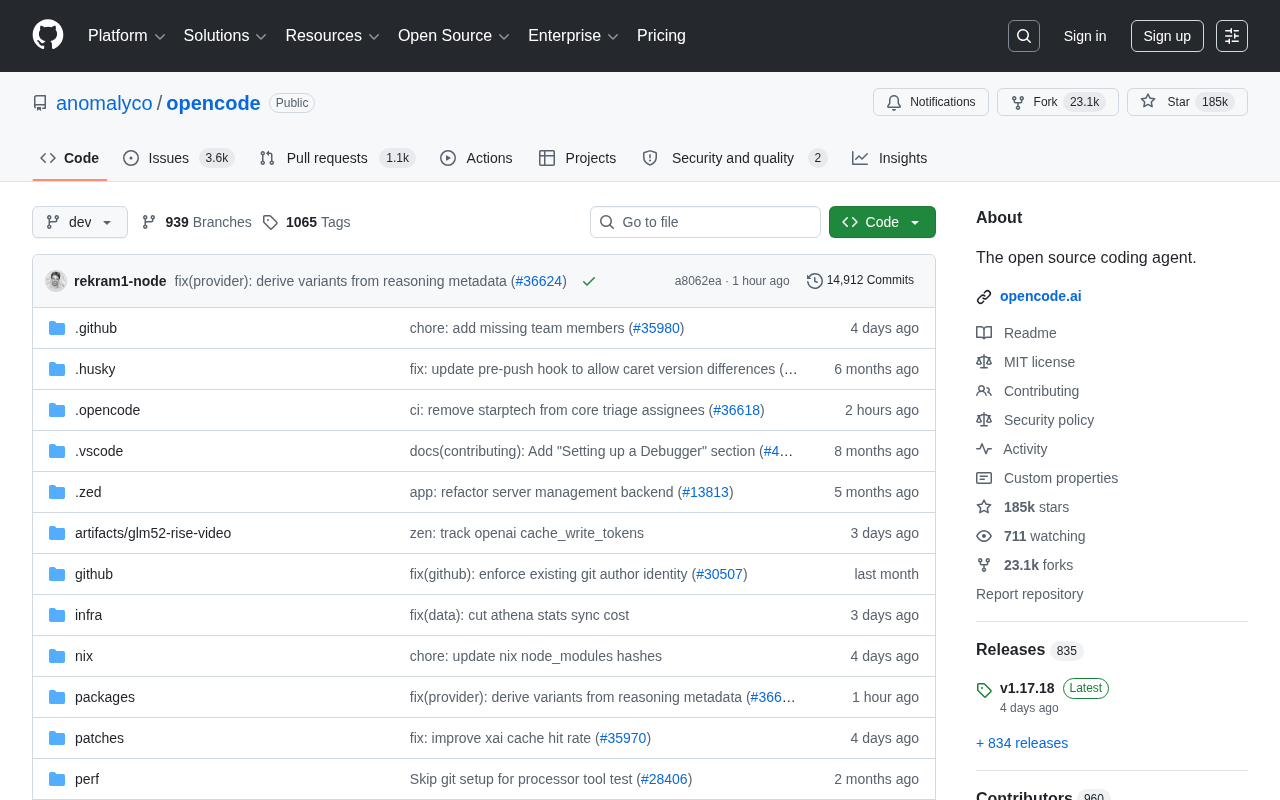
OpenCode is an open-source TypeScript coding agent with 156K+ GitHub stars, built for privacy and customization.
OpenCode is an open-source coding agent developed by the anomalyco team in TypeScript, with over 156K GitHub stars and 18K forks. Unlike closed commercial tools like GitHub Copilot, its key advantages are full transparency, support for private self-hosting to address data privacy concerns, and the flexibility to plug in any underlying LLM. A high fork ratio signals genuine developer engagement and strong adaptability. It's best suited for compliance-focused enterprise teams, technical teams wanting deep customization, and individual developers willing to trade some setup effort for greater freedom.
What Is OpenCode
OpenCode is an open-source coding agent built by the anomalyco team, written primarily in TypeScript. On GitHub, it has accumulated over 156,367 stars and 18,166 forks — numbers that speak volumes about its traction and recognition within the developer community.
A "coding agent" refers to an AI tool capable of understanding developer intent and autonomously executing coding tasks. Unlike traditional code completion plugins, coding agents typically offer stronger task planning, multi-file operation, and contextual understanding — handling everything from generating code snippets to completing entire feature modules. OpenCode's core selling point is its open-source nature, meaning developers are free to inspect, modify, and deploy it without being locked into the black-box mechanisms of closed commercial products.
The "coding agent" space has surged in recent years, fueled by rapid advances in large language model (LLM) capabilities. Unlike tools such as GitHub Copilot that focus primarily on code completion, coding agents are typically built on frameworks like ReAct (Reasoning + Acting), enabling them to break complex tasks into sub-steps and accomplish goals by invoking tools such as file read/write, terminal commands, and code search. Notable peers in this space include Anthropic-backed Claude Code, Cognition's Devin, and open-source alternatives like Aider and SWE-agent. Understanding this context helps position OpenCode within the broader ecosystem — it is not an IDE plugin, but an AI development partner capable of autonomously "getting things done."
Why Open-Source Coding Agents Matter
As competition in AI programming tools intensifies, the market already has plenty of commercial coding assistants. Most of these products are closed-source, however — users cannot audit their internal logic or deeply customize them for specific scenarios. OpenCode takes a fully open-source approach, which brings several distinct advantages.
Open source means transparency and control. Enterprises and individual developers can self-host, keeping code and data within their own environments and avoiding the privacy and compliance risks of uploading sensitive code to third-party services. For industries with strict data security requirements — such as finance and healthcare — this is especially significant.
Open source also means extensibility. TypeScript, the project's primary language, enjoys a massive developer base in frontend and full-stack development, lowering the barrier for community contributions. The 18,000+ forks also signal that a large number of developers are actively building on top of this project or running their own experiments.
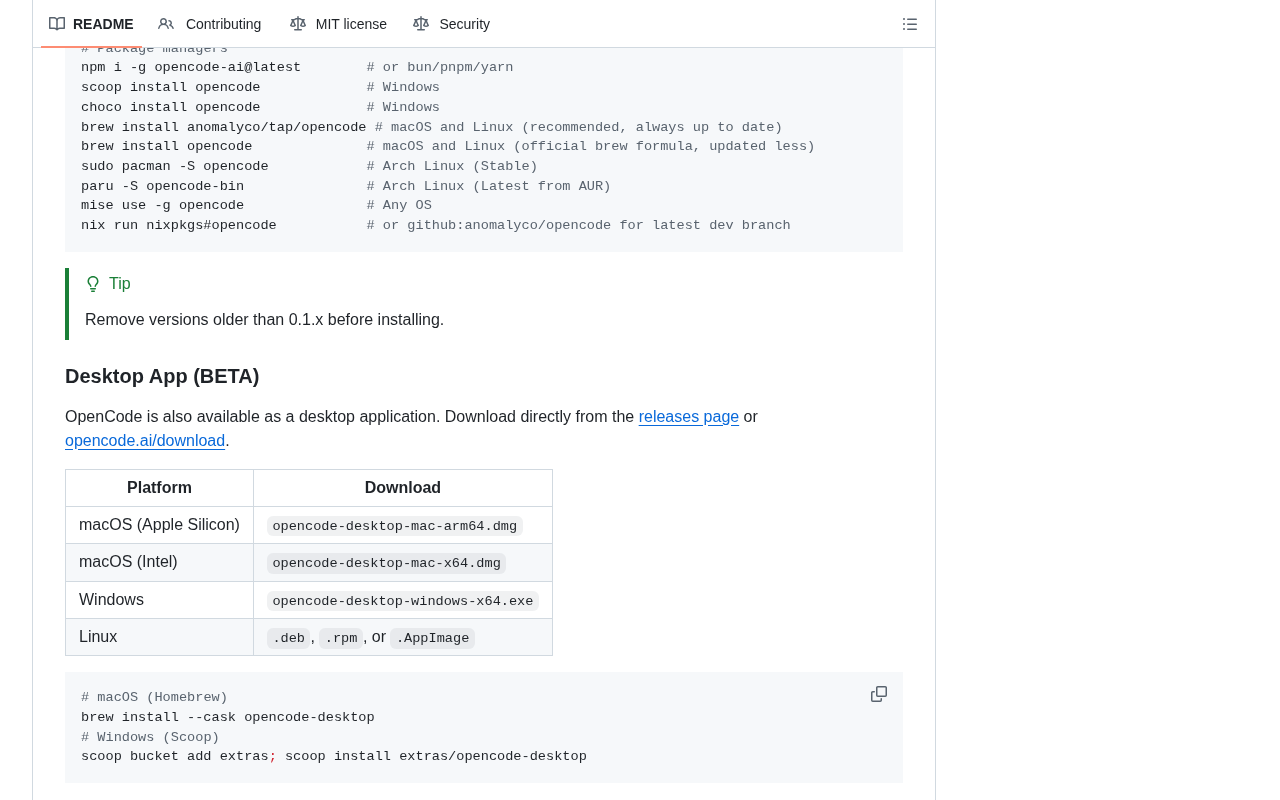
Community Momentum as a Signal of Potential
A star count in the 150K range places OpenCode firmly among GitHub's top-tier projects. While raw numbers don't directly equate to product maturity, they are a clear reflection of community interest and word-of-mouth reach. Projects that accumulate this level of attention in a short time typically do a solid job of addressing a real pain point.
For developers evaluating coding agents, the key dimensions are usually: model capability, flexibility to connect different LLMs, task execution accuracy, and ease of integration into existing workflows. OpenCode's open-source model theoretically gives users the freedom to choose their own underlying model — you can plug in different LLMs based on cost and performance needs, without being tied to a single vendor.
The ratio of nearly 18K forks to 156K stars suggests this isn't just a "bookmark" project — a substantial number of developers are actually using it and modifying it. That kind of active engagement is critical to the long-term viability of any open-source tool.
GitHub stars and forks are common metrics for gauging open-source project influence, but they mean different things. Stars are closer to "likes" or "bookmarks" reflecting awareness, while forks indicate someone has copied the repository — usually intending to contribute, build on it, or study it in depth. Generally, a higher fork-to-star ratio (Fork Ratio) indicates a larger proportion of active participants. OpenCode's Fork Ratio of approximately 11.6% (18,166 / 156,367) is on the higher end for popular developer tools, reinforcing the point that this isn't just passive attention — it also signals that the technical community recognizes the code quality and adaptability of the project.
Who Is It For
Based on the project's positioning, OpenCode is a strong fit for a few types of users. The first group is teams that prioritize data privacy and need private deployment — self-hosting on open-source software satisfies compliance requirements. The second group is technical teams that want deep customization of coding agent behavior, who can modify the TypeScript source directly. The third group is individual developers who are curious about AI programming tools and willing to experiment with cutting-edge open-source solutions.
It's worth noting that, as an open-source project, the actual user experience depends heavily on the quality of the underlying model you configure and how well the community documentation is maintained. Achieving a level of polish comparable to commercial products often requires meaningful technical investment and tuning. This is the classic open-source trade-off: greater freedom and lower licensing costs in exchange for some of the out-of-the-box convenience.
Conclusion
OpenCode represents a broader trend toward open, transparent AI programming tools. With a TypeScript-based stack and a community foundation of over 150K GitHub stars, it has carved out a real presence in the open-source coding agent landscape. For developers who prioritize controllability, privacy, and customization freedom, it is an option worth adding to the evaluation list. That said, given the limited public information currently available, the specific feature set, supported model range, and performance benchmarks are best confirmed by consulting the official repository documentation directly.
Related articles

Spotit: Turn Every Mac App into a Real-Time Interactive Tutorial
Spotit is an AI-powered interactive tutorial tool for Mac. Press a shortcut, ask in plain language, and it highlights exactly where to click next — guiding you through any Mac app as you learn by doing.
Learning AI Agent Development from Scratch: An Open-Source Tutorial Worth Bookmarking
Haozhe-Xing/agent_learning is a systematic, hands-on open-source tutorial for learning AI Agent development from scratch, with daily arXiv paper tracking built in.

Altman Speaks Out: OpenAI IPO Won't Happen Before 2027 at the Earliest
Sam Altman tells Fortune that OpenAI won't IPO before 2027. We break down why, what the capped-profit structure means, and what it signals for AI capital markets.