Amazon Adds SMS Shopping to Alexa: A Strategic Pivot After Blocking Muse

After blocking third-party AI shopping assistant Muse, Amazon launches Alexa SMS shopping to bring the shopping entry point back into its own ecosystem.
Amazon announced it will launch an SMS shopping feature for Alexa, covering millions of users in the coming weeks. The feature follows Amazon's blocking of third-party AI shopping assistant Muse, forming a "block first, then redirect" strategy: first remove external tools that intercept the shopping decision path, then fill the interaction gap with its own SMS-based Alexa. As a native phone capability, SMS lowers the barrier to use, especially benefiting light users unaccustomed to voice or complex apps. But this move also means the shopping entry point becomes further concentrated on the platform, and third-party AI shopping tools face ecosystem risks from depending on a single platform. Details such as payment processes, supported categories, account binding, and whether fees apply remain undisclosed—these will determine whether it's a novelty toy or a practical channel.
Amazon Teaches Alexa to "Text" and Help You Shop
Amazon recently announced a new feature for Alexa: users will be able to interact with Alexa via SMS to get shopping help. The feature will roll out to millions of users over the coming weeks.
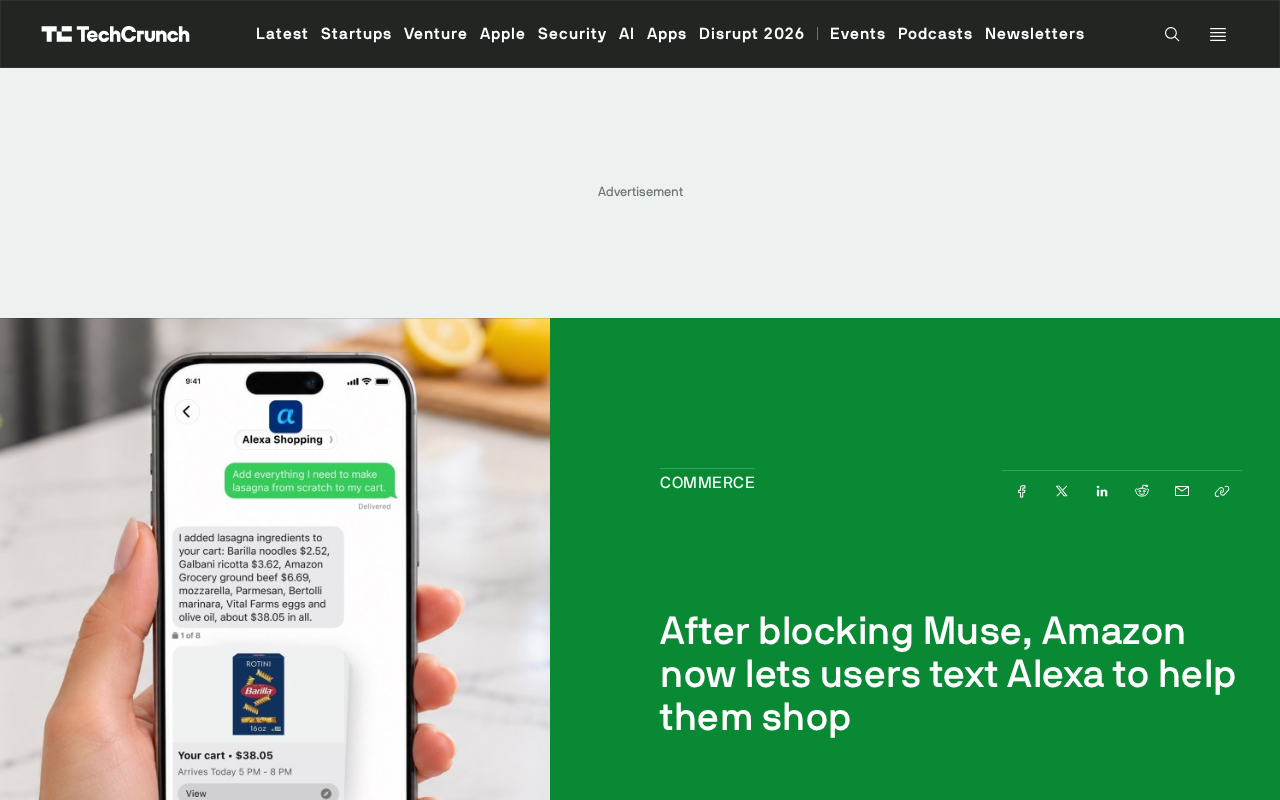
What makes this news noteworthy isn't just the feature itself, but its timing—it comes shortly after Amazon blocked the third-party AI shopping assistant Muse. According to RSS source reports, Amazon first prevented external tools like Muse from accessing its platform, then immediately launched its own Alexa SMS shopping capability. This "block first, then redirect" maneuver reveals Amazon's strong intent to control the shopping entry point.
Feature Breakdown: SMS as a New Shopping Interface
SMS interaction lowers the barrier to use
Compared to opening an app or waking up a smart speaker, SMS is a native phone capability with virtually no learning curve. Users don't need to install additional apps or use voice interaction—they can simply send shopping-related requests to Alexa directly from the SMS interface. For user groups unaccustomed to voice assistants or complex app operations, this interaction method significantly lowers the barrier.
SMS, as a basic telecommunications capability, differs from apps or web pages in that it doesn't rely on data networks or specific operating systems, and works equally well on feature phones and in weak network environments. For platforms, the advantage of SMS channels lies in high delivery rates and high read rates, but the limitations are also obvious: message length constraints, weak rich media support, and complex session state management. Connecting an AI assistant to SMS requires backend conversation state tracking and message segmentation processing, while also solving account identity and phone number binding verification issues. This is one reason why "how to bind accounts" remains unclear in the feature details.
Gradual rollout to millions of users
Amazon explicitly stated that the feature will be promoted to millions of users over the coming weeks. This gradual rollout strategy is not uncommon in Amazon's AI feature launches—it controls server-side load while allowing rapid adjustments based on early feedback.
Blocking Muse and Building Its Own Entry: Amazon's Defensive Logic
Why block third-party assistants first
The existence of third-party AI shopping assistants like Muse essentially inserts a new interaction layer between Amazon and consumers. If users become accustomed to searching and comparing products through Muse, Amazon would lose control over the shopping decision path—product recommendations, ad exposure, and even transaction data could be intercepted by external tools. Blocking Muse is Amazon's direct means of protecting its own e-commerce ecosystem entry point.
Third-party AI shopping assistants typically operate by relying on platform-open APIs, web scraping, or plugin mechanisms to obtain product data. Tools like Muse essentially establish an independent product search and comparison layer between users and Amazon, with business models that may include affiliate commissions, advertising, or user data monetization. Platform technical measures to block such tools include limiting API access frequency, banning specific User-Agents, and modifying page structures to render scraping ineffective. This phenomenon is not unique to Amazon but is a common "interface reclamation" behavior in the platform economy—when third-party services threaten a platform's core transaction path, the platform tends to reclaim access permissions to data and interactions.
The SMS feature is "redirection," not "opening up"
After blocking external tools, Amazon needs to give users an alternative, otherwise the gap in user experience could cause dissatisfaction. The SMS version of Alexa plays exactly this role: bringing shopping interactions back into Amazon's own AI system. In other words, this isn't an open ecosystem—it's using proprietary features to fill the capability gap left by removed third-party functionality.
Potential Impact on the Industry and Users
The battle for shopping entry points escalates
Amazon's move reflects a larger trend: AI assistants are becoming the new entry point for e-commerce shopping, and platforms want this entry point firmly in their own hands. For third-party AI shopping tool developers, the risk of relying on a single platform is rising.
Users gain convenience, but choices narrow
From the user's perspective, SMS shopping brings convenience, especially for light users. But at the same time, the blocking of third-party tools means the space for comparison and choice is compressed. What users get is "convenience" carefully designed by the platform—at the possible cost of fewer independent information sources.
The imagination space for SMS channels
If the SMS version of Alexa proves successful, Amazon may expand it to more scenarios, such as order inquiries, return processing, and subscription management. As a low-interference, high-reach channel, SMS has considerable untapped potential in the e-commerce service chain.
Unknowns Worth Watching
Currently, specific details about the feature remain limited: which product categories SMS shopping supports, whether it supports the complete payment process, how users bind accounts, and whether SMS fees will be incurred—Amazon has not elaborated on any of these. These details will determine whether the feature is a "novelty toy" or a truly usable shopping channel. Additionally, the specific scope and enforcement methods of blocking Muse await clearer disclosure.
What is certain is that Amazon is demonstrating through its actions: when it comes to the AI shopping assistant pie, it wants to cut its own slice.
Related articles
 Tech Frontiers
Google Omni 1.2 Flash: 15-Second AI Video at Just $0.07 per Second
Google DeepMind releases Gemini Omni 1.2 Flash: 15-second video, 720p at $0.07/sec (30% cheaper), multi-turn editing without regeneration, draft upscaling to 4K.
 Tech Frontiers
No AI Ghostwriting: Writer's Quarter Reinvents Novel Writing with a Visual Workbench
The Writer's Quarter is an AI-free novel writing and planning tool that unifies character building, story planning, and manuscript writing in one visual workbench. This article analyzes its positioning, target users, and differentiated value amid the rise of AI writing tools.
 Tech Frontiers
Fleeep: A Unified Inspiration Collection Notes App for Creatives
Fleeep is a notes app for creatives that unifies screenshots, bookmarks, saved posts, and inspiration into one calm, cross-device, offline-capable space. This article analyzes its positioning, differentiation, and target users.