Amazon Raises Frontline Workers' Pay by $1/Hour in a $1.5B+ Investment
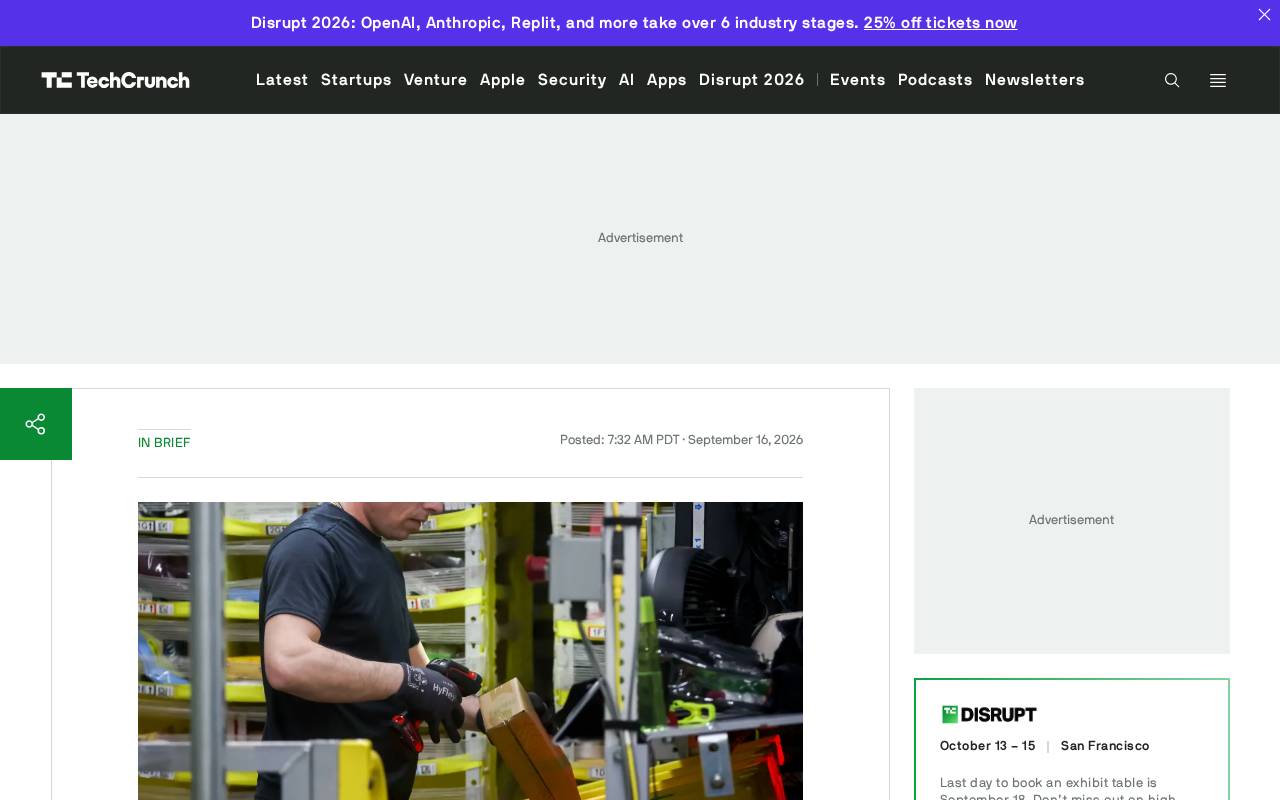
Amazon raises frontline pay by $1/hour in a $1.5B+ investment — just 0.06% of its $2.68T market cap.
Amazon announced a $1-per-hour wage increase for its warehouse and logistics frontline workers, representing a total investment exceeding $1.5 billion across hundreds of thousands of employees. The article's key lens is placing this figure within Amazon's broader financial scale: $1.5 billion is just 0.06% of the company's roughly $2.68 trillion market cap, illustrating the unique economic logic of hyperscale tech firms. The raise delivers real income gains for individual workers and helps stabilize the workforce, while Amazon's wage decisions also serve as an industry bellwether — reflecting the ongoing tension between automation and human labor at the world's largest retailers.
Amazon Announces Pay Raise for Frontline Workers
Amazon has announced a $1-per-hour wage increase for its frontline employees. According to publicly available data, the total investment in this raise exceeds $1.5 billion. The move affects Amazon's vast network of warehouse, logistics, and operations staff, marking another significant adjustment to the company's labor costs.
For a tech and e-commerce giant known for its scale, a $1 hourly raise multiplied across hundreds of thousands of frontline workers adds up to a substantial sum. Yet viewed against the company's overall financial footprint, the relative size of this investment is modest.
What $1.5 Billion Means at Amazon's Scale
It's worth putting this $1.5 billion figure on the scale alongside Amazon's overall market capitalization. Based on the figures provided, Amazon's current market cap sits at approximately $2.68 trillion — making this wage investment roughly 0.06% of that total.
In other words, what looks like a massive pay increase becomes a vanishingly small fraction when measured against Amazon's capital scale. This contrast highlights a fascinating reality about big tech companies: even multi-billion-dollar employee benefit investments can appear almost negligible relative to a company's total valuation.
That doesn't make the raise meaningless. For every individual frontline worker, an extra dollar per hour represents a real, tangible income gain. And for the company, stabilizing its workforce, improving employee satisfaction, and reducing turnover typically generate long-term returns.
Market capitalization is calculated by multiplying share price by total shares outstanding — it reflects the market's expectations of future earnings, not cash readily available on the company's books. So comparing the wage investment to market cap doesn't mean the expense is "easy to absorb." A more direct benchmark is Amazon's annual operating profit, which was approximately $36.9 billion in fiscal year 2023. Against that figure, the $1.5 billion raise represents roughly 4% of annual operating profit — a far more meaningful gauge of actual financial impact than 0.06%. Even so, it remains well within a range Amazon can absorb, underscoring that leading tech companies do have the capacity to improve worker compensation without seriously denting their financials.
Industry Signals Behind the Raise
As one of the world's largest employers, Amazon's compensation decisions tend to serve as a bellwether for the broader industry. Frontline warehouse and logistics roles have long faced challenges including labor shortages and high turnover rates — and wage increases are a common lever for retaining talent and easing staffing pressure.
From a macro perspective, the labor cost investments made by tech and retail giants reflect the ongoing balancing act between automation and human workers. Despite Amazon's massive investment in warehouse automation, frontline human labor remains an indispensable part of its operational ecosystem.
For individual employees, the raise is a positive signal. For investors, the 0.06% market cap figure suggests this type of expenditure poses virtually no material burden on company finances. Behind this seemingly win-win dynamic lies the distinctive economic logic of hyperscale enterprises.
Amazon's push into warehouse automation is worth examining closely. The company's Amazon Robotics division — formerly Kiva Systems, acquired in 2012 for $775 million — has deployed more than 750,000 robots across its global fulfillment network for tasks like shelf movement, sorting, and packaging. Yet automation hasn't replaced human workers; it has instead spawned a new category of roles designed to work alongside robots, such as robot monitors, maintenance technicians, and process coordinators. This means that even as automation continues to advance, overall demand for frontline workers is unlikely to shrink dramatically in the near term. In this context, using wage increases to stabilize the human workforce is a practical necessity for maintaining supply chain stability under Amazon's "human-robot collaboration" operating model — not merely a public relations gesture.
Summary
Amazon's decision to raise frontline workers' pay by $1 per hour, representing a total investment exceeding $1.5 billion, is both a direct improvement to employee compensation and a reflection of the financial characteristics that define hyperscale tech companies. The contrast — $1.5 billion amounting to just 0.06% of market cap — may be the most thought-provoking takeaway from this story.
Due to the limited source information available, this article does not cover details such as the effective date of the raise or the specific job categories included. Further clarification from Amazon's official communications is worth watching.
Related articles

AI Agent Developer Job Hunt Guide: Four Hard Standards to Clear Before You Apply
A practical guide for landing AI Agent developer roles: four measurable standards — project runs, problems debuggable, solution explainable, interviews survivable.

Multi-Agent Development Guide: From Monolithic AI to Team Collaboration in Practice
A beginner's guide to multi-agent development covering core advantages, common learning pain points, enterprise tech stacks, and engineering methodology for AI developers.

Agent Skill Routing: Retrieval vs. LLM vs. Two-Stage Architecture Compared
Retrieval or LLM for Agent skill routing? Compare coarse-filter vs. fine-select architectures on latency, accuracy, and cost — with 4 key production considerations.