Amazon's Bee AI Memory Devices: A Personal Assistant on Your Wrist and Phone

Amazon launches Bee Frontier and Bee Eclipse AI memory hardware with no audio retention and Alexa+ integration.
Amazon released Bee Frontier wearable and Bee Eclipse phone magnetic accessory on Product Hunt, both capturing daily conversations to generate summaries, reminders, and to-dos. The core differentiator is no raw audio retention—discarding audio after transcription and using only structured text for AI memory, reducing data breach risk and storage costs, but sacrificing audio playback and relying entirely on recognition models for summary accuracy. Both integrate Alexa+, enabling memory content to be invoked, queried, and transformed into action. With 71 votes and 11th place on Product Hunt, attention is early-stage; success depends on natural Alexa+ memory invocation, credible no-recording promises, and willingness to buy separate hardware for "memory".
Amazon is extending AI memory capabilities to scenarios closer to the body. Bee Frontier and Bee Eclipse, unveiled on Product Hunt, aim to turn everyday conversations into actionable information using a "no audio retention" approach.
Two Form Factors, One Goal: Help AI Remember for You
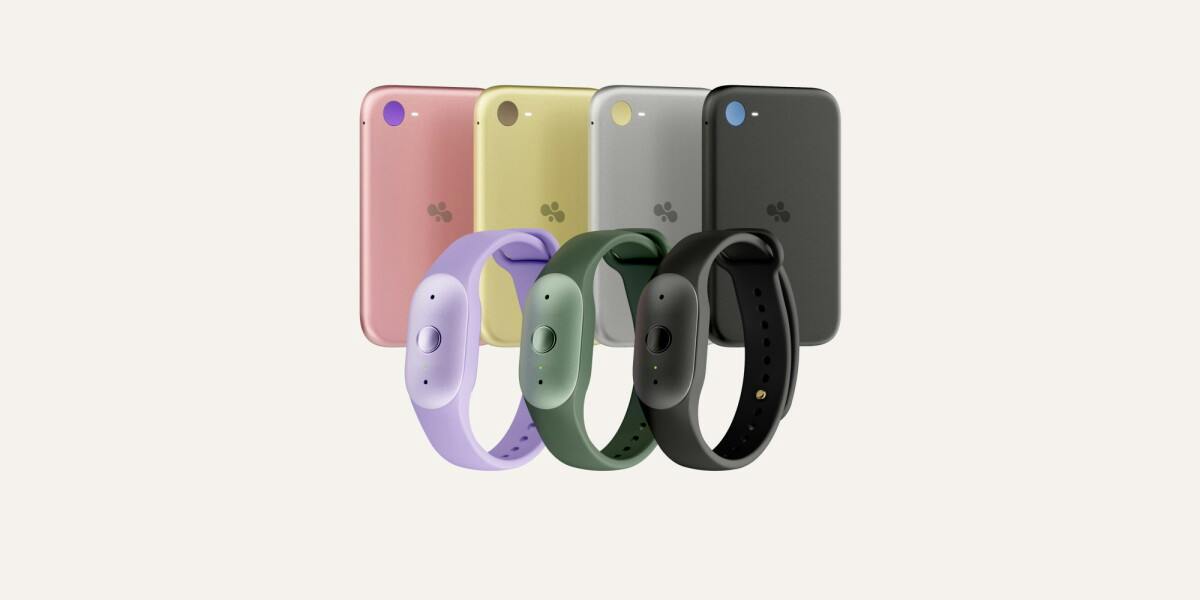
Bee Frontier is a wearable device that can be worn on the wrist or clipped to clothing; Bee Eclipse attaches magnetically to a phone. Both target the same need—capturing conversations and generating summaries, reminders, and follow-up to-dos.
You may not have noticed, but the company emphasizes that the devices do not retain raw audio. This means the AI memory carrier is structured text rather than audio files, addressing users' privacy concerns to a certain extent.
No Audio Retention: Balancing Privacy and Utility
"No audio retention" is the most core differentiator of these two products. Most conversation recording tools save raw audio for playback or proofreading, while the Bee series chooses to discard audio after completing transcription on-device or in the cloud.
The benefits of this design are obvious: reduced data breach risk and lower storage costs. But the trade-off is that users cannot revisit the original audio, and summary accuracy depends entirely on the performance of speech recognition and understanding models. For scenarios requiring precise quotation of original words, this may be a shortcoming.
The trade-off between on-device transcription and cloud transcription is key to understanding how "no audio retention" is implemented. On-device transcription means the speech recognition model runs directly on local chips, audio never leaves the hardware, offering the strongest privacy, but limited by compute power and energy consumption, recognition accuracy and language support are typically weaker than cloud-based; cloud transcription uploads audio to servers for processing, with stronger model capabilities, multilingual support, and complex scenario handling, but requires encryption and compliance safeguards during transmission. The Bee series discards raw audio immediately after transcription, retaining only structured text, which means regardless of which path is taken, the privacy risk window is compressed to the moment of transcription. The cost is that transcription errors cannot be corrected by replaying original audio, and summary quality highly depends on front-end recognition accuracy—which explains why such products view speech recognition model capabilities as their core competitiveness.
Alexa+ Integration: From Memory to Action
Both devices integrate Alexa+. This means the conversation content captured by Bee is not just passively stored, but can be invoked, queried, and transformed into action. For example, automatically generating a to-do list after a meeting, or reminding you of details a contact mentioned last time.
According to Product Hunt data, the product received 71 votes, ranking 11th, categorized under productivity, wearable devices, and artificial intelligence. The heat isn't explosive, but the direction is clear—AI hardware is shifting from "voice assistant" to "memory assistant".
Alexa+ is Amazon's LLM-powered voice assistant launched in 2025, a generative AI upgrade of the original Alexa. Unlike traditional intent-slot-based voice assistants, Alexa+ relies on large language models to understand context, conduct multi-turn conversations, and invoke external services to complete tasks like ordering food, schedule management, and smart home control. For the Bee series, integrating Alexa+ means the device is not just a passive recording tool like a voice recorder, but can use captured conversation content as context input, supporting cross-session retrieval queries like "What was the budget figure mentioned in last week's meeting?", and directly converting conclusions into to-dos, reminders, or messages. This integration also reflects Amazon's hardware ecosystem synergy—memory data flows within the Alexa system, enhancing user stickiness.
Market Positioning and Potential Challenges
The form factor differences between Bee Frontier and Eclipse actually correspond to two usage habits: wearable devices suit all-day wear, while phone accessories are closer to existing device ecosystems. But both face the same question—whether users are willing to purchase a separate hardware device for "memory".
Today, when phones already have recording, transcription, and AI summarization capabilities, the value of dedicated hardware must be reflected in experience continuity and privacy certainty. Whether the Bee series can convince users depends on whether Alexa+'s memory invocation is natural enough and whether the "no recording" promise is credible enough.
The Product Hunt comment section has only 2 comments—a limited sample—but at least indicates the product is still in an early attention stage. For users interested in the combination of AI memory and wearables, this product group is worth continued observation.
The dedicated AI memory hardware category is in a validation phase. Previously, products like Humane Ai Pin and Rabbit R1 debuted with high-profile slogans of "replacing phones", but suffered reputation declines due to inconsistent experiences, battery life, and connectivity issues, leaving a trust deficit for similar products. In contrast, products focusing on single scenarios like "recording and summarization"—such as the Limitless (formerly Rewind) pendant and Plaud recording cards—have gained relatively stable user bases. The Bee series chooses not to challenge the phone's status but to exist as a complementary accessory, a more pragmatic positioning. Industry consensus is becoming clear: the success of such hardware doesn't depend on specs, but on whether wake-up is frictionless, whether summaries are credible, and whether privacy promises are verifiable. Product Hunt's early vote count only reflects attention at the moment of launch; the real test lies in long-term retention rates and subscription conversion.
One-line Summary
Amazon launches Bee Frontier and Bee Eclipse AI memory hardware with no audio retention and Alexa+ integration.
Paragraph Summary
Amazon released Bee Frontier wearable device and Bee Eclipse phone magnetic accessory on Product Hunt, both designed to capture daily conversations and generate summaries, reminders, and to-dos. The core differentiator is no raw audio retention—audio is discarded after transcription, with only structured text carrying AI memory, reducing data breach risk and storage costs, but at the cost of no audio playback and summary accuracy depending entirely on recognition models. Both devices integrate Alexa+, enabling memory content to be invoked, queried, and transformed into action. With 71 votes and 11th place on Product Hunt, attention is still early-stage; success depends on whether Alexa+ memory invocation is natural, whether the no-recording promise is credible, and whether users are willing to buy separate hardware for "memory".
Related articles

Amphibious Transforming Drone: Beyond 100x Power Savings, What Are the Real Needs?
Is the amphibious transforming drone just a gimmick? Starting from the 100x power difference of the M4 Morphobot, explore real application scenarios and thesis topic ideas, analyzing boundary conditions where pure drones and pure ground robots both fail.

Warhound Raises $200 Million: Genetically Engineered "War Dogs" Paired with Anduril Gear
Warhound raises $200M, backed by Ben Lamm and Palmer Luckey, to genetically engineer dogs for military and law enforcement use and equip them with Anduril gear. This article analyzes its technology direction, funding logic, and ethical controversy.

Claude API Comes to Google Cloud: IAM Integration and SDK Access Guide
Anthropic hosts the full Claude API on Google Cloud with IAM-controlled permissions and unified billing. This guide covers the Vertex AI and Anthropic-hosted entry points, IAM role configuration, and SDK access.