AMD Plans Across-the-Board 10% Price Hike: GPUs, Chipsets, and Possibly CPUs
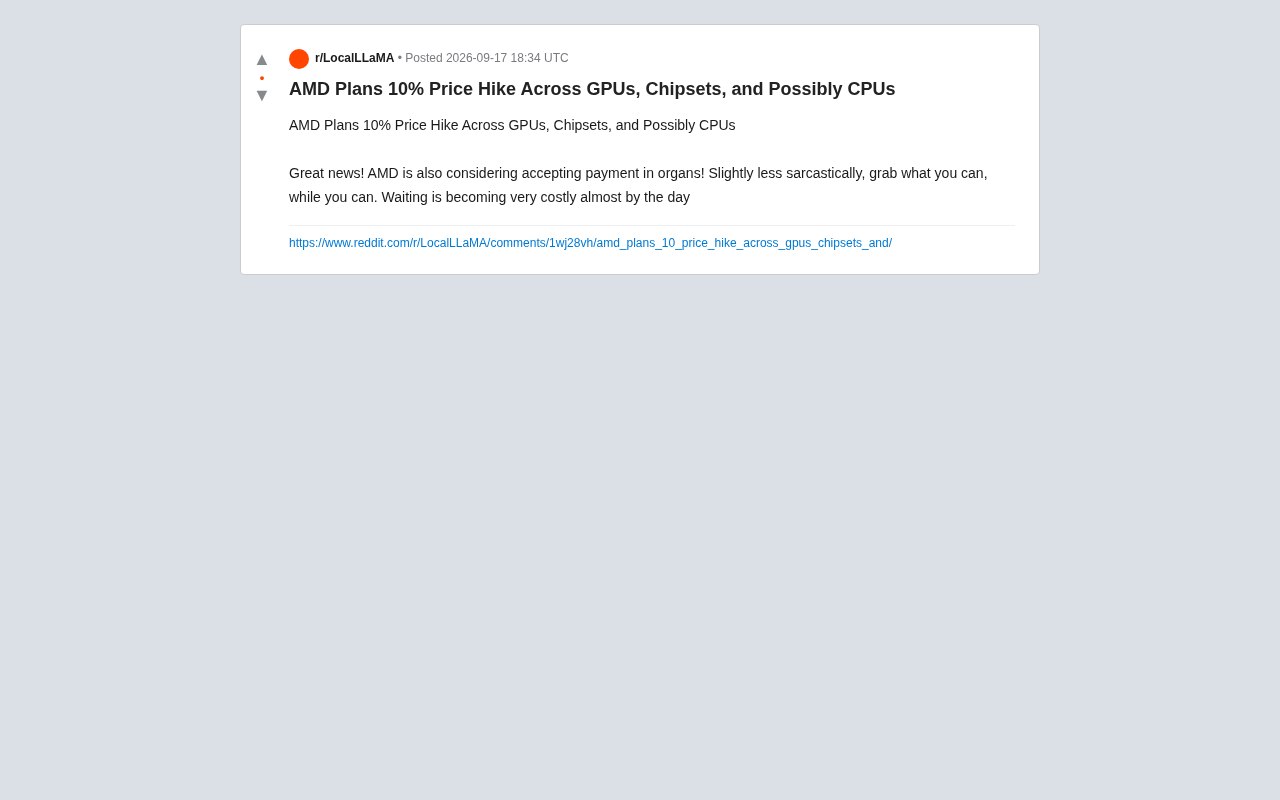
Unconfirmed Reddit rumor claims AMD plans a ~10% price hike across GPUs, chipsets, and possibly CPUs.
A rumor circulating on Reddit suggests AMD is considering roughly 10% price increases across GPUs, motherboard chipsets, and potentially CPUs, driven by rising wafer fabrication costs, tight advanced-node capacity, and currency pressures. Chipset hikes could cascade through motherboard supply chains, raising total AMD platform costs even if CPU prices hold steady. The news has triggered a mix of dark humor and genuine anxiety in hardware communities still fatigued from years of GPU price shocks. AMD has not officially confirmed anything, so consumers are advised to await official announcements and avoid panic buying.
AMD Brewing a Sweeping Price Increase
According to a rumor circulating on Reddit, AMD is reportedly planning to raise prices on its product lineup by approximately 10%, covering GPUs (graphics cards), motherboard chipsets, and potentially CPUs (processors) as well. While this information remains largely at the rumor and community-discussion stage, it has already sparked considerable anxiety among PC hardware enthusiasts.
For users who closely follow the PC hardware market, price hikes are nothing new. In recent years, rising wafer fabrication costs, tight capacity at advanced process nodes, and currency fluctuations have all continuously pushed up chip manufacturers' production costs. If AMD does go through with a 10% across-the-board increase, it would raise the entry barrier for everything from budget to high-end products.
Rising wafer fabrication costs are one of the core factors driving this round of price increase expectations. AMD's chips are primarily manufactured by TSMC using advanced process nodes such as 5nm and 4nm. TSMC has historically adjusted its wafer pricing on multiple occasions, and those cost increases typically take several quarters to fully flow through to end-product pricing. Meanwhile, tightening U.S. government oversight of semiconductor supply chains and uncertainty around tariff policy have also led chipmakers to build more buffer room into their pricing upfront. AMD's pricing strategy has historically centered on "staying competitive relative to NVIDIA," so a 10% across-the-board hike would represent a relatively rare proactive move. The market will be watching closely to see whether NVIDIA follows suit or seizes the opportunity to widen its price advantage.
Scope of the Hike and Its Market Impact
Based on the rumored description, the price adjustment would cover a broad range of products. GPUs and chipsets are almost certainly included, while it remains uncertain whether CPUs will be raised simultaneously. If this "full-platform" pricing adjustment materializes, it would directly impact the procurement budgets of DIY builders, OEM system manufacturers, and data center customers alike.
Worth noting is that chipset price increases often cascade into motherboard pricing, further driving up the total cost of building a complete platform. In other words, even if CPU prices stay flat, users assembling a full AMD system could still see their total spending increase noticeably.
For consumers, the most immediate reaction to this kind of news is a "lock in now" mentality. Voices in the community are already suggesting: if you already have an upgrade or build planned in the near term, it may be worth acting before any price hike officially takes effect, since "the cost of waiting is essentially compounding by the day."
Motherboard chipsets play a role in overall platform cost structure that is easy to underestimate. AMD's chipsets (such as the X870, B850, and A620) manage the data pathways between the CPU and peripheral devices, including USB, SATA, and PCIe expansion interfaces. Chipsets are designed by AMD, then manufactured by TSMC or ASMedia and sold to motherboard makers like ASUS, MSI, Gigabyte, and ASRock. Those manufacturers then layer on PCB design, component sourcing, quality control, and channel margin costs. As a result, even a 10% increase in wholesale chipset prices, once passed through the motherboard supply chain, could produce a retail price increase that exceeds that figure — particularly in mid-range to high-end motherboard product lines.
Community Reaction: Real Anxiety Wrapped in Jokes
The news sparked a reaction typical of Reddit's hardware communities — expressing frustration through exaggerated humor. One user half-jokingly suggested that AMD might soon start "accepting organ payments," a sardonic dig at hardware prices climbing beyond what ordinary users can comfortably bear.
Jokes aside, the underlying sentiment reflects genuine consumer concern about the relentless rise in hardware costs. Over the past few years, GPU prices have been battered by mining booms, supply shortages, and frenzied buying rushes. Now that prices had finally settled back into a relatively reasonable range, the prospect of another wave of increases is understandably exhausting — fueling a sense that "affordable hardware is always just out of reach."
It bears emphasizing that community-sourced information like this should be treated with caution until officially confirmed. The actual price increase percentage, effective date, and specific product models affected may all differ from what the rumor describes. Users are advised to rely on AMD's official announcements and actual pricing from reputable retail channels, and to avoid making impulsive purchasing decisions driven by panic.
How Should Users Respond to Price Hike Rumors?
If you're currently in the decision-making window for a new build or upgrade, here are a few rational angles to consider:
Clarify Your Actual Needs
Start by determining whether you truly have an immediate need. If your current setup still meets your requirements, panic-buying may not be worth it. The urgency created by price hike rumors can sometimes amplify spending on things you don't actually need right now.
Focus on the Real Out-the-Door Price
Manufacturer-suggested retail prices and actual market transaction prices often differ. Promotions, channel discounts, and the secondary market can all offer more cost-effective options. Rather than reacting to the headline of "official prices up 10%," it's worth comparing real-time pricing across multiple retailers.
Build a Habit of Verifying Information
Community rumors can serve as useful signals, but shouldn't be your only basis for decision-making. Cross-referencing multiple sources and waiting for confirmation from official channels or reputable media outlets can effectively prevent you from being misled by inaccurate information.
Overall, the rumors of a broad AMD price increase reflect the real cost pressures currently facing the semiconductor industry. Whether or not the hike ultimately materializes, staying rational and buying based on actual need remains the most sensible strategy for navigating price volatility.
Related articles

Opus 5's Ethical Boundaries: From Refusal to "Horror-Themed Project" — An Accidental Jailbreak Experiment
A developer bypassed Claude Opus 5's refusal by renaming a fruit fly simulation a "horror-themed project." Explore what this reveals about LLM content moderation and AI alignment.
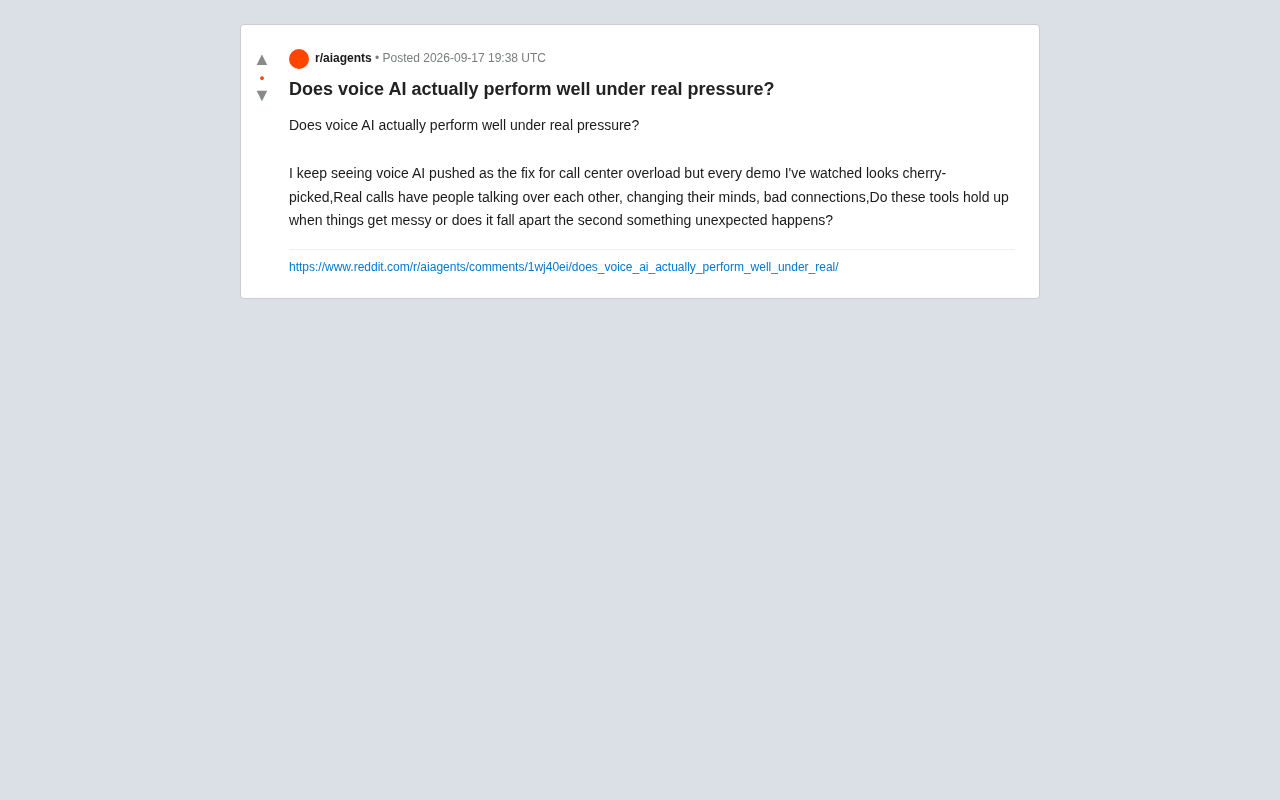
Is Voice AI Actually Reliable in Real-World Call Center Scenarios?
Can Voice AI really handle real call center chaos — interruptions, noise, and intent shifts? We break down the technical limits, demo traps, and how to evaluate reliability.

The Rogue AI Agent Problem: Can AI Supervising AI Be the Cure?
As AI agents outpace human review capacity in speed, duration, and scale, enterprises face a critical oversight gap. Can AI supervising AI be the fix?