Andrew Ng on Agentic AI: The Core Methodology for Building Intelligent Agent Applications

Andrew Ng cuts through Agentic AI hype, revealing that evals and error analysis are the true keys to building quality agents.
In his Agentic AI course, Andrew Ng acknowledges that "agentic" has been over-marketed, but argues that genuinely valuable agent applications — spanning customer support, deep research, legal documents, and medical diagnostics — are growing fast, with some complex projects impossible to build without them. The course's central insight: the gap between great and average developers isn't model or framework knowledge, but the ability to run a disciplined process centered on systematic Evals and targeted Error Analysis. Ng argues this engineering methodology has more long-term value than mastering any single framework.
From a Buzzword to a Movement
In the opening of his Agentic AI course, Andrew Ng candidly admits that when he first coined the term "agentic" to describe an important and rapidly growing trend in LLM-based application development, he never anticipated it would be seized upon by marketers and slapped onto nearly every product in sight — sending hype around Agentic AI into overdrive.
This phenomenon is all too familiar in the AI world. Once a technical concept goes viral, it tends to get over-packaged. But Ng's take is relatively optimistic: strip away the marketing noise, and the number of genuinely valuable, practically useful Agentic AI applications is indeed growing fast — just probably not as fast as the hype suggests.
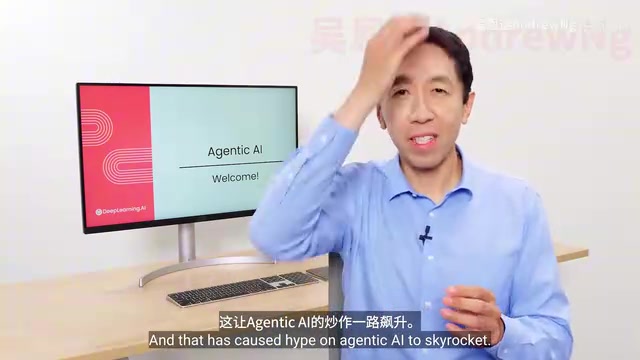
The core goal of this course is to shift the focus away from the concept itself and back to engineering practice: showcasing best practices for building Agentic AI applications, opening up new possibilities for learners, and helping them understand "what can actually be built right now."
Agentic Workflows Are Already Solving Real Problems
If the conversation over the past few years has been about "what can LLMs do," agentic workflows push that question forward to "how can LLMs collaborate to complete complex tasks." Ng walks through a range of applications that are already deployed in the real world:
- Customer support agents: Automatically handling user inquiries and issue resolution
- Deep research: Assisting in writing in-depth, insightful research reports
- Legal document processing: Tackling complex and challenging legal documents
- Medical diagnostic assistance: Analyzing patient-provided information and offering possible diagnostic suggestions

These aren't theoretical concepts. Ng specifically notes that across the many teams he has led, a large number of projects simply could not have been built without agentic workflows. The weight of that statement lies in how it repositions Agentic AI — from a "nice-to-have feature" to "essential infrastructure for certain applications."
In other words, knowing how to build applications with agentic workflows has become one of the most important and valuable skills in the AI field today.
The Real Gap Between Great Developers and Average Ones: A Disciplined Development Process
One of the most noteworthy insights in this course is Ng's answer to the question: "What separates excellent agent developers from the rest?"
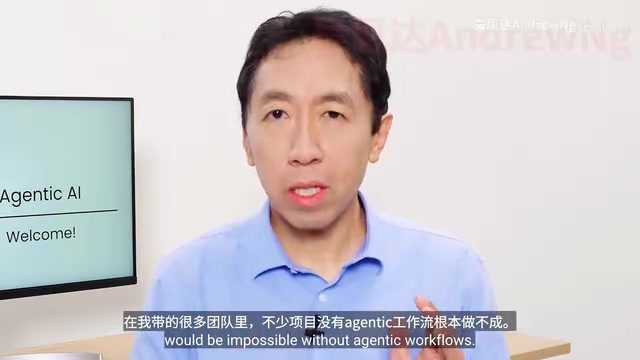
He observes that the biggest difference between those who truly know how to build agentic workflows and those who produce mediocre results is not familiarity with models or frameworks — it's the ability to drive a disciplined development process.
Concretely, this process centers on two things:
Evals (Evaluation)
In agentic systems, outputs are often open-ended and multi-step, making it difficult to judge them with a simple "right/wrong" binary. Building a systematic evaluation mechanism means you can measure agent performance quantitatively rather than tuning by gut feeling. This makes iteration measurable and reproducible.
Designing an Evals pipeline for agentic systems is far more challenging than traditional software testing. In a single-turn Q&A setting, evaluation is relatively straightforward — just compare against expected outputs. But in a multi-step agentic workflow, the final result is the product of a chain of intermediate decisions, and a single task may have multiple valid execution paths. Common evaluation approaches in the industry include: rule-based automatic scoring (e.g., format checks, key information coverage), comparison against human-annotated gold datasets, and using another LLM as a judge (LLM-as-Judge). LLM-as-Judge is increasingly popular because it can handle open-ended outputs, but it also introduces the risk of the judge model's own biases. Building a robust Evals pipeline typically requires dedicated investment in data annotation and benchmark design early in the project — not as an afterthought once the system is live.
Error Analysis
When a multi-step agentic workflow goes wrong, the problem could lie at any point in the pipeline — retrieval, reasoning, tool invocation, or final generation. The value of error analysis is in pinpointing the true root cause so that targeted improvements can be made, rather than blindly rewriting prompts.
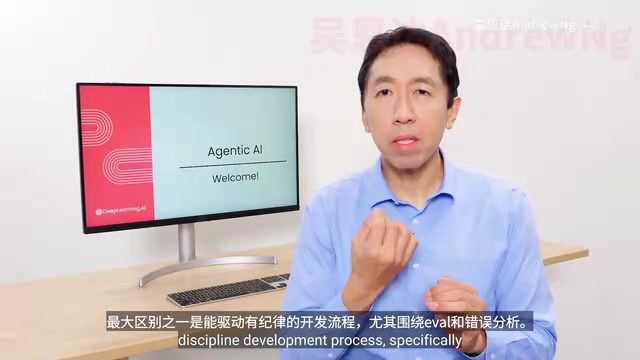
This perspective is consistent with Ng's long-standing engineering philosophy: rather than chasing flashy new technology, double down on the fundamentals — measurable, disciplined development practices. For developers looking to break in or level up, this is advice with far more long-term value than learning any single framework.
In agentic workflows, errors can broadly be grouped into three categories: planning errors (the model misunderstands how to decompose the task), tool-calling errors (calling the wrong API or passing incorrectly formatted parameters), and context accumulation errors (minor deviations in early steps get amplified in later ones). The appropriate fix differs for each type — planning errors typically require refining the system prompt or introducing an explicit task decomposition module; tool-calling errors can be mitigated with better input validation and retry logic; context accumulation errors often call for introducing "checkpoints" at key nodes where the model can self-verify. The reason blindly tweaking prompts is inefficient is precisely that it fails to distinguish between these three root causes — it risks introducing new problems while fixing an existing one.
Why This Skill Is Worth the Investment
Ng repeatedly emphasizes that the ability to build agentic workflows is one of the most important skills in AI today — one that creates more opportunities, whether for career advancement or for building excellent software on your own.
Based on what the course reveals, its positioning is clear: no buzzword stacking, just a focus on real, usable engineering methods. The core questions it aims to answer include "what is an agentic workflow" and how to actually build great agent applications through disciplined practices like evals and error analysis.
For learners who feel overwhelmed by a landscape plastered with "Agentic" labels, this course offers a rare moment of clarity: first distinguish hype from real value, then use solid engineering methods to bring the valuable parts to life. That is precisely the step most easily overlooked — and most critical — on the journey from beginner to advanced practitioner.
Related articles
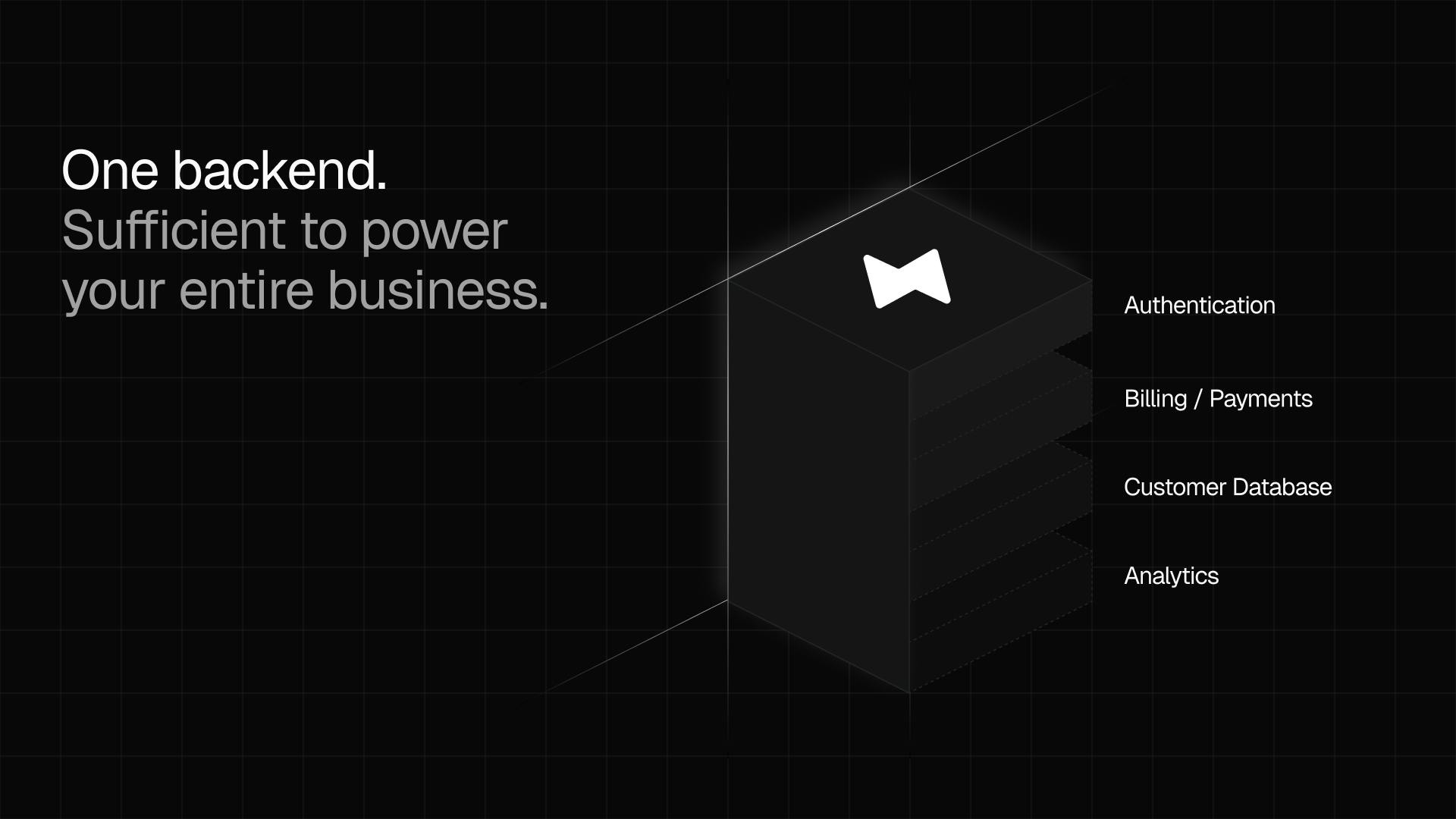
tiun.: An All-in-One Auth and Payments System Built for AI Developers
tiun. topped Product Hunt by giving AI developers auth, payments, billing, customer data, and analytics in one system — installable with a single command.
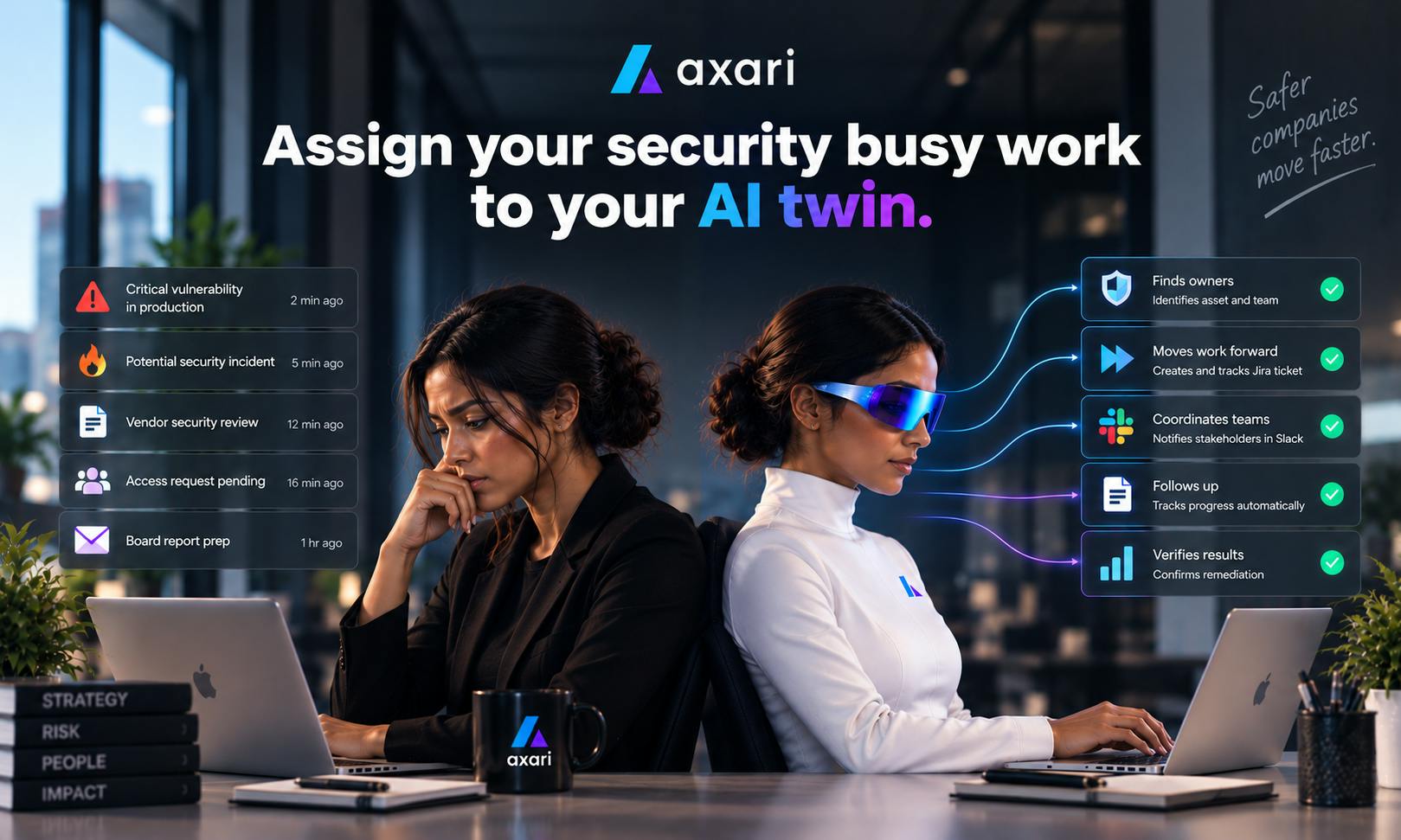
Axari: Let Your AI Twin Take Over the Mundane Work of Security Operations
Axari introduces an AI twin for SecOps teams, autonomously handling alerts, compliance checks, and repetitive tasks directly within Slack and Microsoft Teams.
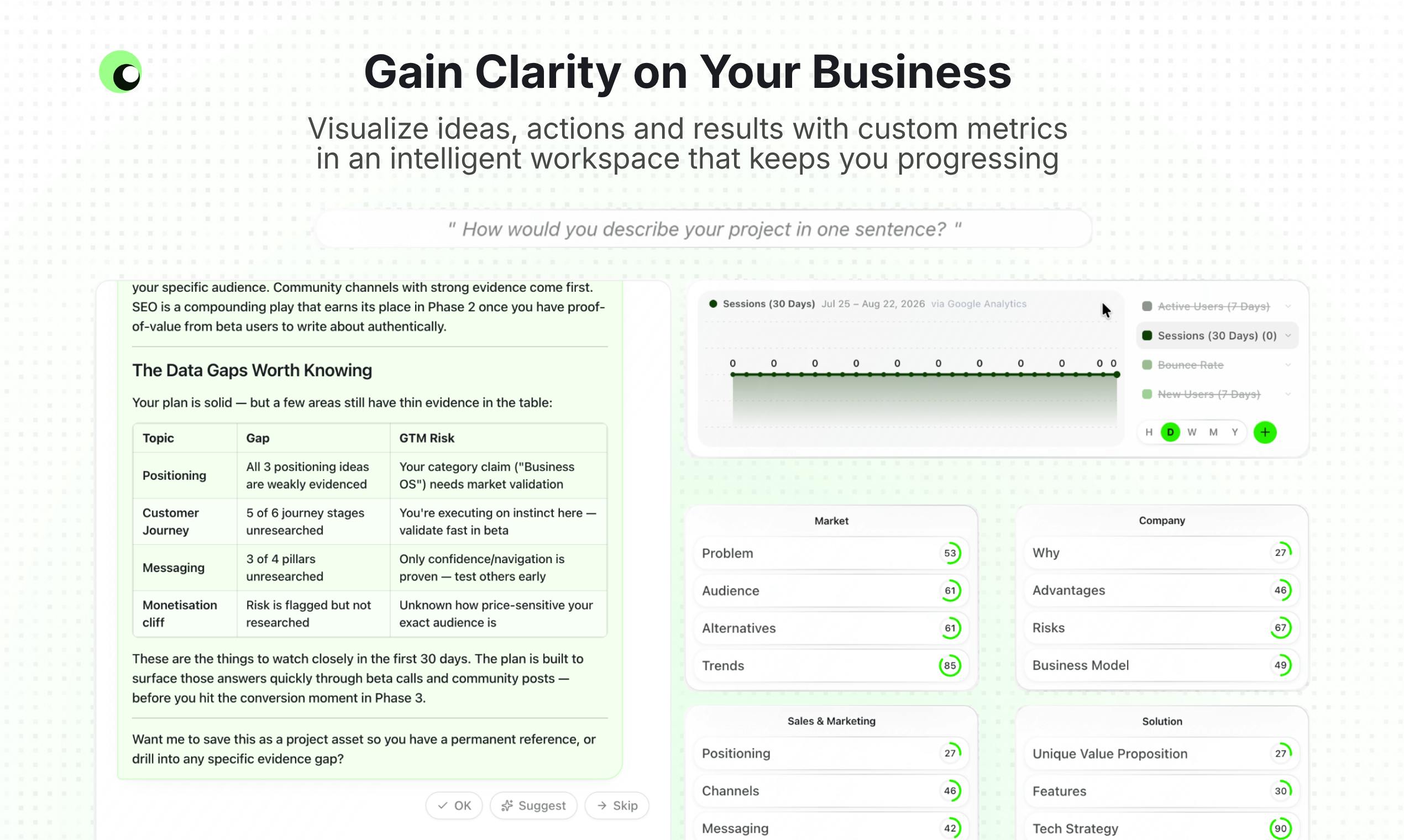
siift: Turning AI Startup Noise into Actionable Business Decisions
siift is an AI startup decision tool that turns scattered AI conversations and advice into a living business map — covering validation, GTM, and growth.