Andrew Ng's Agentic AI Course: Cutting Through the Hype to the Core of Agent Development

Andrew Ng separates Agentic AI hype from real value, pinpointing evals and error analysis as the expert developer's edge.
In the opening of his Agentic AI course, Andrew Ng acknowledges that his coined term "agentic" was overrun by marketing hype, while noting that genuinely valuable agent applications are also growing fast. He covers real-world use cases — from customer support to medical diagnosis — and argues some complex projects simply can't exist without Agentic workflows. His core insight: the gap between expert and average agent developers lies in driving a disciplined process built around evals and error analysis, a methodology he frames as more durably valuable than chasing the latest models or frameworks.
From a Coined Term to Full-Blown Hype
In the opening of his Agentic AI course, Andrew Ng shares an interesting story: when he coined the word "agentic" to describe an important and rapidly growing trend in application development, he never anticipated that marketers would seize on it and slap it onto virtually everything in sight. The result? Hype around Agentic AI has skyrocketed.
This pattern is all too familiar in the AI world. Whenever a new concept emerges, market enthusiasm tends to far outpace the actual maturity of the underlying technology. Ng candidly acknowledges this, but he also offers a more important observation: setting aside the hype, the number of genuinely valuable and useful Agentic AI applications is also growing rapidly — just not as dramatically as the hype itself.
This distinction matters. It reminds learners not to lose their judgment about the technology itself amid wall-to-wall marketing speak — but equally, not to let their distaste for hype cause them to miss the real opportunities.
What Agentic Workflows Can Actually Do
The course walks through a range of real-world use cases that illustrate the practical value of Agentic workflows.
Ng notes that agentic workflows are now being used to build customer support agents, conduct deep research for insightful research reports, handle complex legal documents, and analyze patient inputs to suggest possible medical diagnoses.
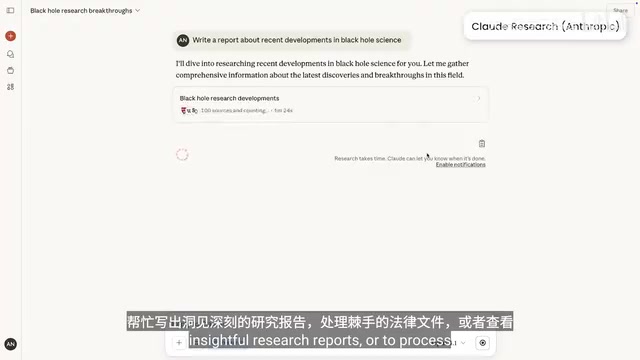
He makes a particularly weighty point: across many of the teams he has led, numerous projects simply could not have been built without Agentic workflows. This isn't a nice-to-have technical option — it's the capability that transforms certain complex applications from "impossible" to "achievable."
For this reason, he frames the ability to build Agentic applications as one of the most important and valuable skills in AI today — whether you're a job seeker or a developer who wants to independently build great software.
The Line Between Experts and Everyone Else: Evals and Error Analysis
The most valuable insight in the course is Ng's answer to the question: what actually makes someone genuinely good at building Agentic workflows?
His observation is that the biggest difference between people who truly know how to build agentic workflows and those who are less effective comes down to one capability: driving a disciplined development process.

Specifically, this process centers on two things — evals (evaluations) and error analysis.
This is worth unpacking. Many beginners building agents tend to tweak prompts intuitively, swap out models, and declare success when a single example runs correctly. But what Ng is pointing to is a more engineering-driven, systematic methodology.
Why Evals Matter So Much
Evals mean establishing a measurable set of standards to judge agent performance — rather than going by feel. With quantitative evaluations, you can tell whether each change actually made the system better or worse.
In machine learning engineering practice, an Evaluation Suite typically consists of test case collections covering representative inputs, expected outputs, and scoring criteria. For Agentic systems, evaluation is far harder than for traditional ML models — because an agent's output is often a multi-step sequence of actions rather than a single classification label. Common evaluation dimensions include: Task Success Rate, step efficiency (whether unnecessary paths were taken), accuracy of tool calls, and quality of the final answer. Some teams also distinguish between "online evaluation" (real-time monitoring in production) and "offline evaluation" (batch testing on a fixed test set) — the latter being the foundation for rapid iteration. Without this mechanism, any change to an agent is essentially navigating in the dark.
The Value of Error Analysis
Error analysis requires developers to dig into specific cases where the agent failed and identify the root cause — whether the problem lies in the retrieval step, a deviation in the reasoning chain, or a failed tool call. Only by pinpointing the true bottleneck does optimization have a clear direction.
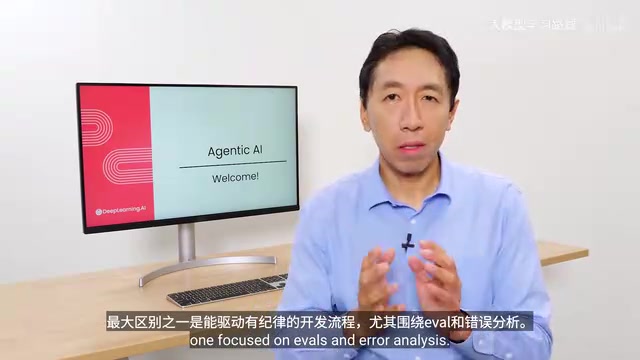
This disciplined development process, centered on evals and error analysis, is the core methodology the course aims to teach — and the dividing line between expert developers and the rest.
Error Analysis is a methodology for systematically examining failure cases of a model or system, long advocated in traditional machine learning. The basic workflow is: collect a batch of failure samples → categorize by error type (e.g., retrieval failure, reasoning shortcuts, hallucination, incorrect tool parameters) → estimate the frequency and impact of each error type → prioritize fixing the highest-frequency bottlenecks. In Agentic systems, because the execution chain is longer, errors can occur at multiple levels — planning, tool invocation, context management — and upstream errors amplify as they propagate down the chain. This makes error analysis even more indispensable in Agentic development than in single-model tuning. It ensures developers invest their limited optimization resources where they truly matter, rather than endlessly adjusting prompts based on instinct.
The Course's Purpose and Value
Taken together, this Agentic AI course has a clear and focused positioning: rather than chasing hype, it concentrates on teaching best practices for building agent-powered applications, while expanding learners' sense of what's actually possible.
Ng anchors the course goals at two levels from the very start: first, showing how to build genuinely useful Agentic AI applications; second, teaching the disciplined development approach that makes someone truly good at it. The first is about vision; the second is about craft.
For those looking to get started in large language model application development, this framing is genuinely instructive. It doesn't linger on surface-level claims about how powerful agents are — it goes straight to the parts of the development process most easily overlooked, yet most determinative of success. Mastering evals and error analysis may deliver more long-term returns than chasing the latest models and frameworks.
(This article is based on the opening content of Andrew Ng's Agentic AI course, which includes lecture slides, code, and bilingual Chinese–English subtitles.)
Related articles

iPhone 18 Pro Camera Upgrades: The Value Hidden in the Details
iPhone 18 Pro's camera update focuses on subtle experiential improvements. This analysis examines Apple's shift from bold design leaps to incremental refinement, and the role of computational photography on a mature hardware platform.
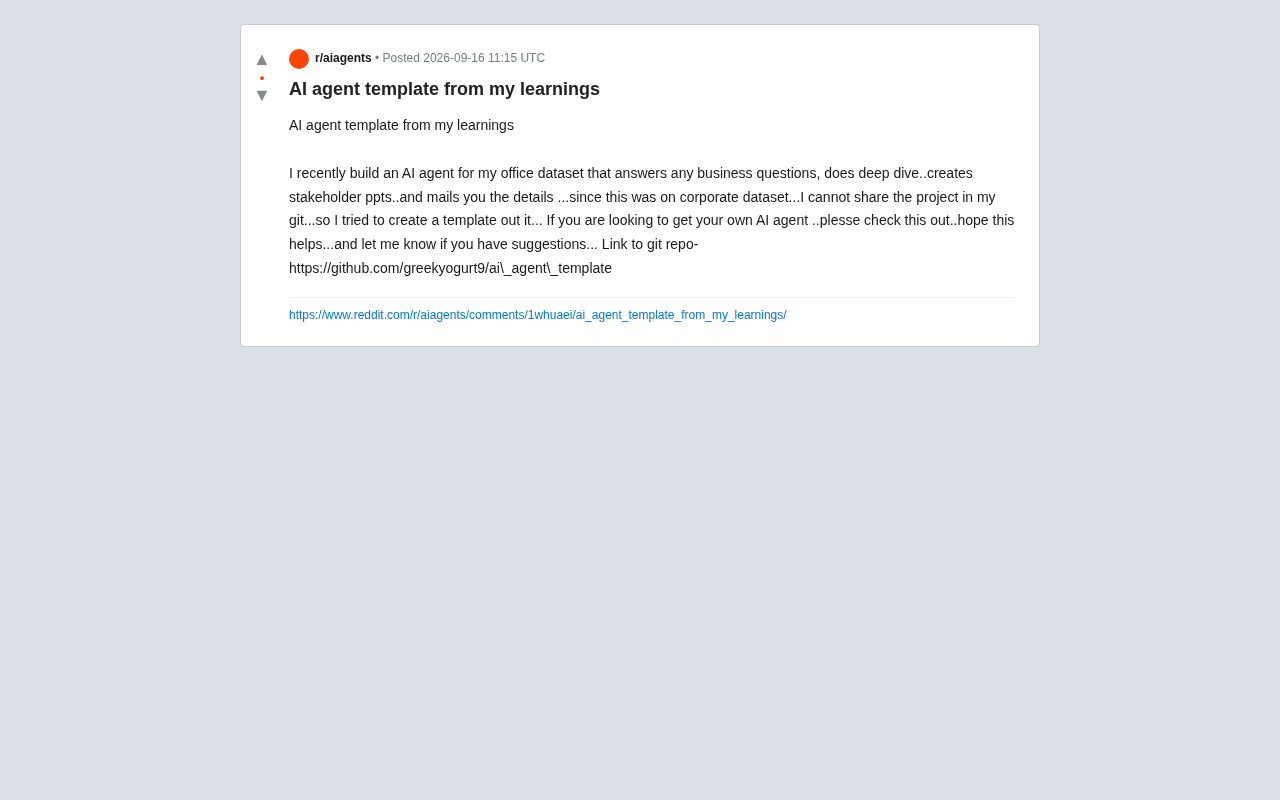
From Enterprise Practice to a Reusable Template: Lessons from Building an AI Agent
A developer shares an open-source AI Agent template built from an enterprise project, covering natural language data Q&A, analysis, auto-generated PPTs, and email distribution.

Nintendo's Open-World Design Evolution: Breaking Down Fire Emblem Fortune's Weave
Nintendo brings the open-world design philosophy of Breath of the Wild to Fire Emblem with the massive Switch 2 title Fortune's Weave. Here's what it means.