Andrew Ng's Agentic AI Course Essentials: Seeing Through the Hype to the Real Value of AI Agents

Andrew Ng's Agentic AI course cuts through marketing hype to teach practical agent-building skills.
In his latest course, Andrew Ng addresses the over-marketing of "agentic" AI while highlighting the real growth in valuable applications. The course covers best practices for building agentic workflows—from customer support to medical diagnostics—emphasizing that orchestration capability, not just model strength, defines competitive advantage. Ng identifies the ability to "drive" agent systems as the key differentiator between experts and average developers, and positions workflow mastery as one of today's most critical AI skills.
When "Agentic" Transforms from Technical Term to Marketing Sticker
In the opening of his latest Agentic AI course, Andrew Ng shares a rather reflective observation. He candidly admits that when he originally coined the term "agentic," it was to describe an important trend rapidly emerging in building large language model applications. What he didn't anticipate, however, was that marketers would quickly seize on this word, slapping it as a "sticker" on virtually every product.
The term "agentic" originates from the concept of "agency" in cognitive science and psychology, referring to a system's ability to autonomously perceive its environment, formulate plans, and take action. In the AI context, it describes a paradigm for large model applications that goes beyond the traditional "prompt-response" mode: AI no longer just passively answers questions, but can autonomously plan multi-step tasks, invoke external tools, perform intermediate reasoning, and adjust strategies based on feedback. This is conceptually aligned with earlier "AI Agent" ideas, but emphasizes engineered workflow orchestration. Notably, similar terminological inflation is common in the tech industry—concepts like "cloud computing," "big data," and "metaverse" have all undergone the transformation from precise technical definitions to generalized marketing labels.
This has directly led to a dramatic surge in hype around Agentic AI. For anyone following the AI field, this phenomenon is familiar—once a concept with clear technical meaning gets swept up in market fervor, it easily becomes vague and loses its original value proposition. Ng's admission is, to some extent, a "demystification" for the entire industry.
Beyond the Hype, Real Value Is Growing Rapidly
However, Ng's core message is optimistic. He points out that if you filter out the marketing noise, you'll discover that the number of genuinely valuable Agentic AI applications is also growing rapidly—though perhaps not as explosively as the hype suggests, the growth itself is very real.
This assessment is worth contemplating. Technology hype often follows a steep curve, while real application deployment follows a more gradual, more solid upward trajectory. The separation between the "hype curve" and "real value curve" that Ng describes aligns closely with Gartner's Hype Cycle. This model divides emerging technology development into five phases: Technology Trigger, Peak of Inflated Expectations, Trough of Disillusionment, Slope of Enlightenment, and Plateau of Productivity. Agentic AI is likely near the peak of inflated expectations, with many companies rushing to label products before understanding core technical principles. Historical experience shows that applications surviving the trough of disillusionment are typically those solving real pain points with measurable ROI.
The gap between the two is precisely where many practitioners stumble: either misled by hype into overestimating short-term capabilities, or underestimating long-term potential due to disappointment. Ng hopes learners can see through this fog and focus on what actually works.
He explicitly states in the course that the goal is to show learners best practices for building Agentic AI applications and open up new opportunities for capability development.
Real-World Applications of Agentic Workflows
Ng lists a series of real applications currently supported by agentic workflows:
- Customer Support Agents: Automatically handle and respond to user inquiries
- Deep Research: Assist in writing research reports with profound insights
- Complex Data Processing: Handle challenging data analysis and decision tasks
- Legal Document Analysis: Review and understand legal documents
- Medical Diagnostic Assistance: Analyze patient input information and provide possible diagnostic suggestions

The core architecture of agentic workflows typically includes several key components: a Planner responsible for decomposing complex goals into executable subtask sequences; a Tool Use layer enabling AI to operate APIs, databases, search engines, and other external systems; a Memory module maintaining cross-step contextual state; and a Reflection/evaluation mechanism allowing AI to assess its own output quality and iterate improvements. Compared to traditional single LLM calls, this architecture introduces loop and branching logic, enabling AI to handle nonlinear, multi-constraint complex tasks. Mainstream implementation frameworks include LangGraph, CrewAI, and AutoGen, each with different emphases on orchestration flexibility, multi-agent collaboration, and observability.
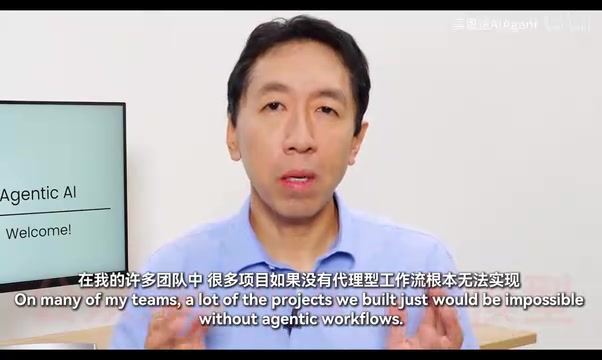
He particularly emphasizes that in the multiple teams he leads, many projects "simply couldn't be implemented without agentic workflows." This statement carries significant weight—it indicates that agent workflows are not optional nice-to-haves, but prerequisites for whether certain complex applications can exist at all.
Why This Is One of the Most Important Skills in AI
Ng offers a clear assertion: Mastering how to build applications with agentic workflows is one of the most important and valuable skills in AI today.
The logic behind this is straightforward. As foundational large model capabilities become increasingly homogeneous, real differentiation is increasingly manifested in "how to organize and orchestrate model capabilities." As OpenAI, Anthropic, Google, Meta, and other providers continuously release similarly capable foundational models, the industry is entering a phase of "model layer commoditization"—the gaps between GPT-4o, Claude 3.5 Sonnet, and Gemini 1.5 Pro have significantly narrowed across most benchmarks. This means the competitive focus is shifting from "whose model is stronger" to "who can better organize model capabilities to solve real problems." This trend has spawned what's called the "Orchestration Layer"—the middleware between foundational models and business logic, with agentic workflows being the core implementation of this layer.
Agentic workflows are the concentrated expression of this orchestration capability—involving how to decompose tasks, how to invoke tools, how to design multi-step reasoning, and how to enable AI to make autonomous decisions in complex processes.
The Key Difference Between Experts and Average Developers: Drive
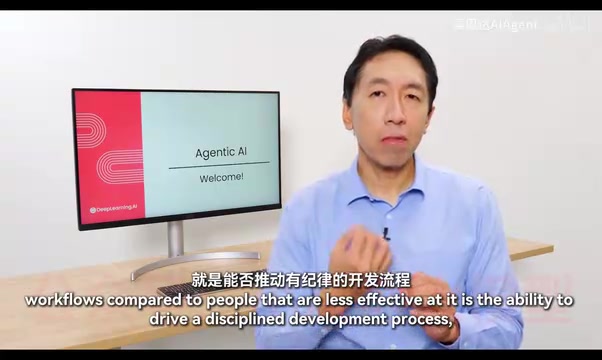
A particularly valuable insight in the course is Ng's identification of the biggest difference between those who excel at building agentic workflows and those who are less efficient—the ability to "drive" them.
While he doesn't elaborate on what "drive" specifically means in the opening, he promises to explain in detail throughout the course what this means and what makes someone truly skilled at building these workflows. This framing suggests that building agents isn't just about technical stacking, but a practical capability for actively guiding, iteratively optimizing, and continuously regulating AI behavior. In industry practice, this "drive" capability typically manifests in several dimensions: first is refined prompt engineering—how to write system prompts to constrain agent behavioral boundaries; second is fault tolerance and degradation design—when AI output at a step doesn't meet expectations, how to design fallback mechanisms and human review checkpoints; third is evaluation system construction—unlike deterministic testing in traditional software, agentic system outputs are probabilistic, requiring systematic evaluation pipelines based on LLM-as-Judge, human preference annotation, and similar methods. This capability combination transcends traditional software engineering, more closely resembling an "AI Systems Engineer" role requiring both deep understanding of model capability boundaries and intuition for regulating complex system behavior.
It's closer to "engineering intuition" and "systems thinking" rather than pure coding skills.
From Beginner to Expert: The Value Proposition of This Course
From the course structure, this Agentic AI tutorial covers core topics including Workflows, Tools, and MCP (Model Context Protocol), accompanied by courseware and code, forming a complete learning path from beginner to expert.
Among these, MCP is a standardization protocol open-sourced by Anthropic in late 2024, aimed at establishing unified connection interfaces between AI models and external data sources and tools. Before MCP, each AI application needed to write customized integration code for different tools and data sources, creating an "M×N" integration problem that greatly increased development complexity. MCP borrowed the concept of USB-C unified interfaces, defining a standard client-server communication protocol that enables AI applications (MCP Clients) to access any compatible tools and data services (MCP Servers) in a unified way. The protocol has gained support from major providers including OpenAI, Google, and Microsoft, rapidly becoming the de facto standard for tool invocation in agentic AI. Mastering MCP is crucial for building scalable, interoperable agent systems.
For developers and technical professionals hoping to enhance their competitiveness in the AI era, Ng's value proposition is very direct: having the ability to build agentic workflows will open more opportunities for you—whether career development opportunities or opportunities to independently build excellent software products.
In an era where concepts are over-marketed, Ng chooses to return to technical fundamentals, using practice-oriented teaching to help learners build real capabilities. This may be the greatest significance of this course: not chasing trends, but teaching you how to build things that are genuinely useful.
Key Takeaways
Related articles

Gemini Omni 1.1 Hands-On Review: 40-Second Long Video Generation Compared with Seedance 2.5
Hands-on review of Google's Gemini Omni 1.1 Flash video model: 40-second scene extension, keyframe control, 360p draft workflow, and side-by-side comparison with Seedance 2.5.
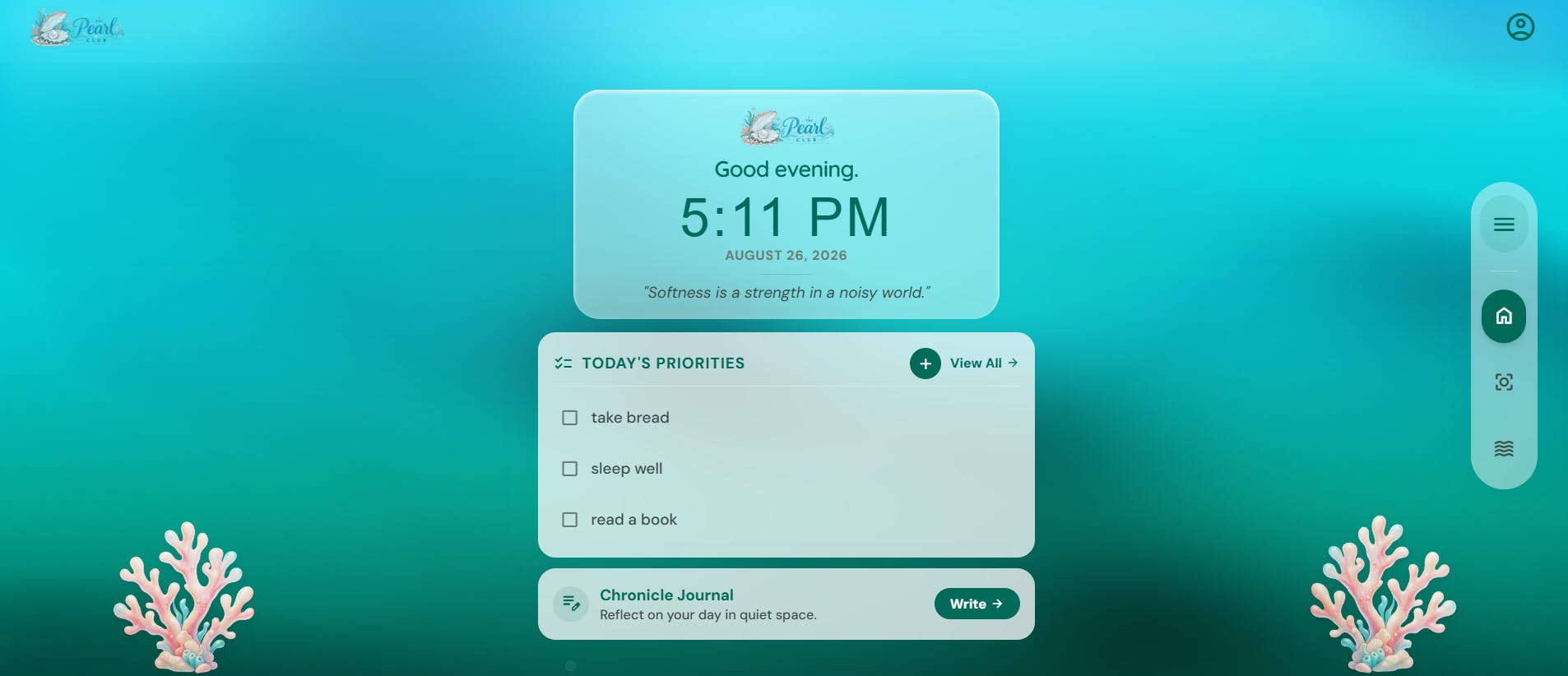
The Pearl Club: An Anti-Efficiency Haven on the Internet
The Pearl Club is a healing app emphasizing 'slowing down,' offering journaling, mini-games, and marine life collection. This article analyzes its anti-efficiency design philosophy, market performance, and opportunities in the emotional product space.

SheerID Verification Stuck? Solutions for Failed AI Student Discount Claims
SheerID verification stuck when claiming AI student discounts? This guide explains why verification gets stuck, how student IDs show as already used, and provides practical solutions including browser troubleshooting and customer service contact for verification reset.