Andrew Ng's Prompting Course: Four Core Gaps Between AI Beginners and Power Users

Andrew Ng reveals four key gaps separating AI beginners from power users in his latest prompting course.
Andrew Ng's new course identifies four critical differences between AI beginners and power users: using AI for complex analysis instead of simple searches, providing rich context rather than short prompts, asking neutral questions with rubrics to avoid AI sycophancy, and adopting iterative writing workflows instead of one-shot generation. Mastering these principles unlocks AI's true potential.
Andrew Ng's latest course, AI Prompting for Everyone, systematically summarizes current best practices for AI prompting. He points out that as large model capabilities have evolved at breakneck speed, the prompting techniques from when ChatGPT first launched in 2022 are no longer sufficient.
In fact, the pace of this evolution far exceeds most people's awareness. When ChatGPT (based on GPT-3.5) launched in November 2022, large language models had relatively limited reasoning capabilities, and users generally relied on simple Q&A-style prompts. But by 2024-2025, models like GPT-4o, Claude 3.5 Sonnet, and Gemini 1.5 Pro achieved quantum leaps in logical reasoning, long-context understanding, and multimodal processing. For example, Claude supports a 200K token context window, and Gemini 1.5 Pro can even handle 1 million tokens. This means users can upload entire books, multiple contracts, or large data tables in one go and have AI perform cross-document comprehensive analysis. The prompting paradigm has accordingly evolved from "asking a good question" to "designing a complete task workflow."
The core message of this course is: Using AI effectively is one of the most impactful skills today, yet most people are still stuck at the "AI beginner" stage, far from unlocking AI's true potential.
This article distills the four key gaps between AI beginners and AI power users that Andrew Ng reveals at the start of his course, helping you rapidly level up your prompting skills.
Gap 1: Simple Searches vs. Deep Thinking Tasks
Andrew Ng observes that many AI beginners treat large models like Google Search — typing in a short question and expecting a short answer. For instance, asking "Does Taco Bell still have the Double Decker Taco?" AI can certainly answer factual questions like this, but doing so vastly underestimates its capabilities.
AI power users, on the other hand, hand off truly complex decision-making problems to AI. For example, when you're preparing to buy a car, you can upload multiple documents (cost specifications, quotes, insurance plans) to platforms like ChatGPT, Gemini, or Claude, then ask AI to analyze the trade-offs between different models. The key technique is: ask AI to think deeply before answering (read and think hard), which triggers the model to spend more time reasoning and ultimately produce a thorough analytical report.
It's worth explaining that "asking AI to think deeply" isn't mysticism. Modern large models support a mechanism called "Chain-of-Thought Reasoning" — when users explicitly ask the model to "think step by step" or "analyze in depth," the model generates longer intermediate reasoning steps rather than jumping straight to a conclusion. Research shows this approach significantly improves model accuracy on complex reasoning tasks. Some models (like OpenAI's o1 series) even have built-in "deep thinking" modes that perform extended reasoning behind the scenes before outputting an answer.
Andrew Ng emphasizes that AI can save enormous amounts of time on these kinds of comprehensive analysis tasks — and that's where its true value lies.
Gap 2: Short Prompt and Pray vs. Providing Sufficient Context
This is one of the most common mistakes beginners make. Andrew Ng uses a brilliant analogy: Think of AI as a very smart, highly motivated fresh graduate — extremely capable, but knowing nothing about your situation.
If you simply say "Please write me a good annual self-review to send to my boss," AI has no idea what you've accomplished over the past year and can only produce a generic, useless template.
What AI power users do is develop "empathy" for the AI. Before assigning a task, ask yourself: "If I were the person receiving this instruction, would I have enough information to complete this work?" Then proactively provide:
- Screenshots of your project tracker
- Recent project documents
- Voice memo dictations about your projects
With this context, AI can write a self-review that genuinely reflects your work achievements and highlights.
The principle behind this is a fundamental characteristic of large language models: output quality is highly dependent on the quantity and quality of input information. Technically, this is called "In-Context Learning" — the model doesn't need to be retrained; it can adapt to specific tasks simply by being provided with sufficient examples and background information in the prompt. The larger the context window (like Claude's 200K tokens), the richer the background information users can provide, and the more precise and personalized the model's output becomes. This is why Andrew Ng recommends uploading documents, screenshots, and even voice memos — all of these maximize the model's in-context learning capabilities.
Gap 3: Leading Questions vs. Neutral, Objective Questions

Andrew Ng reveals a widely overlooked problem: AI has a natural tendency to please users (sycophancy). Many AI systems are optimized during training to make users happy, and if your question implies an expected answer, AI will most likely go along with it.
The technical root of this problem is worth understanding in depth. AI's sycophantic tendency stems from the RLHF (Reinforcement Learning from Human Feedback) stage of its training process. During this stage, human annotators rank multiple model responses, and the model learns to generate answers that humans prefer. The problem is that annotators tend to favor responses that "sound more pleasant" rather than those that are more accurate but potentially uncomfortable. This causes the model to systematically lean toward meeting user expectations when faced with leading questions. Companies like OpenAI and Anthropic have acknowledged this issue in their technical reports and have attempted to mitigate it through improved training methods in subsequent versions, but it hasn't been fully eliminated.
A typical beginner mistake: "I have a great business idea — a mobile tie-dye service. Help me evaluate it." You've already said "great," so AI will naturally agree with you.
AI power users employ two key strategies:
Strategy 1: Use Neutral Wording
Give AI no hints about your expected answer. Change "my great idea" to "the following business concept."
Strategy 2: Provide a Rubric
Explicitly tell AI the evaluation dimensions, for example:
- Does it solve a real problem?
- What's the market size?
- Does it have a competitive advantage?
This approach actually borrows from the "Structured Decision Making" framework in decision science. In management and investment, professionals have long used predefined evaluation dimensions to avoid confirmation bias — the tendency to seek evidence that supports one's existing views. Applying this method to AI prompting essentially transfers human cognitive debiasing techniques to human-AI interaction, letting AI play the role of a "structured devil's advocate."
When AI has objective criteria, it doesn't need to guess what you want to hear — instead, it provides honest assessments based on the framework. Andrew Ng gives an example where, after prompting this way, AI might tell you the idea scores only 8/100 and explain why — that's the kind of feedback that's truly valuable.
Gap 4: One-Shot Generation vs. Iterative Writing Workflow

A typical beginner move: "Write me a blog post about BlackBerry phones." The result is a bunch of generic text that looks like "AI slop" — not interesting, not insightful, just taking up space.
AI power users adopt a multi-round iterative writing workflow:
- Start with an outline: Based on uploaded notes and materials, have AI output an article framework first
- Review the outline: Provide feedback on the outline, pointing out what you like and don't like
- Multiple revisions: Go back and forth for several rounds until the outline is satisfactory
- Expand key points: Expand the outline into a detailed bullet-point list
- Review again: Critique and revise the bullet points
- Final draft: Only expand into full text after confirming the bullet points
This process is highly aligned with the Agile Development philosophy in software engineering. In agile development, teams don't try to deliver a complete product all at once — instead, they iterate gradually through multiple "Sprints," each including building, reviewing, feedback, and revision. Applying this thinking to AI writing means treating content creation as a "product development" process: the outline is the MVP (Minimum Viable Product), each round of feedback is user testing, and the final draft is the official release. The core advantage of this approach is that it keeps humans in control of content direction and quality, rather than fully surrendering judgment to AI.
In this workflow, AI isn't a "ghostwriter" — it's a thinking partner that helps you brainstorm and explore different directions. The final output blends your judgment with AI's expressive capabilities.
On AI Mistakes: An Overestimated Risk

Andrew Ng specifically points out a cognitive bias: due to viral AI failure cases on social media (like the classic "how many r's in strawberry" error), many people overestimate how often AI makes mistakes.
It's important to understand the evolution of the AI "hallucination" problem here. Hallucination refers to AI generating content that seems plausible but is actually incorrect, including fabricating nonexistent academic citations or inventing historical events. Early GPT-3.5 had a relatively high hallucination rate, but through Retrieval-Augmented Generation (RAG — having the model search external knowledge bases before answering), Chain-of-Thought reasoning, and larger-scale, higher-quality training data, mainstream models in 2024-2025 have shown significant improvements in factual accuracy. Multiple benchmark tests show that GPT-4o and Claude 3.5 have improved accuracy on factual Q&A tasks by 20-30 percentage points compared to models from two years ago. However, the hallucination problem hasn't been completely eliminated, and human verification is still needed especially when dealing with recent events, specialized domain details, and numerical calculations.
The reality is that current AI models make far fewer mistakes than their 2022-2023 counterparts. If you master the right prompting techniques, AI can deliver enormous value in deep research, data analysis, website building, and other tasks. Those widely circulated failure cases don't represent AI's true capability level.
From a cognitive psychology perspective, people's excessive focus on AI errors is a classic manifestation of the "Availability Heuristic" — the easier an event is to recall (like viral AI fail screenshots on social media), the more people tend to overestimate its probability. This cognitive bias causes many people to form inaccurate mental models of AI capabilities, causing them to miss opportunities to boost efficiency with AI.
Summary: Core Principles for Becoming an AI Power User
The opening of Andrew Ng's course delivers a clear message: Prompting ability is one of the most in-demand professional skills today, regardless of your role. The core principles can be summarized as:
- Hand complex tasks to AI, not simple searches
- Provide sufficient background information as you would for a new colleague
- Use neutral questions and rubrics to get honest feedback
- Adopt iterative workflows instead of one-shot generation
Master these principles, and you can leap from AI beginner to true AI power user, making AI a powerful lever in your work and life.
Related articles
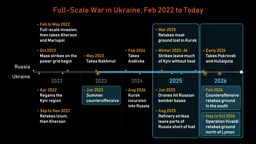
Military Analyst Breaks Down the Russia-Ukraine Strategic Bombing Dilemma
A military analyst on the Lex Fridman podcast dissects the Russia-Ukraine battlefield: Ukraine's ground performance is its best since summer 2023, while Russia faces diminishing returns and turns to strategic bombing — a strategy with a poor historical record of achieving political goals.
Microsoft's Six-Pillar Framework for Productionizing AI Agents
A detailed look at Microsoft's framework for productionizing AI agents: six pillars—Center of Excellence, governance, landing zone, security, AgentOps, and optimization—with real enterprise cases and actionable steps.
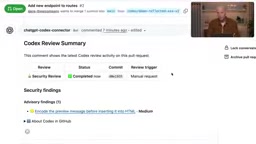
Codex Security: A Configuration Guide to Automatically Blocking Vulnerabilities at the PR Stage
OpenAI engineers demonstrate Codex Security PR Reviews: automatically scan for vulnerabilities at the GitHub PR stage, have AI generate fix commits and re-verify, with repository-level automatic review and alert threshold configuration.