Android x Gemini 4: A New Breakthrough in Multilingual Scenario Experience

Video shows Gemini 4 holding natural conversations in multilingual daily scenarios, signaling AI assistants' shift from translation tools to scenario-aware companions.
A YouTube video showcases Android devices and Gemini 4 in a multilingual roaming experience under the "Lingo City" concept, covering everyday dialogues like ordering in French, exchanging pleasantries in Italian, and describing ramen in Japanese. The article notes that AI assistants are shifting from "answering questions" to "understanding scenarios," with core capabilities reflected in context awareness over literal translation, seamless scene switching reliant on long-range context memory, and discourse-level semantic understanding of sensory descriptions. If reliably deployed in real environments, AI assistants could become an intermediary service layer for cross-language travel, lowering the barrier to high-frequency needs like asking for directions and ordering food. But the article also cautions that the demo is choreographed, and real-world factors such as accents, noise, and latency still need verification—whether Gemini 4 is a marketing concept or a practical tool remains to be seen.
When AI Assistants Start Understanding Street Conversations
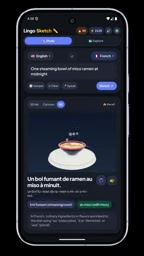
A video from YouTube showcases a collaboration scenario between an Android device and Gemini 4, with the title "Lingo City" hinting at a city-roaming language learning experience. The video content is not a technical demonstration but a series of slice-of-life multilingual conversations: from espresso on a Paris terrace, to a casual stroll through the streets of Rome, to a steaming bowl of miso ramen. Together, these clips point to a trend—AI assistants are shifting from "answering questions" to "understanding scenarios."
The Role Shift from Tool to Companion
Traditional voice assistants often require manual language switching when faced with mixed-language input. But the interactions shown in the video are natural: ordering in French, exchanging pleasantries in Italian, describing food in Japanese—the AI seems to flow seamlessly with the context of the conversation. The core of this experience isn't translation accuracy but the grasp of scenario intent—whether the user is ordering food, asking for directions, or simply chatting.
Mixed-language input refers to users alternating between multiple languages within the same conversation, rather than presetting a single language mode. Traditional voice assistants typically rely on explicit language-switching commands or settings menus, because their speech recognition and natural language understanding modules are often trained for a single language. Handling mixed input requires the model to possess language-agnostic semantic representation capabilities—sharing an underlying semantic space across languages, thereby automatically inferring the current language from context and maintaining conversational coherence. This capability is especially critical for multilingual scenarios such as travel and cross-border business, and is also an important indicator of whether an AI assistant feels "natural."
Three Observation Dimensions of Multilingual Interaction
Context Awareness Beats Literal Translation
Everyday dialogue appears repeatedly in the video, such as "Ça sent bon le beurre chaud, n'est-ce pas?" (The warm butter smells so good, doesn't it?). The value of such sentences lies not in information transfer but in atmosphere creation. If Gemini 4 can maintain conversational coherence in similar scenarios, it indicates that its multilingual capability has risen from the word-and-sentence level to the discourse level.
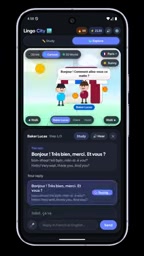
According to the YouTube channel's interpretation of the video, the demonstration focuses on the AI's adaptability to the "urban language environment" rather than showcasing individual language skills. This is clearly different from past product approaches that sold on translation precision.
Fluidity of Scenario Switching Is Key
From a French breakfast to an Italian café, the scene transitions in the video show no obvious pauses or sense of reset. For users, this means not having to repeatedly wake the assistant or reconfigure the language. According to relevant analysis by a Bilibili creator, this seamless switching relies on the model's long-range context memory capability, which is also one of the core improvements that distinguishes Gemini 4 from previous generations.

Long-range context memory refers to the model's ability to track prior information over a longer conversational span, typically measured by token window size. In multilingual scenario switching, the model needs to remember the previously used language, conversation topic, user preferences, etc., avoiding resetting state with each switch. If Gemini 4 can maintain memory coherence during scene transitions, it indicates that its context window is sufficient to cover cross-scenario conversations, and that its attention mechanism can effectively associate distant information. This capability directly affects the "seamlessness" of user experience and is also an important technical dimension that distinguishes it from previous generations.
Semantic Understanding of Sensory Descriptions
Descriptions like "Un bol fumant de ramen au miso à Minmi" involve multiple sensory information such as temperature, smell, and location. The AI needs to understand not just the noun "ramen" but also the immediacy conveyed by "steaming hot." Judging from the effect presented in the video, the system handles such concrete expressions fairly naturally, without mechanical repetition or irrelevant responses.
Discourse-level understanding is contrasted with word-and-sentence-level understanding: the latter focuses on the literal meaning of individual words or sentences, while the former requires the model to grasp cross-sentence coherence, anaphoric relationships, contextual intent, and emotional tone. In sensory descriptions, "steaming hot" not only conveys temperature information but also implies immediacy and freshness, requiring the model to infer with common sense. Discourse-level understanding enables the AI to distinguish between different intents such as ordering food, asking for directions, and chatting, and to give responses that fit the scenario, rather than mechanical translation or irrelevant answers. This is the key leap for multilingual assistants from "translation tools" to "conversation partners."
Potential Impact on the Android Ecosystem
If such experiences can be reliably deployed on Android devices, the most direct change would be a lower barrier to cross-language travel scenarios. Users would no longer need to pre-download offline language packs or frequently switch input methods. The deeper impact is that AI assistants could become an intermediary layer connecting local services with foreign users—high-frequency needs such as asking for directions, ordering food, and shopping could all be fulfilled through natural conversation.
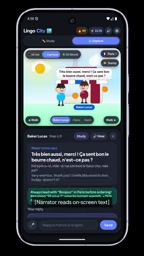
However, a caveat: the video shows choreographed demonstration scenarios, and real-world accent differences, background noise, and network conditions will all affect the experience. Gemini 4's performance outside the lab remains to be verified.
Taking a Sober View of Demos vs. Real-World Deployment
Competition in multilingual AI assistants has been ongoing for some time, and the gap between products in translation accuracy is narrowing. The real dividing line lies in the depth of scenario understanding and control of response latency. The conversational rhythm in the video approaches human interaction; only if this latency level can be reproduced on mass-production devices would the promise of "Lingo City" truly be fulfilled.
For ordinary users, rather than focusing on model parameters, it's more practical to focus on a more concrete question: on your next trip abroad, can you really leave the house without a translation app? The answer to this question determines whether Gemini 4 is a marketing concept or a practical tool.
Related articles

OpenAI to Shut Down Agent Builder and Two Other Services on November 30, Developers Must Migrate Urgently
OpenAI will shut down Agent Builder, the evals dashboard, and reusable prompts on November 30; evals is already read-only. Here's the scope, OpenAI's migration paths (Agent SDK, PromptFu, your own code), and what developers should export and rebuild this week.
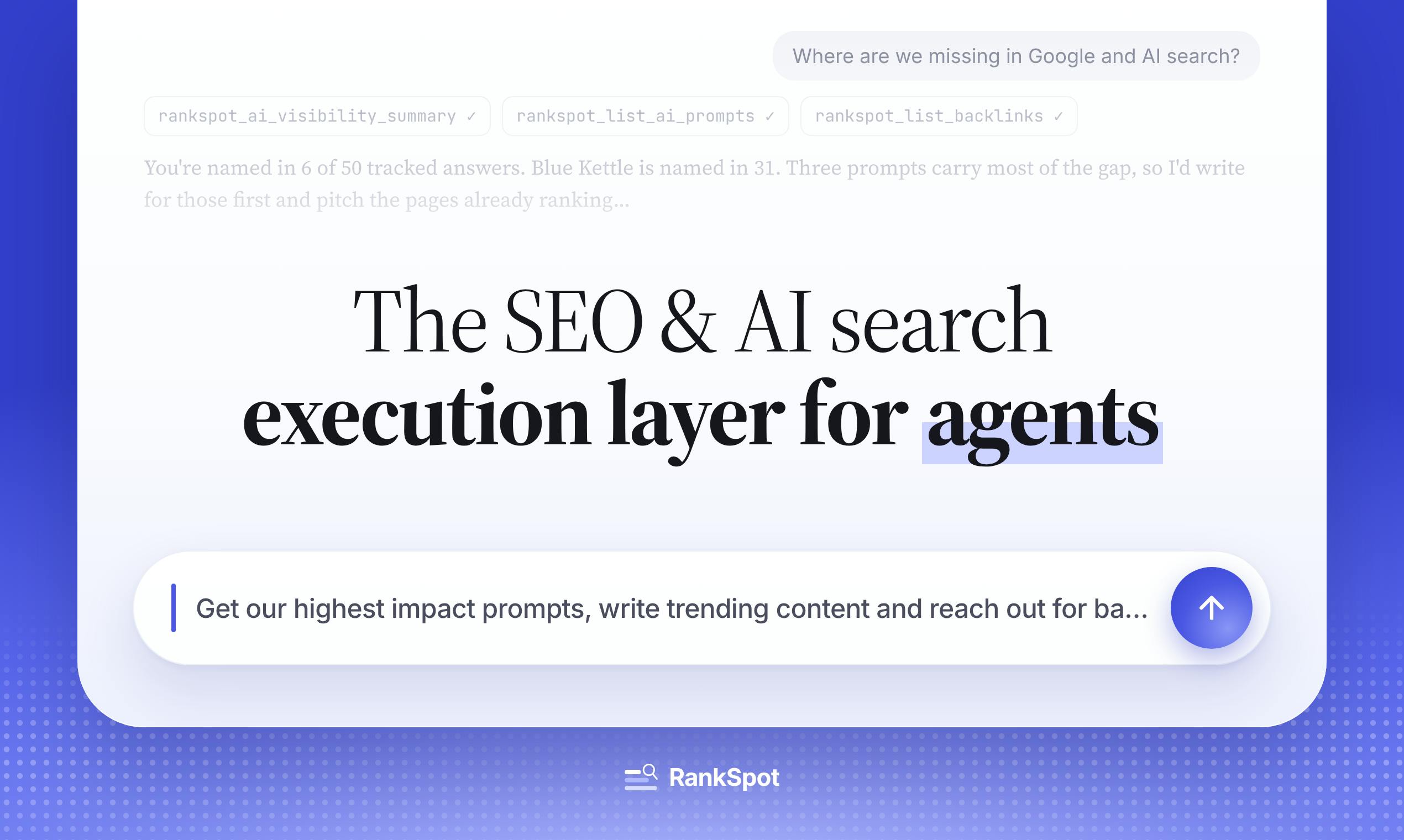
RankSpot: A Pay-Per-Use SEO & AI Search Execution Layer That Lets Agents Write, Publish, and Build Backlinks for You
RankSpot is an SEO & AI search execution layer for AI Agents. Connect via MCP to Claude or ChatGPT to write, publish & build backlinks. Pay-per-use, $3/article.

Appxiom: Giving AI Coding Assistants Production Context
Appxiom gives AI coding agents production context—crashes, jank, memory leaks, failed network calls—across Android, iOS, Flutter, KMP, and Web, ranking bugs by Goal Friction Impact.