Anthropic Co-Founder: AI 'Kill Switch' May Need to Be Mandatory by Law

Anthropic co-founder calls for mandatory AI kill switch legislation, questioning the reliability of self-regulation.
An Anthropic co-founder told the BBC that AI "kill switches" may need to be legally mandated rather than left to voluntary self-regulation. Coming from inside a top AI company, this carries a strong signal — even industry insiders are skeptical of pure self-regulation. Intense competition tends to make safety the first casualty, and mandatory legislation would set a non-negotiable floor for the industry. However, kill switches face serious technical hurdles around distributed deployment and open-source models, while governance questions about who triggers them and how to prevent misuse remain unresolved. The proposal sits at the heart of the regulation-vs-innovation tension, with the technical community sharply divided.
A Warning From Inside the AI Industry
AI safety is back in the spotlight. According to the BBC, an Anthropic co-founder made a striking argument in a recent interview: an AI system's "kill switch" may need to be mandated by law rather than left to voluntary industry practice. What makes this statement particularly noteworthy is that it didn't come from an outside critic — it came from a core founder of a leading AI company.
A "kill switch" refers to a mechanism that can rapidly shut down or halt an AI system when it behaves unexpectedly, goes out of control, or poses potential harm. The concept itself isn't new to AI safety discussions, but framing it as something that requires mandatory legislation represents a markedly more cautious approach to regulation.

Why "Mandatory" Matters
Most AI safety measures today still rely on corporate self-regulation and voluntary industry commitments. Companies individually decide how much to invest in safety and what protective mechanisms to deploy, with no unified constraints. When the Anthropic co-founder emphasized the word "mandatory," they were essentially questioning the reliability of self-regulation alone.
From an industry logic standpoint, as market competition intensifies and release cycles accelerate, companies face mounting pressure to trade off safety for speed. If safety mechanisms are optional, they're likely to be the first thing sacrificed in a highly competitive environment. Making emergency shutdown mechanisms a legal requirement would draw a hard line that the entire industry cannot cross.
The Limits of Self-Regulation
Anthropic itself is branded around "AI safety first," and its co-founder proactively calling for regulation reflects, to some degree, a distrust within the industry of the pure self-regulation model. When even industry insiders believe external constraints are necessary, that signal alone deserves serious attention from policymakers.
There are precedents for self-regulation in the AI industry. In 2023, leading companies including OpenAI, Google, Meta, and Anthropic signed voluntary commitments at the White House covering safety testing, information sharing, and transparency reporting. Critics, however, have pointed out that these pledges lack verifiable quantitative metrics and third-party audit mechanisms — making them essentially PR gestures. By contrast, safety standards in high-risk industries like finance, healthcare, and aviation are built on mandatory compliance, with license revocations or criminal liability for violations. The Anthropic co-founder's call is an attempt to push AI safety mechanisms from "soft commitments" toward a similarly hard compliance framework. The core logic of this shift: when potential systemic risks are large enough, reputational incentives and moral self-discipline alone are insufficient to ensure companies hold the safety line under pressure.
What a "Kill Switch" Actually Means Technically
To be clear, a "kill switch" sounds simple but is extraordinarily difficult to implement. For AI models that are distributed across infrastructure, have already been open-sourced, or are deeply embedded in other systems, designing a shutdown mechanism that is truly effective and impossible to circumvent is a complex engineering and governance challenge.
There are also critical questions that remain unanswered: Who has the authority to flip the switch? Under what conditions is it triggered? How do you prevent misuse or malicious exploitation? Without clear legislative definitions for these questions, a mandatory requirement could end up being purely symbolic. This is precisely why the topic sparked nearly a hundred heated comments on Hacker News — the technical community is sharply divided on feasibility and real-world effectiveness.
Take large language models as an example. Their inference processes are typically distributed across hundreds or even thousands of GPU nodes, and model weights may be replicated across multiple data centers or even users' local devices. For models that have already been released as open source (such as Meta's LLaMA series), once the weight files are public, anyone can download and run them on private servers — at which point a "shutdown" is technically near impossible. Even for closed-source API services, an effective shutdown requires coordinating across cloud providers, CDN nodes, caching layers, and more. This is fundamentally different from "taking down" traditional software — a software takedown only requires stopping distribution, whereas terminating a live AI inference service involves instantly halting real-time compute resources.
The industry has proposed several technical approaches, including embedding encrypted licenses in model weights (requiring periodic online verification), implementing forced interrupt interfaces at the hardware driver level, and using Trusted Execution Environments (TEEs) to monitor inference processes. But each approach faces issues of performance overhead, security vulnerabilities, or bypassability. No recognized mature standard currently exists.
The Tension Between Regulation and Innovation
The debate around AI regulation has long featured two competing voices. One side argues that strict regulation is a necessary safeguard against systemic risk; the other worries that premature or excessive regulation will stifle innovation, and may disproportionately burden resource-constrained startups and open-source communities.
The mandatory kill switch proposal sits squarely at the center of this tension. Proponents see it as a safety net to prevent catastrophic outcomes; opponents worry about implementation costs, technical feasibility, and the potential chilling effect on open research ecosystems. Judging by the discussion activity on Hacker News, this divide is very much present among technical practitioners as well.
Conclusion: A Conversation That's Just Beginning
The Anthropic co-founder's remarks are less about providing answers and more about raising the right questions. The rapid advancement of AI capabilities is forcing governance frameworks to evolve, and the "mandatory kill switch" is just one of many unresolved issues.
For practitioners and policy observers following AI development, the truly important thing to track is whether this call translates into concrete legislative action — and where the industry ultimately lands in balancing technical feasibility with regulatory necessity. The conversation about where to draw the hard lines on AI safety has only just begun.
Related articles
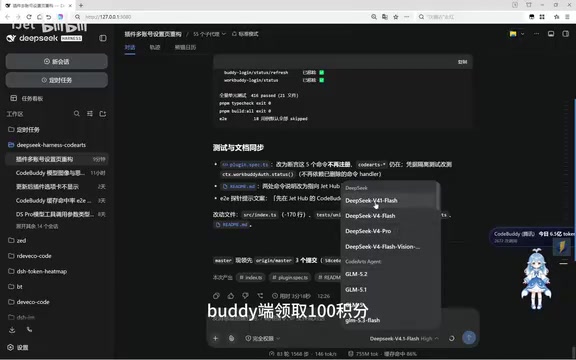
Free DeepSeek V4.1 Flash via DSH: Bulk Point Collection & International WorkBuddy Tested
DSH project update tested: WorkBuddy now offers 100 points per claim, rate limits raised beyond 80M tokens with faster resets, and international WorkBuddy supports free Hunyuan 4 and DeepSeek V4.1 Flash.
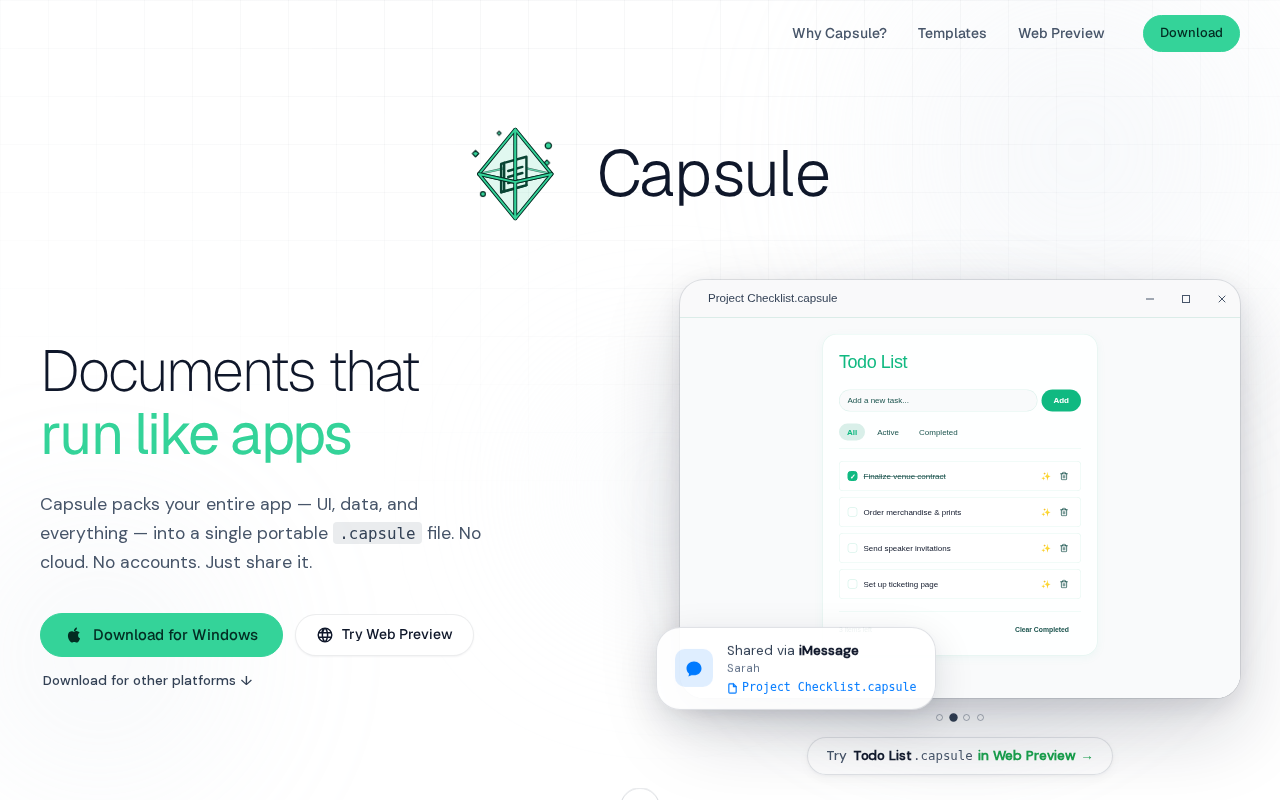
Capsule: Pack Web Apps and Data into a Single SQLite File
Capsule is a Rust/Tauri 2.0 tool that packs HTML web apps and data into a single SQLite file — privacy-first, local storage, portable sharing, with AI support.

DSH-SUBAGENT-UI Plugin: The Ultimate Sub-Agent Manager for DeepSeek Harness
DSH-SUBAGENT-UI is a DeepSeek Harness browser plugin offering sub-agent overview, search, local categorization, and completion snapshots — install with one command.