Anthropic Founders Seek 50.1% Voting Control Ahead of IPO

Anthropic's seven co-founders aim to jointly hold 50.1% voting control to retain strategic authority after a potential IPO.
Anthropic is seeking shareholder approval for a governance arrangement in which its seven co-founders would collectively hold 50.1% of voting rights. Coming ahead of a widely anticipated IPO, the move is designed to ensure the founding team retains strategic control even after opening to public market capital. For a company whose core mission centers on AI safety, founders see maintaining oversight of research priorities and development pace as an institutional safeguard. However, the structure limits ordinary shareholders' influence and is likely to attract scrutiny from regulators and institutional investors — reflecting the broader tension frontier AI companies face between scaling through capital and preserving founder-led strategic direction.
Anthropic's Governance Strategy: How Founders Are Locking In Control
AI frontrunner Anthropic is seeking shareholder approval for a special equity structure that would give the company's seven co-founders collective control of 50.1% of voting rights on most company matters. This move comes at a pivotal moment when an Anthropic IPO is widely anticipated, signaling that the founding team intends to maintain firm strategic control even after the company goes public.
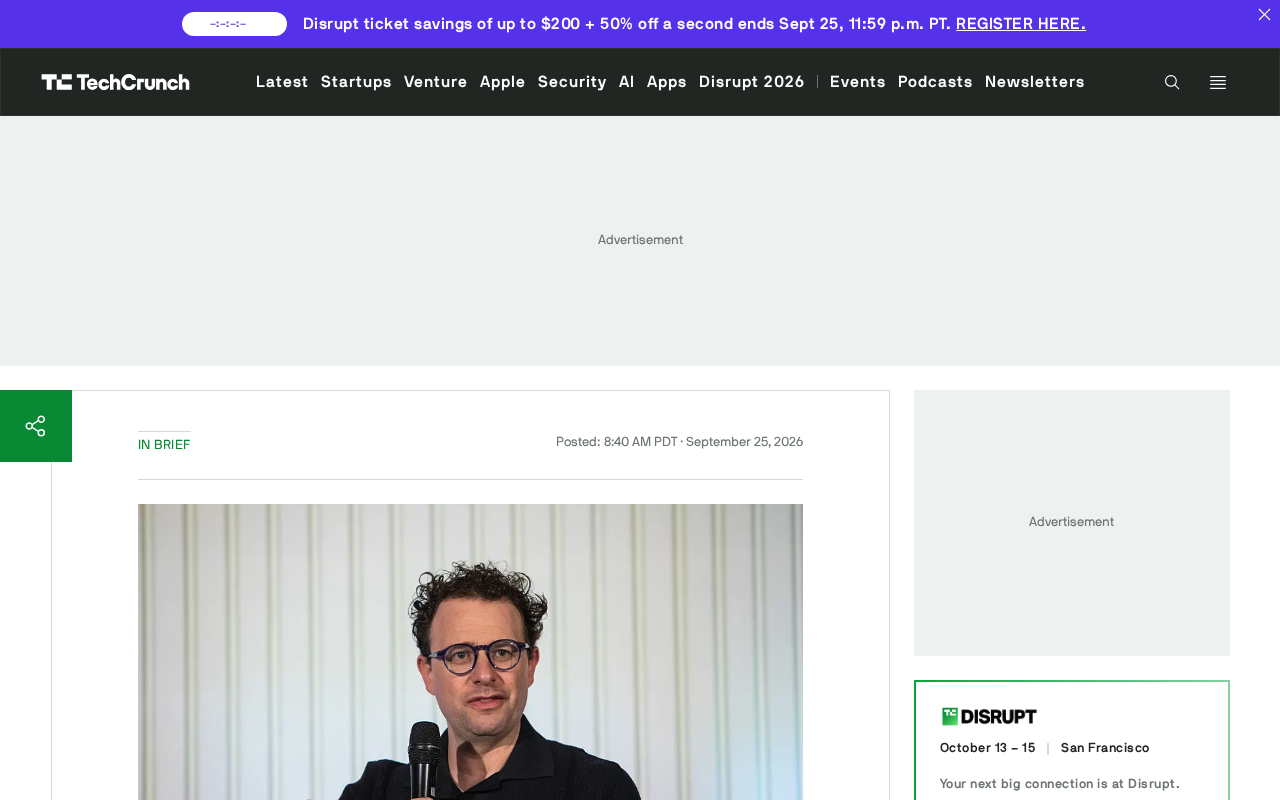
For a high-profile AI company with an elevated valuation and strong investor demand, founders retaining control is far from unusual. Silicon Valley has seen numerous tech giants adopt similar dual-class share structures, allowing founding teams to bring in outside capital without diluting their decision-making power.
Why Founders Want to Lock In Voting Rights Before an IPO
The core rationale behind this governance design is long-term strategic continuity. In a fiercely competitive AI industry where technology roadmaps evolve rapidly, founding teams typically believe they understand the company's mission better than short-term-focused outside shareholders. For Anthropic — a company that has built its narrative around AI safety — maintaining control over its development pace and research priorities may be viewed as an institutional guarantee for delivering on its safety commitments.
Notably, the detail that seven founders collectively hold 50.1% means control isn't concentrated in a single individual, but rather requires internal consensus among the founding team. This design preserves the founding group's overall authority while leaving room for internal checks and balances.
Dual-Class Share Structure is the key framework for understanding this arrangement. In a typical dual-class design, a company issues two categories of stock: Class A shares (purchased by ordinary investors) carry fewer voting rights (usually one vote per share), while Class B shares (held by founders) carry supervoting rights (sometimes ten votes per share or more). This allows founders to retain majority votes at shareholder meetings even after their ownership stake has been substantially diluted. Google, Facebook (Meta), and Snap have all used similar structures. Anthropic's approach is somewhat different — framed as "seven founders jointly holding 50.1%," it more closely resembles a founding-team alliance agreement than a pure share-class tiering system. This distributes the risk of single-person autocracy to some degree, but also introduces potential complexity around how to coordinate when founders disagree internally.
What This Means for Investors and the Market
Founder control of majority voting rights is a double-edged sword. Proponents argue it helps the company resist short-term market pressures and focus on long-term value creation and technology development. Critics worry that ordinary shareholders will have significantly diminished influence over major decisions, and that corporate governance transparency and accountability may suffer as a result.
For investors planning to participate in the Anthropic IPO, this structure is a reminder that even after buying shares, they will occupy a relatively passive position in terms of corporate governance — a familiar tradeoff investors must weigh when today's tech companies go public.
From a regulatory standpoint, dual-class and multi-tier voting structures have come under increasing scrutiny from the SEC and certain institutional investors in recent years. While Nasdaq and the New York Stock Exchange permit listed companies to use such structures, major index providers including FTSE Russell and S&P Dow Jones Indices have explicitly excluded or restricted companies with supervoting rights from their flagship indices. This means companies with founder-controlled governance structures may be ineligible for inclusion in mainstream passive index funds, which in turn can affect stock liquidity and valuation premiums. For Anthropic, if it moves forward with a formal IPO, navigating how to maintain founder control while meeting the inclusion criteria of major indices will be an important issue to plan for in advance.
Conclusion
Anthropicʼs governance arrangement is a textbook example of how leading AI companies balance "bringing in capital" with "retaining control" as they move through the capitalization process. As more frontier AI companies head toward public markets, how founders strike a balance between scaling through fundraising and maintaining strategic leadership will remain a central concern for the industry and investors alike.
Note: This article is based on limited publicly available information. Specific terms of the equity structure are subject to Anthropic's official disclosures.
Related articles

Meta vs. Publishers: The AI Data Battle Over Terms of Service Changes and the Future of the Internet
Meta changed its business account terms to allow AI training on linked website data, sparking backlash from publishers and creators. Industry groups demanded negotiations, forcing Meta to remove 'training' wording and delay the effective date. The dispute reveals the deeper battle over data authorization and the future of the internet in the AI era.

When Outside Xbox Meets Blood on the Clocktower: A Legion Match in Minecraft
Outside Xbox guests Ellen and Mike play Minecraft Blood on the Clocktower in a Legion game. How can three good players fight an evil majority amid information noise? This article breaks down Legion mechanics, information-role mind games, and the endgame reversal.

Kimi K3.1 Hands-On Test: Open-Source Model Nears Opus, Video Generation Steals the Show
Kimi K3.1 completed motion graphics, 3D rendering, mini-games, and video generation in a live test. Analysis of its 2.8T MoE architecture, gap vs Opus/GPT, and hidden video generation.