Anthropic IPO Priced at $83, $1.5 Trillion Valuation Faces Market Test

Anthropic priced its IPO at $83 for a $1.5T valuation; $500B in demand still wasn't enough, and the open faces a falling market.
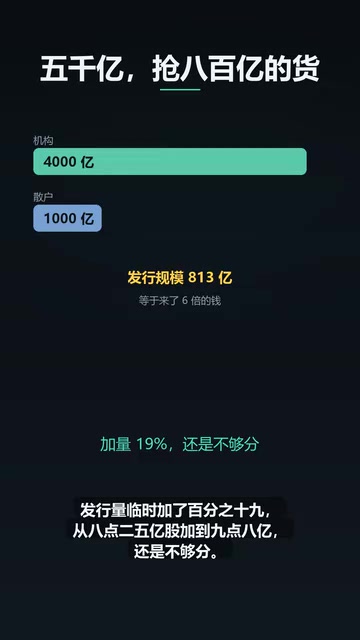
Anthropic's IPO priced at $83, 6.4% above its range top, valuing it at $1.5 trillion. Institutions bid $400B and retail $100B—about $500B chasing limited shares—forcing the deal size up 19% from 825M to 980M shares, still not enough. Off-exchange contracts quote $100, a 20% premium, showing hungry demand. But timing is poor: the Nasdaq 100 fell 4.4% in three days and the Nasdaq dropped five straight days. Pricing reflects weeks of accumulated enthusiasm, while the open depends on current sentiment—a clear time lag. The CEO's remark three days earlier against valuing the company a dollar above its true worth contrasts with the final price. The first-day open versus the offer price, and how unallocated capital is absorbed, are key to gauging market attitude toward high-valuation AI assets.
Anthropic's IPO priced at $83, 6.4% above the top of its previously announced range, corresponding to a valuation of $1.5 trillion. Behind this price is a rare buying frenzy: institutions placed $400 billion in demand and retail investors $100 billion, roughly $500 billion in capital chasing limited offering shares. The deal size was forced to increase temporarily from 825 million shares to 980 million shares, a 19% increase, and it still wasn't enough to go around.
Pricing Above the Range: The Contrast Between the CEO's Words and Market Behavior
Three days ago, Anthropic's CEO publicly said the company should not be valued even one dollar above its true worth. Three days later, the pricing broke straight through the top of the range. This contrast is itself a telling signal: when subscription demand reaches several times the offering size, pricing discipline often gives way to allocation pressure.
From the underwriters' perspective, pricing above the range while simultaneously expanding the offering is a way to strike a balance between "accommodating more investors" and "keeping first-day gains from spiraling out of control." But even with a 19% increase in deal size, the $500 billion in subscription demand still cannot be fully satisfied, which means a large amount of capital will continue hunting for shares in the secondary market after the open.
IPO Pricing Range and the Upward Adjustment Mechanism
Before the formal roadshow, the underwriting syndicate sets a price range (for example, "$X to $Y per share") based on comparable company valuations and prior investor communications. This range is essentially price guidance released to the market, and the final price should in principle fall within it. But when subscription demand far exceeds the offering size, underwriters can negotiate with the issuer to price above the range (pricing above the range) while increasing the number of shares offered. This is not uncommon in hot tech IPOs—Facebook in 2012 famously raised both deal size and price due to strong demand. Pricing above the range is usually seen as a signal of overheated demand, but it can also compress first-day upside, because the secondary market needs to digest a higher starting valuation. Raising both deal size and price means the issuer chose "to raise more capital" rather than "let IPO subscribers earn more first-day gains"—a trade-off to some degree between allocation relationships and first-day stability.
Off-Exchange Contracts at a 20% Premium, but the Broader Market Is Heading Down
Off-exchange contracts have already quoted $100, 20% above the $83 offer price. This premium reflects optimistic expectations for first-day performance and shows that the hunger of IPO-subscription capital has not eased despite the larger deal size.
The problem is timing. Over the past three days, the Nasdaq 100 has fallen 4.4%, and the Nasdaq itself has declined for five straight days. Anthropic must prove it deserves a $1.5 trillion valuation in a market environment that is heading downward. IPO pricing reflects subscription enthusiasm accumulated over the past few weeks, while post-open trading reflects market sentiment at this very moment—there is a clear time lag between the two.
What Off-Exchange Contracts (Pre-IPO Swaps/CFDs) Mean
Before a formal listing, some trading platforms or market makers offer off-exchange derivative contracts linked to IPO shares, allowing investors to bet on the first-day price before the listing. These contracts usually take the form of contracts for difference (CFDs) or total return swaps, and their quotes reflect market expectations for the opening price rather than the exchange's official price. Because the underlying has not yet listed, such contracts have limited liquidity and higher counterparty risk; quotes often carry wide bid-ask spreads and are prone to emotional swings that deviate from rational levels. Therefore, the $100 quoted by off-exchange contracts is more of a directional sentiment indicator—it shows that IPO-subscription capital is willing to pay a premium for shares, but it cannot be directly equated with an opening price forecast. Regulators typically impose additional restrictions on such products, and retail investors should be aware of leverage and settlement risks.
What It Takes to Support a $1.5 Trillion Valuation
A $1.5 trillion valuation puts Anthropic directly among the world's most valuable companies. What supports this valuation is its revenue growth in the enterprise AI market and continued investment in model capabilities. But a high valuation also means harsher scrutiny: any signal of slowing growth will be amplified.
Looking at the subscription structure, the split of $400 billion from institutions and $100 billion from retail shows that this is not only institutional allocation behavior but also has a clear component driven by retail sentiment. High retail participation, a large off-exchange premium, and a temporarily expanded deal size—these characteristics stacked together often correspond to higher first-day volatility.
Enterprise AI Revenue and Valuation Multiples
Enterprise AI companies are typically valued on the basis of ARR (annual recurring revenue), measured using price-to-sales (P/S) or EV/Revenue multiples. How much revenue a $1.5 trillion valuation corresponds to depends on the multiple the market is willing to pay. Using the 15-25x P/S typical of growth SaaS, implied ARR would need to reach $60 billion to $100 billion; if the market pays a higher 30-40x, that corresponds to ARR of about $37.5 billion to $50 billion. This estimation framework explains why "signals of slowing growth will be amplified": high-multiple valuations essentially discount years of future growth in advance, and once ARR growth or renewal rates decline at the margin, multiple compression directly hits market value. At the same time, enterprise AI also faces structural pressure on profit margins from compute costs and capital expenditure on model iteration, all of which enter the valuation scrutiny.
What to Watch After the Open
The gap between the first-day opening price and the $83 offer price is the first thing to watch. If the open is significantly above the $100 off-exchange contract, demand is even stronger than expected; if the open is close to or even below the offer price, it means the downward market environment has outweighed subscription enthusiasm.
More important is how capital is absorbed after listing. Of the $500 billion in subscription demand, the portion that did not receive allocations will look for opportunities in the secondary market, and the pace of that capital inflow determines whether the stock can hold at high levels. With the Nasdaq down five straight days, Anthropic's first-day performance is, to some extent, also a test of the market's attitude toward high-valuation AI assets.
One-line Summary
Anthropic priced its IPO at $83 for a $1.5 trillion valuation, $500 billion in demand still wasn't enough, and the open faces a falling market.
Paragraph Summary
Anthropic's IPO ultimately priced at $83, 6.4% above the top of its range, corresponding to a $1.5 trillion valuation. Institutions placed $400 billion and retail investors $100 billion in subscription demand—roughly $500 billion chasing limited shares—forcing the deal size up from 825 million to 980 million shares, a 19% increase that still wasn't enough. Off-exchange contracts already quote $100, a 20% premium to the offer price, reflecting hungry IPO-subscription capital. But the timing is unfavorable: the Nasdaq 100 fell 4.4% over three days and the Nasdaq declined five straight days. IPO pricing reflects subscription enthusiasm accumulated over weeks, while opening performance depends on current sentiment—there is a time lag. The CEO's remark three days earlier that the company should not be valued one dollar above its true worth contrasts with the final pricing. The article argues that the gap between the first-day open and the offer price, and the pace at which unallocated capital is absorbed in the secondary market, are key to gauging the market's attitude toward high-valuation AI assets.
Related articles

Zero-Code Replication of a $10,000 3D Website with Claude Code: A Six-Tool Breakdown
Bilibili creator Yomi used Claude Code plus five free tools to build a 3D product landing page quoted at $10,000 overseas—zero code. Breakdown of the six-tool division of labor, image-to-3D workflow, and the core collaboration method: "give AI a reference, not 'make it look better.'"
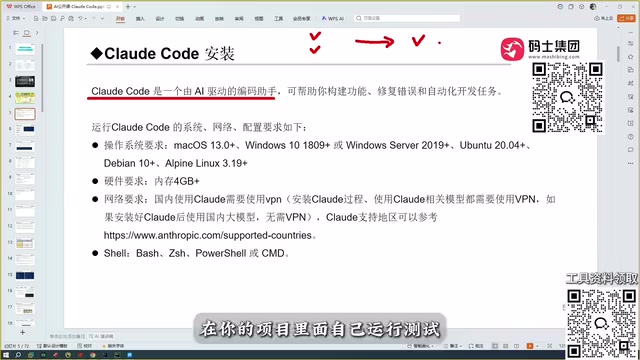
Claude Code in Practice: Install, Connect Models, Calculate Tokens, and Ship a Full-Stack Project with a Single Document
Based on a Bilibili public course demo, this covers Claude Code installation, model connection, token cost calculation, and the practical path of shipping a full-stack project with a single document, plus comparisons with Copilot, Cursor, Trae, and other coding assistants.
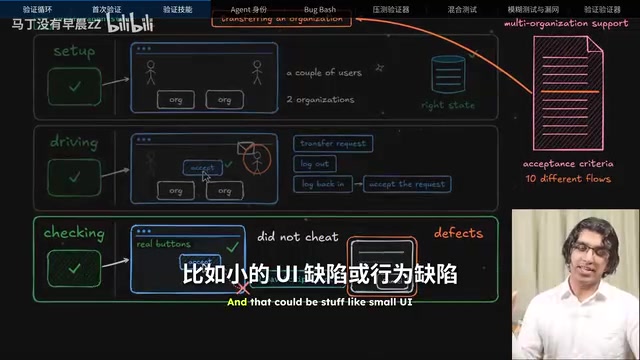
Who Accepts AI-Written Code? A 25-Minute Deep Dive into Verification Loops and the New Code Review Paradigm
After AI writes lots of code, how should Code Review verify it? This article breaks down the Claude Code team's verification loop framework: surface-level end-to-end verification, setup/drive/check three-stage skills, hybrid end-to-end testing and reliability checklists, and how to tighten the loop when issues slip through.