Anthropic Launches AI Office Suite, Making Another Move in the Enterprise Market
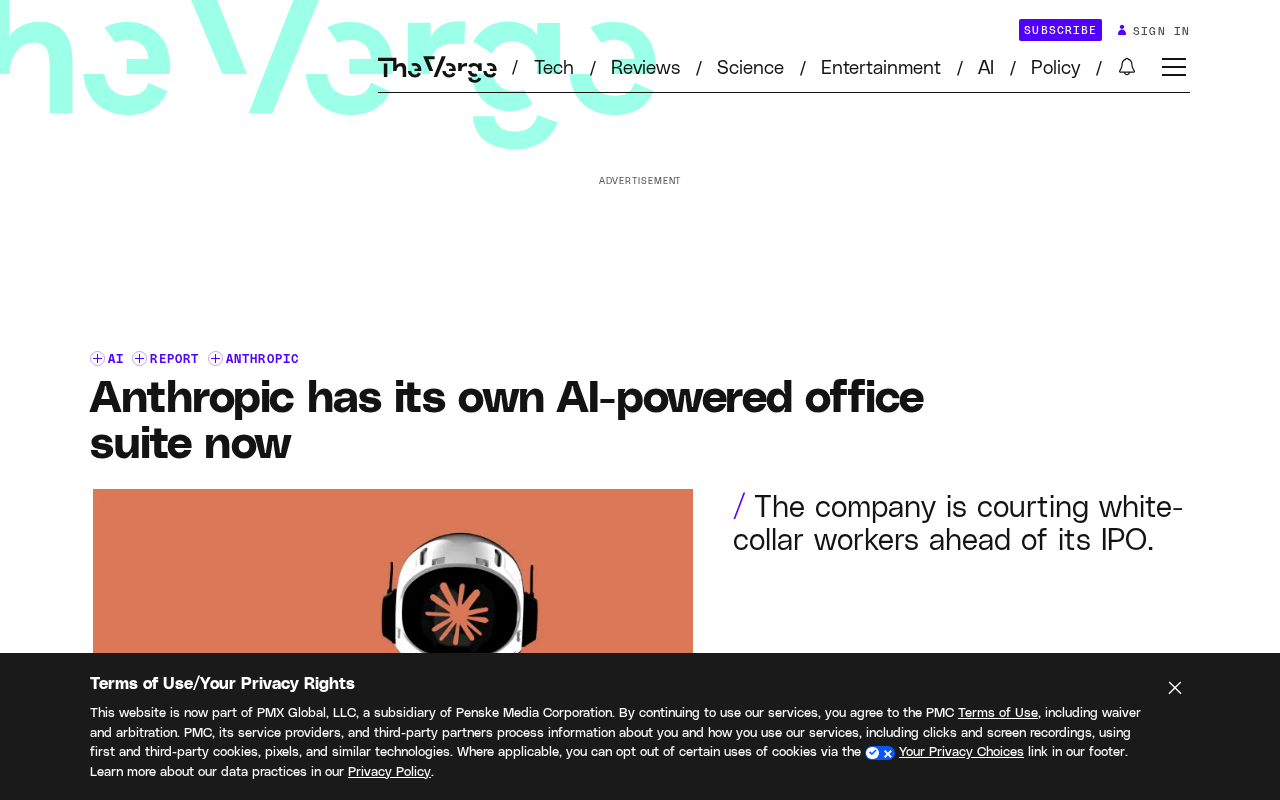
Anthropic launches an AI office suite, extending from coding tools to an enterprise work platform.
According to RSS sources, Anthropic has launched an AI-driven office suite, expanding its product line from coding assistance represented by Claude Code to everyday office scenarios such as documents, spreadsheets, and presentations. The article argues that office software is the infrastructure of enterprise digitalization, and controlling the document and collaboration entry point means controlling workflow context, making it a must-win battleground as frontier labs compete for the second major scenario beyond coding. Anthropic's advantages lie in model capabilities and enterprise trust, but it needs to shore up weaknesses in collaboration experience, format compatibility, and ecosystem integration to compete with Microsoft, Google, and vertical startups. The suite's specific features, pricing, and availability have not yet been disclosed, and whether it can replicate Claude Code's success remains to be tested by the market.
Anthropic has long been known for its enterprise-grade offerings and coding tools. The popularity of Claude Code has made it stand out among frontier labs, even prompting competitors like OpenAI and Meta to follow suit. Now, the company is trying to extend its influence from the code editor to everyday office scenarios—according to RSS sources, Anthropic has launched its own AI-driven office suite.
From Code to Documents: Anthropic's Product Boundary Expansion
Over the past few years, Anthropic's label has been very clear: serving high-value enterprise customers with coding assistance and complex task handling capabilities. The rise of Claude Code not only validated market demand for AI coding but also built Anthropic's reputation among developers. Competitors subsequently followed with similar strategies, which indirectly confirms the effectiveness of this path.
The launch of an office suite means Anthropic is no longer content with being just "the developer's AI assistant." Document writing, spreadsheet processing, presentation creation—once these high-frequency office scenarios are deeply integrated with AI, they will directly reach a broader enterprise user base. For a company centered on enterprise services, this is a natural extension of its product matrix.
Claude Code is a command-line AI coding assistant launched by Anthropic that allows developers to complete code generation, debugging, refactoring, and repository-level tasks directly in the terminal using natural language. Relying on the long context and tool-calling capabilities of the Claude model, it extends "conversational programming" from IDE plugins to shell workflows, which is why it quickly became popular among developers. Its significance lies not only in improving coding efficiency but also in validating the enterprise-level implementation path of "the model as the product": high value, measurable, and easy to generate willingness to pay. This also explains why OpenAI's Codex-type products and Meta's internal coding assistant would follow a similar form—coding scenarios naturally have clear evaluation criteria and context boundaries, making them an ideal testing ground for validating frontier model capabilities.
Why the Office Suite Is a Must-Win Battleground
Office software is the infrastructure of enterprise digitalization. Whoever controls the document and collaboration entry point controls the context of enterprise workflows. If Anthropic can embed Claude's reasoning capabilities into everyday office tools, it has a chance to upgrade from an "assistive tool" to a "work platform."
This move also echoes an industry trend: frontier labs are all looking for a second killer scenario beyond coding. The user base for coding tools is relatively limited, while office suites cover almost all knowledge workers. This step by Anthropic is both an extension of its own enterprise DNA and a probe into a larger market.
"Office suite" usually refers to the trio of documents, spreadsheets, and presentations, along with the collaboration and permission systems behind them, represented by Microsoft 365 and Google Workspace. Its commercial value lies in three points: first, it covers almost all knowledge workers, with a user base far larger than that of developers; second, it carries the context of enterprise workflows, including historical documents, organizational structure, and approval chains; third, it has strong network effects and switching costs—once it becomes the default entry point for a team, it is hard to replace. For AI vendors, embedding into an office suite means moving from being a "model API that gets called" to becoming a "work platform used daily," thereby gaining distribution channels and a data loop. This is also why, beyond model capabilities, collaboration experience, format compatibility, and ecosystem integration become the deciding factors.
Competitive Landscape and Unknowns
The office suite track is not empty. Microsoft and Google have already embedded AI assistants into their office product lines, and startups are rapidly iterating in niche scenarios. Anthropic's advantage lies in model capabilities and enterprise trust, but office suites compete not only on models but also on collaboration experience, format compatibility, and ecosystem integration.
Currently disclosed information is limited, and the suite's specific features, pricing, and availability are not yet clear. But the direction is clear: Anthropic is evolving from a "coding tool provider" to an "enterprise AI work platform." Whether it can replicate the success of Claude Code depends on whether it can translate model advantages into a smooth everyday office experience.
The competitive landscape of the enterprise AI office market can be roughly divided into three layers: the bottom layer is model providers (Anthropic, OpenAI, Google), the middle layer is office platform vendors (Microsoft Copilot, Google Gemini for Workspace), and the top layer is vertical startups (Notion AI, various document and meeting assistants). Anthropic's position is rather special—it is both a model supplier and trying to become a product provider, which may create competitive-cooperative relationships with some partners. Its differentiation lies in model reasoning capabilities and enterprise customer trust, while its weakness lies in the lack of distribution channels, file format ecosystems, and collaboration infrastructure required for an office suite. Whether it can replicate the success of Claude Code hinges on whether it chooses to build a full product set itself or embed into the existing office ecosystem via APIs and plugins.
What It Means for Enterprises
For enterprises already using Claude-series products, an office suite means a more unified AI workflow. For customers still on the sidelines, it adds a reason to include Anthropic in their procurement lists. And for the entire industry, competition in AI office suites will further heat up, and the way model capabilities and product experience are combined will become the key to differentiation.
Whether Anthropic's office suite can become the next thing to be imitated still needs market validation. But one thing is certain: this company is answering a question with concrete action—the ceiling for AI assistants is far beyond writing code.
Related articles
Microsoft WebIQ: Verifiable Real-Time Web Grounding for AI Agents
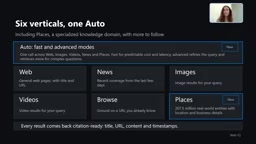
Microsoft WebIQ gives AI Agents real-time, citable web grounding across web, news, images, videos, and Places—164ms P95 latency, 50% fewer tokens, Scopes source control, and MCP integration.
Augmentable Gaussian Splatting: Building Photorealistic Simulation Environments for Robot Training
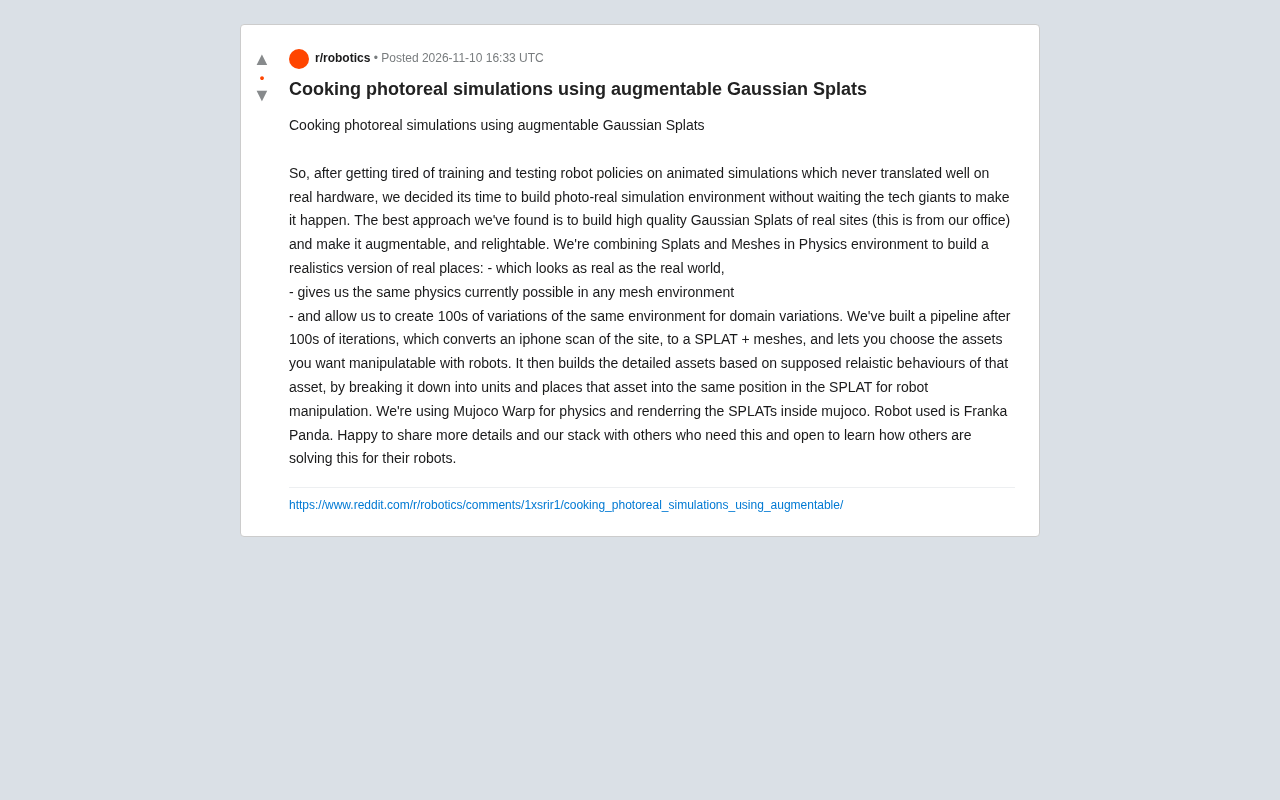
Team combines Gaussian Splatting with meshes to build photorealistic robot simulation environments, integrating MuJoCo Warp physics and Franka Panda for augmentable, relightable real-site simulation.
Gemini 4 Carbon Released: The Leap from Gemini 3 to Gemini 4 in Under a Year
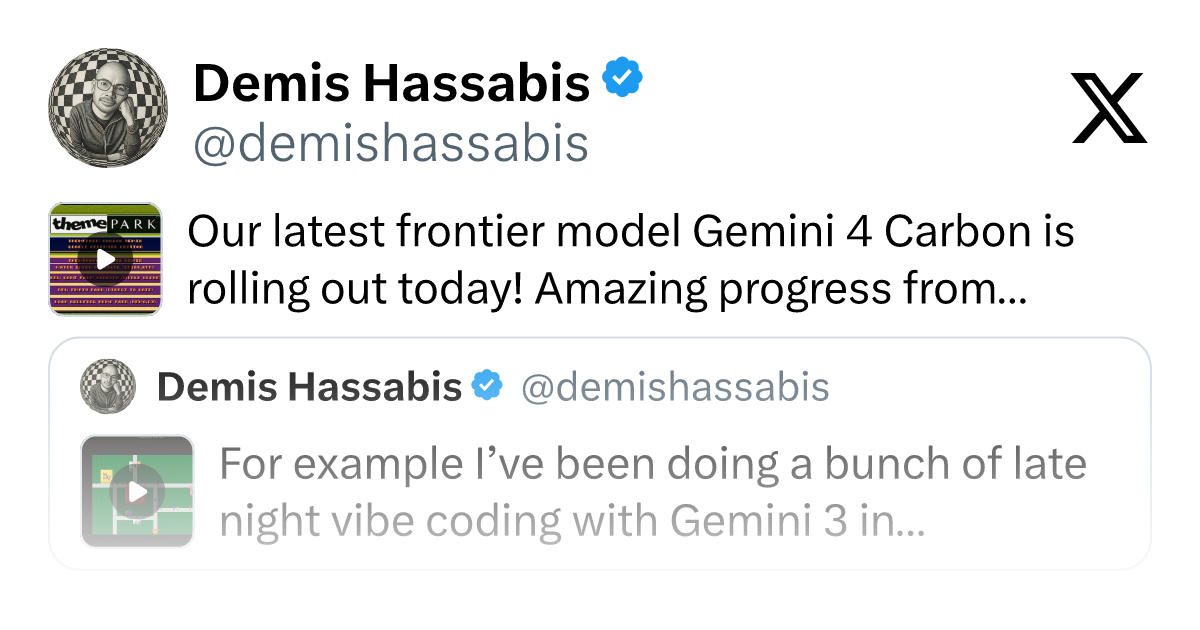
Google releases Gemini 4 Carbon, less than a year after Gemini 3. In the official demo, Carbon reverse-engineered the Theme Park binary, added a new DeepMind-themed ride, and ported it to the web in one shot.