Anthropic's Imminent IPO: The Roadshow Logic Behind a $1.4 Trillion Valuation

Anthropic plans a Nasdaq IPO at a $1.4 trillion valuation, pitching team stability and cash-as-compute-buffer.
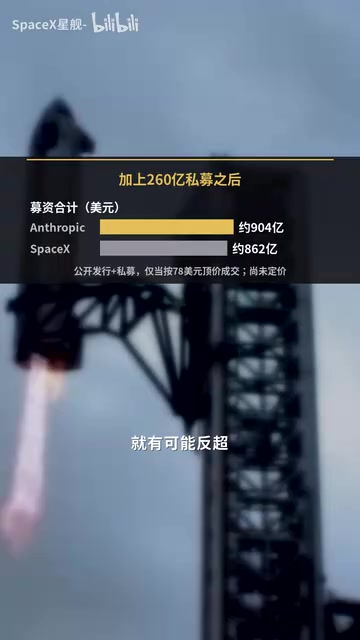
Anthropic is about to list on Nasdaq at $70–78 per share, with a public valuation of about $1.4 trillion. Though below SpaceX's $1.77 trillion, adding a ~$26 billion private placement to seven firms including Nvidia and Google could push the total to ~$90 billion and overtake it. In the roadshow, founder Dario stressed not compute but team stability: all seven co-founders remain and over three-quarters of the first 100 employees are still there. The timing logic: cash reserves buffer compute investment, under-promise and over-deliver. Wednesday night's pricing will decide the final scale and first-day reception.
According to a Bilibili creator's breakdown, Anthropic—hailed as "the most formidable AI company on the planet"—is about to list on Nasdaq. Shares are priced in the $70–78 range, with pricing set for Wednesday evening ET and trading beginning Thursday. In his roadshow, founder Dario Amodei conveyed a signal strikingly different from the usual IPO narrative—this company is betting on "people," not just a compute story.

The Valuation Game: Can $1.4 Trillion Beat SpaceX?
Anthropic's public valuation this time is roughly $1.4 trillion. That figure is unprecedented in the history of tech company IPOs, but the creator raised an interesting comparison: can it surpass SpaceX?
Based on public data, $1.4 trillion is below SpaceX's $1.77 trillion. Counting only the public offering portion, Anthropic's roughly $64 billion is also less than SpaceX's roughly $86 billion. But the key variable is the private placement—Anthropic sold about $26 billion in private shares to seven companies including Nvidia and Google. Calculated at the top price, the total scale reaches about $90 billion, which could potentially overtake SpaceX.
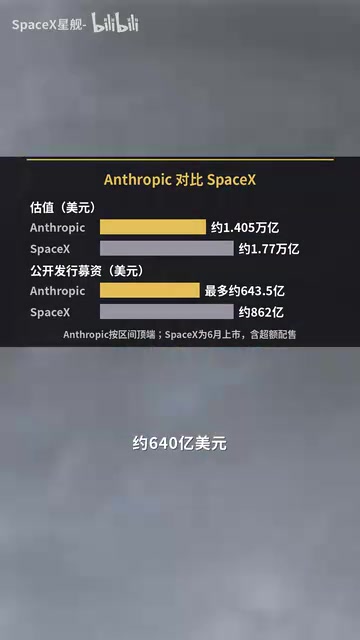
This combined structure of "public offering plus strategic private placement" both binds key partners in the compute supply chain and provides additional support for the valuation. The participation of Nvidia and Google is itself an endorsement of Anthropic's technical approach.
Private Placement refers to a financing method in which a company issues shares or securities non-publicly to specific investors, as distinct from a public IPO offering to the general public. Before a tech company goes public, private placements are often used as a means of binding strategic partners: investors subscribe to shares at an agreed price, and the company gains capital while tying the other party's interests to its own development. Anthropic's sale of about $26 billion in private shares to seven companies including Nvidia and Google is a typical strategic private placement—replenishing cash while locking in key allies in the compute supply chain. Such shares usually carry a lock-up period and do not immediately enter public market circulation, so their valuation contribution must be calculated separately from the public offering portion.
Roadshow Core: Why Is Dario Betting on "People"?
According to the creator's account, what Dario repeatedly emphasized in the roadshow was not model parameters but team stability: all seven co-founders are still on board, and more than three-quarters of the earliest 100 employees remain at the company.
This data is quite rare in the AI industry. Large-model startups generally face the problem of core talent drain, and stories of co-founders parting ways and early key members being poached by big companies are commonplace. Anthropic's ability to retain its founding team and early employees to this degree shows that its internal culture, sense of mission, and incentive mechanisms have withstood the test of rapid expansion.
Dario's logic is straightforward: the endgame of the AI race is not who produces a certain model first, but who can consistently and steadily make correct judgments. People are harder to replicate than compute, and harder for competitors to poach.
Co-founder retention rate is one of the key indicators for measuring the governance health of a startup. In the AI large-model field, due to rapid technological iteration and fierce poaching by big companies, complete retention of the core team is extremely rare. All seven co-founders still in place and more than three-quarters of the early hundred employees still on board means the company's equity structure, decision-making mechanisms, and corporate culture have withstood the test of rapid expansion. For public market investors, this indicator reduces "key-person risk"—the risk that a company relies excessively on individual leaders and suffers a strategic gap if they leave. By placing team stability above model parameters, Dario is in essence telling investors: Anthropic's competitiveness comes from organizational capability, not a single-point technological breakthrough.
Why Go Public Now? The Buffer Logic of Cash and Compute
As for the timing of the IPO, Dario's explanation is equally pragmatic: the more cash you have, the bigger the buffer to hold compute.
Unpacking this statement reveals two layers of meaning. First, the training cost of frontier models is still rising rapidly, and compute reserves require long-term, massive capital investment; the public market's capital pool is more sustainable than private markets. Second, having ample cash means greater bargaining power and risk resistance in compute procurement and capacity locking—when the supply chain is tight, cash is the buffer.

The creator also mentioned a detail: Anthropic's attitude toward going public is "rather under-promise and over-deliver." This is consistent with Dario's consistently cautious style and also suggests that the pricing strategy may lean conservative, leaving room for the aftermarket.
Compute Buffer refers to an enterprise's ability to cope with supply chain fluctuations and training cost fluctuations by locking in computing resources such as GPUs in advance, signing long-term procurement agreements, or holding sufficient cash. Training frontier large models requires tens of thousands of GPUs running continuously for months, and compute procurement often requires prepaying huge sums. When the supply chain is tight (such as GPU shortages), companies with sufficient cash can lock in capacity at a premium, while companies with limited funds may be forced to delay training plans. Dario's statement that "the more cash you have, the bigger the buffer to hold compute" is exactly this logic: public market fundraising provides a more sustainable capital pool than private markets, enabling Anthropic to stay proactive in the compute arms race.
Key Variables of the Record Night
According to the creator's breakdown, Wednesday night's pricing will settle several open questions: where the final price lands within the $70–78 range, whether the total fundraising scale can reach the $90 billion level, and how the market accepts the $1.4 trillion valuation on the first day of trading.
Note that the above valuation and fundraising figures all come from the creator's account; specific numbers are subject to the official prospectus and final pricing. For readers following the capitalization process of the AI industry, this IPO's pricing logic and first-day performance will become an important sample for observing the valuation anchor of leading AI companies.
One-line Summary
Anthropic plans to list on Nasdaq at a $1.4 trillion valuation, with its roadshow emphasizing team stability and cash as a buffer for compute.
Paragraph Summary
Anthropic is about to list on Nasdaq, with shares priced in the $70–78 range and a public valuation of about $1.4 trillion. Although below SpaceX's $1.77 trillion, adding the roughly $26 billion private placement to seven companies including Nvidia and Google brings the total to about $90 billion at the top price, potentially overtaking it. In the roadshow, founder Dario emphasized not the compute story but team stability: all seven co-founders remain, and more than three-quarters of the earliest 100 employees are still there. The timing logic is that cash reserves provide a buffer for compute investment, with an attitude of under-promising and over-delivering. Wednesday night's pricing will determine the final fundraising scale and the market's first-day acceptance of the valuation.
Related articles

ChatGPT Plus Subscription Pitfall Guide: Go/Plus/Pro Tier Comparison and Quick Activation
A complete ChatGPT Plus subscription guide based on a Bilibili tutorial: from registering an account, comparing Go/Plus/Pro tiers, to the practical steps for quickly completing your subscription.

GPT-6.2 Sol/Astra Released! A Step-by-Step ChatGPT Plus Subscription Guide and Tier Comparison
GPT-6.2 Sol/Astra is out—here's a ChatGPT Plus subscription guide: register an account, compare Go/Plus/Pro tiers, and subscribe in a minute.

Comparing Three Channels for Subscribing to GPT Plus in China: Is Website Top-Up the Easiest?
How to subscribe to GPT Plus in China? This article compares website top-up, credit card, and mobile top-up channels—process, cost, and risk—with steps and tips to help you choose wisely.