Anthropic's "Make Money Button": Why the AI Monetization Opportunity Falls Flat for Small Developers

AI's "money button" exists but mainly benefits established businesses, not independent developers.
A Reddit post about an Anthropic employee's "make money button" metaphor reveals a core tension in AI commercialization: while technologies like Claude Code and MCP create clear monetization paths, they primarily benefit companies with existing audiences and trust. Independent developers face barriers including user trust deficits, high subscription friction, and the absence of a fair discovery and micropayment infrastructure — the missing piece needed to democratize AI monetization.
A Metaphor That Sparked Heated Debate
Recently, a post on Reddit sparked widespread discussion among AI practitioners. According to the poster, an Anthropic employee once mentioned that within today's AI ecosystem, there exists a so-called "make a lot of money button" — all you have to do is press it, and you can ride the AI wave to achieve substantial commercial returns.
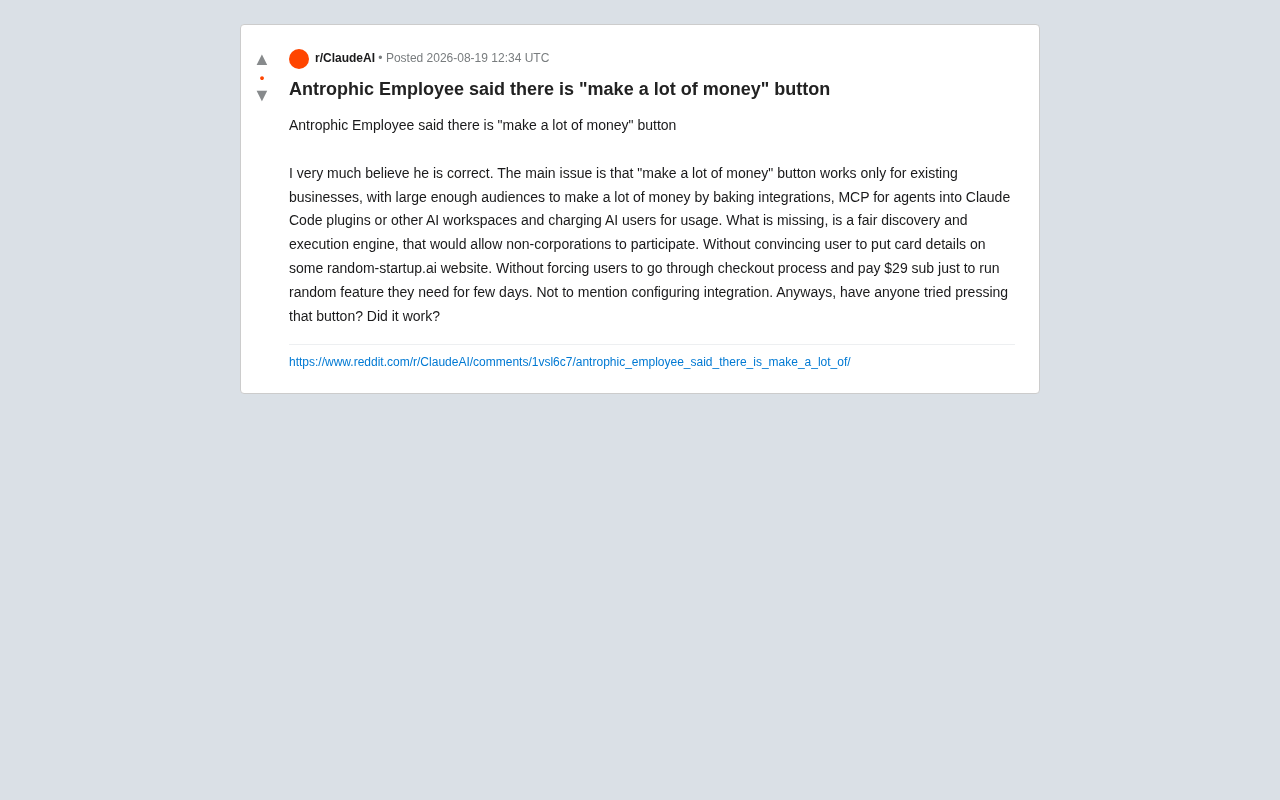
While the metaphor was somewhat tongue-in-cheek, it struck precisely at the core question of AI commercialization: as Claude Code, MCP (Model Context Protocol), and various AI Agent workflows mature, integrating services into AI workspaces and charging users is becoming an increasingly clear path to monetization.
It's worth explaining these key technologies here. Claude Code is a command-line AI programming tool launched by Anthropic that allows developers to interact directly with Claude models in the terminal to write, debug, and refactor code. Its distinguishing feature is the ability to understand the context of an entire codebase and operate directly on the file system. MCP (Model Context Protocol) is a communication protocol open-sourced by Anthropic in late 2024, designed to establish standardized connections between AI models and external data sources and tools. Think of MCP as the "USB port" of the AI world — whether it's a database, API, or local file system, as long as it follows the MCP specification, it can be seamlessly invoked by any compatible AI Agent. The combination of these two technologies enables third-party developers to package their services as MCP servers that can be directly called by AI tools like Claude Code, forming a potential commercial ecosystem.
As for AI Agent workflows, these refer to AI systems that can autonomously perceive their environment, formulate plans, and execute multi-step tasks — distinct from traditional single-turn Q&A-style AI. A typical Agent workflow might include: receiving a high-level instruction from a user, breaking it down into subtasks, calling multiple external tools (such as search engines, databases, and code executors) to complete each step, and finally aggregating the results. For example, a data analysis Agent might first invoke a SQL tool to query a database, then call a Python environment for statistical analysis, and finally use a visualization tool to generate charts. This multi-tool collaboration pattern is precisely the core scenario that the MCP protocol aims to address — enabling Agents to discover and invoke various third-party tool services in a standardized way.
But the question is — does this "button" really work for everyone?
Who Can Actually Press the AI Monetization "Money Button"?
The poster raised a remarkably insightful point: this "money button" currently works primarily for businesses that already have established operations and a sufficiently large audience.
The Natural Advantage of Existing Players
For companies that already have products, a user base, and traffic, converting their services into AI capabilities is almost a natural extension. They can:
- Package existing APIs as Claude Code plugins or MCP servers
- Provide callable tool integrations for AI Agents
- Charge AI users directly on a usage-based model
It's worth elaborating on the usage-based pricing model here. It's a business model that emerged in the cloud computing era, with representative examples including AWS charging by compute time, Stripe charging per transaction, and Twilio charging per API call. Compared to traditional fixed subscription models, the advantage of this approach is that it lowers the initial barrier to usage and closely aligns payment with value delivered. In the AI space, OpenAI's API pricing uses a per-token billing model. However, usage-based models impose higher technical requirements on small developers — precise usage tracking, real-time billing systems, and anti-abuse mechanisms are all needed, and the cost of building this infrastructure is often prohibitively heavy for independent developers.
These companies already control distribution channels and carry trust endorsements. Adding "AI integration" as a new revenue stream costs them very little and offers considerable returns. This is the fundamental reason the "money button" works for them — they're simply adding an AI gear to an existing business flywheel.
The AI Monetization Dilemma for Small Teams and Independent Developers
However, for non-enterprise developers, independent creators, and small teams, this button often "malfunctions." The poster identified several key obstacles with surgical precision:
- Lack of trust: Users are reluctant to enter credit card information on some "random startup.ai" website
- Excessive payment friction: To use a feature they might only need for a few days, users must complete a full checkout process and subscribe to a $29/month plan
- Complex configuration: The integration setup process is cumbersome and unfriendly to average users
These friction points compound, making it difficult for small players to reach and convert users even when they have excellent AI capabilities.
The Missing Piece in AI Commercialization: A Fair Discovery and Execution Engine
The most valuable insight in the post was identifying the missing infrastructure in the current AI monetization ecosystem — a "fair discovery and execution engine."
What Problems Should Ideal AI Monetization Infrastructure Solve?
This engine should address three core problems:
- Discovery: Allowing high-quality, long-tail, non-enterprise AI capabilities to be fairly discovered by users, rather than being completely drowned out by large companies' traffic advantages
- Execution: Enabling users to pay-as-they-go and invoke on-demand, without bearing subscription burdens for one-time needs
- Trust: Having the platform handle payments and identity centrally, so users don't need to expose payment information to unfamiliar small websites
In other words, the ideal state is for AI capabilities to function like atomized services in an app store, where users can invoke and pay per use through a unified, trusted entry point, while developers don't need to build their own complete customer acquisition, payment, and operations systems.
In this vision, micropayment mechanisms play a crucial role. The micropayment concept was proposed by internet pioneer Ted Nelson in the 1960s, referring to online payments with extremely small individual amounts (typically under $1). Although this concept has existed for decades, it has always faced the "mental transaction cost" problem in practice — the cognitive burden of each payment decision on the user can exceed the friction caused by the payment amount itself. Additionally, the fixed fee structure of traditional payment channels (such as credit cards) makes micropayments economically unviable: a $0.10 transaction might incur a $0.30 processing fee. In recent years, the Lightning Network on blockchain and Stripe's small-payment optimization solutions have provided new technical paths for this problem, but large-scale adoption within the AI tool ecosystem remains to be validated.
MCP Protocol's Potential vs. the Reality Gap in Commercialization
From a technical perspective, the emergence of the MCP protocol has indeed laid a standardized foundation for such an engine. It enables tools from different sources to be called by AI Agents in a unified manner. But standardization at the protocol level doesn't equal fairness at the business level — distribution and settlement remain centralized in the hands of a few platforms.
Currently, AI plugin markets and Agent tool ecosystems are still in their early stages, lacking mature usage-based billing, micropayment, and independent developer revenue-sharing mechanisms. This is the real picture of what the poster called "the missing piece."
What This Discussion Means for AI Practitioners
Although this is just a community discussion from Reddit, and the claim about an "Anthropic employee" can't be fully verified, the problems it reflects are very real and widespread:
The dividends of AI commercialization are concentrating toward those who already have resources. This closely mirrors the evolution of platform economics in the early internet era — behind the rhetoric of technology democratization often lies a re-centralization of distribution and settlement rights.
This analogy has deep historical roots. In the mobile internet era, the emergence of Apple's App Store and Google Play was initially seen as a democratizing tool for developers — anyone could build an app and reach global users. But as the ecosystem matured, app discovery mechanisms gradually became dominated by search ranking algorithms and ad bidding, with top apps capturing the vast majority of downloads and revenue. Statistics show that the top 1% of apps on the App Store capture approximately 95% of revenue. Similar concentration effects have appeared in platform ecosystems like YouTube and Amazon third-party sellers. The current AI tool ecosystem is in the "prehistoric era" before the App Store's birth, with no unified distribution and settlement standards yet formed. This is both a challenge and an opportunity — early entrants may find their ecological niche before the rules solidify.
For independent developers looking to participate in this wave, directions worth considering include:
- Finding or building low-friction distribution channels (such as plugin marketplaces on existing Agent platforms)
- Adopting usage-based or micropayment business models rather than heavy subscriptions
- Leveraging trusted third parties to handle payment and trust issues
For the industry as a whole, whoever can be the first to build that "fair discovery and execution engine" may become the true infrastructure winner of the AI era.
Conclusion
The "money button" does exist, but it's not equally accessible to everyone. The democratization of technology has lowered the barrier to creating AI capabilities, but it hasn't simultaneously solved the three major commercialization pain points of discovery, trust, and settlement. Until this infrastructure matures, the button looks more like a privilege for industry giants than an inclusive opportunity.
As for that soul-searching question — "Has anyone actually pressed this button? Did it work?" — the answer may depend entirely on which side of the ecosystem you're standing on.
Related articles
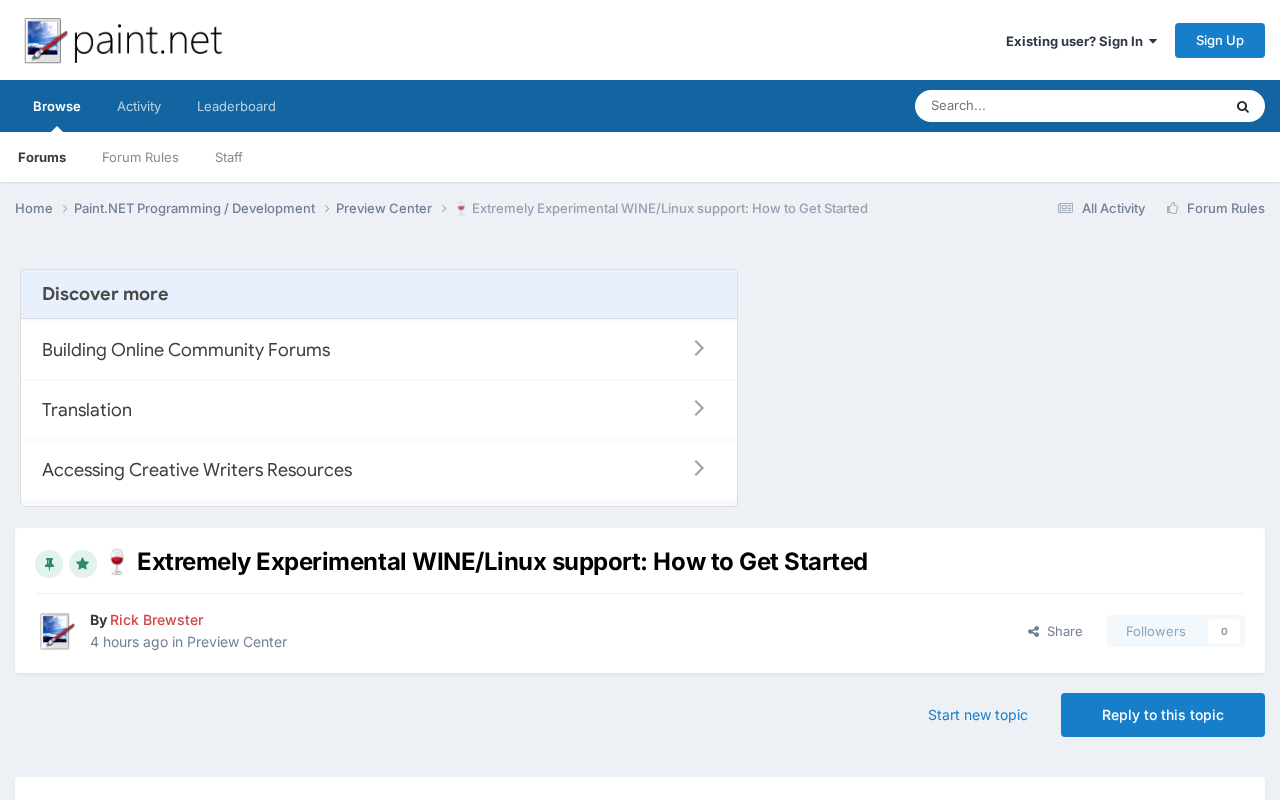
Paint.NET Officially Supports Linux: A Cross-Platform Experiment via the Wine Compatibility Layer
Paint.NET adds experimental Wine/Linux support, bringing the popular Windows image editor to Linux. We analyze its technical approach, limitations, and impact.
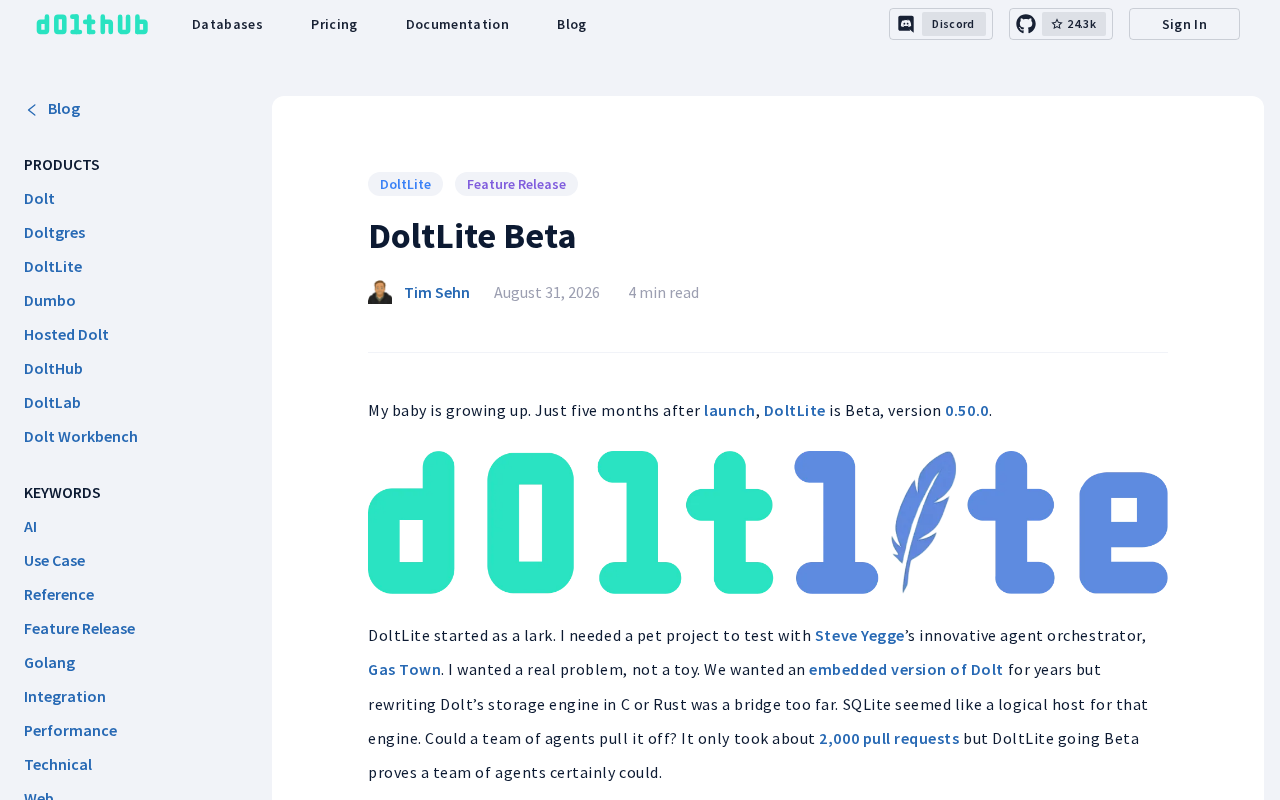
DoltLite: Injecting Git Version Control into SQLite with 2,000 AI Pull Requests
DoltLite is an open-source SQLite fork bringing Git-style data version control with commit, branch, merge, and diff. Built via ~2,000 AI Agent PRs.

Cache Stampede: How to Handle 50,000 Requests Penetrating at Once
Deep dive into Cache Stampede and thundering herd problems with three solutions: Mutex/Single-flight, logical expiration, and TTL jitter, plus production-grade combined strategies for reliable high-concurrency caching.