Anthropic's New Model Fable 5.2 Tested: Performance Surpasses Opus 5.5

Anthropic launches Fable 5.2 and Mythos 5.2, surpassing its own Opus 5.5 with a faster, cheaper approach and topping multiple benchmarks.
With Opus 5.5 still leading, Anthropic launched Fable 5.2 and Mythos 5.2, breaking the industry convention that the strongest model must be overtaken by rivals. The two share the same underlying model, with Fable adding biology and cybersecurity safeguards. Anthropic says Fable 5.2 boosts output speed by up to 30%, with per-token price about twice that of Opus 5.5, but in high effort mode cost per task is only half. It ranks first on both the Artificial Analysis Intelligence Index and LMArena ELO, and a custom yapping benchmark shows its answers are the most concise. In three tests—a MOBA prototype, NumPy CNN visualization, and weight-space programming—Fable 5.2 clearly outperformed Opus 5.5 in code quality and architectural understanding. The author suggests positioning it as a supplement for heavy-duty consultation scenarios rather than an everyday primary model.
Anthropic has launched Fable 5.2 and Mythos 5.2 even though it already has Opus 5.5, a long-time leading model. According to analysis from a YouTube channel, this breaks the AI industry convention that "a company releases its strongest model and is then overtaken by rivals"—OpenAI has not recently released a competitive new model, while Anthropic chose to surpass itself with a stronger model.
Release Highlights: Faster Speed and Lower Cost per Task
Fable 5.2 and Mythos 5.2 are essentially the same underlying model, with the difference being that Fable adds safeguards for biology and cybersecurity. Anthropic claims that Fable 5.2 generates output up to 30% faster than the previous Fable generation and is also cheaper.
What is worth noting is the pricing logic: the per-token cost of Fable 5.2 is about twice that of the older Opus 5.5, but Anthropic claims that in "high effort" mode, Fable 5.2 can match the performance of Opus 5.5 in "maximum effort" mode while costing about half as much per task. In other words, the model offsets its higher token price by completing tasks faster.
Anthropic's usage recommendations are also worth considering: for everyday development, Opus 5.5 is still recommended as the primary model; for extremely complex tasks, upgrade to Fable; and for simple tasks, move down to Sonnet or Haiku. This shows that Fable is positioned as a supplement for heavy-load scenarios, not a full replacement.
Per-token cost and cost per task are two different levels of metrics. The former is the basic unit of API pricing, namely the price per million input/output tokens; the latter multiplies the total number of tokens a model consumes in a complete task by the unit price. A model with a higher unit price but shorter output and faster reasoning may actually have a lower cost per task. This is the core of Anthropic's pricing narrative: although Fable 5.2's token price doubles, by reducing redundant output and speeding up completion, it cuts the total cost of "getting one thing done" to about half that of Opus 5.5. When evaluating a model's cost-effectiveness, cost per task should be the benchmark rather than token price.
Public Benchmarks: Leading on Most Leaderboards
On Artificial Analysis's Intelligence Index, Fable 5.2 ranks first, surpassing Opus 5.5 and some models in the Gemini series. In LMArena's ELO human preference ratings, the model also received the highest score on the list.
The video author also points out that official launch pages usually show only advantageous items, but after switching to other independent benchmarks, Fable 5.2's lead still holds. This means the performance improvement is not an accidental result on a single leaderboard.
The Artificial Analysis Intelligence Index is a composite benchmark maintained by the independent evaluation organization Artificial Analysis. It normalizes scores from multiple mainstream evaluations (such as MMLU, GPQA, and HumanEval) and aggregates them with weights into a 0-100 index for cross-vendor comparison of general model capabilities. Because it does not rely on vendor-reported data, it is often regarded as a relatively neutral reference. LMArena (formerly Chatbot Arena), by contrast, uses crowdsourced blind testing: users vote on the same response from two anonymous models, and the system uses an Elo rating algorithm (similar to chess rankings) to estimate the strength of a model's human preference. The two are complementary—the former leans toward objective questions, while the latter leans toward subjective experience—so topping both more strongly indicates that the improvement is not an accident in a single dimension.
Custom Benchmark: A Claude That Says Less "Fluff"
The video author developed a "yapping benchmark" specifically to measure the redundancy of model responses, including four dimensions: length, stock phrases, formatting, and layout. Fable 5.2 scored very low on this benchmark, meaning its answers are more concise.
On the phrase dimension, it almost never uses typical AI stock phrases such as "You're right" or "You have every reason to be upset"; on the length dimension, it is also the most concise model in the Claude series. The author compared Opus 5.5 and Fable 5.2's answers to the same question, and the latter was clearly shorter and less verbose.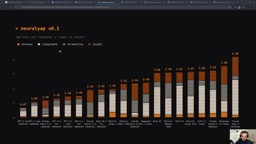
This stylistic difference has a big impact on the actual user experience, especially in scenarios where information needs to be obtained quickly rather than by reading long explanations.
Test 1: MOBA Prototype and Code Quality
The author used the same prompt to ask each model to build a simplified MOBA prototype, including movement, basic attacks, and four abilities. The version generated by Fable 5.2 had the most complete animations and ran the smoothest, clearly outperforming the results from DeepSeekAd and Opus 5.5.
The more critical difference was in code style. The code generated by Fable 5.2 on the left had a clear structure, reasonable spacing, and modular classes, reading like something written by a human engineer; the code from Opus 5.5 on the right was described by the author as a "typical copy-paste AI product," with redundant comments and chaotic structure.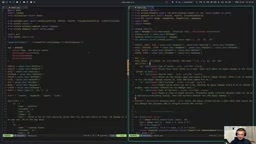
The author also acknowledged that the test used Ursina, an obscure Python game engine, so all models' performance was discounted, but the relative gap was still obvious.
Test 2: Pure NumPy Convolutional Network Teaching Visualization
The second experiment asked the models to implement a convolutional neural network from scratch using NumPy, train it on MNIST, and provide a complete teaching visualization.
Fable 5.2's result was the best in the author's view: it prioritized showing the network structure itself, with the input, convolution kernels, pooling layers, flattening, fully connected layers, and Softmax visible layer by layer; during training, changes in the loss function and weights could also be observed, and the input source corresponding to a given output could be traced back. By contrast, although the results from Kimi K3.1 Pro and Opus 5.5 also ran successfully, the interface looked more like "a bunch of things happening at once," with limited teaching value. At the code level, the same difference from the previous experiment continued: Fable 5.2's code was more modular and easier to read.
Test 3: Weight-Space Programming
The author also tested "weight-space programming"—having the model directly hand-write neural network weights without gradient descent. In the Breakout game task, GPT-6 Astra had previously achieved an average score of 517; Opus 5.5 scored only just over 200 in the author's test, while Fable 5.2 reached 493.
Fable 5.2's performance was already close to Astra, and its score distribution was very wide, with some runs reaching 600 or even 700, but also some extremely low values. The author emphasized that the model wrote out all weight values by hand based solely on a description of the architecture, without tools or internet access, and then directly ran the game script to verify the results.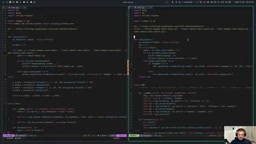
This result shows that the model's understanding of the internal structure of neural networks has substantially improved, not just surface-level performance optimization.
Weight-space programming refers to directly manually specifying every weight value for a neural network without relying on backpropagation and gradient descent, so that the network can complete a task without training. Traditional training adjusts parameters iteratively through data, whereas weight-space programming requires the model to understand "what kind of weight combinations produce what kind of behavior," which is equivalent to reverse reasoning about the network's internal computation mechanism. It places extremely high demands on the model's abstract reasoning and numerical intuition, so it is often used as a stress test to probe whether a model truly "understands" neural network structure, rather than as a simple code generation capability.
Conclusion: How to Choose
The author believes Fable 5.2 is currently the strongest model but would not use it as an everyday primary model. His recommendation is: Opus 5.5 remains the default choice, Sonnet for lighter tasks such as frontend work, Haiku for extremely low-cost scenarios, and Fable 5.2 reserved for scenarios requiring big-picture thinking and high complexity, such as code review, architecture evaluation, and contract clause analysis.
From a competitive landscape perspective, the author believes Anthropic is currently the most active front-tier lab in terms of release cadence, OpenAI has recently lacked activity, and Gemini is the only rival worth watching. For developers, the value of Fable 5.2 is not in replacing Opus, but in providing a "heavy-duty consultation" option—measured by cost per task, it may be more cost-effective than it appears.
One-line Summary
Anthropic launches Fable 5.2 and Mythos 5.2, surpassing its own Opus 5.5 with a faster and cheaper approach and topping multiple benchmarks.
Paragraph Summary
With Opus 5.5 still leading, Anthropic launched Fable 5.2 and Mythos 5.2, breaking the industry convention that "the strongest model must be overtaken by rivals." The two models share the same underlying model, with Fable adding extra safeguards for biology and cybersecurity. Anthropic says Fable 5.2 improves output speed by up to 30%, with a per-token price about twice that of Opus 5.5, but in high effort mode its cost per task is only half. It ranks first on both the Artificial Analysis Intelligence Index and LMArena ELO, and the author's custom yapping benchmark shows its answers are the most concise. In three tests—a MOBA prototype, NumPy convolutional network visualization, and weight-space programming—Fable 5.2 clearly outperformed Opus 5.5 in code quality and architectural understanding. The author suggests positioning it as a supplement for heavy-duty consultation scenarios rather than an everyday primary model.
Related articles

OpenAI on the Data Center PR Crisis and AI Regulation Through Self-Restraint
OpenAI executive interview: why AI data centers face a PR crisis, and why OpenAI supports a "speed limit" framework to regulate recursive self-improvement, stressing humans must control AI.
Apple's New Mac App Harbor: Local AI Inference and Thunderbolt 5 Clustering
Apple's new Mac app Harbor exposed: turning Macs into private AI inference servers, pooling unified memory across multiple Macs via Thunderbolt 5 to run large models. This article analyzes its features, differences from Exo and LM Studio, and impact on the local AI ecosystem.
Token-Space Active Learning: TEAL, a New Method for Low-Budget Semantic Segmentation
TEAL introduces token-space efficient active learning for pixel-level low-budget semantic segmentation with ViT foundation models—one pixel query per image locates informative positions and trains the decoder, reducing annotation cost.