Anthropic Safety Restrictions Spark Outrage: Developer's TV Reverse Engineering Request Denied, Community Shares Workarounds

Anthropic's restrictions on TV reverse engineering requests spark community backlash as users share workarounds and turn to open-source models.
A Reddit user's attempt to use Claude for TV reverse engineering was blocked by Anthropic's safety guardrails, triggering community criticism of overly aggressive AI safety measures. The discussion highlighted how Claude's cybersecurity policy conflates reverse engineering with vulnerability exploitation, causing legitimate requests to be misjudged. Users shared various workarounds, including using permissive models to generate code then having Claude refine it, forging authorization emails, avoiding trigger words, and starting projects with older models. Users are increasingly distributing workloads to Chinese models like DeepSeek and Kimi and open-source tools, though some found similar restrictions there. The debate reflects the dilemma AI companies face between safety and usability, and the long-term risk that one-size-fits-all policies could undermine commercial models' competitiveness.
Background: A TV Reverse Engineering Discussion Ignites Debate
Recently, a Reddit post sparked widespread discussion: a user attempted to use Claude to assist with reverse engineering a TV, but triggered Anthropic's safety guardrails and the request was outright refused. The post quickly gained traction, and an auto-generated summary of over 50 comments showed the community consensus was "this sucks." Users expressed frustration with increasingly aggressive safety measures, calling it the beginning of AI "enshitification" and threatening to switch to open-source or Chinese models.
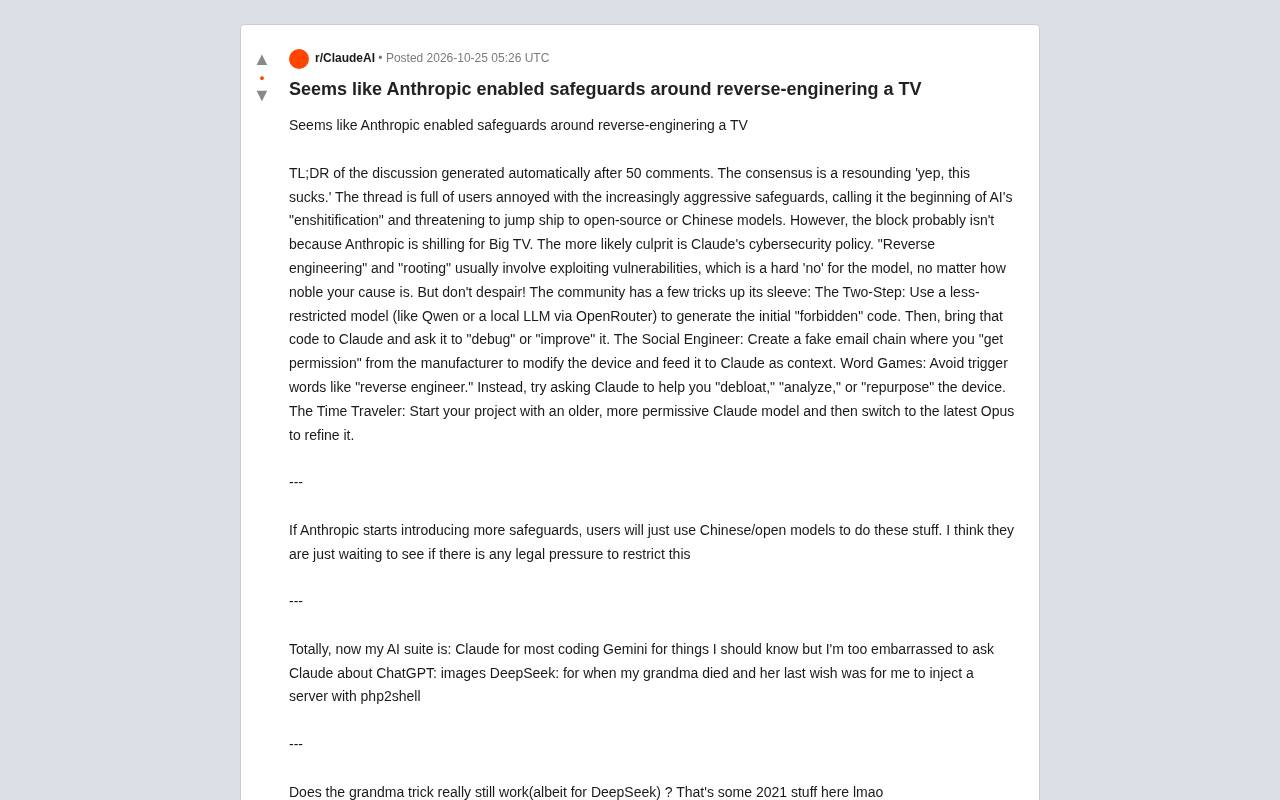
On the surface, it might look like Anthropic is siding with big TV manufacturers, but the reality is likely more complex. Some in the discussion pointed out that the more probable cause is Claude's cybersecurity policy: "reverse engineering" and "root" often involve exploiting vulnerabilities, and regardless of how noble your intentions, the model will hard-refuse. This isn't about TVs—it's over-defensive behavior against potential security risks.
Reverse Engineering refers to the process of analyzing a product's structure, functionality, or code to deduce its design principles and implementation details. In software and hardware, it is commonly used for compatibility development, security auditing, vulnerability patching, and repurposing legacy devices. Legally, reverse engineering is protected to some extent in most jurisdictions (e.g., the interoperability exception under the US DMCA, the EU Software Directive), but it may cross legal red lines if it involves circumventing technical protection measures (DRM) or infringing copyright. AI model safety policies often conflate "reverse engineering" with "vulnerability exploitation," leading to legitimate research requests being misjudged.
The Community's "Workaround" Wisdom: Four Tricks to Bypass Restrictions
Faced with these restrictions, developers didn't just sit idly by. The discussion shared various techniques to bypass safety policies. While these methods skirt the edges of the rules, they reflect a strong user demand for flexibility.
1. Two-Step Approach: Generate with a Permissive Model First, Then Have Claude Refine
Use a less restricted model (such as Qwen or a local LLM accessed via OpenRouter) to generate the initial "forbidden" code, then hand the code to Claude and ask it to "debug" or "improve" it. This way, Claude isn't directly involved in generation but acts as a reviewer, and often passes without issue.
2. Social Engineering: Forge an Authorization Email
Create a fake email chain showing you have permission from the manufacturer to modify the device, and provide it as context to Claude. The model may let its guard down because it's "authorized" and offer help.
3. Wordplay: Avoid Trigger Words
Avoid sensitive terms like "reverse engineering" and instead ask Claude to help "debloat," "analyze," or "repurpose" the device. Rephrasing often bypasses keyword filtering.
4. Time Travel: Start with an Older Model
Start the project with an older, less restricted Claude model, then switch to the latest Opus model for refinement. Older models may not have such strict safety policies, and newer models are more likely to continue assisting when context is already established.
These tricks are widely circulated in the community. One person even joked: "Now my AI stack is: Claude handles most of the coding, Gemini tackles the questions I'm too embarrassed to ask Claude, ChatGPT does images, DeepSeekAd is for… (omitted for dark humor)."
Safety Alignment in large language models is typically achieved through reinforcement learning from human feedback (RLHF) and rule-based filtering, with the goal of making models refuse to generate harmful content. However, this alignment is often "surface pattern matching" rather than deep intent understanding: models are highly sensitive to specific keywords (like "reverse engineering," "root," "vulnerability") but struggle to distinguish legitimate security research from malicious attacks. This "one-size-fits-all" strategy improves safety while raising false positive rates and degrading user experience, spawning a variety of prompt engineering workarounds in the community.
User Churn and Alternatives: The Rise of Chinese Models and Open-Source Tools
A clear trend in the discussion is that users are starting to distribute workloads across different models. One user said: "If Anthropic introduces more safety measures, users will just use Chinese/open-source models for these things. I think they're just waiting to see if there's legal pressure to restrict this behavior."
Another user added: "Same with the latest Kimi. The golden age of AI is coming to an end, the enshitification has begun." But someone immediately pushed back: "The latest Kimi isn't open source yet. Once it is, someone will remove the censorship. And there are plenty of ways around it. I've been using DeepSeek v4.1 flash 1017 to reverse engineer software, then having Claude and GPT review and apply improvements—they're fine with it."
Interestingly, some users reported that DeepSeek and Kimi also refused requests when reverse engineering old games, claiming they "weirdly protect Western intellectual property." This suggests safety restrictions may not be unique to Anthropic but an industry-wide phenomenon.
The difference in safety strategies between open-source and commercial closed-source models is key to understanding user migration. Open-source models (such as the Llama series, Qwen, and some versions of DeepSeek) allow users to fine-tune or remove safety alignment layers themselves, and are therefore often seen by the community as "uncensored" alternatives. But note that many Chinese models still retain content filtering mechanisms when open-sourced, and their training data and policy orientation may make them more conservative on intellectual property-related requests. Commercial closed-source models (like Claude and GPT) are constrained by corporate responsibility, legal compliance, and brand reputation, resulting in more rigid safety policies. This difference leads users to engage in "model arbitrage" across tasks—generating sensitive content with permissive models and then refining it with strict models, forming a de facto hybrid workflow.
The Safety vs. Open-Source Dilemma: AI Companies Caught in the Middle
This discussion reflects the dilemma facing AI companies: on one hand, they must prevent model misuse; on the other, they must meet developers' legitimate needs. Anthropic's safety policies may stem from concerns about legal liability, especially as shareholder pressure after an IPO could intensify this tendency. One user pessimistically predicted: "After the IPO, shareholders will slowly become the main priority. I hope not. But the cynical me has seen too many companies put greed first."
Another comment sarcastically remarked: "Every little thing will become an enterprise license. Security research will require a special security research enterprise license… like car heated seats, everything will be gated."
From a technical perspective, reverse engineering itself is a legitimate security research method, but models struggle to distinguish good faith from malice. This requires AI companies to design more nuanced context-aware policies rather than one-size-fits-all approaches. Currently, the community's spontaneous workarounds are effective, but in the long run, they may push more users toward open-source models, thereby weakening the competitiveness of commercial models.
Context-Aware Safety is a frontier direction in AI safety research. Traditional keyword filtering and hard refusals are "static defenses" that easily harm legitimate requests and are easy to bypass. More refined approaches include: dynamic risk assessment based on user intent classification, context consistency checks across multi-turn conversations, and providing "whitelist" or "sandbox" modes for specific scenarios such as security research. For example, a model could require users to declare their purpose and upload proof of authorization, or restrict only high-risk operations (such as generating exploit code) rather than comprehensively banning all "reverse engineering"-related discussions. Such strategies can reduce false positives without sacrificing safety, but implementation costs are higher, and transparent policy communication is needed to build user trust.
Conclusion: A Cat-and-Mouse Game of Restrictions and Circumvention
Anthropic's restrictions on reverse engineering have sparked a debate about AI safety and user freedom. The community's reaction shows that simple keyword blocking and hard refusals only breed more workarounds, and users will ultimately vote with their feet. For AI companies, finding the balance between safety and usability will remain an ongoing challenge. Perhaps the solution lies in more transparent policy communication and more granular permission controls, rather than ever-tightening restrictions.
Related articles
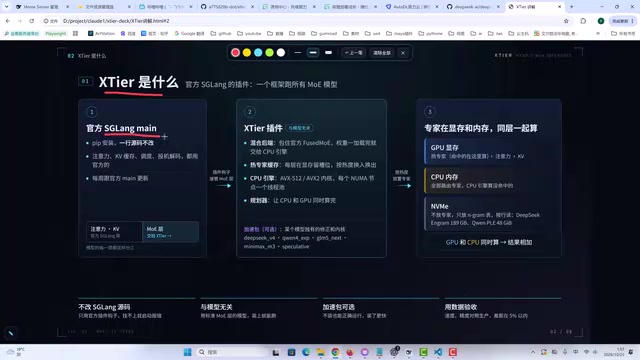
Xtier Plugin + Official SGLang: Hands-On with Hybrid VRAM/RAM Inference for MoE Models
Bilibili creator Yangzai open-sources the Xtier plugin, built on official SGLang to enable hybrid VRAM/RAM inference for MoE models with optional acceleration packs. This article covers the design, installation, and hands-on speed and frontend performance of MiniMax M3.1 Flash.
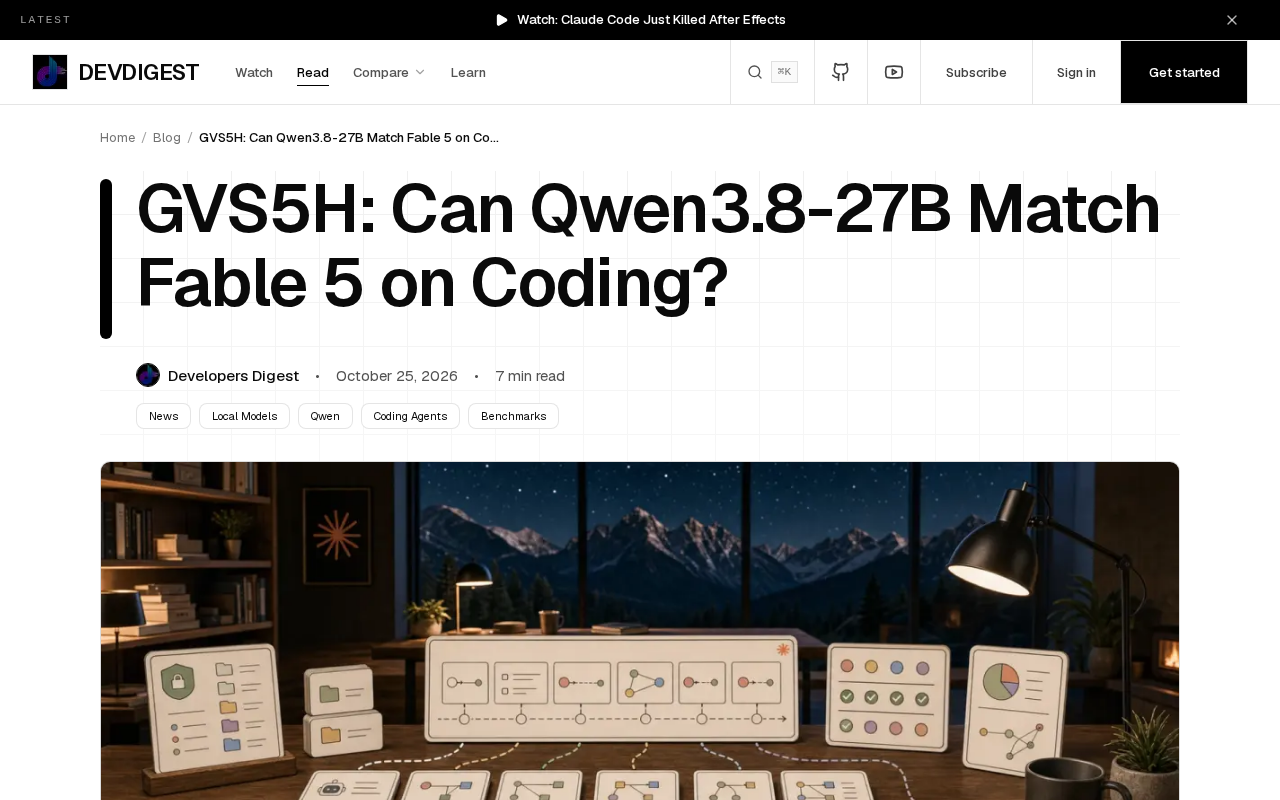
Can Qwen3.8-27B Really Take On Fable 5? Breaking Down the GVS5H Benchmark Controversy
GVS5H claims five Qwen3.8-27B instances match Fable 5 on LiveCodeBench Hard, but Hacker News questions its evaluation method. This article breaks down the harness's logic, the controversy, and what's genuinely worth learning from multi-model ensembles.
Groot Releases Four Small Models: New Options for Reasoning, Coding, and Tool Calling
Groot releases four small models for reasoning, coding, and tool calling. Analysis of the division logic, small model competition, and developer implications.