Apache Cassandra Explained: A Linearly Scalable and Highly Available Distributed Database

A deep dive into Cassandra's linear scalability, decentralized design, and tunable consistency.
This article provides an in-depth look at Apache Cassandra, an open-source distributed database built for linear scalability and high availability. It covers core concepts including decentralized architecture with Gossip protocol, consistent hashing for data distribution, tunable consistency levels based on the CAP theorem, and query-driven data modeling with CQL. The article also discusses ideal use cases, operational considerations, and trade-offs to help teams make informed architecture decisions.
Why Distributed Databases Matter
In an era of data explosion, single-machine databases can no longer handle the massive read/write demands of modern internet applications. When a business scales from thousands to hundreds of millions of users, traditional relational databases often become performance bottlenecks—vertical scaling (upgrading a single machine's hardware) has its limits, while horizontal scaling introduces a host of challenges around data consistency and fault tolerance.
Vertical scaling (Scale Up) improves processing power by upgrading a single server's CPU, memory, and disk. Its advantages include architectural simplicity and no need to modify application code, but it's constrained by physical limits (e.g., a single server can have at most a few TB of memory) and costs grow exponentially. Horizontal scaling (Scale Out) distributes the load across more server nodes, with theoretically no capacity ceiling, but it introduces the inherent complexities of distributed systems—data sharding, cross-node consistency, and network partitions. Modern internet applications almost universally require horizontal scaling, and solving data consistency and coordination challenges during horizontal scaling is the core problem distributed databases aim to address.
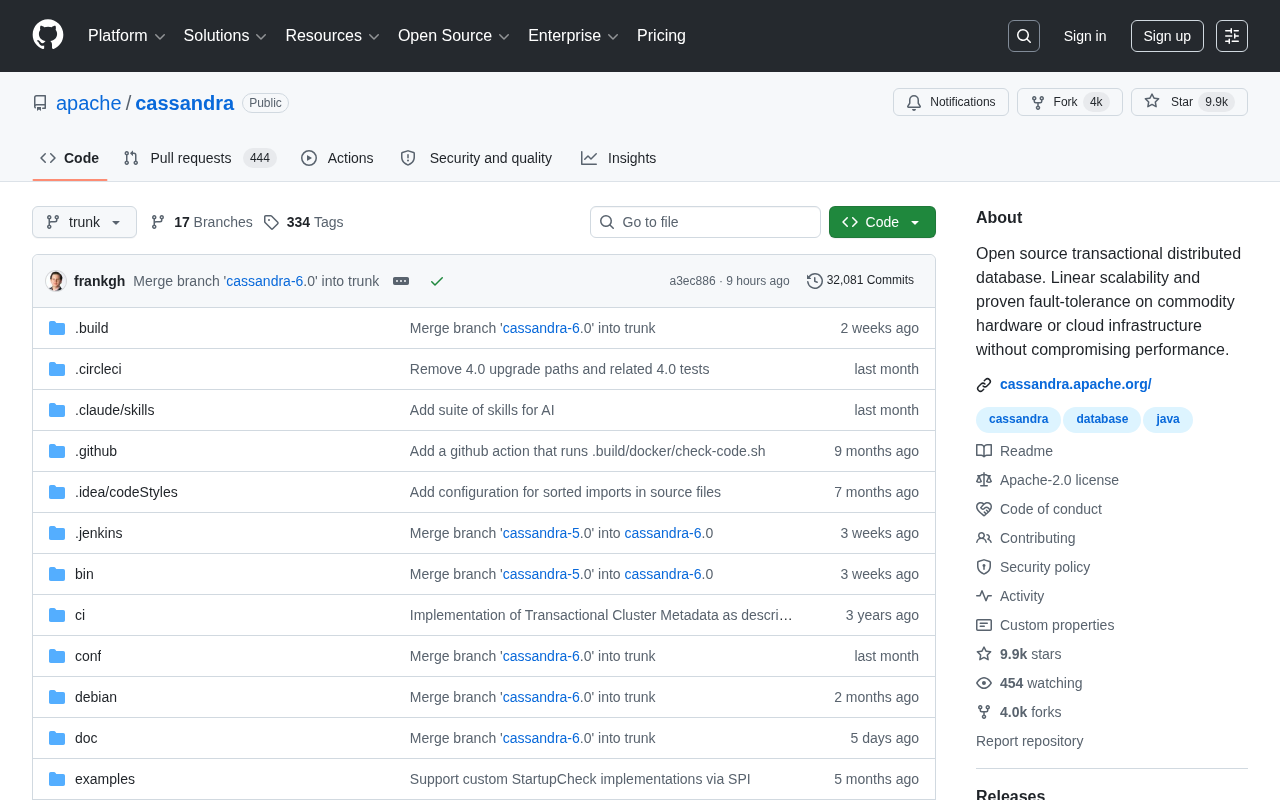
Apache Cassandra was built to solve exactly these problems. As an open-source, transactional distributed database, it's renowned for its Linear Scalability and Proven Fault-Tolerance—all achievable on commodity hardware or cloud infrastructure without sacrificing performance. The project has accumulated nearly 9,900 stars and close to 4,000 forks on GitHub, maintaining an active community presence.
Core Design Principles of Cassandra
Linear Scalability: More Nodes, More Throughput
Cassandra's most compelling feature is its linear scaling capability. "Linear" means that as you add nodes to the cluster, system throughput increases in nearly direct proportion. If one node can handle 100,000 operations per second, then theoretically 10 nodes can handle close to 1 million. This predictable scaling pattern allows enterprises to plan infrastructure investments precisely in line with business growth.
Behind this capability is Cassandra's decentralized architecture. There is no traditional "master node" in the cluster—all nodes are equal peers that communicate and share cluster state information via the Gossip protocol. This design eliminates single-point bottlenecks and single points of failure.
The Gossip protocol (also known as the epidemic protocol) is a decentralized inter-node communication mechanism inspired by how information spreads in social networks. In Cassandra, every second each node randomly selects one to three other nodes in the cluster and sends them its known cluster state information (such as node liveness, data load, schema version, etc.) while receiving theirs in return. Through this repeated exchange, all nodes eventually converge on a consistent view of the cluster state. The key advantage of the Gossip protocol is that it requires no central coordinator and is highly fault-tolerant—even if some nodes are temporarily unreachable, information can still propagate through alternative paths. Its time complexity is O(log N), meaning information reaches all N nodes in roughly log N rounds of communication.
Fault Tolerance Without Performance Loss
Cassandra's fault tolerance is another core strength. Data is distributed across multiple nodes in the cluster via Consistent Hashing and replicated across different nodes according to a configurable Replication Factor. Even when some nodes go down, data can still be read from other replicas, ensuring business continuity.
Consistent hashing is a classic algorithm for solving data sharding problems in distributed systems, first proposed by Karger et al. at MIT in 1997. Its core idea is to organize the hash value space into a virtual ring (Hash Ring), typically ranging from 0 to 2^127-1. Each node in the cluster is mapped to one or more positions on the ring (using virtual nodes/vnodes), and each data record's primary key is hashed to a position on the ring. The data is stored by the first node encountered clockwise on the ring. The key advantage of this design is that when nodes are added or removed from the cluster, only the data on adjacent nodes needs to be partially redistributed rather than fully reshuffled, significantly reducing data migration during scaling operations—typically affecting only 1/N of the data (where N is the number of nodes).
More importantly, Cassandra supports cross-datacenter replication, enabling geographic-level disaster recovery. When an entire datacenter becomes unavailable, requests can be automatically routed to other datacenters to maintain service continuity.
Deep Dive into Cassandra's Technical Architecture
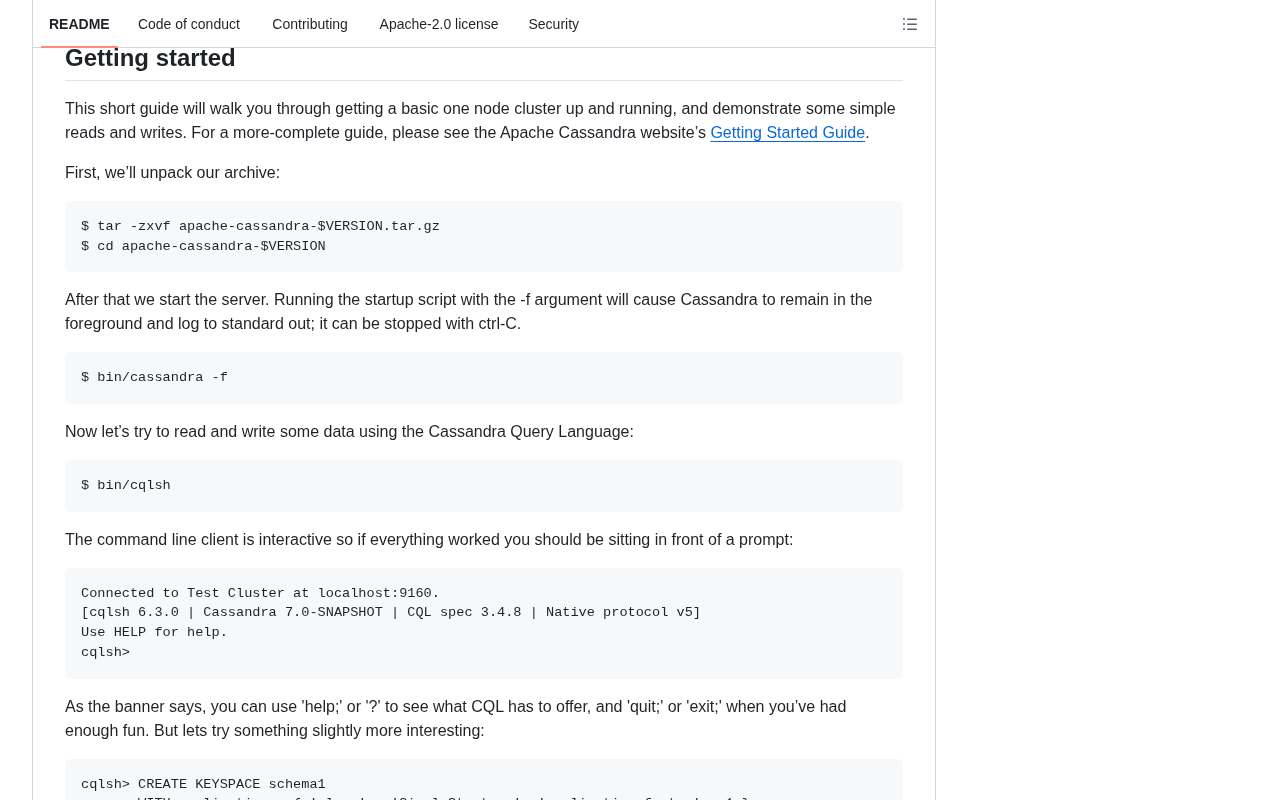
Java-Based Implementation
Cassandra is built in Java, which allows it to leverage the mature toolchain of the JVM ecosystem while maintaining excellent cross-platform compatibility. Java's garbage collection mechanism, rich concurrency libraries, and vast developer community all provide a solid foundation for Cassandra's stability and maintainability.
However, running on the JVM also introduces unique challenges. Java's Garbage Collection (GC) mechanism has a direct and profound impact on Cassandra's performance. When the JVM performs a Full GC, it may trigger a "Stop-the-World" pause—halting all application threads for memory reclamation—which in production environments can cause latency spikes of hundreds of milliseconds or even several seconds. The Cassandra community has long worked to optimize GC behavior: earlier versions recommended the CMS (Concurrent Mark Sweep) collector, later transitioning to G1GC, and the latest versions now support low-latency collectors like ZGC and Shenandoah, which can keep GC pause times under 10 milliseconds. Additionally, Cassandra 4.0 introduced Off-Heap Memory management for storing certain data structures (such as Bloom Filters and index summaries), thereby reducing GC pressure.
An AP System with Tunable Consistency
Under the CAP theorem framework, Cassandra is typically classified as an AP system (prioritizing Availability and Partition tolerance). However, it doesn't completely abandon consistency—instead, it provides a Tunable Consistency mechanism. Developers can specify the consistency level for each individual read or write operation, ranging from ONE (only one replica needs to acknowledge) to QUORUM (a majority of replicas must acknowledge) to ALL (all replicas must acknowledge).
The CAP theorem was proposed by Professor Eric Brewer at UC Berkeley in 2000 and formally proved by Seth Gilbert and Nancy Lynch in 2002. It states that in a distributed system, the three properties of Consistency (all nodes see the same data), Availability (every request receives a non-error response), and Partition Tolerance (the system continues to operate despite network partitions) cannot all be fully satisfied simultaneously—at most two can be guaranteed at the same time. Since network partitions are unavoidable in reality, practical distributed system design mainly involves trade-offs between C and A: CP systems (like ZooKeeper and HBase) sacrifice availability to guarantee consistency during partitions, while AP systems (like Cassandra and DynamoDB) sacrifice strong consistency to guarantee availability during partitions. It's worth noting that the CAP theorem describes trade-offs in extreme scenarios—during normal operation without network partitions, systems can provide both consistency and availability.
Cassandra's tunable consistency mechanism is actually based on an extended implementation of the Quorum voting protocol. Assuming a Replication Factor RF=3 (i.e., each piece of data is stored in 3 replicas), common consistency levels include: ONE—returns a result as soon as 1 replica responds, offering the lowest latency but weakest consistency; QUORUM—requires ⌊RF/2⌋+1=2 replicas to respond, striking a balance between latency and consistency; ALL—requires all 3 replicas to respond, providing the strongest consistency but highest latency and lowest availability. When writes use QUORUM and reads also use QUORUM, since W+R > RF (2+2 > 3), the read and write sets must overlap, guaranteeing that the most recently written data is read—achieving so-called "strong consistency." There are also levels like LOCAL_QUORUM (quorum within the local datacenter only) and EACH_QUORUM (quorum required in each datacenter) for multi-datacenter scenarios.
This design enables developers to make fine-grained trade-offs between consistency and performance. For scenarios like log writing where consistency requirements are low, weaker consistency can be chosen in exchange for higher throughput. For critical transactional data, stronger consistency levels can be used to ensure data accuracy.
CQL: A Friendly Transition for SQL Developers
To lower the barrier to entry, Cassandra provides CQL (Cassandra Query Language). Its syntax closely resembles SQL, allowing developers familiar with relational databases to get started quickly. However, it's important to note that Cassandra's data modeling approach differs fundamentally from traditional relational databases—it emphasizes query-driven modeling, meaning table structures are designed based on application query patterns rather than pursuing data normalization.
Traditional relational databases follow Normalization design principles, eliminating data redundancy to ensure data integrity and combining data from multiple tables through JOIN operations during queries. Cassandra takes the opposite approach—Denormalization. Developers need to first identify all of the application's query patterns, then create dedicated tables for each query, even if this means the same data is redundantly stored across multiple tables. For example, if an application needs to query orders both by user ID and by date range, two different tables should be created with user ID and date as partition keys respectively. While this design increases storage costs and write-time maintenance overhead, it ensures that every query can be efficiently completed within a single partition, avoiding cross-node data aggregation operations and achieving predictable millisecond-level query latency.
Typical Use Cases for Cassandra
Cassandra excels in scenarios requiring massive data handling, high write throughput, and high availability. Typical applications include:
- Time-series data storage: Continuously generated high-volume write data such as IoT sensor data, monitoring metrics, and log records.
- Messaging and social platforms: Data like user feeds, direct messages, and notifications that require fast writes and timeline-based reads.
- E-commerce and recommendation systems: Behavioral data needed for product browsing history, shopping carts, and personalized recommendations.
- Global businesses: Applications requiring cross-region deployment and local access to reduce latency.
Many well-known internet companies have adopted or continue to use Cassandra to power their core services, serving as strong proof of its validation in large-scale production environments.
What to Know Before Using Cassandra
Despite its clear advantages, Cassandra is not a one-size-fits-all solution. The following points should be objectively evaluated during technology selection:
Not suited for complex relational queries: Cassandra is not a good fit for complex JOIN queries and transaction processing. If your business heavily depends on multi-table JOINs or strong ACID transactions, a traditional relational database may be more appropriate. ACID stands for the four fundamental properties of database transactions—Atomicity, Consistency, Isolation, and Durability. Traditional relational databases like MySQL and PostgreSQL strictly guarantee ACID properties through mechanisms like locking and Write-Ahead Logging (WAL). While Cassandra introduced Lightweight Transactions (LWT) starting from version 4.0, these are implemented via the Paxos consensus protocol and carry significant performance overhead, making them unsuitable for high-frequency transaction scenarios.
A shift in data modeling mindset is required: Developers must plan query patterns in advance, because once a table structure is established, modifying query patterns later often requires redesigning the data distribution—an expensive undertaking.
Operational complexity cannot be overlooked: Tuning, monitoring, and troubleshooting distributed systems, along with JVM garbage collection tuning, all require the team to have relevant technical expertise. Proper JVM tuning—including heap size configuration, young-to-old generation ratios, and GC algorithm selection—is a critical aspect of Cassandra operations that should not be neglected.
Conclusion
Apache Cassandra represents a classic paradigm in distributed database design—achieving an elegant balance among scalability, availability, and performance through its decentralized architecture, consistent hashing, and tunable consistency. For enterprises facing the challenges of massive data volumes and high-concurrency writes, it remains a choice well worth serious evaluation.
As a continuously active open-source project, the Cassandra community keeps iterating to improve performance, usability, and operational experience. Understanding its design philosophy and the boundaries of its applicability will help technical teams make smarter decisions during architecture selection.
Related articles
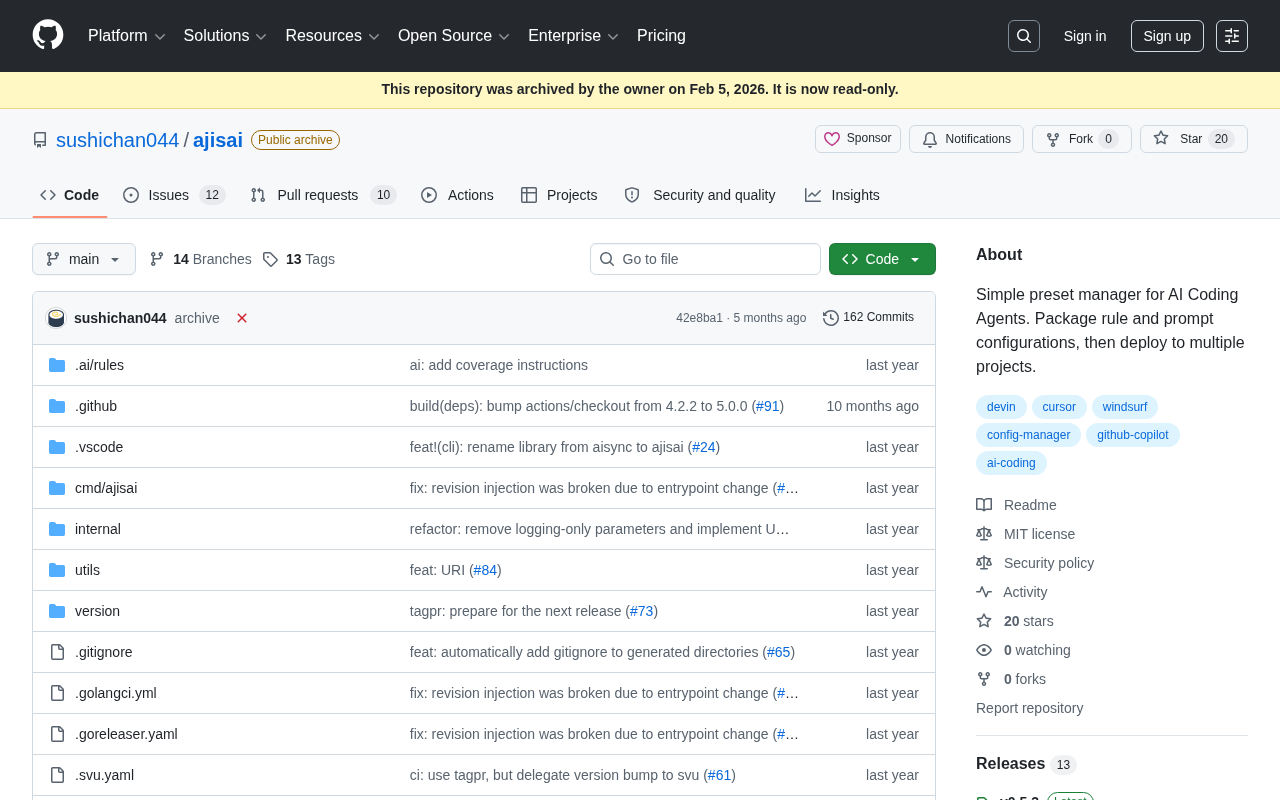
ajisai: A Preset Management Tool for Unifying Rules and Prompts Across AI Coding Assistants
ajisai is a Go-based preset manager for AI coding assistants like Cursor and Claude Code. Package rules and prompts once, deploy everywhere. Early-stage but promising.
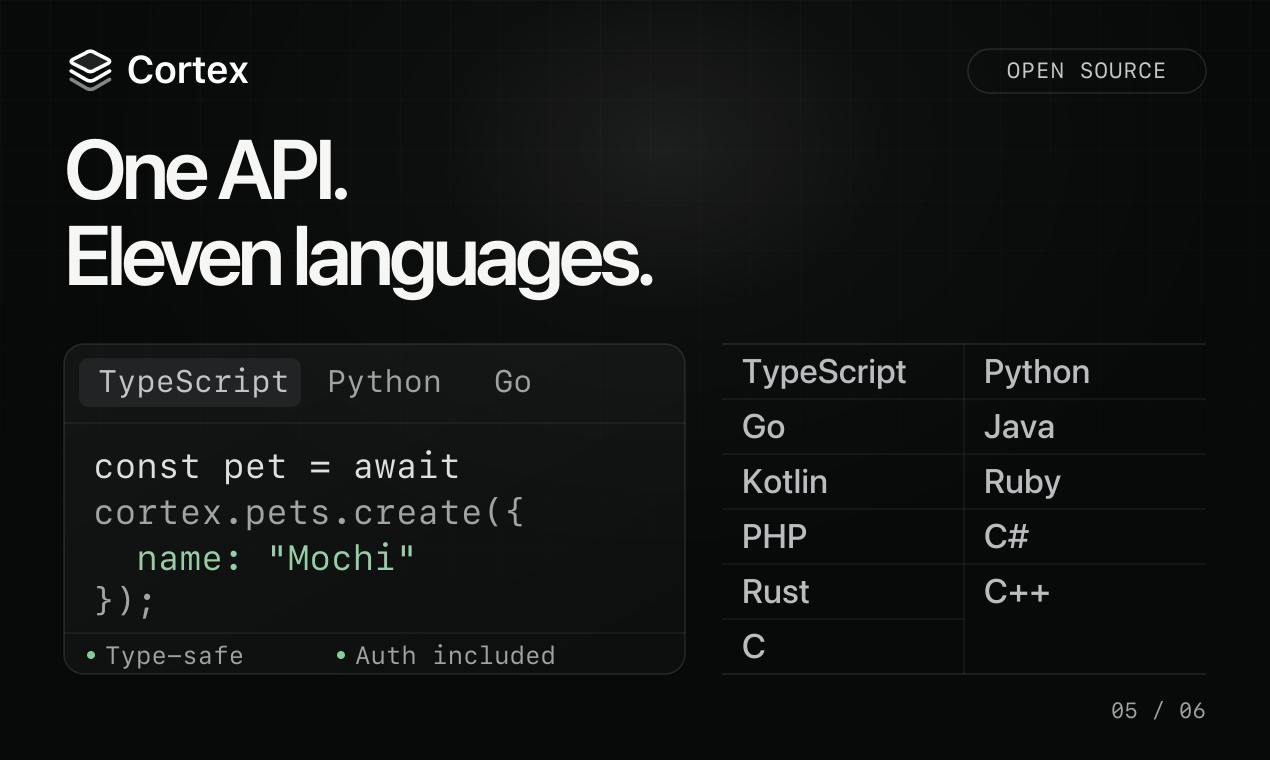
Cortex: Convert API Specs into Docs, SDKs, and MCP Servers in One Click
Cortex is an open-source tool that converts OpenAPI, GraphQL, gRPC and more into interactive docs, typed SDKs in 11 languages, and MCP servers for AI agents.

ABrush: An AI Studio Built for Digital Artists
ABrush is an AI studio for digital artists, ranked #4 on Product Hunt. It embeds leading AI models into existing workflows to remove repetitive tasks, speed up iteration, and keep artists in control.