Appeals Court Rejects Expansive Copyright Claim: The Fair Use Battle in the Digital Age
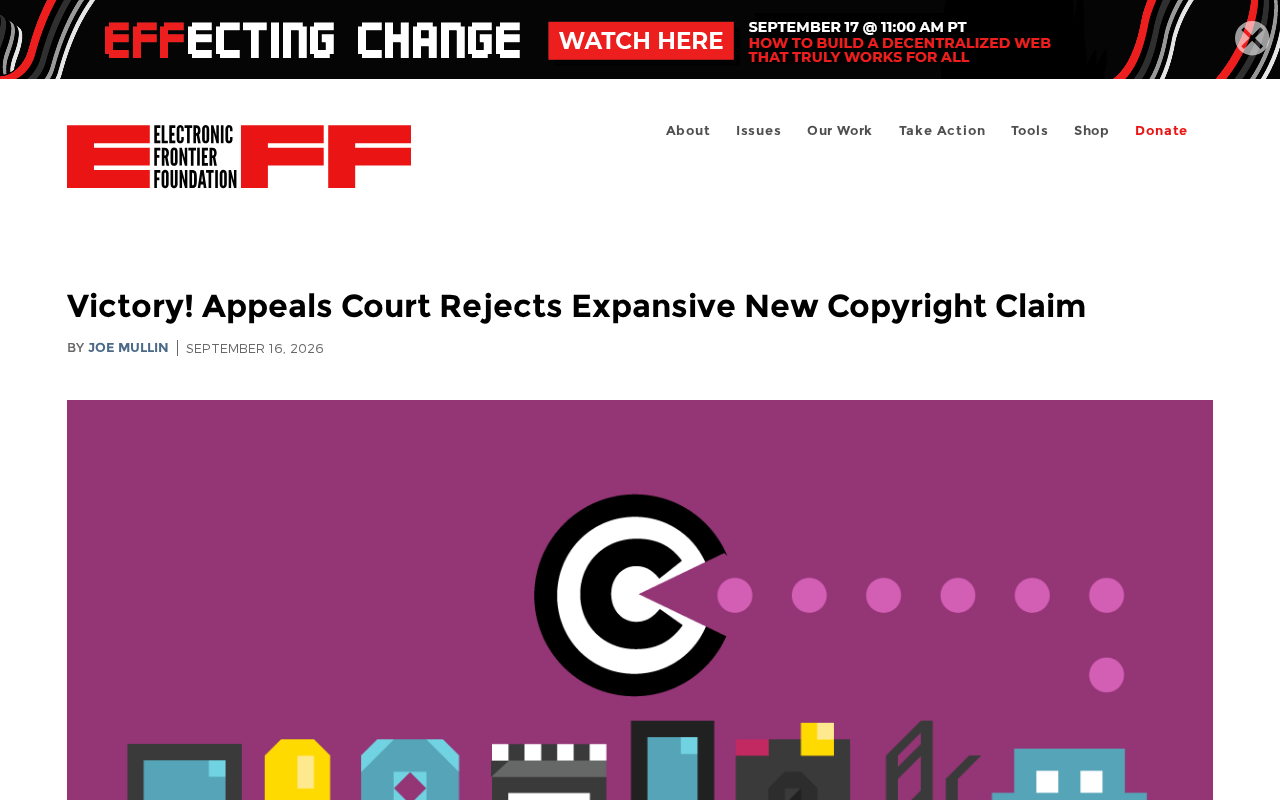
Appeals court rejects expansive copyright claim, a win for fair use and AI data compliance.
An appeals court ruling rejecting an "expansive" new copyright claim has drawn widespread attention from the tech and AI communities. The article explains how rights holders have increasingly used litigation to bring fair use content under copyright control — threatening developers' ability to reuse code, create derivative works, and train AI models. The U.S. fair use Four-Factor Test, especially the "transformative use" standard, is the central legal tool against such expansion and the key battleground in AI training data disputes. The court's restraint signals a judicial preference for preserving existing public domain boundaries, offering a relatively positive outlook for technology innovation — though the full ruling details should be verified against official documents.
Overview
A significant ruling has emerged from an appeals court in a case centered on defining the boundaries of copyright protection. As reported by the Hacker News community (titled Victory: Appeals Court Rejects Expansive New Copyright Claim), the court rejected what was described as an "expansive" new copyright claim. This type of case draws attention from the tech community because the boundaries of copyright directly affect how software is developed, content is created, and AI training data is used.
It's worth noting that the publicly available source material is limited (the community post had only 9 upvotes and 1 comment). This article provides context and background analysis based on the core information conveyed by the title — specific ruling details should be verified against the official court documents.
Why "Expansive Copyright Claims" Are a Concern
As digital content becomes an increasingly core asset, copyright holders have continuously attempted to expand the scope of protection through litigation. An "expansive claim" typically refers to efforts by rights holders to bring content that is otherwise unprotected — or falls within fair use — under copyright control.
If courts were to uphold such claims, the ripple effects could include:
- Reduced freedom for developers to reuse code, interfaces, or data structures
- Higher legal risks for content remixing, quotation, and commentary
- Threats to the openness and interoperability of the broader technology ecosystem
As a result, an appeals court rejecting such a claim is often celebrated by developers and free culture advocates as a "Victory" — a framing reflected in the post's title itself.
The Critical Role of the Fair Use Doctrine
Within the U.S. copyright framework, Fair Use serves as a vital safeguard against excessive copyright expansion. When courts assess whether infringement has occurred, they weigh factors such as the purpose of the use, the nature of the original work, the amount used, and the effect on the market. When rights holders attempt to push beyond these established frameworks, a court's careful rejection helps maintain the balance between creative freedom and rights protection.
Fair Use originates from Section 107 of the U.S. Copyright Act, codifying the "fair dealing" principle rooted in common law tradition. Courts apply the Four-Factor Test: (1) Purpose and character of the use — whether it is transformative, i.e., whether it adds new expression or function to the original; (2) Nature of the copyrighted work — factual works receive less protection than creative ones; (3) Amount and substantiality used — the proportion quoted and whether it captures the "heart" of the work; (4) Effect on the potential market — whether it substitutes for the commercial value of the original.
Notably, the "transformative use" standard has been widely cited in AI-related cases in recent years — including Google Books and Authors Guild v. Google, both of which held that large-scale text scanning constituted fair use. This has made "transformativeness" the central battleground in AI training data copyright disputes, and the primary pressure point that rights holders seek to limit through novel claims.
Potential Implications for the Tech and AI Industries
Every judicial determination on copyright boundaries spills over into the broader technology sector. In recent years, debates have intensified over whether AI training data constitutes infringement and who owns the copyright in AI-generated content. Any recognition of an "expansive copyright claim" could significantly increase compliance costs and uncertainty across the industry.
The appeals court's rejection of such a claim indirectly signals that the judiciary — when confronted with copyright challenges posed by new technologies — tends to preserve existing fair use and public domain boundaries, rather than indefinitely expanding rights holder control. For technology innovation that depends on the reuse of data, code, and content, this is a relatively favorable direction.
In the realm of AI training data copyright disputes, several landmark U.S. cases are currently in progress, including The New York Times v. OpenAI and Getty Images v. Stability AI. A central question in these cases is whether large-scale scraping and model training constitutes "transformative use," and whether model outputs materially substitute for the original works in the marketplace.
While the appeals court's rejection of an expansive copyright claim does not directly rule on the legality of AI training, its tone of judicial restraint helps "preserve the temperature" of the existing fair use framework — that is, it prevents copyright protection from suddenly contracting due to individual aggressive lawsuits, pending new congressional legislation or higher-court rulings. This has practical value for AI developers assessing compliance risk and formulating data sourcing strategies.
Conclusion
This ruling once again highlights the core tension in copyright law during the digital age: how to protect creators' rights without stifling open innovation and the free flow of information. For practitioners who follow technology policy, tracking these precedents can help anticipate the future compliance landscape. Readers are advised to consult the official court ruling and professional legal analysis for authoritative guidance — this article is intended only as a contextual and background overview.
Related articles
Using Claude Code for Free in China: A Complete Guide to Connecting Free Domestic Models
A step-by-step guide for China-based users to run Claude Code for free by connecting Meituan's open-source LongCat model API — no paid subscription needed.
Getting Started with Claude Code: A Beginner's Guide to AI-Powered Coding
Claude Code is a locally-run AI coding agent that reads your entire project and auto-debugs code. Compare it with Copilot, Cursor, TRAE, and Codex to see why it leads the pack.
14K Stars Open-Source Desktop App cc-haha: 5 AI Agents That Divide and Conquer on Their Own
cc-haha, the open-source Claude Code desktop app with 14K Stars, adds Agent Teams: 5 AI agents autonomously divide tasks, with a 99% cache hit rate on 40M tokens.