Apple Adds AI Assistant to Pages, Keynote, Numbers
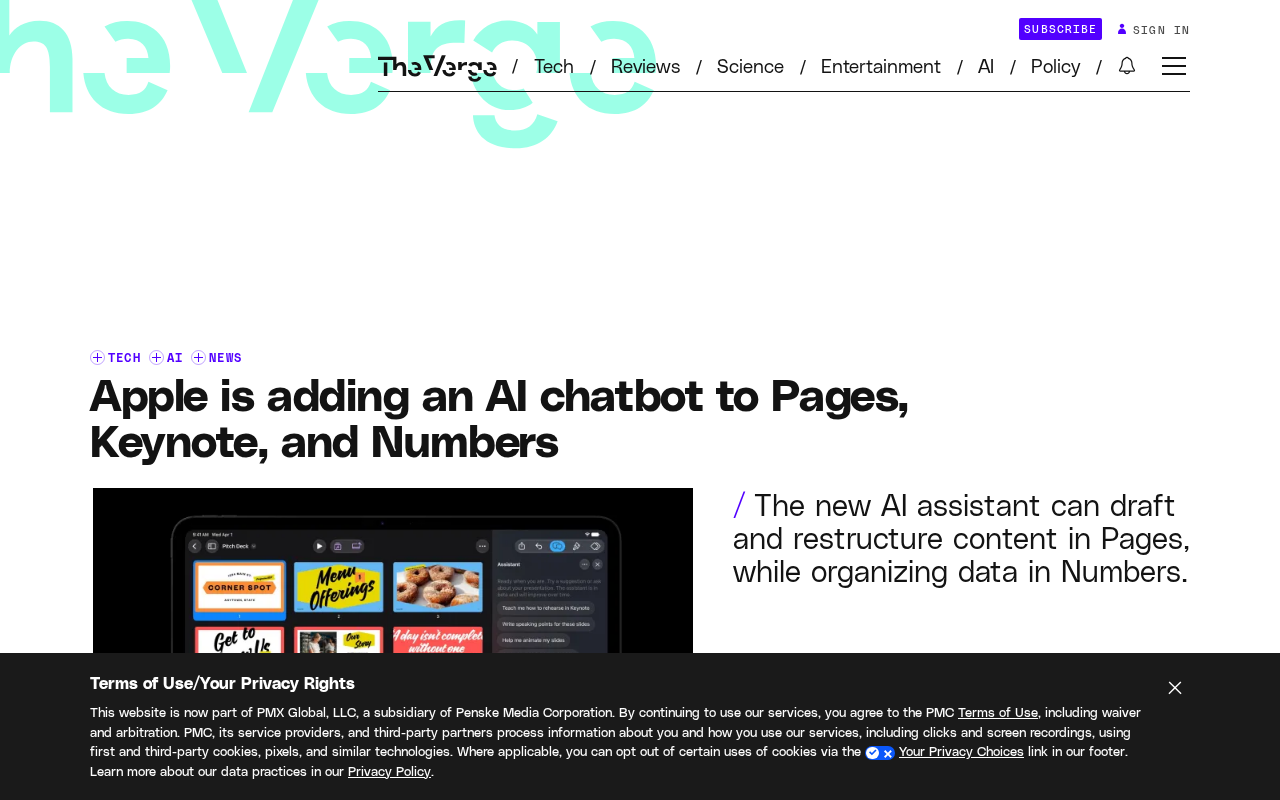
Apple introduces dual-model AI assistant to Keynote, Pages, Numbers, escalating productivity AI competition.
Apple plans to embed an AI assistant into its iWork productivity suite, covering Keynote, Pages, and Numbers. Powered by both Apple's own models and OpenAI models, its core capability is understanding document context and proactively operating on content—such as design, animation, and slide optimization in Keynote, drafting and restructuring documents in Pages, with Numbers' features undisclosed. The dual-model strategy reflects trade-offs between on-device privacy and cloud generation, and positions Apple against Microsoft Copilot and Google Gemini.
Apple is expanding its AI capabilities to its productivity suite. According to an RSS source, Apple will introduce an AI assistant to its three apps—Keynote, Pages, and Numbers—built on Apple's own models and OpenAI's models.
Core Features: From Understanding Document Context to Proactive Operations
The key capability of this AI assistant lies in understanding the context of documents rather than simply generating text. In Keynote, it can perform tasks such as designing, animating, and optimizing slides. This means users no longer need to manually adjust the layout and motion effects of every page—the AI can propose adjustments based on the overall content of the presentation.
In Pages, the assistant can draft and restructure documents. This sounds like elevating writing assistance from mere continuation to the structural level—when document content changes, the AI can help reorganize paragraphs and logic, not just fill in text.
Numbers' specific features are not detailed in the original information, but it is reasonable to infer that AI's value in spreadsheet scenarios may center on data organization, formula suggestions, or chart generation.
Technical Foundation: Apple + OpenAI Dual-Model Strategy
The assistant is powered by both Apple and OpenAI models. Apple's choice of a hybrid model approach suggests a division of labor between on-device and cloud—local models may handle privacy-sensitive and low-latency tasks, while OpenAI's models handle more complex generation and understanding needs.
This approach creates tension with Apple's long-standing privacy narrative, but it also reflects Apple's choice to partner with leading external models to shore up its shortcomings in generative AI capabilities. For users, the actual experience depends on how the two models work together and which tasks are routed to the cloud.
The Division of Labor Between On-Device and Cloud Models
On-device models refer to small-scale AI models that run directly on user devices (such as iPhone, iPad, Mac), typically quantized and compressed to fit limited compute and memory. Their advantages are low latency, offline availability, and privacy protection from data never leaving the device, but their parameter count and knowledge breadth are limited. Cloud models run in data centers with stronger reasoning and generation capabilities, capable of handling complex long-document understanding and multimodal tasks, at the cost of network dependency and potential data exposure risks. Apple has already adopted an "on-device first, cloud as supplement" architecture in Apple Intelligence, introducing Private Cloud Compute to mitigate privacy concerns around cloud processing. The introduction of OpenAI models means some high-complexity tasks may be routed to third-party clouds—a new variable that requires trade-offs against Apple's previously emphasized privacy architecture.
Impact on the Productivity Tool Competitive Landscape
Embedding an AI assistant into Keynote, Pages, and Numbers means Apple is formally bringing AI capabilities into the iWork suite. Consistent with Microsoft's integration of Copilot in Office and Google's push for Gemini in Workspace, the competitive focus of productivity software is shifting from feature richness to the depth of AI assistance.
For Apple users, the value of this change lies in AI being able to directly operate on document content rather than staying in a separate chat window. If implemented well, Keynote's slide design and Pages' document restructuring will significantly reduce the time cost of layout and structural organization. However, currently disclosed information is still limited, especially regarding specific capabilities in Numbers and actual availability timing.
How iWork Differs from Copilot and Gemini
iWork is Apple's free productivity suite for Mac, iPad, and iPhone, including Keynote (presentations), Pages (word processing), and Numbers (spreadsheets), competing directly with Microsoft Office and Google Workspace. Microsoft Copilot is deeply integrated into Word, Excel, and PowerPoint, emphasizing enterprise subscriptions and Microsoft 365 ecosystem integration; Google Gemini relies on Workspace's cloud collaboration advantages. Apple's differentiation lies in deep device and system integration—AI can directly invoke system-level capabilities to manipulate document object models rather than serving only as a sidebar chat assistant. However, iWork's market share in enterprise and cross-platform collaboration is far smaller than Office's, so its AI features are more a means of reinforcing Apple ecosystem stickiness than directly competing for the enterprise office market.
One-line Summary
Apple introduces dual-model AI assistant to Keynote, Pages, Numbers, escalating productivity AI competition.
Paragraph Summary
Apple plans to embed an AI assistant into its iWork productivity suite, covering Keynote, Pages, and Numbers. The assistant is powered by both Apple's own models and OpenAI models, with core capabilities in understanding document context and proactively operating on content—such as completing design, animation, and slide optimization in Keynote, drafting and restructuring documents in Pages, with Numbers' specific features not yet disclosed. The dual-model strategy reflects Apple's division of labor and trade-offs between on-device privacy and cloud generation capabilities, as well as its approach of leveraging leading external models to shore up generative AI shortcomings. This move positions Apple against Microsoft Copilot and Google Gemini, signaling that the competitive focus of productivity software is shifting from feature richness to AI assistance depth, though actual availability timing and Numbers capabilities remain to be clarified.
Related articles
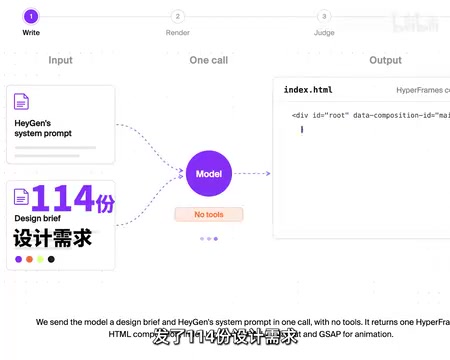
27-Model Code-to-Video Test: Claude Opus 5.5 Takes the Crown, But the Real Value King Is Someone Else
Artificial Analysis' Code2Video Benchmark has 27 models write HTML videos from pure code: Claude Opus 5.5 tops at 1536, while GPT 6.1 ranks fourth at ~1/10 the cost.

Writing Code with Claude Code Means Passing a Network Admin Exam First: The Pain of Configuring AI Programming Tools
Claude Code's real barrier isn't coding ability but account, network, and regional configuration. Why AI programming tools are painful to set up — and how developers should choose pragmatically.

Jev in Practice: A Decision Model That Replaces Token-by-Token Decoding with a Single Prefill
Breaking down Jev's inference paradigm: skip token-by-token decoding and use a single prefill forward pass to output choices, ordinal scores, and booleans. Comparing encoder and decoder paths, multi-question mask design, duplicate token pitfalls, and RLCD with GRPO for probability calibration training.