Apple Developer Center Lands in Europe: A Look at Mac Touch and New Subscription Features
Apple's developer newsletter reveals the Berlin Developer Center, Mac touch, the student challenge, and subscription updates.
Apple's supersized edition of Hello Developer released a concentrated batch of updates: Europe's first Apple Developer Center is located in Berlin, marking the extension of Apple's offline developer support to Europe; touch interaction is coming to Mac, requiring developers to reconsider design constraints like touch target sizes, gesture recognition, and state feedback; Swift Student Challenge 2027 has entered preparation; and App Review has added help articles alongside subscription updates aimed at lowering barriers to review communication and monetization. Overall, Apple is advancing both offline developer ecosystem expansion and platform interaction evolution, with Mac touch adaptation being the most urgent short-term priority.
Apple's official developer newsletter Hello Developer has released its latest issue as a "supersized edition," delivering a batch of updates directly relevant to developers: the first Apple Developer Center in Europe is about to open, touch interaction is coming to the Mac platform, the next Swift Student Challenge has launched, and a series of updates to App Review help documentation and subscription features. For teams building apps in the Apple ecosystem, this issue packs noticeably more information than a typical monthly edition.
Europe's First Apple Developer Center Lands in Berlin
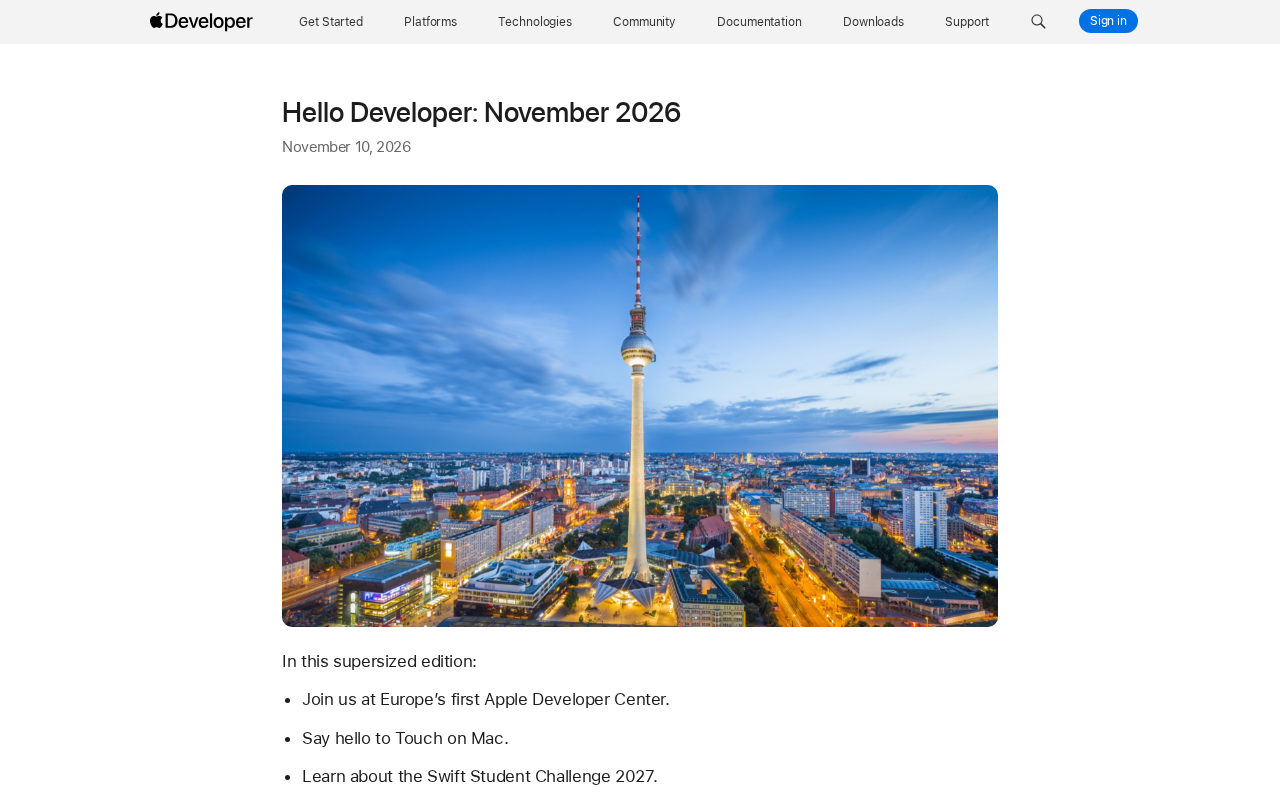
The newsletter places "join the first Apple Developer Center in Europe" at the top of its update list. The accompanying image shows a night view of the Berlin TV Tower and Alexanderplatz, essentially confirming the center's location in Berlin. For European developers, this means Apple's offline investment in developer relations is beginning to extend to Europe following its home base in the US.
The value of a Developer Center goes beyond hosting events. In the past, Apple's developer support, technical consultations, design reviews, and other resources were mostly concentrated online or at US-based occasions like WWDC, so European teams often had to communicate across time zones or make long trips. The establishment of an in-person center is expected to give local developers more direct access to support from Apple engineers and evangelists, and could also become a fixed venue for regional developer community events. The newsletter itself does not disclose the center's specific opening date or scope of services, so this information will need to be tracked in future announcements.
Apple Developer Center is a physical, in-person space that Apple establishes for developers, typically offering technical sessions, design labs, one-on-one consultations, and opportunities for face-to-face interaction with Apple engineers. Unlike annual large-scale conferences such as WWDC, Developer Centers emphasize ongoing, regionalized support, allowing developers to receive continuous technical guidance outside of conference season. Apple has previously established developer centers in locations such as Cupertino, and the Berlin center marks the first time it has replicated this model in Europe—a meaningful step toward shortening the feedback loop between European teams and Apple's platform teams.
Mac Welcomes Touch Interaction
"Say hello to Touch on Mac" is the item most worth the attention of technical teams in this issue. The Mac has long relied on the mouse and trackpad as its primary input methods, and the introduction of touch interaction means app interfaces need to reconsider design constraints such as touch target sizes, gesture recognition, and state feedback.
For developers, this is a change that requires advance planning for adaptation. Touch and pointer differ significantly in interaction precision, hover states, context menus, and other aspects. If existing Mac apps simply port over iOS touch code, they are likely to run into issues such as hit areas that are too small and gesture conflicts. The newsletter title only indicates the direction; specific APIs and adaptation guides will need to wait for official documentation updates.
In touch interaction, several foundational concepts directly affect the quality of adaptation: the hit target refers to the effective area a user's finger can tap, and is generally recommended to be no smaller than 44×44 points; gesture recognition needs to distinguish between taps, double taps, long presses, drags, and other continuous inputs, while coordinating with the system's scroll and zoom gestures; the hover state is used on pointer devices for previews and hints, but touch devices have no true hover, so the relevant UI needs to provide alternative feedback. In addition, touch has no concept of a right-click, and context menus are typically invoked via long press instead. These differences mean Mac apps cannot simply reuse iOS touch logic, but must be redesigned for scenarios where large screens and multiple input methods coexist.
Swift Student Challenge 2027 Launches
The newsletter explicitly mentions the Swift Student Challenge 2027, indicating that the next student challenge has entered the preparation stage. This competition has long been an important channel for Apple to cultivate young developers. Combined with the opening of the European Developer Center, it is reasonable to infer that Apple is trying to combine online competitions with offline developer resources to provide student developers with a more complete growth path. For the specific schedule, submission requirements, and judging criteria, the newsletter points to a detailed page that developers can access via the official link.
App Review and Subscription Feature Updates
This issue also mentions two updates directly related to monetization: new App Review help articles and new subscription features.
The addition of App Review help articles usually means Apple is trying to reduce the communication costs of the review process. For developers, rejections often hinge on an unclear understanding of the guidelines, and more detailed help documentation can lower the cost of repeated submissions. As for subscription features, the newsletter does not go into detail, but subscriptions have always been an important source of developer revenue in the Apple ecosystem, and the related new features are worth watching for fuller explanations later.
App Review is the process by which Apple conducts manual and automated review of apps submitted to the App Store, based on the App Store Review Guidelines as well as specific terms concerning privacy, payments, content, and other areas. Common reasons for rejection include inaccurate metadata, crashes or incomplete functionality, failure to provide a test account, and unclear presentation of subscription terms. On the subscription side, Apple's auto-renewable subscription system involves mechanisms such as subscription groups, upgrades/downgrades/crossgrades, promotional offers, and billing grace periods. Developers who want to reduce churn during the subscription lifecycle need to configure these capabilities correctly and handle the corresponding server notifications. The expansion of help documentation usually means Apple wants developers to resolve more compliance issues on their own before submitting.
What Signals Does This Newsletter Send?
Looking at these updates together, this issue points in two directions: first, the expansion of the offline developer ecosystem, marked by the Berlin Developer Center; second, the evolution of the platform's interaction paradigm, with Mac touch being the most representative step. The subscription and App Review updates fall under ongoing optimization of monetization infrastructure.
For developers, the most urgent action in the short term is to follow the Mac touch adaptation guides; in the medium term, it is worth watching whether the European Developer Center can bring more convenient local support resources. The full content can be found on the Hello Developer page of Apple's developer website.
This article is based on summary information from Apple's official developer newsletter Hello Developer: November 2026. For specific technical details, refer to Apple's official documentation.
One-line Summary
Apple's developer newsletter reveals the Berlin Developer Center, Mac touch, the student challenge, and subscription updates.
Paragraph Summary
Apple's supersized edition of Hello Developer released a concentrated batch of developer updates: Europe's first Apple Developer Center is located in Berlin, marking the extension of Apple's offline developer support to Europe; touch interaction is coming to the Mac platform, requiring developers to reconsider design constraints such as touch target sizes, gesture recognition, and state feedback; Swift Student Challenge 2027 has entered the preparation stage; and App Review has added help articles alongside subscription feature updates aimed at lowering the barriers to review communication and monetization. Overall, Apple is simultaneously advancing offline developer ecosystem expansion and platform interaction evolution, with Mac touch adaptation guides being the most urgent item to follow in the short term.
Related articles
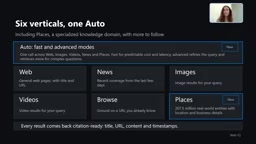
Microsoft WebIQ: Verifiable Real-Time Web Grounding for AI Agents
Microsoft WebIQ gives AI Agents real-time, citable web grounding across web, news, images, videos, and Places—164ms P95 latency, 50% fewer tokens, Scopes source control, and MCP integration.
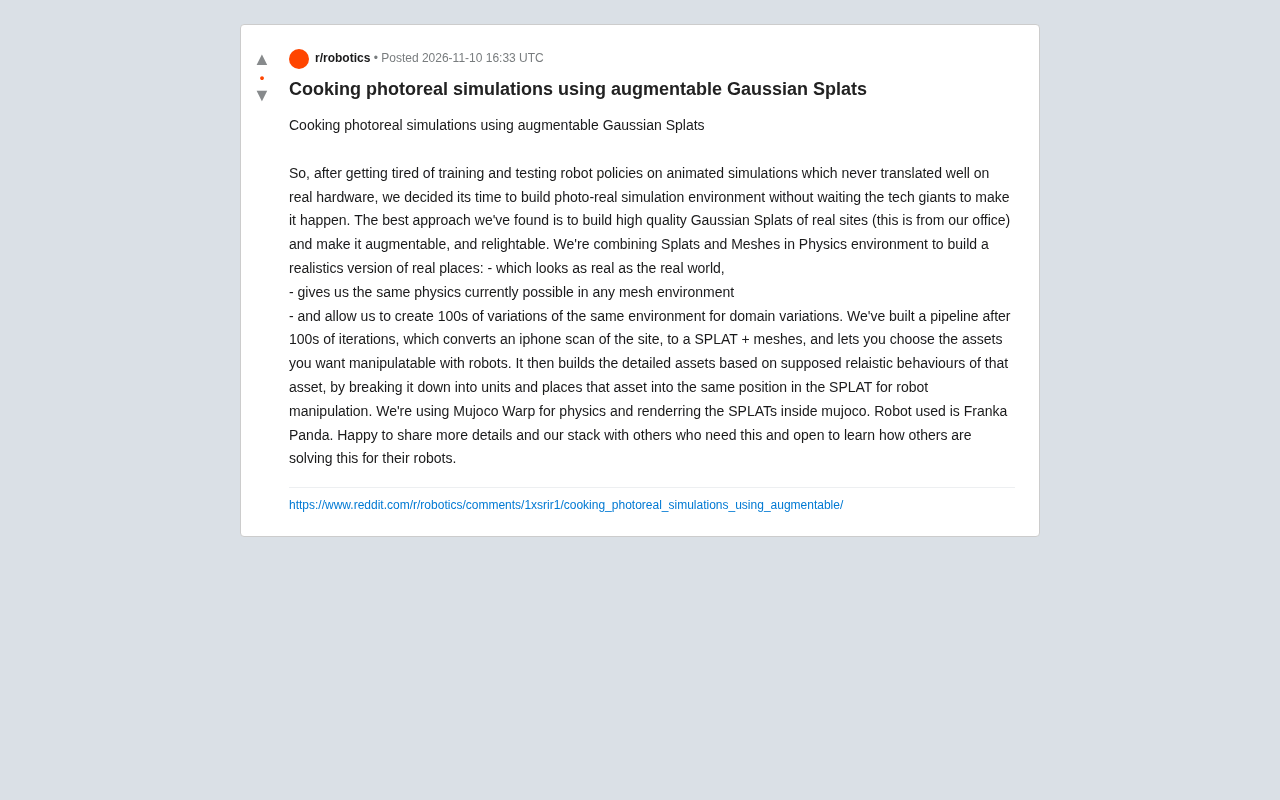
Augmentable Gaussian Splatting: Building Photorealistic Simulation Environments for Robot Training
Team combines Gaussian Splatting with meshes to build photorealistic robot simulation environments, integrating MuJoCo Warp physics and Franka Panda for augmentable, relightable real-site simulation.
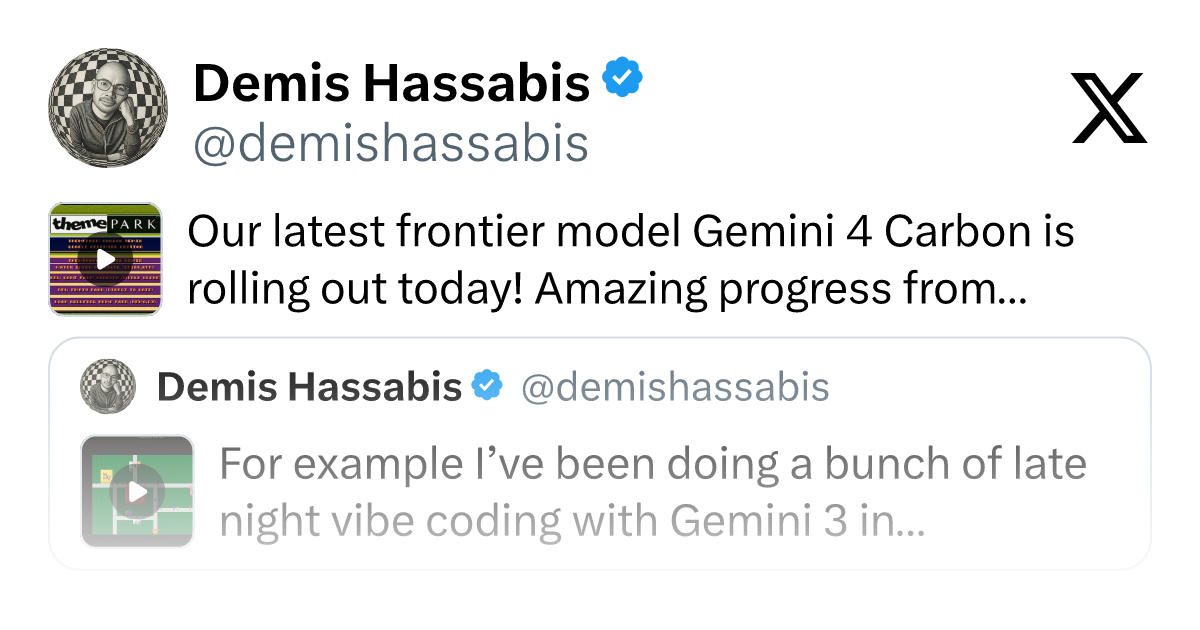
Gemini 4 Carbon Released: The Leap from Gemini 3 to Gemini 4 in Under a Year
Google releases Gemini 4 Carbon, less than a year after Gemini 3. In the official demo, Carbon reverse-engineered the Theme Park binary, added a new DeepMind-themed ride, and ported it to the web in one shot.