Apple HomeView Hands-On: Apple's Answer to the Smart Home Hub
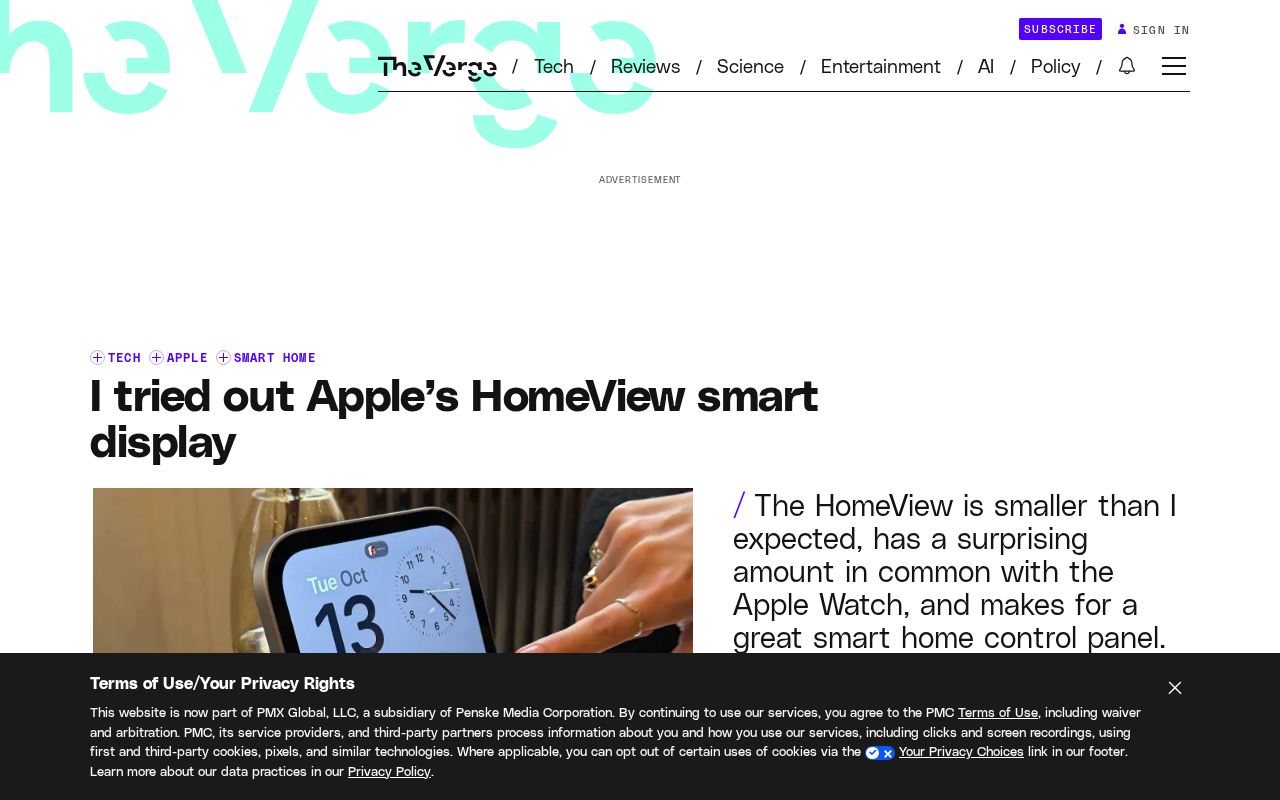
Apple launches HomeView, its first smart home display—square screen plus Siri AI, betting on the home ecosystem entry point.
Apple has officially unveiled HomeView, its first smart home display, featuring a 7-inch square touchscreen and built-in Siri AI, positioned as a three-in-one smart home controller, personal assistant, and home hub. The square screen offers more orderly display space for device card grids, photo walls, and video calls, and aligns more closely with the intuitive perception of a "control panel." Siri is upgraded from a Q&A tool on your phone to an execution hub in the home environment, handling orchestration of lights, climate, security, and scene automation. Against Amazon Echo Show and Google Nest Hub, Apple's differentiation lies in ecosystem integration depth—whether it can seamlessly connect with iPhone, HomePod, and HomeKit determines if it becomes the entry point to Apple's home ecosystem. Hands-on execution is solid, but Siri's comprehension, multi-user switching, and third-party integration breadth still need long-term validation.
Apple has officially unveiled HomeView, its first smart home display. The device features a 7-inch square touchscreen and built-in Siri AI, positioned as a three-in-one combination of smart home controller, personal assistant, and home hub.
Hardware Design: Balancing a Square Screen with Home Aesthetics
HomeView's most striking design element is its 7-inch square touchscreen. The square aspect ratio offers practical advantages in home control scenarios—grid-arranged smart device cards, multi-panel family photo walls, and video call feeds all get more orderly display space.
Apple didn't go with a circular or portrait-oriented approach, which sets it apart from existing smart displays on the market. A square shape aligns more closely with the intuitive perception of a "control panel" rather than a "tablet" or "smart speaker with a screen." As a home hub that lives permanently on a kitchen counter, entryway table, or living room side table, the device needs to blend into the home environment rather than dominate it—and HomeView continues Apple's aesthetic standards for hardware quality.
Siri AI and the Core of Smart Home Control
The built-in Siri AI is the brain of the entire device. It's not just a voice assistant—it takes on the role of smart home controller, handling the orchestration of lights, climate control, security, and scene automation, all through Siri.
Apple's angle is upgrading Siri from a "Q&A tool" on your phone to an "execution hub" in the home environment. Users can walk up to the screen or simply issue voice commands to trigger device automation, check camera feeds, and adjust environmental parameters. This interaction logic emphasizes "use at a glance" rather than pulling out your phone and opening an app.
The device also serves as a personal assistant, integrating schedules, reminders, weather, and communications into a shared household context. For multi-member families, HomeView's potential as a communal information panel is worth watching.
About HomeKit: HomeKit is Apple's smart home platform framework, introduced in 2014. It provides a unified access protocol and security standard for third-party manufacturers' lights, locks, cameras, thermostats, and other devices. Once a device is HomeKit-certified, it can work with iPhone, iPad, Apple Watch, HomePod, and Apple TV, and be controlled through the "Home" app or Siri voice commands for scene automation. A key characteristic of HomeKit is its emphasis on local processing and end-to-end encryption—many automations can run on a home hub device without going through the cloud. The so-called "home hub" has traditionally been handled by a HomePod, Apple TV, or an always-at-home iPad, responsible for running automations and responding to remote commands when the user is away. If HomeView serves as a screen-based hub, it takes on a dual role in this chain as both an interaction entry point and a scheduling node—which is a key dimension for evaluating its value.
Apple's Approach to the Smart Home Market
The smart display category already has players like Amazon Echo Show and Google Nest Hub, and Apple's entry means the category is now officially part of mainstream ecosystem competition.
Apple's differentiated advantage lies in the depth of its ecosystem integration. If HomeView can seamlessly invoke iPhone, Apple Watch, HomePod, Apple TV, and HomeKit devices, it won't be just another isolated screen—it will be the entry point to Apple's home ecosystem. Conversely, if cross-ecosystem compatibility is limited, its appeal will be confined to heavy Apple users.
From a product logic standpoint, HomeView fills Apple's interaction gap in the physical home space—iPhone for personal use, Mac for the desk, Apple TV for the living room, HomeView for shared family areas. Whether this spatial layout works depends on Siri's response quality and the richness of the HomeKit ecosystem.
About the smart display category: Smart displays are devices that sit between smart speakers and tablets, typically featuring a 7-to-10-inch touchscreen and a built-in voice assistant, designed to reside permanently in shared home spaces (kitchen, bedside, entryway). Amazon Echo Show pioneered this category in 2017, with Google Nest Hub following suit. Both center on their respective voice assistants and can control smart home devices, play videos, make video calls, and display calendars and photos. The core competitive factor in this category isn't hardware specs—it's the voice assistant's comprehension ability and the scale of the device ecosystem it can connect to. Apple previously had no presence in this form factor, and HomeView marks its first direct entry into head-to-head competition in this segment.
Hands-On Impressions and Open Questions
From initial hands-on time, HomeView's hardware execution is up to Apple's usual standards, and the square screen's practicality exceeds expectations. The real test is on the software side: Siri's comprehension in home scenarios, the smoothness of multi-user switching, and the breadth of third-party device support all require long-term use to validate.
Price and release timing will directly affect its market positioning. In the role of smart home hub, Apple doesn't need a showpiece device—it needs a daily tool the whole family is willing to use every day.
One-line Summary
Apple launches HomeView, its first smart home display—square screen plus Siri AI, betting on the home ecosystem entry point.
Paragraph Summary
Apple has officially unveiled HomeView, its first smart home display, featuring a 7-inch square touchscreen and built-in Siri AI, positioned as a three-in-one smart home controller, personal assistant, and home hub. The square screen offers more orderly display space for device card grids, photo walls, and video calls, and aligns more closely with the intuitive perception of a "control panel." Siri is upgraded from a Q&A tool on your phone to an execution hub in the home environment, handling orchestration of lights, climate, security, and scene automation. Against Amazon Echo Show and Google Nest Hub, Apple's differentiation lies in ecosystem integration depth—whether it can seamlessly connect with iPhone, HomePod, and HomeKit determines if it becomes the entry point to Apple's home ecosystem. Hands-on execution is solid, but Siri's comprehension, multi-user switching, and third-party integration breadth still need long-term validation.
Related articles

Anthropic IPO Countdown: The Compute Cost Ledger Behind a $2 Trillion Valuation
Anthropic's IPO targets up to $2 trillion — double its Series H valuation. We break down the timeline, compute cost logic, and the key question investor day must answer.

Anthropic IPO Prospectus Revealed: Behind 12x Revenue Growth, the Twin Tests of Compute Costs and Customer Concentration
Anthropic filed its IPO prospectus: 2025 revenue up 12x to $4.6B, net loss $42B including $34B non-cash. Breaking down compute costs, $2T valuation logic, customer concentration risks, and founder control.

Xteink X4 Pro Review: A Mini E-Reader That Fits in Your Pocket, Now More Affordable
Xteink X4 Pro is a 4.26-inch mini e-reader, smaller and thinner than a 6-inch Kindle, magnetically attachable to phones, and cheaper than ever. We analyze its screen, design, use cases, and value.