Apple Refreshes HomePod mini: New Chip Inside, Still $149

Apple launches a new HomePod mini with an upgraded chip, SoundGlow, and a $149 price.
Apple quietly updates the HomePod mini with a new chip boosting Siri's on-device AI and a new SoundGlow visual interaction feature, while keeping the $149 price. The update signals Apple's push to strengthen Siri's usefulness, enhance daily experience with visual feedback, and hold the entry-level smart home market. It launches October 30.
Apple has quietly updated its smart speaker lineup with a new generation of the HomePod mini. The product keeps its compact spherical design, but packs an updated chip inside and introduces a visual interaction feature called "SoundGlow." Most notably, the pricing strategy remains unchanged — the new HomePod mini stays at $149, meaning hardware upgrades come without a higher barrier to entry.
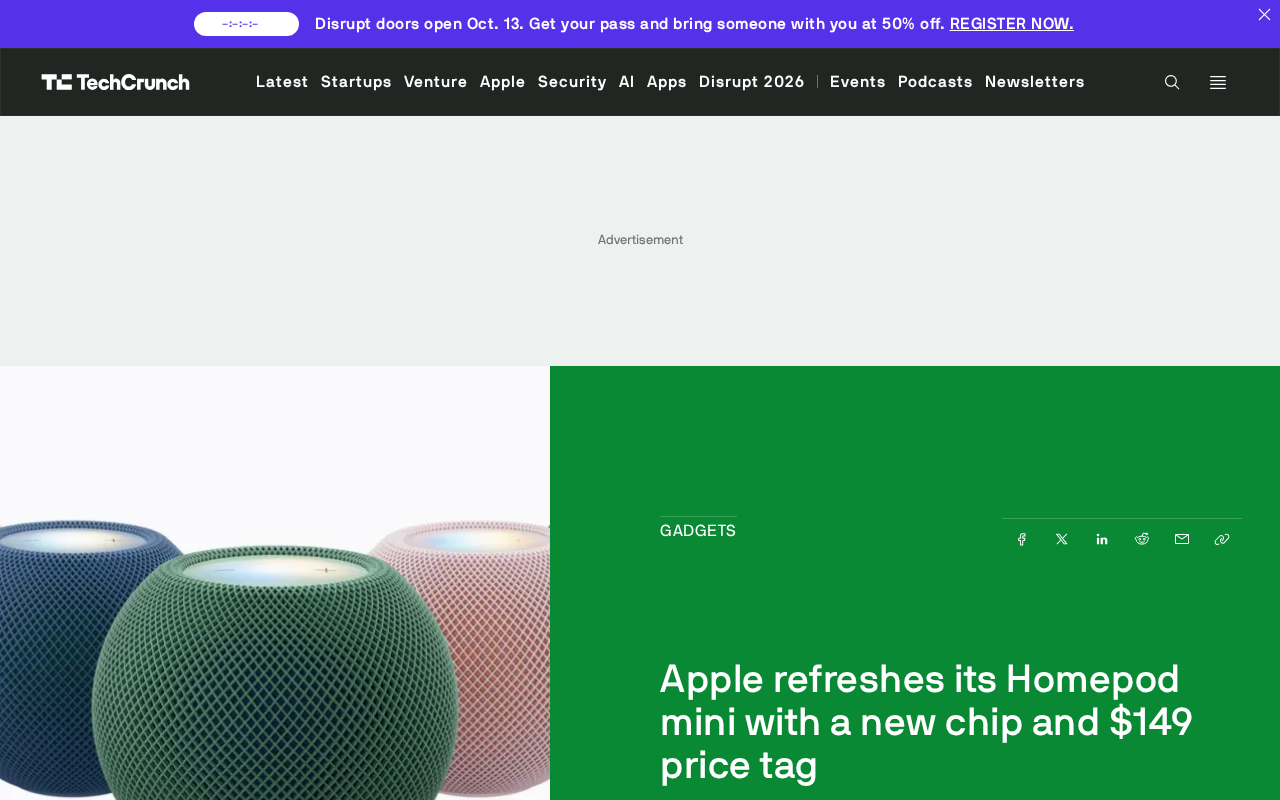
Hardware Upgrade: New Chip and AI Capabilities
According to RSS source information, the core change in the new HomePod mini is its internal chip. While Apple hasn't disclosed the specific chip model, it explicitly states that the new chip delivers stronger on-device processing power for Siri AI features. This means the voice assistant's response speed, local command recognition accuracy, and privacy protection could all see improvement.
In recent years, competition in the smart speaker space has shifted from pure audio quality to AI interaction capabilities. By emphasizing the combination of Siri AI and the new chip, Apple signals its intent to close the gap with competitors in voice assistant experience. For users already deeply embedded in the Apple ecosystem, the HomePod mini's role as a home hub controller will only become more solid.
On-Device Processing refers to AI models performing inference computations directly on the local device, without uploading voice data to cloud servers. In the smart speaker context, this means wake word detection, speech recognition, intent understanding, and command execution can all happen inside the HomePod mini. On-device processing offers three core advantages: lower response latency, since network round-trip time is eliminated; stronger privacy, since sensitive voice data never leaves the device; and the ability to execute basic commands even when offline. Apple's push for on-device AI on Siri is directly constrained by the compute power of its custom Neural Engine, which is why chip updates often coincide with Siri capability improvements.
SoundGlow: A New Attempt at Visual Interaction
The new HomePod mini introduces a "SoundGlow" feature. Based on available information, this is a visual feedback feature that may sync with audio content through the touch area or LED lighting on top of the speaker. Apple has long favored using light language to convey status information on its smart speakers, and SoundGlow enriches this interaction method.
Visual feedback has practical value in smart home scenarios. When users issue voice commands, lighting changes can provide immediate confirmation, reducing the uncertainty of "did the device receive my command?" For users who place the HomePod mini on a bedside table or desk, this soft light feedback is more fitting for the product's positioning than a screen.
The light language of smart speakers has become an industry-standard way of conveying status. The Amazon Echo series uses a ring light to display volume, listening status, and notifications, while Apple's HomePod uses a Siri waveform light effect on top to indicate active listening or processing. Light effects matter because smart speakers have no screen — users can't get visual confirmation the way they would on a phone. Light color, rhythm, and breathing patterns can encode different information: blue typically means listening, red means muted, and flashing indicates network issues. SoundGlow likely follows this logic but may go further by binding light effects to audio rhythm or content mood, making visual feedback part of the music experience.
The $149 Pricing Strategy
The new HomePod mini maintains its $149 price point. Against a backdrop of widespread cost pressures in global consumer electronics, Apple's decision not to raise prices demonstrates its emphasis on the entry-level smart home market. The HomePod mini has always been one of the most affordable hardware entry points in the Apple ecosystem, and a stable price helps expand the user base.
From a product matrix perspective, the HomePod mini plays the role of a "door opener" that brings users into the Apple smart home ecosystem. Once users get used to controlling lights, thermostats, and scene automation through Siri, upgrading to a higher-end HomePod or expanding with other accessories becomes a natural next step. The $149 price tag clearly takes this strategic logic into account.
Ecosystem Gateway strategy is a classic play in Apple's hardware lineup: lower the barrier to entry with a relatively affordable device, then generate long-term profit through services, accessories, and premium models. The HomePod mini plays a role in the Apple ecosystem similar to the Apple Watch SE or entry-level iPad. Once users start controlling HomeKit devices with Siri, switching costs rise rapidly — lighting, climate control, security, and scene automation all become deeply tied to the voice entry point. Therefore, the $149 price is not merely price competition, but an investment in long-term user value.
Availability and Market Outlook
The new HomePod mini goes on sale starting October 30. For Apple users considering a smart speaker, the new chip and SoundGlow feature provide more compelling reasons to buy than the previous generation.
While overall growth in the smart speaker market has slowed, its strategic position as the voice entry point for smart homes has not diminished. Apple's update this time isn't particularly aggressive, but the direction is clear: strengthen Siri's usefulness with AI capabilities, enhance daily experience with visual interaction, and hold the entry-level market with stable pricing. The product's market performance will also reflect consumers' genuine willingness to pay for the "AI + smart home" combination.
One-line Summary
Apple releases a new HomePod mini with an upgraded chip, SoundGlow, and a $149 price tag.
Paragraph Summary
Apple has quietly updated the HomePod mini. The new model keeps its compact spherical design, with the core changes being an updated chip that enhances Siri's on-device AI processing and a new visual interaction feature called SoundGlow that provides instant feedback through light effects. Most notably, the price stays at $149 — hardware upgrades without a higher barrier to entry. The article argues Apple's direction is clear: use AI to strengthen Siri's usefulness, use visual interaction to improve daily experience, and use stable pricing to hold the entry-level smart home market. The product goes on sale October 30, and its market performance will reflect consumers' willingness to pay for the AI and smart home combination.
Related articles

Amphibious Transforming Drone: Beyond 100x Power Savings, What Are the Real Needs?
Is the amphibious transforming drone just a gimmick? Starting from the 100x power difference of the M4 Morphobot, explore real application scenarios and thesis topic ideas, analyzing boundary conditions where pure drones and pure ground robots both fail.

Warhound Raises $200 Million: Genetically Engineered "War Dogs" Paired with Anduril Gear
Warhound raises $200M, backed by Ben Lamm and Palmer Luckey, to genetically engineer dogs for military and law enforcement use and equip them with Anduril gear. This article analyzes its technology direction, funding logic, and ethical controversy.

Claude API Comes to Google Cloud: IAM Integration and SDK Access Guide
Anthropic hosts the full Claude API on Google Cloud with IAM-controlled permissions and unified billing. This guide covers the Vertex AI and Anthropic-hosted entry points, IAM role configuration, and SDK access.