Apple's Foldable iPhone Duo Leaked: Name Confirmed, Starting at $2,000
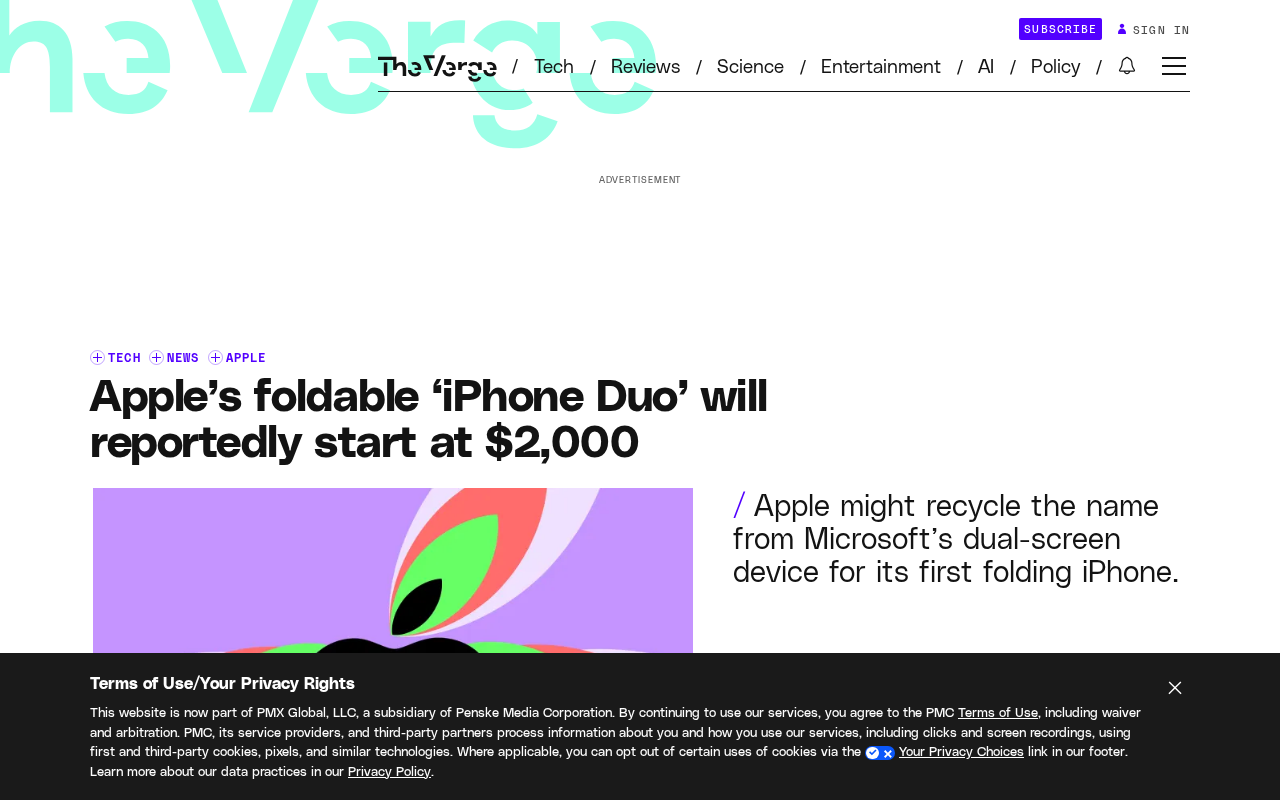
Apple's foldable iPhone Duo leaked with a $2,000 starting price, debuting at new CEO Ternus's first keynote.
Bloomberg reporter Mark Gurman has revealed that Apple's long-awaited foldable phone will be called iPhone Duo, with a starting price of $2,000. Set to debut at new CEO John Ternus's first major keynote, the device marks Apple's official entry into the foldable market. The "Duo" name reflects its dual phone-tablet functionality, while the premium pricing targets high-end users and core Apple fans.
Apple's Foldable Phone Name Officially Leaked
As Apple's new CEO John Ternus prepares to host his first iPhone launch event, renowned Bloomberg tech reporter Mark Gurman has dropped a bombshell in his latest report: Apple's foldable phone will officially be called iPhone Duo.
About Mark Gurman: Gurman is a veteran Bloomberg tech reporter who has covered Apple for over 15 years. His Power On newsletter is one of the most influential sources in the tech industry. He has built an extensive network of Apple supply chain and internal sources, with a historical accuracy rate of approximately 85% or higher. He accurately predicted major products including iPhone X's Face ID, the Apple Silicon transition, and the Vision Pro headset. That said, even with a high accuracy rate, products may still be adjusted before final release due to engineering, market, or strategic factors.
This late-night exclusive reveals that the iPhone Duo will start at $2,000. This pricing makes it one of the most expensive iPhones in Apple's history and marks the company's official entry into the fiercely competitive premium foldable market.
The Product Philosophy Behind "Duo"
The name "Duo" reflects the core value proposition of foldable devices — a compact phone form factor when folded, transforming into a near-tablet large-screen experience when unfolded. This naming convention continues Apple's signature minimalist design language, directly communicating the product's dual-use scenarios.
Foldable Screen Technology Explained: Foldable phones use flexible OLED display technology, replacing traditional glass substrates with special polymer substrates that allow the screen to bend without breaking. Core technical challenges include developing ultra-thin flexible glass (UTG), designing hinge mechanisms, and distributing stress at the fold point. Samsung Display, as the industry leader, has reduced visible crease by approximately 40% with its third-generation UTG technology, achieving fold durability exceeding 200,000 cycles. If Apple adopts a proprietary or custom solution, it may achieve breakthroughs in materials science and precision manufacturing — which is a key reason for its delayed entry, waiting for both supply chain readiness and its own technology reserves to reach production-grade standards.
Apple has been relatively conservative in the foldable space. While Samsung, Huawei, Google, and other brands have already released multiple generations of foldable products, Apple has remained on the sidelines. This "late-mover advantage" strategy is classic Apple: waiting for the technology to fully mature and avoiding being the guinea pig for early technical issues.
Breaking Down the $2,000 Pricing Strategy
The $2,000 starting price is nearly double that of a standard iPhone, sending a clear positioning signal: the iPhone Duo initially targets premium users and Apple's core fan base, not the mass market.
For market comparison, the Samsung Galaxy Z Fold series starts at around $1,800, with the Google Pixel Fold priced similarly. Apple's $2,000 price tag is slightly higher but falls within the overall price range for flagship foldables while preserving Apple's brand premium.
Foldable Market Overview: The global foldable market has grown steadily since the Samsung Galaxy Fold debuted in 2019, with approximately 23 million units shipped in 2024 — about 2% of total smartphone volume. Major players include Samsung (approximately 60% market share), Huawei (leading in the Chinese market at approximately 20%), OPPO, vivo, and Motorola. Product form factors are divided into vertical-folding clamshells (like the Galaxy Z Flip) and horizontal-folding book-style devices (like the Galaxy Z Fold). Despite low penetration, foldables command an ASP (average selling price) 1.5–2x that of standard flagships, contributing significantly to manufacturer profits. Apple's entry is expected to significantly boost category awareness and could push the foldable market beyond 50 million units by 2026.
Why Apple Is Entering the Foldable Market Now
Apple's decision to enter the foldable market at this point follows a clear strategic logic.
Technology Has Reached Maturity: Foldable technology has made breakthrough advances over the past few years. Early pain points — screen creases, hinge durability, software adaptation — have been substantially improved. Reduced technical risk has created the right entry conditions for a company like Apple that prioritizes product polish.
Market Growth Needs New Momentum: With traditional smartphone market growth slowing, foldables are seen as a key category for revitalizing the premium segment and driving upgrade cycles. Apple needs innovative product form factors to solidify its leadership in the high-end market.
Apple's Unique Ecosystem Advantage: Apple's greatest competitive edge lies in its deeply integrated hardware-software ecosystem. Years of development in iOS and iPadOS provide mature multitasking and split-screen frameworks for foldable screens, with over 2 million App Store apps that can quickly adapt to large-screen scenarios. Additionally, Apple's proprietary A-series and M-series chips can optimize power efficiency and performance scheduling for the foldable form factor. Ecosystem services like iCloud and Continuity enable the iPhone Duo to seamlessly integrate into Mac and iPad workflows. Compared to the fragmented adaptation landscape in the Android camp, Apple's closed ecosystem delivers a more consistent user experience. This systemic advantage could offset the disadvantage of late hardware entry and quickly establish a foldable experience benchmark.
A Signature Product for the New CEO Era
The iPhone Duo launch coincides with John Ternus's first major keynote since becoming CEO. Ternus has long overseen Apple's hardware engineering and brings deep understanding of product development.
Ternus's Leadership Style: John Ternus succeeded Tim Cook as Apple's fourth CEO in 2024, having previously served as Senior Vice President of Hardware Engineering for over a decade. With more than 20 years at Apple, Ternus was deeply involved in core projects including the Apple Silicon chip transition and iPhone product line evolution. Unlike Cook's operations background, Ternus's engineering DNA has led observers to expect potential shifts in Apple's product innovation cadence. His decision to debut a breakthrough category like foldables at his first keynote is interpreted as the new leadership's desire to restore market confidence in Apple's innovation capabilities through a groundbreaking product form factor, while differentiating from the incremental iteration strategy of the Cook era.
As a major product under his leadership, the foldable iPhone will be a critical window for observing Apple's strategic product direction. How Apple addresses the inherent challenges of foldables — crease control, hinge experience, and software ecosystem adaptation — will directly determine whether the iPhone Duo can lead the evolution of this category.
Stay Tuned for Official Details
It's important to note that all current information comes from Gurman's reporting, and Apple has not officially confirmed anything. While Gurman is one of the most authoritative reporters in Apple product intelligence with a strong track record, final details regarding naming, pricing, and launch timing may still change.
Apple's official entry into the foldable market is undoubtedly a milestone event in the mobile device industry. With its massive user base, mature hardware-software ecosystem, and powerful integration capabilities, the iPhone Duo has the potential to redefine consumer perceptions and experience standards for foldable devices.
As the launch event approaches, more official details about the iPhone Duo are set to be revealed. Whether this $2,000 foldable device can carry on Apple's tradition of innovation is something tech enthusiasts should keep a close eye on.
Related articles

Anthropic Employee Departure: An In-Depth Analysis of Talent Mobility in AI Safety
An Anthropic employee departure sparks industry attention. This article analyzes talent challenges, ideological divides, and knowledge diffusion in AI safety.

The Evolution of AI Workflows: A Three-Stage Leap from Automation to Intelligent Agents
Three real-world examples reveal the core differences between AI workflows and Agents: traditional automation follows rules, AI workflows add intelligent decisions, and Agents achieve autonomous planning.

Tension Wood: Nature's Built-In Actuator Material
Tension wood is a unique reaction wood tissue in plants that can achieve bidirectional movement like muscle. This article explores tension wood's contraction mechanism, mechanical principles, and implications for biomimetic materials and soft robotics.