Archaeological Chronicles of the Valley of the Nobles: Decoding the Afterlife Beliefs of Ancient Egyptian Elites 4,000 Years Ago
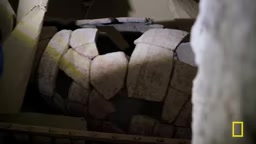
Archaeologists in Aswan's Valley of the Nobles reconstruct the life stories and afterlife beliefs of ancient Egyptian elites.
National Geographic's Lost Treasures of Egypt documents two international teams excavating at Koubet el Hawa near Aswan. The University of Jaén team unearthed the first set of wooden funerary boats found in 70 years from a tomb dating to c. 2000 BCE, whose owner Shemai turned out to be a child official. A joint British-Swiss team used murals, skeletal analysis, and X-ray scanning to confirm the identity of Hunay, royal wet nurse to Pharaoh Amenhotep II. CT scanning further revealed a misidentified skeleton, an in-situ heart scarab amulet, and a servant woman who may have lived past 70 — rare in an era of 25-year average lifespans.
Near Aswan along the Nile lies a burial ground older than the Valley of the Kings — and far less excavated. The National Geographic documentary Lost Treasures of Egypt ventures into this ancient necropolis known as the Valley of the Nobles, chronicling two seasons of excavation by international archaeological teams. What they seek here isn't gold or jewels, but the forgotten life stories of the ordinary elites who once served the pharaohs.
Koubet el Hawa: A Burial Ground a Thousand Years Older Than the Valley of the Kings
Koubet el Hawa, located near Aswan, is one of Egypt's largest ancient burial sites. The nobles interred here predate the pharaohs of the Valley of the Kings by several hundred years. By the time of filming, roughly 100 tombs had been identified — all belonging to powerful figures who governed this land before the pharaonic era as we know it.
Professor Alejandro Jiménez Serrano of the University of Jaén in Spain leads the largest foreign archaeological team operating in Egypt, now in his tenth consecutive season of excavations here. His goal: to find intact, unlooted tombs that can illuminate the lives of early Egyptians. "It's hard to explain my feelings — not just nerves, but sadness, excitement, a whole mix of emotions," he said on opening day of the season.
The previous year, Alejandro had discovered the entrance to a sealed tomb but couldn't enter because his excavation permit had expired. To prevent modern-day grave robbers from getting in, the team installed a steel security door over the shaft leading to the burial chamber. A year later, he finally got inside — and found a coffin dating to around 2000 BCE.
Four Funerary Boats: The Rarest Find in 70 Years
Among the remains of the outer coffin, Alejandro found something extraordinary: a set of wooden model boats — four in total, complete with crew figures.
In ancient Egyptian belief, boats played a crucial role in the afterlife. The Egyptians believed these model boats would come to life, helping the deceased fish and travel through the underworld. Ordinary people believed they too, like the pharaohs, could sail across the Nile into the next world. "This is the first time in 70 years that anyone has found a set of boats like this," Alejandro said with excitement. "You want to laugh, to shout, to cry."
Termites had eaten into the wooden boats, but ironically, the termites' excrement had bonded the fragments together for thousands of years. Restoration specialists Sarah and Teresa reinforced the pieces with liquid adhesive, then used scalpels to carefully peel sections of the hull from the tomb floor. The coffin's owner was named Shemai — inscriptions identified him as a "storage administrator."
When the team opened the inner coffin, they discovered that this official — who controlled grain distribution and wielded real power — was a child. The mummy measured just 1.25 meters in length. "My daughter was about that tall when she was eight," Alejandro reflected. "I never imagined he was just a boy." This young noble, though no pharaoh, was furnished with a tomb and burial goods like Tutankhamun, ensuring safe passage to the afterlife.
Funerary boat models were especially prevalent during the Middle Kingdom period (c. 2055–1650 BCE), which aligns with the era to which Shemai belonged. These models were typically crafted from cedar or local wood and populated with rowing crew, punters, and even cooks — reflecting the elaborate travel arrangements of the living elite. Finding a complete set is exceptionally rare: wood is already fragile in the dry desert environment, and the hotter climate of southern Egypt combined with termite activity makes preservation far more difficult. The best-preserved comparable collection in the world is the funerary boat set from the tomb of Meketre, housed in the Egyptian Museum in Cairo and unearthed in the 1920s — long the benchmark for archaeological discoveries of this period. It is precisely for this reason that Alejandro described this find as the "first in 70 years."
The Pharaoh's Wet Nurse: Establishing the Identity of Hunay
A second team — a joint British and Swiss expedition led by Swiss Egyptologist Andrea Loprieno-Narz of the University of Basel — was excavating at another site in the Valley of the Nobles, designated TT95. Inscriptions on pottery indicated that a noblewoman named Hunay had once been buried here.
But the tomb had been reused repeatedly over the centuries, and grave robbers searching for gold and amulets wrapped within mummies had torn the remains apart. The tomb was a jumble of hundreds of human bone fragments. British bioarchaeologist Ivana Kozoradská-Agunmarkin estimated a minimum of 80 individuals — and given that a human adult has 206 bones, the scale of the disorder was staggering.
Murals on the walls revealed Hunay's special bond with the pharaoh: she is depicted nursing the future pharaoh Amenhotep II. Hunay was a royal wet nurse — which explained why she was entitled to a tomb so close to the Valley of the Kings.
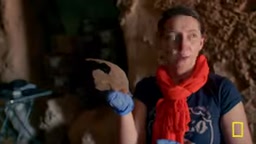
Ivana assessed age using cranial suture fusion and tooth wear, and cross-referenced this with the mural's depiction of Hunay's son as a grown official, concluding she had died in middle age. Ivana also needed to find evidence of the brain-removal mummification procedure practiced only on the elite — ancient Egyptians considered the brain useless in the afterlife and would extract it in pieces through the nostrils. X-ray scanning ultimately confirmed the skull contained no remaining brain tissue, corroborating Hunay's identity. "Three thousand years later, the memory of Hunay has been rekindled."
Royal wet nurses held an exceptionally high status in ancient Egyptian society — far above that of ordinary court attendants. A wet nurse not only nursed a prince but accompanied and educated him throughout childhood, forging a lifelong emotional bond with the future pharaoh. That bond frequently translated into tangible political patronage: a wet nurse's husband and sons were often appointed to senior official positions, while the nurse herself could be buried in close proximity to the Valley of the Kings upon her death, sometimes with burial goods approaching royal standards. Amenhotep II (r. c. 1427–1400 BCE) was a celebrated pharaoh of the New Kingdom, renowned for his military prowess. Confirming Hunay as his wet nurse gives this tomb a historical significance beyond its purely archaeological value — it forms a direct link to a well-documented chapter of royal history.
Opening a Sealed Chamber: Anticipation and Disappointment
Team member Martina Bartanova, while clearing the entrance passage of another unopened tomb, unexpectedly found human remains in the sand outside — first an adult, then a child. Child mortality was high in ancient Egypt, but finding well-preserved children's remains in this aristocratic burial ground was unusual.
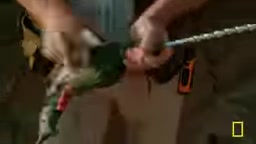
After relocating the child's remains, Martina began excavating the wall blocking the burial chamber. The wall was riddled with termites — termites need to be near a food source like wood, hinting that something lay beyond. Once the team confirmed it was a fully sealed chamber, Alejandro took a cautious approach: he drilled a hole with a large drill bit, then inserted a miniature camera with a light to survey the interior.
The result was deflating: the lens revealed only rubble and debris, no pottery or burial goods — it looked like a corridor. "Most of the time archaeology is frustrating — you don't find what you hoped for, but that's part of the game." Martina kept digging, however, and eventually uncovered a clay coffin behind the debris — the actual burial chamber. Inside was not a carefully wrapped mummy, but a skeleton swathed in black material with little formal preparation. Why would such a simple burial exist in this elite necropolis? A new mystery had opened.
CT Scanning and the Gold Mask: Technology Brings the Dead Back to Life
In another tomb, the team uncovered two mummies and a stunning golden death mask. Archaeologists used soft brushes to clear the sand grain by grain, then stabilized the mask with resin-coated paper to prevent it from crumbling.
Because the mask was lodged beneath its owner's bones, extraction was painstaking — the mask ultimately came out in several pieces, held together by resin and paper. Once cleaned, Alejandro read the owner's name from the hieroglyphics.
To learn more, Alejandro transported six sets of remains to a local hospital, borrowing a medical CT scanner overnight for non-invasive analysis. CT scanning generates three-dimensional images from multiple-angle X-rays, allowing researchers to see through wrappings to the skeleton beneath and determine sex, age, pathology, and cause of death. The scans yielded surprises: one set of remains assumed to be male proved to be female; and in the final set examined, the team found a scarab amulet still resting in its original position over the heart.
The scarab symbolized rebirth and was commonly used by the elite to protect the deceased's soul, inscribed with spells to guide the dead through the judgment of the soul. Of the nine mummies scanned, this was the only one whose amulet remained in its original position. The woman Martina had found with the humble burial — CT scanning revealed she had been over 70 years old at the time of death. In ancient Egypt, where average life expectancy was around 25 and many women died in childbirth, this was a remarkable age. Alejandro speculated she may have been a servant to the nobility, destined to continue serving her masters even in death.
The heart scarab (Heart Scarab) is among the most theologically significant grave goods in ancient Egyptian funerary culture, its importance derived directly from Chapter 30 of the Book of the Dead. In ancient Egyptian concepts of post-mortem judgment, a deceased person's heart would be placed on a scale and weighed against the feather of Ma'at — the embodiment of justice and cosmic order. If the heart proved heavier than the feather, it would be devoured by the monster Ammit and the soul annihilated; if lighter or equal, the deceased could enter the afterlife. The heart scarab amulet was inscribed with specific spells intended to "persuade" the heart to remain silent during judgment and not reveal the deceased's earthly transgressions. Placing the amulet directly over the heart rather than elsewhere on the body indicates that the tomb's occupant received professional mummification services that strictly followed ritual protocols — a mark of high status in itself.
The True Treasure
The riches buried in the Valley of the Nobles extend far beyond gold and jewels. The royal wet nurse Hunay, the child whose origins remain uncertain, and the elderly woman who may have spent her life in service to the powerful — these are the true treasures sleeping beneath the sand. Through forensic anthropology and modern technologies like CT scanning, archaeologists are gradually piecing together the life trajectories and afterlife beliefs of ancient Egypt's elite class, bringing the individual stories of people who lived millennia ago back into the light.
Related articles

WorkBuddy Agent in Action: From AI Q&A to Automated Office Work
WorkBuddy is Tencent's AI agent desktop workbench that reads local files, operates office software, executes multi-step tasks, and runs on schedules. This article explains its core features, key differences from traditional AI tools, and use cases.

Anthropic Research: LLMs Make Formal Software Verification at Scale Possible
Anthropic Frontier Red Team research shows LLMs can generate formal proofs at the RISC-V assembly level for over 100 real open-source libraries, covering 123 OSS-Fuzz libraries and 239 entry points, totaling about 180 million lines of Rocq proofs and finding hundreds of bugs. The article analyzes specification generation, the proof pipeline, trust boundaries, and cost reduction paths.

Prompt Engineering for Beginners: From Writing Prompts to Building AI Collaboration Skills
From the four functions of prompts to the six-step prompt engineering process, this article systematically covers core concepts, business value, and three layers of limitations to help beginners build a complete cognitive framework for prompt engineering.