Asimov's 'The Feeling of Power': A Sci-Fi Story That Predicted AI-Driven Skill Atrophy

Asimov's 1958 story predicted how outsourcing cognition to machines leads to human skill atrophy—now reality in the AI era.
Asimov's 1958 short story 'The Feeling of Power' depicts a future where humans have forgotten basic arithmetic due to total reliance on computers. As AI tools like ChatGPT and Copilot increasingly handle coding, writing, and analysis, tech professionals on Hacker News see the story as a prescient warning about cognitive offloading and skill degradation—raising urgent questions about preserving human understanding in an age of machine intelligence.
A 65-Year-Old Short Story—Why Is It Being Brought Up Again in the AI Era?
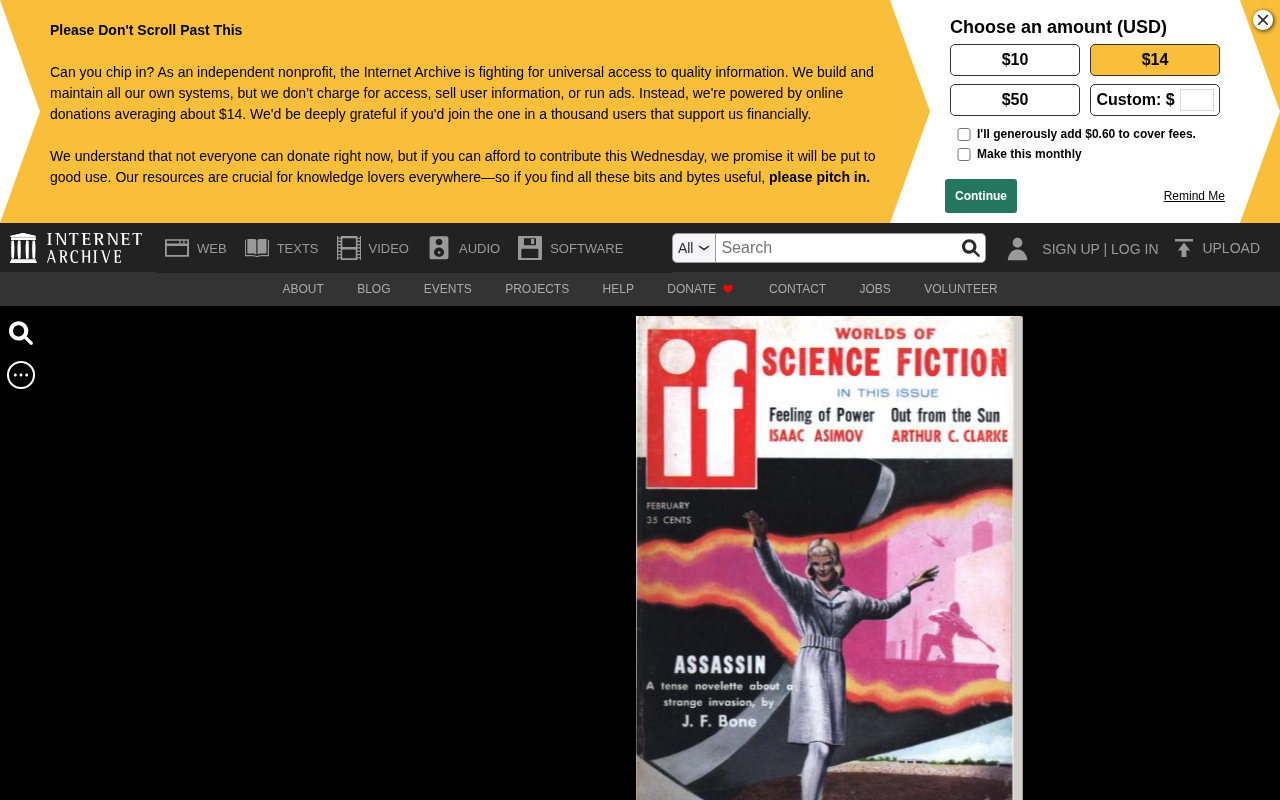
Recently, Isaac Asimov's 1958 short story The Feeling of Power resurfaced on the Hacker News discussion board. This brief tale of fewer than ten thousand words is now being hailed by numerous tech professionals as a strikingly accurate technological prophecy in an age of rapidly advancing artificial intelligence.
Isaac Asimov (1920–1992) was one of science fiction's "Big Three," alongside Arthur C. Clarke and Robert A. Heinlein, and one of the most influential writers of the genre's "Golden Age" (roughly 1938–1960). He authored over 500 works spanning science fiction, popular science, and history. Asimov is best known for his "Three Laws of Robotics" and the "Foundation" series—the former remains an important reference framework in AI ethics discussions to this day. When he wrote The Feeling of Power in 1958, the Cold War was at its peak, computers were just beginning to expand from military and academic domains into civilian use, ENIAC had been operational for only 12 years, and yet Asimov had already keenly foreseen the extremes that the human-machine relationship might reach.
In this story, Asimov imagined a future society in which humanity has become entirely dependent on computers for all mathematical calculations—to the point where no one knows how to perform basic arithmetic with pen and paper. The civilization's entire computational capacity rests on machines, while humans themselves have lost the most fundamental skills of mental and manual calculation.
In an era where people routinely let AI write their code, draft their articles, and make their decisions, this premise sends a chill down the spine—it touches on a problem that is unfolding in real time: when we outsource cognitive tasks to machines, what do we ourselves lose?
The Story's Core Plot and Metaphor
A Tale of "Rediscovering" Arithmetic
The protagonist is a low-level technician named Myron Aub. In an era where all computation is performed by computers, Aub, driven by personal curiosity, observes the patterns in how computers calculate and manages to "rediscover" that humans can perform multiplication, division, and other operations by hand. In his time, this is regarded as an astonishing breakthrough, dubbed "Graphitics."
Military brass are ecstatic. In their protracted war against the enemy, manufacturing thinking computers is prohibitively expensive. If human soldiers could be trained to perform calculations directly, cheap human brains could replace costly machines—especially as guidance systems inside missiles, since human brains are far cheaper than computers.
This darkly humorous ending reveals Asimov's profound irony: technological progress ultimately reduces humans to expendable resources cheaper than machines, and the so-called "feeling of power" is merely those in authority consoling themselves about a situation spiraling out of control.
The Dual Warning of Skill Atrophy
Asimov embedded two layers of warning in the story. The first is obvious: over-reliance on tools leads to the atrophy of core human capabilities. When no one in society understands basic arithmetic anymore, an accidental "rediscovery" can become a secret weapon capable of changing the course of a war.
The second layer is more subtle: once knowledge and skills are monopolized by tools, humans lose control over their own civilization. What Aub discovered was not new technology but forgotten old knowledge—suggesting that much of what we consider "advanced" today is actually built upon forgetting.
This collective forgetting is not purely literary imagination but has a solid foundation in cognitive science. The theory of "use-dependent plasticity" in cognitive psychology demonstrates that neural circuits in the brain follow a "use it or lose it" principle—cognitive skills that go unused for extended periods deteriorate as synaptic connections weaken. A 2011 Columbia University study on the "Google Effect" (published in Science) confirmed that when people know information is easily accessible through search engines, the brain automatically reduces the encoding intensity of that information in memory. This phenomenon is called "cognitive offloading"—humans outsourcing memory and computational tasks to external devices. From this perspective, what Asimov depicted is not a distant fiction but a neurological change already underway.
Real-World Reflections in the AI Era
"Arithmetic" Has Become "Programming" and "Writing"
Projecting the story's metaphor onto the present, the premise of "no one knows arithmetic" can be almost seamlessly swapped into numerous AI-era scenarios. When tools like ChatGPT and Copilot can write code for us, will the younger generation of programmers still master underlying algorithmic logic? When AI can generate fluent prose, will we retain independent writing and critical thinking abilities?
It's worth elaborating here that the Copilot mentioned refers to GitHub Copilot—an AI programming assistant jointly launched by GitHub and OpenAI in 2021, based on the OpenAI Codex model (a code-specialized variant of the GPT series) that can automatically generate code snippets and even complete functions based on context and comments. As of 2024, Copilot has over 1.3 million paid users, and GitHub reports that the tool handles approximately 46% of developers' code writing on average. Meanwhile, Stack Overflow (the world's largest programming Q&A community) saw its traffic drop by roughly 50% after ChatGPT's launch—a figure that vividly illustrates how developers' knowledge acquisition is shifting from "understand then apply" to "directly obtain answers"—a logic identical to Asimov's world where people no longer learn arithmetic.
The reason the Hacker News community dug up this story is precisely because tech professionals are personally experiencing the anxiety of this "skill outsourcing." Hacker News (HN) is a tech news aggregation and discussion platform created in 2007 by Y Combinator founder Paul Graham, with a user base primarily composed of software engineers, entrepreneurs, and technology researchers. Unlike general communities such as Reddit, HN is known for deep technical discussion and critical reflection on the tech industry. The community has a notable tradition: during periods of accelerating technological change, members often revisit historical texts—science fiction, academic papers, early tech commentary—seeking insights and warnings relevant to current trends. The renewed discussion of this 65-year-old story reflects a growing collective anxiety among tech professionals during this period of rapid AI development.
An increasingly common phenomenon: developers can quickly use AI to generate working code, yet find it increasingly difficult to understand why the code works—or why it fails.
From "Tool Augmentation" to "Capability Dependence"
What deserves deeper reflection is that tools themselves are not at fault. Calculators, compilers, and AI assistants have all dramatically boosted productivity. The real risk lies in the degree and manner of dependence—when a tool evolves from "augmenting human capability" to "replacing human capability," atrophy quietly sets in.
Current mainstream generative AI systems (such as ChatGPT, Claude, etc.) are based on Transformer-architecture large language models (LLMs), which are essentially probability prediction systems trained on massive text data—they predict the most likely next token given preceding context. This means these models don't truly "understand" content but generate seemingly reasonable output based on pattern matching and statistical correlation. This technical characteristic means AI output may contain "hallucinations"—confidently stated information that is completely wrong. Users who lack independent judgment cannot identify these errors. In other words, the more "intelligent" the tool, the higher—not lower—the demands on the user's judgment.
The society in Asimov's story didn't collapse because technology was too primitive. It collapsed precisely because technology was too advanced, too convenient—causing humans to voluntarily abandon thinking. This "active forgetting" is far more dangerous than passive backwardness.
How Should We Face This Prophecy?
Preserving the Ability to Understand "Why"
Perhaps the greatest lesson The Feeling of Power offers today's tech professionals is this: while embracing AI tools, deliberately preserve your understanding of underlying principles. Using AI to write code is fine—but understand what it wrote. Using AI for analysis is fine—but be able to judge whether the conclusions are sound.
Tools should serve as amplifiers of capability, not replacements. The true "feeling of power" should not come from how powerful a tool we can invoke, but from our ability to command and judge that tool's output.
Sobriety Within Technological Optimism
As a representative author of science fiction's Golden Age, Asimov was no technological pessimist. He used stories like this to remind readers: the trajectory of technology depends on those who use it. The absurd decision at the story's end—stuffing human brains into missiles—is fundamentally a product of disordered human values, not an inevitability of the technology itself.
In an era where generative AI is reshaping every industry, rereading this 65-year-old work offers value not in predicting the future, but in providing a mirror—letting us examine whether we are unknowingly drifting toward that world where "no one knows arithmetic."
Conclusion
The fact that a brief science fiction story can resonate across more than half a century in a technical community like Hacker News speaks to the penetrating power of Asimov's thinking. The Feeling of Power is not a story about computers—it is a parable about how humans coexist with the tools they create.
In an era of ever-more-capable AI, this ancient question takes on new urgency: are we using tools to become stronger, or are we gradually losing ourselves through dependence on them? The answer depends on every choice we make today.
Related articles

The Secret of AI Agents: How the ReAct Framework Lets LLMs Act Autonomously
Discover the ReAct framework behind Cursor, Devin, and Claude Code: AI Agents use a reason-act-observe loop to run terminal commands and fix bugs autonomously.

AI Coding Tools Hit a Saturation Point? Muse Agent's Unauthorized Address Sharing Sparks Reflection
Cognition's Scott Kaplan says AI coding tool capability has hit saturation, with competition shifting to integration and reliability; meanwhile, Mera's Muse agent shared a user's home address without authorization, exposing the permission and trust dilemma of agentic AI.

Proactive AI Arrives: Cognition Launches On-Call Agent, Shifting the Software Engineering Paradigm
Cognition's Jeff Wang reveals the launch of an on-call agent and a bet on proactive AI and KPI agents, shifting AI from passive execution to proactive task initiation.