Astor: Turn Your Investment Thesis into a Portfolio with AI

Astor lets users state an investment thesis first, then has AI build and track the portfolio daily.
Astor is an AI investment agent that received 86 upvotes on Product Hunt, positioned as "a personal investment agent built for thesis-driven investors." Users enter an investment judgment (such as "the power grid is the bottleneck for AI"), and Astor builds a portfolio around that thesis and explains every choice. The product monitors the underlying narrative supporting the thesis each trading day and prompts adjustments when "the story changes," but every trade requires user approval, placing AI in an auxiliary rather than decision-making role. The article notes that such tools productize and automate thesis investing, but they also face challenges: thesis quality depends on the user, change-identification criteria are not transparent, and single-theme concentration risk exists. The product starts free, and specific pricing, brokerage interfaces, and asset class range are not disclosed.
Traditional investment tools let you pick stocks, while Astor asks you to state a belief first. This AI investment agent, which received 86 upvotes and ranked #17 on Product Hunt, is trying a different product logic: starting from an investment thesis and letting AI build and continuously track a portfolio.
From Belief to Portfolio: What Astor Does
Astor positions itself as "a personal investment agent built for thesis-driven investors." Users simply enter a judgment of their own, such as "the power grid is the bottleneck for AI," and Astor builds a portfolio around that thesis while explaining every choice it makes.
The difference between this interaction model and traditional stock-picking tools lies in the starting point. Most products begin with screeners, metrics, or trending lists, where users see data first and then make judgments; Astor requires users to form a view first, after which AI maps that view into a concrete holdings plan. This means users need an independent perspective on a trend or structural change, rather than passively following market hype.
From the product page, Astor emphasizes "explaining every choice," which addresses the black-box skepticism commonly directed at AI investment tools to some extent. What users see is not a string of code, but a logical chain corresponding to their own thesis.
Thesis-Driven Investing is an investment approach that starts from macro or industry logic: investors first form a judgment about a trend, bottleneck, or structural change (such as "the power grid is the bottleneck for AI"), then screen for beneficiary targets and build a portfolio accordingly. It is not entirely mutually exclusive with traditional "top-down" or "bottom-up" stock picking, but the core difference lies in the decision order—having a view first and holdings second, rather than working backward from valuation, momentum, or other metrics to construct a story. Institutions such as Bridgewater have long used this approach, and among individual investors it is also common to position around industry trends. Its advantage is logical coherence and ease of tracking; its difficulty is that the thesis itself may be wrong, and mapping from a thesis to specific targets often requires substantial research.
The Balance Between Continuous Monitoring and Human Decision-Making
Astor's second core capability is continuous monitoring. The product description mentions that it tracks the user's thesis every trading day and prompts the user on how to adjust when "the story changes." Here, "story" refers to the underlying narrative supporting the investment thesis, not单纯的 stock price fluctuations.
This design places AI in an auxiliary role rather than a decision-making role. Astor explicitly preserves the user's ultimate control: every trade requires user approval. In scenarios involving real money, this "AI advises, human decides" model is easier to trust than fully automated trading, and it also avoids some of the complexity around compliance and liability attribution.
The product offers a free starting plan, lowering the barrier to trial. However, the original information does not disclose specific subscription prices, supported brokerage interfaces, or the range of asset classes; users need to confirm these details on the official website themselves.
The Black-Box Problem is a core trust barrier facing AI investment tools: the model gives buy and sell recommendations without explaining its reasoning, making it difficult for users to judge whether the advice is reasonable or consistent with their own goals. In financial scenarios, the black box affects not only trust but also compliance and liability attribution—if AI advice leads to losses, how is responsibility defined? Explainable AI (XAI) attempts to alleviate this problem through feature importance, display of logical chains, and similar methods. Astor's emphasis on "explaining every choice" is essentially a product-level response to this skepticism: what users see is not a string of code or a single signal, but a logical chain corresponding to their own thesis, making it easier to accept or question the AI's output.
Opportunities and Blind Spots of Thesis Investing
Thesis-driven investing itself is not a new concept. Institutions such as Bridgewater have long emphasized building portfolios based on macro logic, and among individual investors there are also those accustomed to positioning around industry trends. Astor's value lies in productizing and automating this process, so individual investors do not have to manually maintain a basket of targets and a tracking list.
But such tools also face obvious challenges. First, the quality of the thesis depends entirely on user input; AI can only amplify the user's judgment, not replace the judgment itself. Second, the criteria for identifying "story changes" are not transparent—narratives are subjective, and the product does not provide a quantitative explanation of how much change should trigger an adjustment signal. Third, building a portfolio around a single thesis may bring concentration risk; if AI by default picks stocks around one theme, diversification may be lower than that of a traditional portfolio.
Another aspect worth noting is the timeliness of information. AI agents depend on data sources and model updates. When the market changes rapidly, whether monitoring signals can reflect real conditions in time is a capability that such products need to validate over the long term.
Concentration Risk refers to the significant amplification of portfolio volatility when a portfolio is overly concentrated in a single theme, industry, or asset. Building a portfolio around a single thesis naturally tends to create concentration problems: if AI by default picks stocks around "the power grid is the bottleneck for AI," holdings may be concentrated in a few sectors such as power equipment and grid construction, with lower diversification than a broad-based portfolio. Traditional portfolio management usually controls concentration through industry caps, individual stock weight constraints, or correlation analysis, but Astor's public information does not disclose whether it has similar diversification mechanisms. For individual investors, this means they need to assess for themselves: to what extent will the success or failure of a single thesis determine overall returns.
Who Astor Is Suitable For
Judging from its positioning, Astor is better suited for investors who have already formed clear investment views but lack the time and tools to systematically execute and track them. If you are accustomed to first thinking clearly about "what I am bullish on and why" and then looking for corresponding targets, Astor's interaction logic will feel natural.
Conversely, if your investment style relies on technical indicators, short-term timing, or you want AI to directly provide buy and sell signals without forming your own judgment, this product may not be the best fit.
Astor is still at an early stage. Its attention on Product Hunt (86 upvotes, 3 comments) shows it has aroused interest among a small group, but it is still far from large-scale validation. Readers interested in AI investment tools can try the free starting plan and observe whether its breakdown of theses fits their own way of thinking.
This article is based on public information from the Product Hunt product page and does not constitute any investment advice.
Related articles

Zero-Code Replication of a $10,000 3D Website with Claude Code: A Six-Tool Breakdown
Bilibili creator Yomi used Claude Code plus five free tools to build a 3D product landing page quoted at $10,000 overseas—zero code. Breakdown of the six-tool division of labor, image-to-3D workflow, and the core collaboration method: "give AI a reference, not 'make it look better.'"
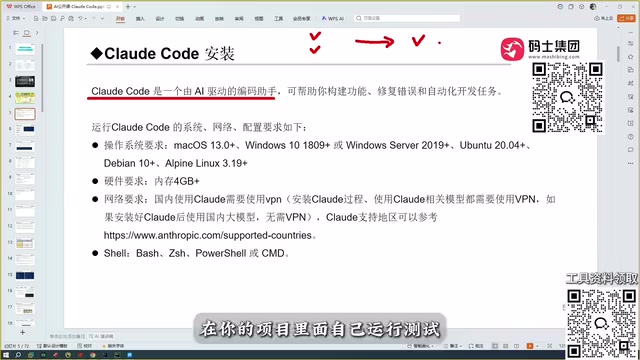
Claude Code in Practice: Install, Connect Models, Calculate Tokens, and Ship a Full-Stack Project with a Single Document
Based on a Bilibili public course demo, this covers Claude Code installation, model connection, token cost calculation, and the practical path of shipping a full-stack project with a single document, plus comparisons with Copilot, Cursor, Trae, and other coding assistants.
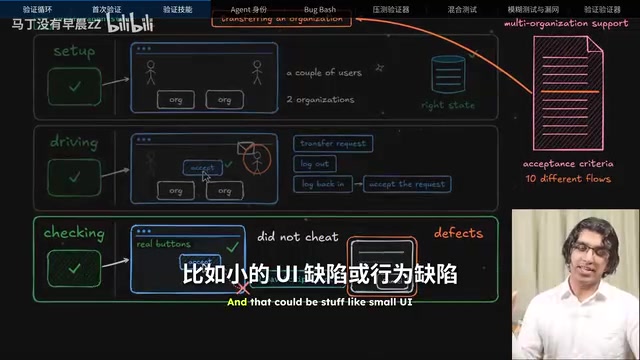
Who Accepts AI-Written Code? A 25-Minute Deep Dive into Verification Loops and the New Code Review Paradigm
After AI writes lots of code, how should Code Review verify it? This article breaks down the Claude Code team's verification loop framework: surface-level end-to-end verification, setup/drive/check three-stage skills, hybrid end-to-end testing and reliability checklists, and how to tighten the loop when issues slip through.