Aura Launches 10-Inch Color E Ink Frame: Smaller, Cheaper, and Sharper

Aura launches the 10-inch color E Ink frame Aura Ink: smaller, cheaper, and sharper.
Aura has released the 10-inch color E Ink frame Aura Ink, a smaller version of its 13-inch first-generation product. The new model improves color count and pixel density, is more affordably priced, and uses a black bezel to distinguish it from the older model. The article argues that shrinking the screen and concentrating pixel density on close-range static viewing is a sensible strategy for e-paper frames; although color e-paper refreshes slowly and has low saturation, its no-light-emission, low-power, image-retaining characteristics suit a desktop decorative role. Specific pricing, battery life, and storage specs have not yet been announced, and whether it can win over image-quality-sensitive users remains to be seen.
Color E-Paper Frames Go Mainstream
Aura has just released a smaller version of its color E Ink frame, making targeted adjustments to screen quality, design, and price while retaining the core experience. The new product, called Aura Ink, uses a 10-inch e-paper panel. Compared with the previous 13-inch first-generation product, it can display more colors and has a higher pixel density.
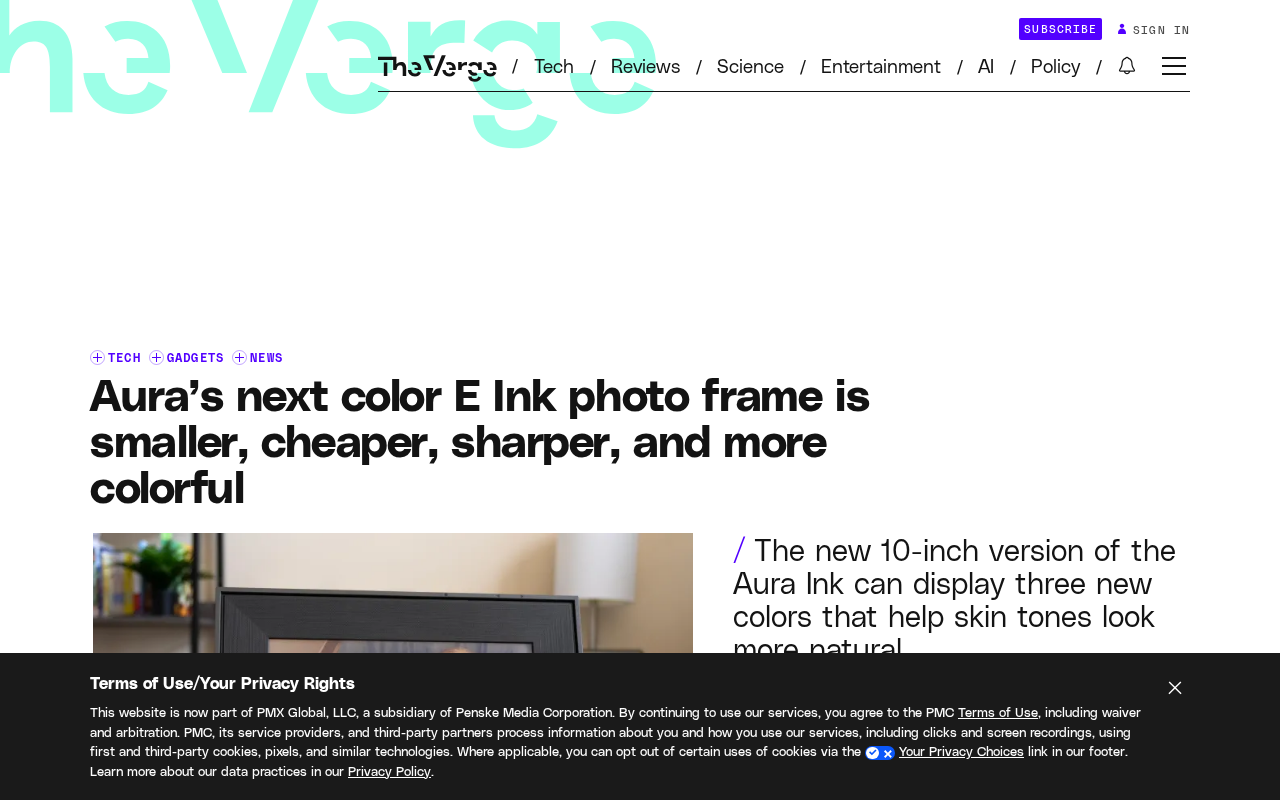
From a product positioning perspective, Aura is pushing color e-paper from a "novelty large-screen" device toward more mainstream desktop scenarios. 10 inches is a more common size for frame-type products—it doesn't look out of place on a desk, nightstand, or entryway console, and costs are easier to control.
Three Improvements Brought by the Smaller Size
Color and Clarity Improve Together
According to the original information, the new Aura Ink's 10-inch panel can display more colors, and its pixel density is higher than that of the 13-inch version. Color performance has always been a weakness of this type of product; an increase in the number of colors means photo gradients, skin tones, and landscape layers will look more natural, while higher pixel density directly improves the grainy look when viewed up close.
More Affordable Price
Aura explicitly states that the new product is more affordably priced. The 13-inch color E Ink frame is a high-priced product, and reducing the screen size is one of the most direct ways to lower costs. A lower barrier to entry helps attract users who are curious about e-paper but unwilling to pay a premium for a large screen.
Black Bezel Distinguishes the Product Line
The new model uses a black bezel, creating a visual distinction from the original 13-inch version. A black bezel provides stronger contrast when displaying photos and blends more easily into modern home environments. This design change may seem like a detail, but it is in fact Aura's way of creating visual layering across its product line.
The Trade-off Logic of Color E Ink Frames
The core selling point of an e-paper frame is a "paper-like" viewing experience: it doesn't emit light, has no blue light, keeps the image on screen when power is off, and consumes very little power. The cost is slow refresh rates and color saturation lower than LCD/OLED. Aura's choice to keep investing in this category suggests it believes some users care more about the comfort of long-term static display than dynamic playback capability.
Reducing size and increasing pixel density essentially concentrates the advantages of e-paper into the "close-range static viewing" scenario. A 10-inch panel is more likely to look refined at desktop viewing distances, while the increase in color count compensates for e-paper's inherent shortcomings in photo reproduction.
The Technical Principles of Color E-Paper
The mainstream approaches to color E Ink currently involve either adding a color filter array (CFA) on top of black-and-white electrophoretic e-ink, or using multi-color particle mixing technology. The former reflects ambient light through a white backplane and then presents color through red, green, and blue filters, at the cost of a noticeable drop in color brightness and saturation; the latter, such as the E Ink Kaleido and Gallery series, displays color by moving microcapsule particles of different colors under an electric field. Whichever approach is used, the reflectance of color e-paper is lower than that of black-and-white versions, and the number of colors is typically only in the thousands to tens of thousands—far below the millions of colors of LCD. This is why improvements in pixel density and color count are especially critical for photo display—they directly determine whether an e-paper frame can approach the look of a paper photo when viewed up close.
What Pixel Density (PPI) Means for E-Paper
Pixel density refers to the number of pixels contained per inch of screen, measured in PPI. The pixel structure of e-paper panels differs from LCD: each pixel requires independent microcapsule or particle control, so increasing PPI means arranging more microcapsules in the same area, which raises manufacturing difficulty and cost. A 10-inch panel is more likely to achieve high PPI than a 13-inch one because, at the same resolution, the pixel pitch is smaller on a smaller size. For frame-type products, viewing distance is usually 30 to 50 centimeters, and a PPI of 200 or above is needed to effectively mask the grainy look. The original article mentions that the new product's pixel density is higher than that of the 13-inch version—precisely the structural advantage of a smaller panel in close-range display scenarios.
Market Significance and Open Questions
Color E Ink frames remain a niche category. By launching a smaller, cheaper, and sharper version, Aura is in effect testing a larger consumer group. The combination of a black bezel and 10 inches makes it feel more like a home decorative object than a tech toy.
The original information does not currently disclose the specific price, launch date, battery life, or storage specifications. The exact increase in color count and the specific pixel density value have also not been announced. These details will determine whether the new product can truly appeal to photo display users who are sensitive to image quality.
For those following e-paper products, the launch of Aura Ink sends a signal: color E Ink is evolving from a large-size experimental product toward something more everyday and more affordable.
One-line Summary
Aura launches the 10-inch color E Ink frame Aura Ink—smaller, cheaper, and sharper.
Paragraph Summary
Aura has released the 10-inch color E Ink frame Aura Ink, a smaller version of its 13-inch first-generation product. The new model improves color count and pixel density, is more affordably priced, and uses a black bezel to visually distinguish it from the older model. The article argues that shrinking the screen and concentrating pixel density on close-range static viewing is a sensible strategy for e-paper frames to play to their strengths and avoid their weaknesses; although color e-paper refreshes slowly and has low saturation, its characteristics—no light emission, low power consumption, and image retention when powered off—suit its positioning as a desktop decorative object. Specific pricing, battery life, and storage specifications have not yet been announced, and whether the new product can win over image-quality-sensitive users remains to be seen.
Related articles
Claude Fable 5.2 Hands-On: Top Intelligence but Absurdly Expensive
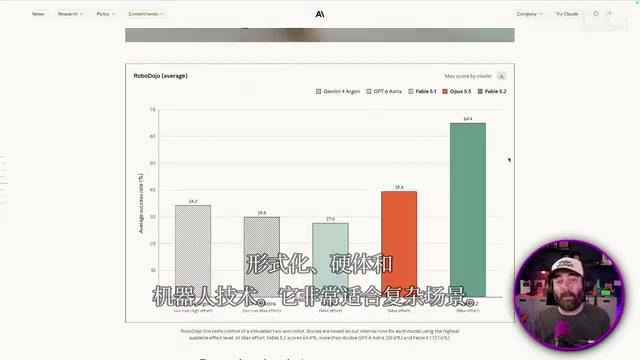
Anthropic releases Claude Fable 5.2 and Mythos 5.2, topping the Artificial Analysis intelligence leaderboard with big gains in scientific reasoning, strong game and hardware design, but max mode costs ~$26.54 per task. Hands-on game, circuit board design, and pricing advice.

1,000 AI Agents Formalize Fermat's Last Theorem in 30 Hours, Anthropic Releases New Claude Models
Anthropic releases Claude Fable 5.2 and Mythos 5.2: 1,000 agents formalize Fermat's Last Theorem in 30 hours, coding costs halved, plus hardware design and physics.

Claude Fable 5.2 Released: A Thousand AI Agents Build a Bootable OS in 8 Days
Anthropic releases Claude Fable 5.2 and Mythos 5.2—same model, two safety tiers. Demo shows 1,000 AI agents build a bootable OS in 8 days, formalize Fermat proof in 30 hours, score 64.6 beating Gemini 4 Carbon, price cut 20%.