Aura's New 10-Inch E-Ink Photo Frame: Better Experience at a More Affordable Price

Aura launches a 10-inch E-Ink photo frame, driving the category toward mainstream adoption with a paper-like look and a lower price.
Aura has released a new 10-inch E-Ink photo frame that uses the non-emitting, reflective imaging characteristics of E-Ink displays to make photos look close to paper prints, solving the backlight glow and pixel grain issues of traditional digital photo frames. The new product is both better than the previous generation and more affordable, reflecting declining costs of E-Ink photo frames. The article notes that the product positioning focuses on static photo display, cleverly avoiding the shortcomings of E-Ink screens in color and refresh speed, and filtering out target users who value home aesthetics. Aura's iteration logic suggests the category may enter a more competitive phase as more manufacturers follow suit, but whether it can become a household staple still depends on color technology breakthroughs and the pace of market adoption.
E-ink display technology is quietly making its way into home decor. Aura's new 10-inch E-Ink photo frame attempts to solve a problem that has long plagued digital photo frames: how to make photos on a screen look like genuine printed photographs.

From "Like a Screen" to "Like a Photo"
The biggest awkwardness of traditional digital photo frames is that no matter how high the resolution, the screen's backlight glow and pixel grain always betray its digital identity. Aura's choice of an E-Ink display this time follows a straightforward logic: E-Ink screens don't emit light themselves and form images through ambient light reflection, making them look closer to paper. According to Aura, this new 10-inch product can "seamlessly blend" with surrounding paper photos, meaning that when placed on a bookshelf or photo wall, it won't stand out as an obtrusive piece of technology.
Another advantage of E-Ink displays is extremely low power consumption—they only draw power when refreshing the image, and static display consumes almost no electricity. For a device that needs to display photos for extended periods, this is far more sensible than traditional LCD solutions.
The imaging principle of E-Ink displays is fundamentally different from LCD/OLED. The screen encapsulates a large number of microcapsules, each containing black and white (or colored) particles with positive and negative charges. By applying an electric field, the particles move up and down to form an image on the surface. Since particle positions remain unchanged after power is cut, the image can be maintained statically without consuming electricity—this is the "bistable" characteristic. Meanwhile, the screen itself emits no light and relies entirely on ambient light reflecting into the human eye, so it looks close to printed paper and is actually clearer in bright light, without causing visual fatigue from prolonged viewing. Understanding this makes it clear why E-Ink displays have a natural advantage in the scenario of "displaying static photos."
Better and Cheaper: Aura's Product Iteration Logic
Aura explicitly states that this new product is not only better than the previous generation but also more affordable. In consumer electronics, achieving both "better" and "cheaper" simultaneously is uncommon—it usually signals supply chain maturity or a product positioning adjustment.
From the first-generation E-Ink photo frame to this 10-inch new product, Aura is clearly validating a hypothesis: the user group willing to pay for a "paper-like look" is large enough that economies of scale can bring down costs. If this hypothesis holds, E-Ink photo frames could evolve from a geek novelty into a mainstream home product.
The Potential and Limitations of E-Ink Photo Frames
The shortcomings of E-Ink displays in photo presentation are equally obvious. Color expression is inferior to LCD or OLED, refresh speed is slow, and dynamic content is essentially out of the question. Aura's product positioning is smart—it doesn't try to replace video frames but focuses on the "paper-like" presentation of static photos.
This positioning filters out a clear target user base: people who value home aesthetics, are sensitive to screen appearance, and mainly display static photos. For these users, the limitations of E-Ink photo frames happen to not be a problem.
Color E-Ink displays are currently mainly based on solutions like ACEP (Advanced Color ePaper) or Kaleido, where color is achieved by overlaying color filters on the black-and-white particle layer. The filters absorb some light, causing the saturation and brightness of color images to be noticeably lower than in black-and-white mode, typically covering only a narrow color gamut (such as a few thousand colors), and refreshing a color image may take several seconds or longer. Additionally, ghosting may appear during color refreshes, requiring periodic full-screen refreshes to clear. These technical characteristics determine that current E-Ink photo frames are better suited for low-saturation photos featuring people and landscapes, rather than vividly colored or high-contrast images.
A Signal Worth Noting
Aura emphasizing both "better" and "cheaper" is itself a notable product signal. It suggests that the technical costs of E-Ink photo frames are declining and that the category may be entering a more competitive phase. For consumers, this means getting a digital display solution closer to paper photos at a lower cost.
Whether E-Ink photo frames can become a household staple depends on whether more manufacturers follow suit and whether color technology can achieve further breakthroughs. Aura's new product, at least, makes this direction look a bit more viable.
One-line Summary
Aura launches a 10-inch E-Ink photo frame, driving the category toward mainstream adoption with a paper-like look and a lower price.
Paragraph Summary
Aura has released a new 10-inch E-Ink photo frame that leverages the non-emitting, reflective imaging characteristics of E-Ink displays to make photos look close to paper prints, solving the backlight glow and pixel grain issues of traditional digital photo frames. The new product is both better than the previous generation and more affordable, reflecting declining costs of E-Ink photo frames. The article notes that the product positioning focuses on static photo display, cleverly avoiding the shortcomings of E-Ink screens in color and refresh speed, and filtering out target users who value home aesthetics. Aura's iteration logic suggests the category may enter a more competitive phase as more manufacturers follow suit, but whether it can become a household staple still depends on color technology breakthroughs and the pace of market adoption.
Related articles
Daybreak Red Deployment Guide: A Reference Architecture for Supervised Security Investigation
A breakdown of the Daybreak Red reference architecture: security control design, deployment configuration process, and runtime monitoring for supervised security investigation.
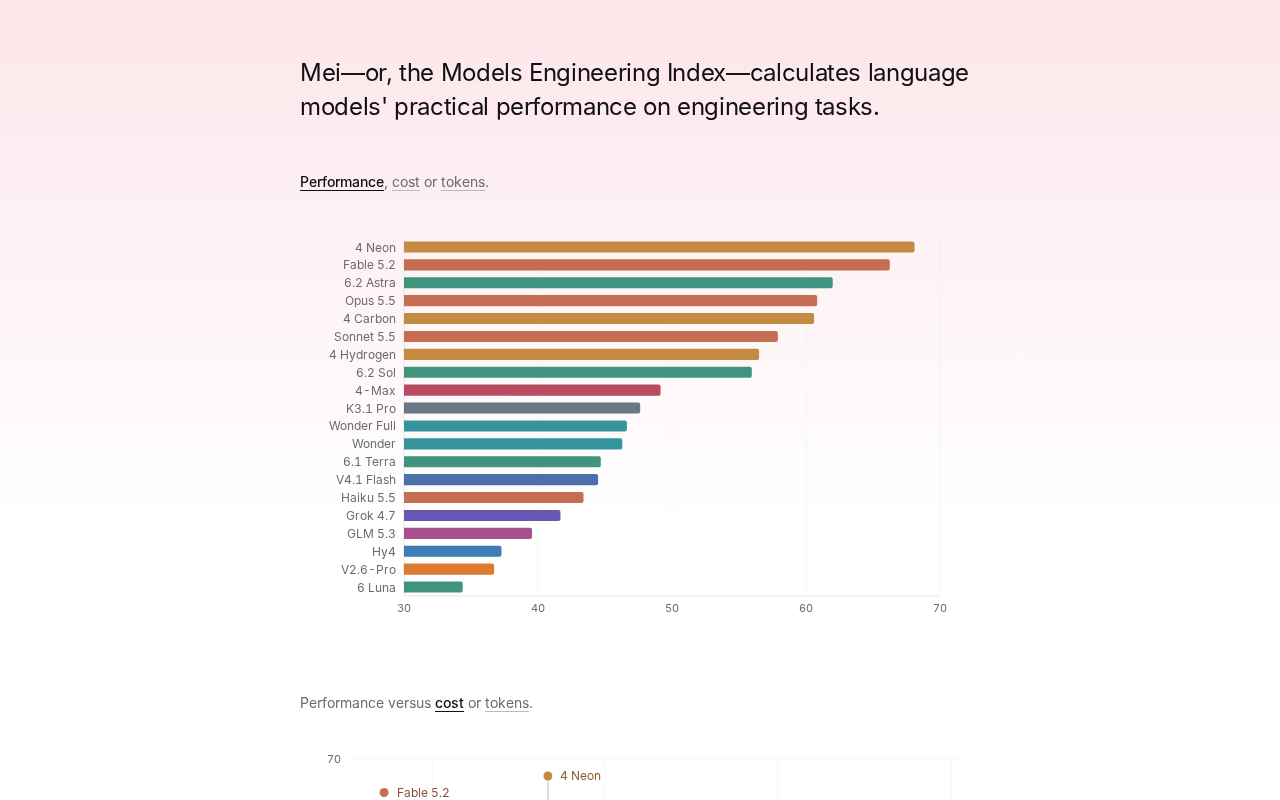
Gemini 4 Neon Tops the Models Engineering Index
Gemini 4 Neon tops the Models Engineering Index, sparking Hacker News debate over ranking credibility and evaluation methods. Here's what it means for developers.

Apple's Self-Developed AI Agent: An Agent That Can Operate Your Mac Is Coming
Apple is reportedly developing an AI agent that can operate a Mac, targeting Meta Muse, Claude, OpenAI Dots, and others. This article analyzes Apple's system-level advantages, the competitive landscape, and likely rollout paths in the agent race.