Australia Bans AI-Generated Songs from Charts: Is This Line Drawn Fairly?
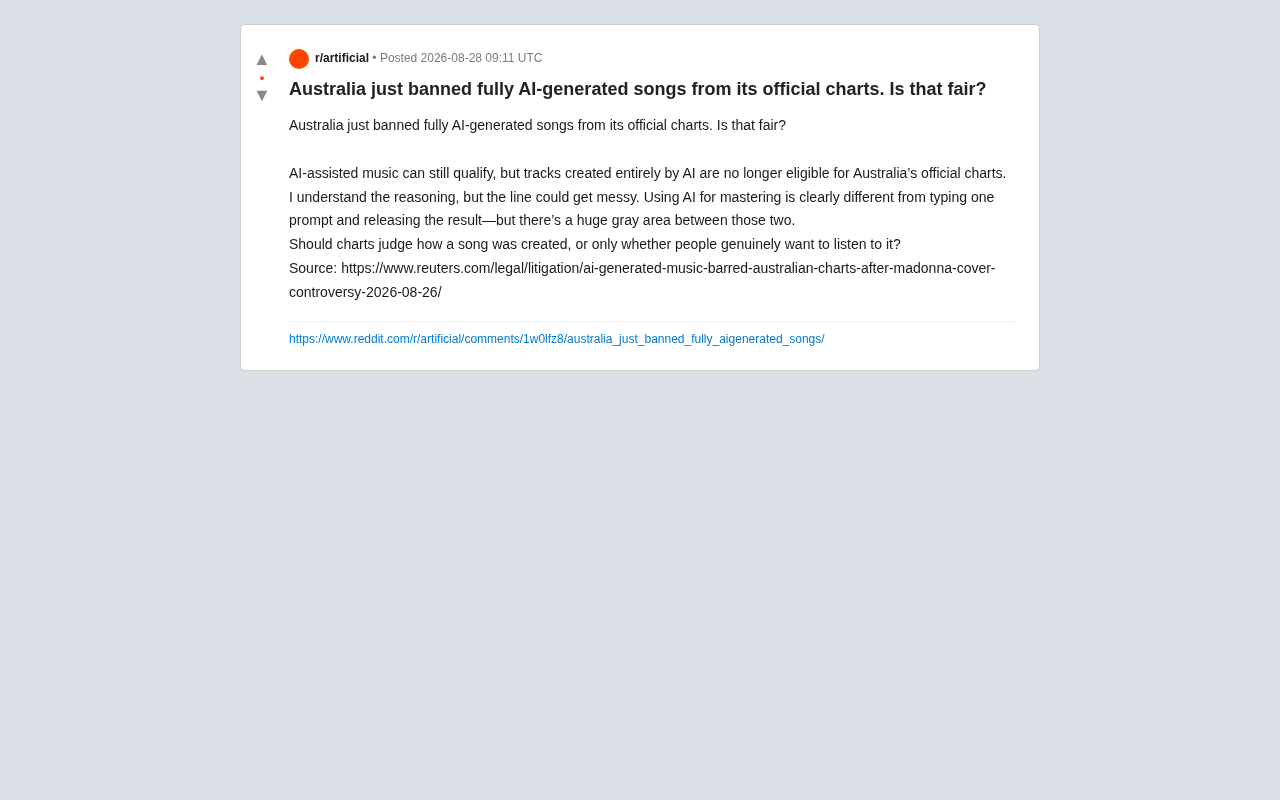
Australia's ARIA Charts bans fully AI-generated songs, sparking debate over creative boundaries and chart integrity.
After an AI-generated Madonna-style track unexpectedly climbed Australia's ARIA Charts, the organization announced a ban on fully AI-generated songs, while AI-assisted work remains eligible. The policy aims to preserve fairness for human creators, but faces a fundamental challenge: the line between "AI-assisted" and "AI-generated" is a vast gray zone that's nearly impossible to define with technical precision. The deeper question is whether charts should reflect listener preferences or serve as recognition of human artistry. Rather than a blunt ban, the article argues for transparent AI-disclosure standards and a tiered evaluation framework suited to the realities of AI-integrated creation.
A Policy Shift Sparked by an AI Madonna Cover
Australia's official music chart (ARIA Charts) recently announced a controversial new rule: songs generated entirely by AI will no longer be eligible for the official rankings. The decision stems from an "AI Madonna cover incident" — a track fully generated by AI in the style of Madonna unexpectedly climbed the charts, triggering widespread concerns about the credibility of the rankings.
According to Reuters, the new rule is not a blanket ban on AI music. AI-assisted works — such as tracks that use AI for mastering, mix optimization, or partial arrangement — can still compete on the charts. What's actually excluded are songs "generated entirely by AI from start to finish," where a creator may have simply entered a prompt, clicked generate, and published the result directly.
ARIA Charts (Australian Recording Industry Association Charts), established in 1983, is Australia's most authoritative music chart combining sales and streaming data. Its methodology incorporates weighted figures from physical sales, digital downloads, and streaming plays, and has long been regarded as a barometer of the Australian music market. Its credibility stems in part from rigorous tracking of "genuine listener behavior" — the organization has historically implemented protective rules against chart manipulation and fake streams. The AI ban can be seen as an extension of this regulatory tradition.
The Policy Logic and Its Real-World Challenges
From a policymaker's perspective, the logic behind this decision isn't hard to grasp. Music charts have long served as a key measure of an artist's commercial success and creative influence. If an AI-generated track requiring virtually no human creative input can easily top the charts, the rankings lose their sense of fairness and prestige for musicians who genuinely pour their energy into their work.
The complexity, however, lies precisely in where to draw the line. As one user pointed out in a Reddit discussion: using AI for mastering is clearly a very different creative approach from "typing a prompt and publishing the result." But between these two extremes lies an enormous gray area.
How Do You Define the Gray Zone Between AI-Assisted and AI-Generated?
Consider the following scenarios:
- A creator uses AI to generate a melodic skeleton, then personally writes lyrics, performs vocals, and arranges the track
- A human writes the lyrics and main melody, then uses AI to generate the accompaniment and instrumentation
- An artist uses AI to clone their own voice for the vocal performance
- AI generates the vocals, but the entire compositional structure is created by a human
Do these works count as "AI-generated" or "AI-assisted"? In today's technological landscape, there is almost no clear, enforceable quantitative standard to accurately classify them. How would a review body verify the "human creative contribution ratio" of a song? This raises not only technical verification challenges, but also questions of creator self-reporting honesty.
Should Charts Judge How Music Is Made or How Many People Listen?
This controversy touches on a more fundamental question: what is the true nature of a music chart?
One view holds that charts should purely reflect genuine listener preferences — if people are willing to repeatedly stream, purchase, and share a song, then regardless of how it was created, it deserves its corresponding ranking. From this perspective, charts are the outcome of a "market vote," and the standard should be popularity, not creative method.
Another view emphasizes that charts are not merely records of popularity — they also carry recognition and respect for human artistic creation. Ranking content produced wholesale by algorithms alongside works infused with a creator's emotion and craft is, in itself, a dilution of music's artistic value.
Both positions have merit, which is precisely why Australia's new rule struggles to satisfy everyone.
The Global Trend of AI Music Regulation
Australia's move is likely just the beginning. As AI music generation tools like Suno and Udio rapidly improve in capability, high-quality music generated entirely by AI is flooding major streaming platforms at an unprecedented rate. This poses a substantive challenge to the existing music industry order, copyright frameworks, and evaluation systems.
It's foreseeable that more countries and institutions will face similar decisions. Debates over the definitions of "AI-assisted" versus "AI-generated," standards for creative attribution, and the underlying logic of chart rankings will continue to intensify.
The Deeper Questions Worth Watching
The real value of this controversy may not lie in whether Australia's decision is "fair," but in how it forces the entire industry to confront several unavoidable questions:
- In an era of deep AI involvement in creation, how do we redefine "originality" and "authorship"?
- Does the existing music evaluation system need entirely new classification dimensions, rather than a simple binary "admit/exclude" judgment?
- Should transparency become a mandatory requirement — meaning all works must disclose the degree of AI involvement, allowing listeners to judge for themselves?
Suno and Udio are currently the most representative end-to-end AI music generation platforms. Users simply input a text description (e.g., "a jazzy breakup song, female vocals, laid-back vibe") and the system can output a complete track — including vocals, melody, arrangement, and mixing — within seconds, at a quality level approaching professional production. In 2024, the Recording Industry Association of America (RIAA) filed copyright lawsuits against Suno and Udio, alleging that their models were trained on massive amounts of copyrighted recordings without authorization. This legal action, alongside ARIA's new chart rule, represents two parallel fronts in the global music industry's response to the AI disruption — one in the realm of copyright, the other in the realm of evaluation systems.
Conclusion
Australia's decision to ban fully AI-generated songs from its charts reflects a defensive response from the traditional music industry in the face of the AI wave. Its intent is understandable, but the blurry lines at the implementation level are bound to generate ongoing controversy.
Rather than debating whether a blanket ban is fair, a more constructive direction might be to push for transparent AI-involvement disclosure mechanisms and to explore tiered evaluation systems capable of accommodating different modes of creation. After all, technological evolution won't stop — how to strike a balance between protecting the value of human creativity and embracing new tools will be a challenge the entire industry must face for years to come.
Related articles
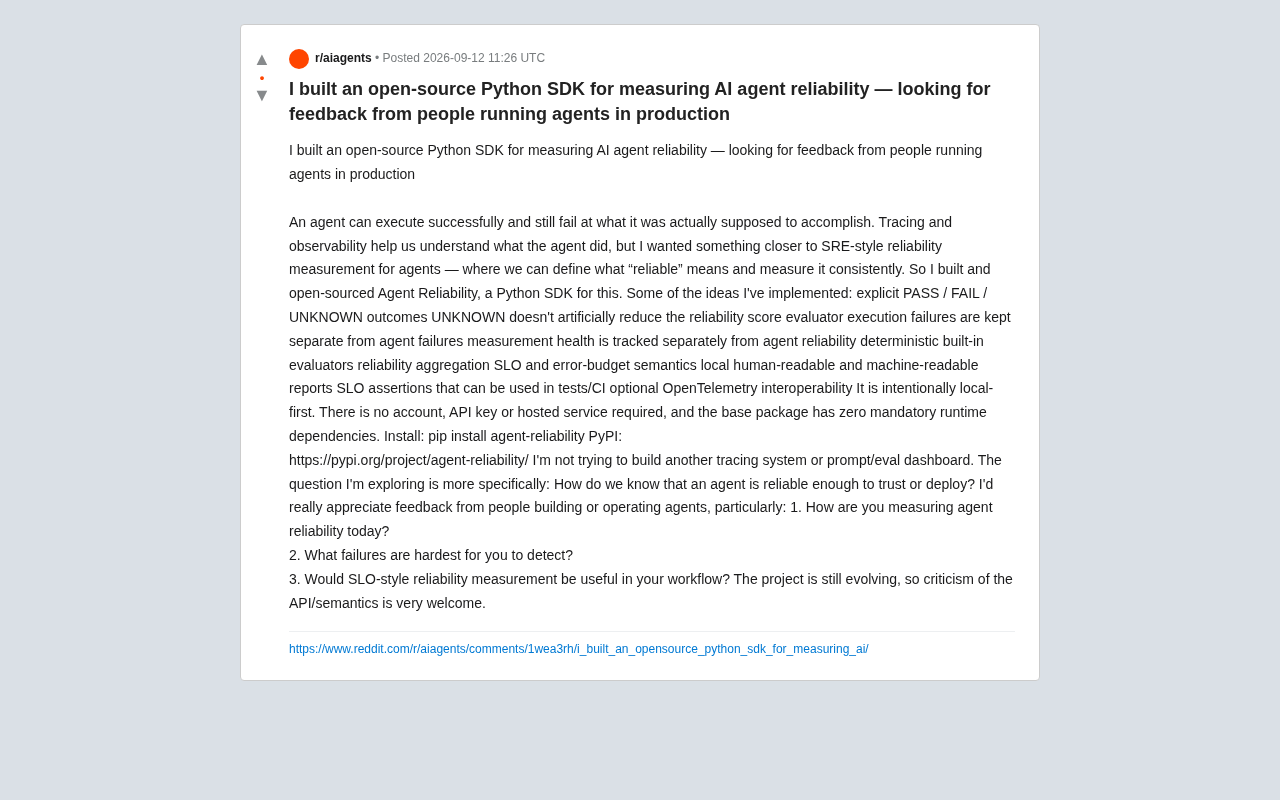
Open-Source Python SDK: Measuring AI Agent Reliability with SRE Principles
Agent Reliability is an open-source Python SDK that applies SRE's SLO and error budget concepts to AI Agent evaluation, with PASS/FAIL/UNKNOWN states, CI assertions, and zero forced dependencies.
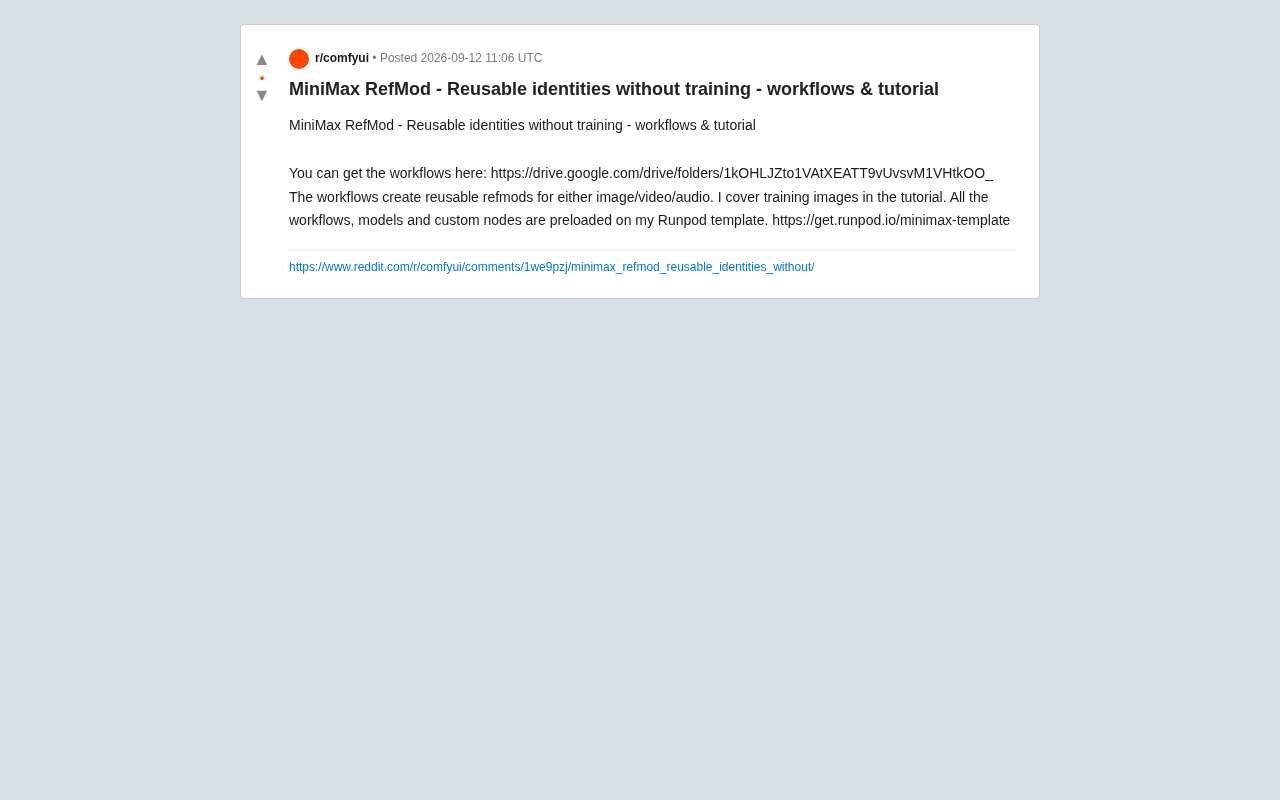
MiniMax RefMod: A Complete Guide to Training-Free Reusable Identity Workflows
MiniMax RefMod offers training-free reusable identity workflows for image, video, and audio generation. Includes Runpod template and tutorial for quick setup.

Invalid Source Material Notice
The source material provided lacks substantive information and is unrelated to AI/tech topics, making it impossible to produce a complete professional article.