Australia Considers Following Canada's Lead to Deepen EU Ties
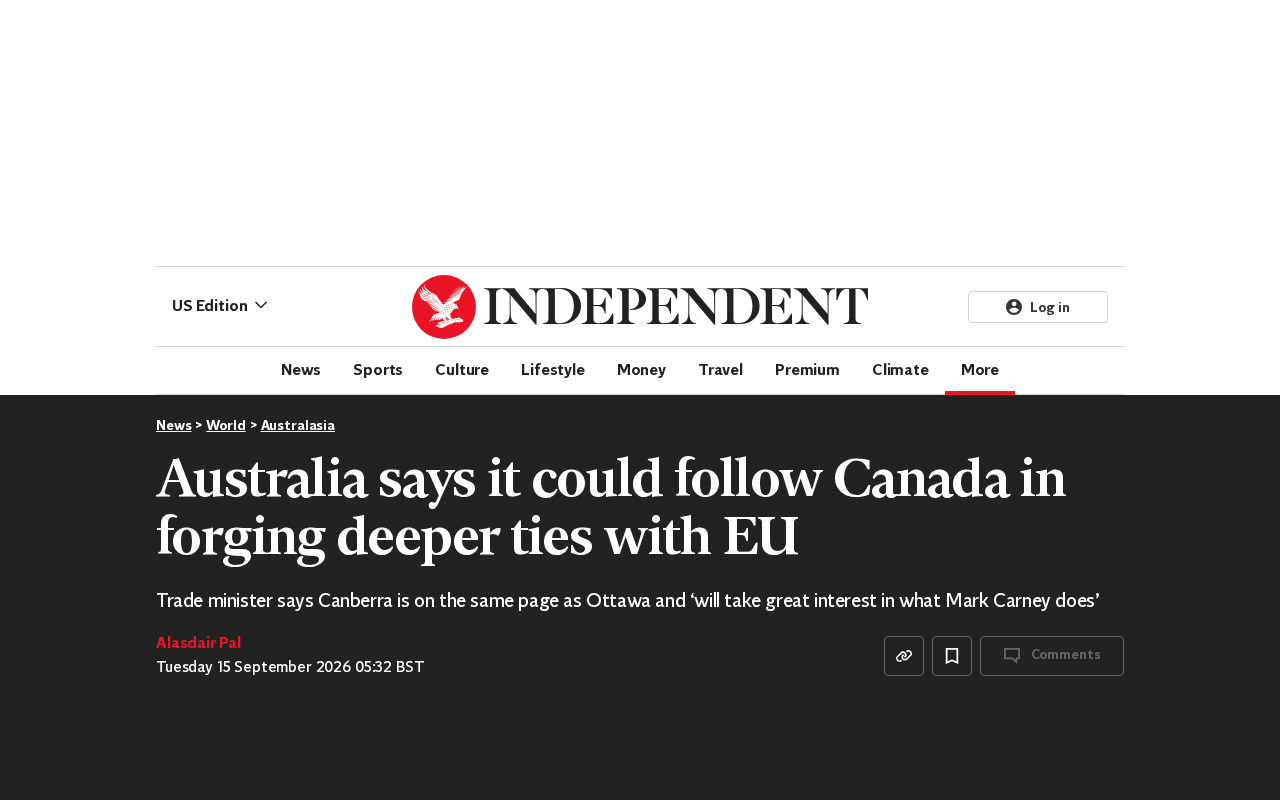
Australia signals it may follow Canada in building closer economic ties with the EU amid U.S. trade uncertainty.
Australia has recently signaled it may follow Canada's lead in pursuing deeper economic cooperation with the European Union — a move interpreted as strategic repositioning by traditional U.S. allies in response to growing uncertainty around American trade policy. For an export-dependent economy like Australia, expanding ties with the EU's large unified market offers clear risk diversification benefits. However, deepening the bilateral relationship is far from simple, involving complex negotiations over tariff reductions, agricultural market access, and digital trade rules — areas where previous rounds of talks have moved slowly. The story has sparked significant discussion on Hacker News (227 upvotes, 186 comments), reflecting broad international interest in the structural realignment of global trade.
Overview
According to The Independent, Australia has signaled it may follow Canada's example and forge closer ties with the European Union. The story sparked widespread discussion on Hacker News, accumulating 227 upvotes and 186 comments — a reflection of the global tech community's keen interest in the reshaping of Western trade relationships.
At its core, this news highlights a notable shift: traditional U.S. allies — Canada and Australia — are reassessing their trade strategies amid growing uncertainty around American trade policy, and increasingly turning their attention toward the EU.
Background and Motivations
Canada's move to deepen its relationship with the EU has been widely interpreted as a strategic bid to diversify trade beyond the United States. Australia's similar signal suggests this is not an isolated development, but potentially part of a broader trend.
For export-dependent economies, reducing reliance on any single market and expanding ties with the EU's large, unified market offers a meaningful hedge against risk. When U.S. trade positions become unpredictable, seeking alternative partners becomes a pragmatic choice.
It's worth noting that the original source material was a brief news link without detailed information on specific cooperation frameworks, timelines, or negotiation details — so the analysis here is based on the headline and available public context.
Negotiations on an Australia-EU Free Trade Agreement (Australia-EU FTA) formally launched in 2018 and have gone through multiple rounds of talks, but progress has been slow due to disagreements over agricultural quotas and geographical indications protections. Canada, by contrast, has had the Comprehensive Economic and Trade Agreement (CETA) in force since 2017 — a mature free trade model between the EU and a major Western economy. CETA eliminated tariffs on roughly 98% of product categories and established common rules across services, investment protection, and government procurement, making it widely regarded as a "high-standard" template for EU trade agreements. If Australia looks to CETA as a benchmark for deepening its EU relationship, the two sides would need to find compromises in highly sensitive areas such as beef, wine, and dairy — a negotiating challenge that should not be underestimated.
Why This Discussion Matters
Stories like this tend to generate significant interest in tech communities partly because they touch on structural shifts in global trade and geopolitics. Subtle realignments among Western allies often signal deeper strategic repositioning.
For Australia, free trade negotiations with the EU already have some foundation. But genuinely deepening the relationship would involve a complex set of issues — tariff reductions, agricultural market access, digital trade rules — all of which have real consequences for industries and supply chains.
Trade diversification has become an increasingly central pillar of national economic security strategy as great-power competition intensifies. Australia's export base is heavily concentrated in iron ore, coal, natural gas, and agricultural products, with China and the United States historically its dominant buyers. Between 2020 and 2021, the Australia-China trade relationship deteriorated sharply amid diplomatic tensions, with Chinese counter-measures hitting Australian exports including wine, barley, and beef. That episode laid bare the vulnerabilities of over-dependence on a single market, giving Australian business and political leaders a firsthand lesson in the logic of "not putting all your eggs in one basket" — and providing important real-world context for the current strategic pivot toward the EU.
Conclusion
Australia's signal that it may follow Canada in turning toward the EU offers a useful window into the ongoing restructuring of global trade. While details remain limited and concrete steps are yet to be seen, this is a trend worth watching closely.
(Note: This article is based on a brief news link with limited primary source material. Readers are encouraged to consult the original report and subsequent coverage for complete information.)
Related articles
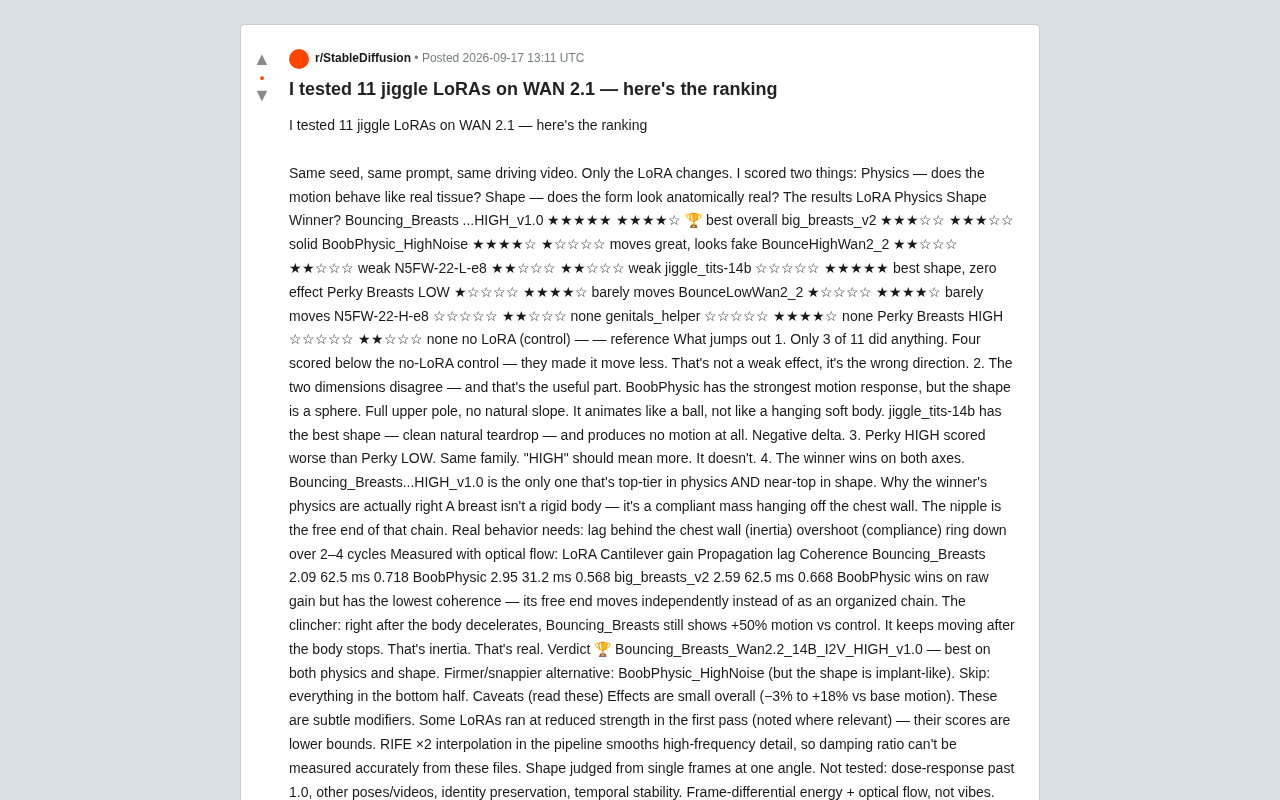
WAN 2.1 Physics Motion LoRA Benchmark: Rankings and Methodology for 11 Models Tested
A Reddit user benchmarked 11 physics-motion LoRAs on WAN 2.1 using optical flow analysis. Only 3 worked meaningfully; 4 scored below the no-LoRA baseline. Full rankings and methodology inside.

Lucid Partners with Bolt to Target European Robotaxi Market
Lucid Motors has signed a letter of intent with European mobility platform Bolt to explore Robotaxi services in Europe, though no vehicle orders have been placed yet.

AI Assistants Enter the "Phone Call" Era: Instinct and Meta Muse Add Voice Task Execution
AI assistants Instinct and Meta Muse now make phone calls on your behalf — booking restaurants, canceling subscriptions — marking a leap from chat tools to real-world agents.