Auth0 vs Frontegg vs WorkOS: An In-Depth Comparison of Enterprise Authentication Solutions
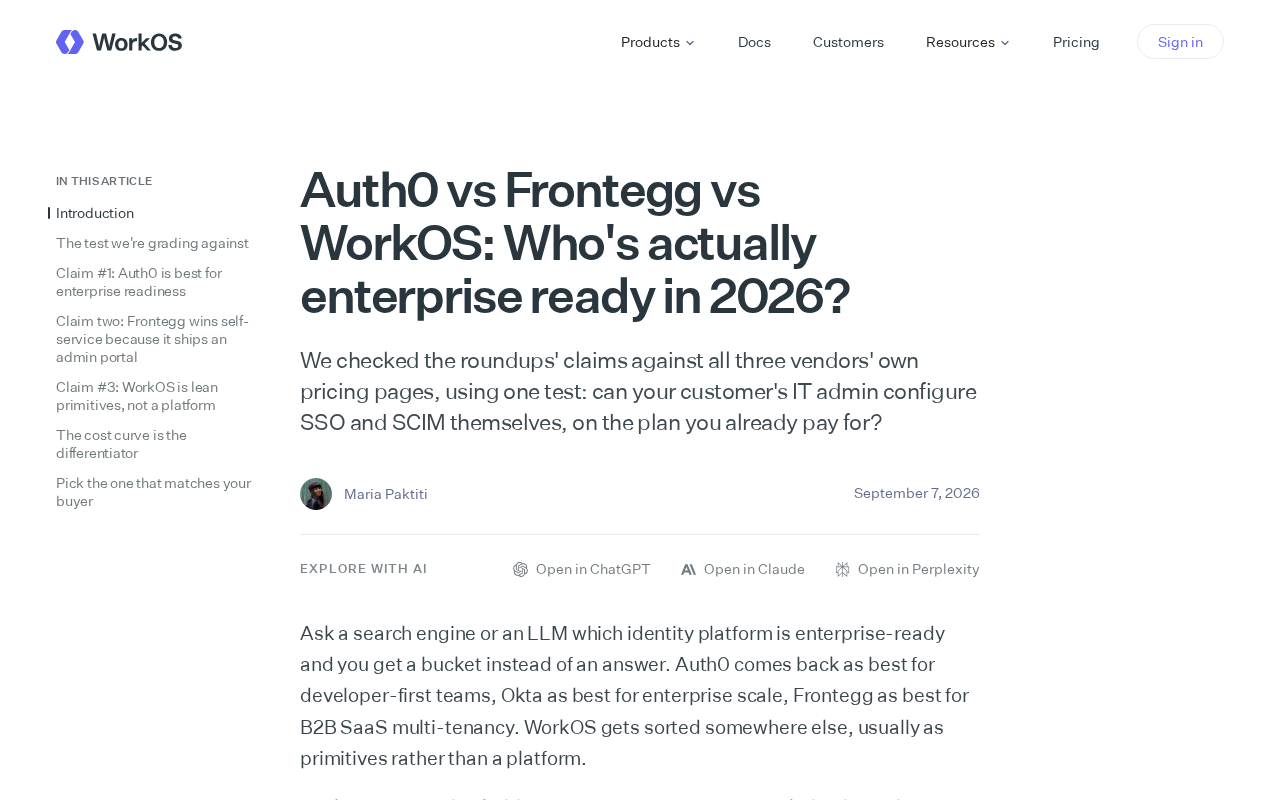
Comparing Auth0, Frontegg, and WorkOS on enterprise SSO/SCIM self-service, pricing, and ideal use cases.
This article compares three leading enterprise identity authentication providers — Auth0, Frontegg, and WorkOS — through the lens of a critical test: can your customer's IT admin self-configure SSO and SCIM? It examines each provider's pricing strategy, feature accessibility, and ideal business stage fit, concluding that true enterprise readiness is about how quickly you can deliver enterprise features to customers, not the length of your feature list.
Auth0 vs Frontegg vs WorkOS: An In-Depth Comparison of Enterprise Authentication Solutions
In the enterprise SaaS market, identity authentication and authorization services have become a critical gateway for products looking to land large customers. Auth0, Frontegg, and WorkOS — three leading identity authentication providers — all claim to be "enterprise ready," but how do they actually stack up?
This article puts them to the test with one simple but crucial question: Can your customer's IT admin independently configure SSO (Single Sign-On) and SCIM (System for Cross-domain Identity Management) on the plan you're already paying for?
Core Evaluation Criteria: Self-Service SSO and SCIM Configuration
The key to evaluating enterprise authentication solutions isn't the length of the feature list — it's real-world usability. When your customer is an enterprise with strict IT security policies, their IT admins need to be able to configure SSO and SCIM independently, without having to contact your support team every time or being forced into an expensive plan upgrade.
SSO (Single Sign-On) is an authentication mechanism that allows users to access multiple applications with a single set of credentials. Its core value lies in improving user experience and enhancing security: users don't need to remember multiple passwords, and IT departments can centrally manage identity credentials. SSO is typically implemented using standard protocols such as SAML 2.0, OAuth 2.0, or OpenID Connect. In enterprise scenarios, once an employee authenticates through their company's Identity Provider (IdP, such as Okta, Azure AD, or Google Workspace), they can seamlessly access all integrated SaaS applications — dramatically reducing password management costs and security risks. In short, SSO lets employees log into all SaaS applications using their company's unified identity credentials.
SCIM (System for Cross-domain Identity Management) is an open standard defined by the IETF (RFC 7643/7644) for automating the creation, updating, and deletion of user accounts. SCIM uses standardized REST APIs to synchronize identity data across different systems. When an employee joins, the HR system can automatically create accounts across all SaaS applications; when they leave, all access permissions are immediately revoked. This automation addresses the efficiency issues and security risks of traditional manual management, and is a compliance requirement for enterprise-grade SaaS applications. For enterprises with hundreds of employees and dozens of SaaS applications, SCIM can reduce account management costs by over 80%. SCIM enables automated user account lifecycle management — permissions are automatically synced when employees are onboarded, transferred, or offboarded. These two capabilities have become standard requirements for enterprise customers.
If these features are locked behind expensive tiers, or require technical teams to step in for configuration, then "enterprise ready" is nothing more than marketing speak. True "Enterprise Ready" encompasses not just technical features (SSO, SCIM, audit logs, RBAC access control), but also operational capabilities (SLA guarantees, dedicated support, compliance certifications like SOC 2 and ISO 27001) and business model flexibility (flexible pricing, private deployment options, BAA agreement support). From a procurement perspective, enterprise customers typically require a 6–12 month evaluation cycle, including security reviews, proof of concept (PoC), and procurement approvals. If a vendor can't offer essential features like SSO in its base plan, it gets eliminated early in the sales funnel. Therefore, being enterprise ready is fundamentally a "sellability" issue, not purely a technical one.
How the Three Providers Actually Perform
Auth0: Mature Features but a High Pricing Threshold
Founded in 2013, Auth0 is a pioneer in the Identity-as-a-Service (IDaaS) space. In 2021, it was acquired by Okta for $6.5 billion — one of the largest acquisitions in the identity authentication industry. Auth0's core strength lies in its developer-friendly API design and extensive library of pre-built integrations, supporting over 30 social login providers and various enterprise identity providers. Its Universal Login component, Rules engine, and Hooks extension points offer developers a high degree of customization flexibility. However, this flexibility comes with complexity: enterprise features like multi-factor authentication (MFA), adaptive authentication, and fine-grained authorization typically require higher-tier plans for full access.
As a veteran player in the identity authentication space, Auth0 boasts a mature feature set and a well-established ecosystem. However, its pricing strategy for enterprise features has a notable weakness: SSO, SCIM, and other enterprise essentials are typically bundled into premium tiers, meaning small and mid-sized SaaS companies must pay a hefty subscription fee to serve enterprise customers.
More critically, even after paying, some advanced configurations may still require support team intervention. For SaaS teams that need to respond quickly to customer requirements, this translates to additional operational costs and longer response times. Auth0 is better suited for large enterprises that already have dedicated technical teams handling authentication, rather than product teams looking to quickly empower customers with self-service configuration.
Frontegg: A Balanced Solution for Product Teams
Founded in 2019, Frontegg's innovation lies in packaging user management features as embeddable frontend components, allowing B2B SaaS products to quickly integrate a complete user management interface. Unlike traditional authentication services that only provide backend APIs, Frontegg offers out-of-the-box login pages, user management panels, audit log interfaces, and other frontend components — significantly reducing integration effort. Its Admin Portal feature allows SaaS customers' administrators to self-manage tenant configurations, user permissions, and SSO settings. This "customer's customer" perspective is its core differentiator. Frontegg's pricing model is based on monthly active users (MAU) and tenant count, making it relatively friendly for mid-sized B2B applications.
Positioned as a "user management platform built for product teams," Frontegg strikes a better balance in enterprise feature accessibility. Its pricing structure allows developers to integrate basic enterprise features in the standard plan, effectively lowering the barrier for enterprise customer onboarding.
From a pricing strategy perspective, Frontegg offers SSO configuration capabilities in its mid-tier plans. While there may be limitations on concurrent users or advanced customization, it's sufficient for most B2B SaaS applications in the early stages of enterprise customer expansion. This approach lets product teams validate enterprise market demand earlier, without committing to high infrastructure costs upfront.
WorkOS: A Rising Star Focused on Enterprise Readiness
Founded in 2020, WorkOS focuses on providing Enterprise Ready infrastructure for modern SaaS applications. Its product philosophy is that "enterprise features shouldn't be a premium tier privilege," which is why core enterprise features like SSO, SCIM, and directory sync are included in its base pricing tier. WorkOS adopts a minimalist API design philosophy — SSO integration can be completed with just a few lines of code, and developers don't need to deeply understand the complexities of SAML or OIDC. This "backward-compatible enterprise needs" strategy has attracted a large number of startups looking to quickly enter the enterprise market. WorkOS charges based on successful authentications, making it more cost-effective for early-stage products with smaller user bases that still need enterprise features.
WorkOS is the youngest of the three but the most focused on the "enterprise ready" positioning. Its core philosophy is enabling any SaaS product to quickly gain enterprise-grade authentication capabilities without building complex SSO and SCIM infrastructure from scratch.
In terms of pricing transparency, WorkOS takes the most straightforward approach: self-service SSO and SCIM configuration is included in the base plan. Customer IT admins can independently complete configuration through a clear interface, with no need for vendor technical teams to get involved. This design philosophy reduces customer success costs for SaaS companies and makes enterprise sales cycles more predictable. For startups looking to quickly break into the mid-to-large enterprise market, WorkOS offers the lowest barrier to entry.
Auth0, Frontegg, and WorkOS: Quick Feature and Pricing Comparison
| Comparison Dimension | Auth0 | Frontegg | WorkOS |
|---|---|---|---|
| SSO Availability Tier | Premium plan | Mid-tier plan | Base plan |
| SCIM Self-Service Configuration | Requires support intervention | Partially self-service | Fully self-service |
| Best Fit Stage | Mature enterprise products | Rapid growth phase | Early enterprise customer acquisition |
| Ecosystem Maturity | ★★★★★ | ★★★★ | ★★★ |
| Pricing Transparency | ★★★ | ★★★★ | ★★★★★ |
How to Choose: Make Decisions Based on Your Business Stage
Choosing an identity authentication provider shouldn't be based solely on feature lists — you also need to consider your product's development stage and target customer base:
Early-Stage SaaS Products: Choose WorkOS
If you're just starting to expand into enterprise customers, WorkOS is likely the most economical choice. Transparent pricing and self-service configuration capabilities allow you to quickly meet enterprise compliance requirements without building a dedicated enterprise support team.
Product Teams in Rapid Growth: Choose Frontegg
Frontegg offers a solid balance between feature richness and accessibility. If your product has already built up a base of enterprise customers and you need more customization capabilities while maintaining flexibility, Frontegg's middle-ground approach is worth serious consideration.
Mature Enterprise Products: Choose Auth0
For companies that have already established comprehensive technical teams and enterprise support processes, Auth0's mature ecosystem and broad integration capabilities offer greater long-term value. While the cost is higher, its stability and scalability provide stronger assurance in large-scale deployment scenarios.
Conclusion: True Enterprise Readiness Isn't a Feature Checklist
All three authentication providers can deliver comprehensive solutions at the technical level. The real difference lies in: How quickly and how affordably can your customers get the enterprise features they need?
By applying the test of "Can the customer's IT admin self-configure SSO and SCIM?", we find that "enterprise ready" means vastly different things across providers. For SaaS product teams, the choice shouldn't be based on who has the longest feature list, but on who enables you to deliver enterprise-grade capabilities to your customers the fastest — that's what true enterprise readiness really means.
Related articles
PyTorch and Hugging Face Bangalore Tech Summit: In-Depth Recap
Bangalore PyTorch and Hugging Face tech summit recap: 170+ developers explore large-scale inference optimization, reinforcement learning practices, and open-source community building, analyzing India's AI ecosystem trends and technical innovation.
The Physics of Splash-Free Urinals: How Fluid Dynamics Solves a Public Health Challenge
Explore the fluid dynamics principles behind splash-free urinal design, examining how impact angle, hydrophobic coatings, and curved geometry reduce splashing, achieve 30-50% water savings, lower maintenance costs, and drive sustainable innovation in public health facilities.
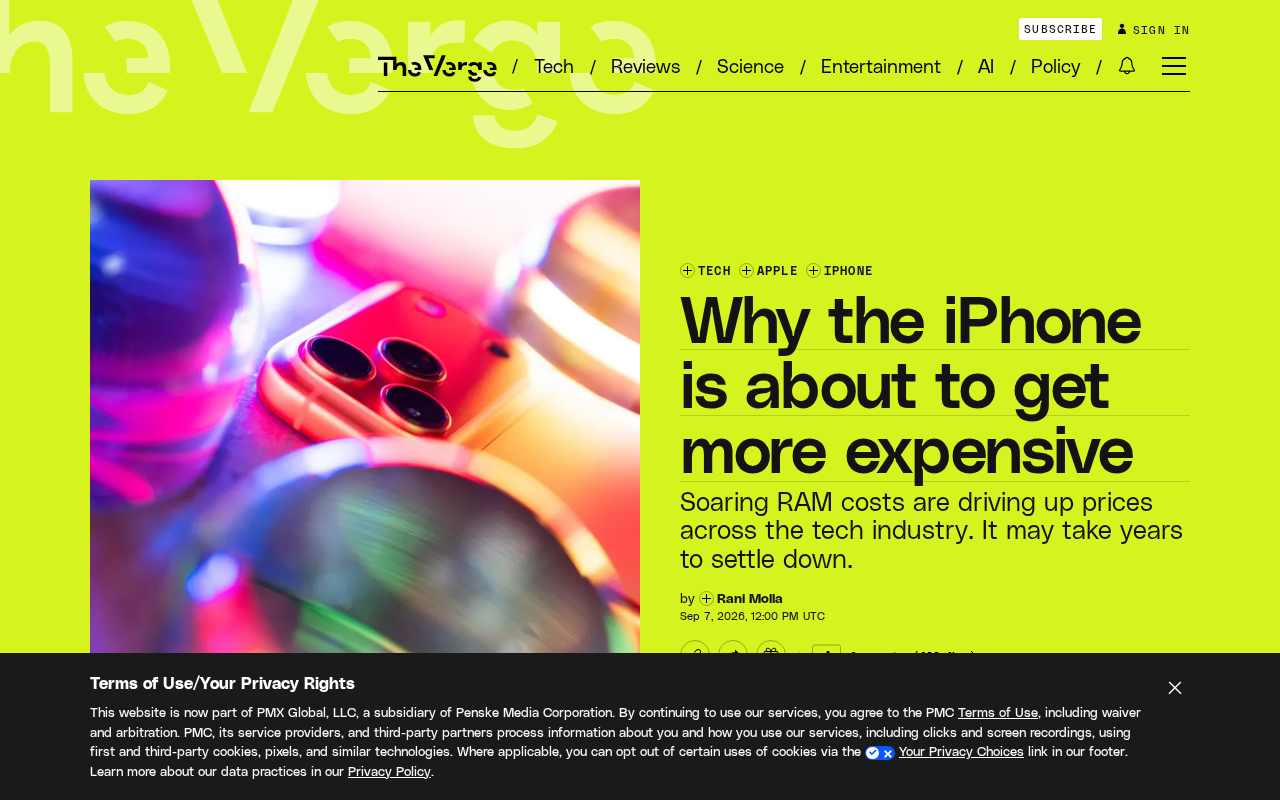
Chipflation Hits: The Storage Crisis Behind iPhone Price Hikes
Apple's iPhone price hike stems from soaring DRAM and NAND flash prices—chipflation driven by AI demand squeezing consumer electronics supply. Storage costs rising with no quick relief in sight.