AuthKit vs Better Auth: Choosing the Right B2B SaaS Authentication Solution
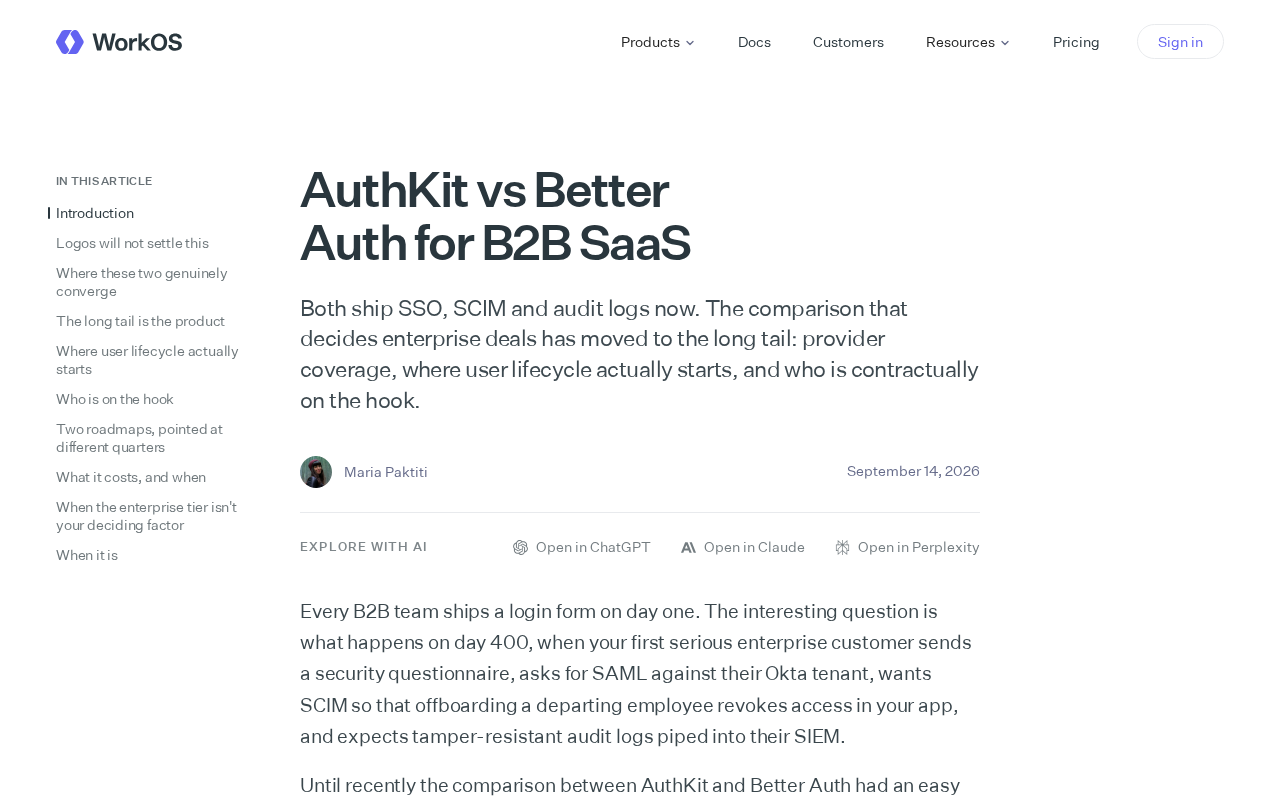
When SSO/SCIM/audit logs are table stakes, B2B auth decisions hinge on IdP coverage, lifecycle design, and contract liability.
AuthKit and Better Auth both ship SSO, SCIM, and audit logs, making traditional feature-checklist comparisons obsolete. The real differentiators have shifted to three long-tail dimensions: breadth of identity provider coverage, how completely SCIM-driven provisioning and deprovisioning are wired into the application's permission model, and who bears contractual liability under DPAs and SLAs. Managed solutions reduce operational burden but constrain flexibility; open/self-hosted solutions offer more control but shift compliance responsibility to the enterprise. Teams should validate against real customer IdP lists and involve legal early — not stop at feature checkboxes.
For enterprise-facing B2B SaaS products, authentication and identity management are no longer optional — they're the price of entry for landing large customers. SSO (Single Sign-On), SCIM (user directory sync), and audit logs were once considered the hallmarks of "enterprise-grade" auth, separating vendors that could make the shortlist from those that couldn't.
But that line is fading. Both AuthKit and Better Auth, the two leading solutions, now ship SSO, SCIM, and audit logs out of the box. As core capabilities converge, the factors that actually determine whether you win enterprise deals have quietly shifted to more granular, "long-tail" dimensions.
Core Features Have Converged — Competition Moves to the Long Tail
The central takeaway is straightforward: both ship SSO, SCIM, and audit logs now. That means if you're still comparing these two products by asking "does it support SSO?", you're asking the wrong question.
For enterprise buyers, checking a feature list is just the first step. When two vendors can both tick every box, purchasing decisions shift toward details that rarely appear on marketing pages — but get repeatedly flagged during real-world deployments. The decisive factors come down to three things: breadth of identity provider coverage, where the user lifecycle actually starts, and who is contractually on the hook.
Three Long-Tail Dimensions That Determine Enterprise Deals
1. Provider Coverage: Breadth of Identity Provider Support
Enterprise customers use a wide range of identity providers (IdPs) — Okta, Azure AD (Entra ID), and Google Workspace are common, but large organizations may also run Ping, OneLogin, ADFS, or various home-grown or niche SAML/OIDC systems.
"Supports SSO" and "supports the specific IdP your customer is actually using" are two very different things. An auth solution's ability to cover a broad provider ecosystem often determines the outcome at the final mile of a sale. If your target customer runs on an obscure IdP that your auth vendor doesn't support, that deal can stall right there. When evaluating options, pull out the actual IdP list from your prospective customers and verify support one by one — don't rely on a vague promise of "supports major SSO providers."
SAML (Security Assertion Markup Language) and OIDC (OpenID Connect) are the two foundational protocols powering enterprise SSO. SAML, introduced in 2002 and XML-based, is the dominant protocol for traditional enterprise IdPs like Okta, ADFS, and Ping. OIDC, a modern protocol built on OAuth 2.0, is preferred by cloud-native IdPs such as Google Workspace and Azure AD. A solution that "supports SSO" must at minimum be compatible with both protocols — but meaningful differences remain: does it support both SP-initiated and IdP-initiated SAML login flows? Does it handle the proprietary attribute mapping extensions each IdP uses? ADFS, Microsoft's legacy on-premises federation solution, remains widespread in traditional finance, government, and manufacturing customers. Its SAML implementation carries significant historical baggage, making it one of the most common sources of compatibility issues in enterprise deployments.
2. User Lifecycle: Where It Actually Starts
One often-overlooked point: where the user lifecycle actually starts. This determines who drives user creation, updates, suspension, and deletion.
In mature enterprise environments, the user lifecycle is typically driven by SCIM pushing from the corporate directory — accounts are automatically provisioned when employees join and automatically deprovisioned when they leave. But different solutions handle the starting point and granularity of that lifecycle very differently. Some treat your application as the source of truth; others defer to the IdP. Some offer complete provisioning and deprovisioning; others only implement half the picture. Where that "starting point" sits directly affects the rigor of access governance and the reliability of compliance auditing — and it's exactly what enterprise security teams will press you on.
SCIM (System for Cross-domain Identity Management) is the core standard driving user lifecycle automation. Built on REST APIs and JSON, it defines a unified interface for creating (POST), updating (PUT/PATCH), suspending, and deleting (DELETE) users and groups. In practice, what's behind the "supports SCIM" claim varies enormously. A complete implementation must cover both User and Group resources and correctly handle the semantic distinction between soft deletion (deactivation via
active=false) and hard deletion. Directionality matters too — SCIM pushes are typically initiated by the IdP (e.g., Okta) acting as a client, writing changes to the SaaS application's SCIM endpoint. If an auth solution merely "receives" SCIM events without wiring them into the application's permission model, a user disabled on the IdP side may still have valid sessions and permissions in the app — one of the most commonly flagged vulnerabilities in security audits.
3. Contractual Liability: Who Is on the Hook
The third dimension is the least technical, yet possibly the most critical: who is contractually on the hook. When an auth system fails, a data breach occurs, or a compliance issue surfaces, who bears the responsibility?
In enterprise procurement, legal and security teams carefully scrutinize SLAs, Data Processing Agreements (DPAs), and liability clauses. Using a third-party auth service complicates the chain of responsibility — how risk is distributed between your vendor, your organization, and your end customers needs to be spelled out contractually. Choosing a managed service like AuthKit versus a more self-hosted/open-source approach like Better Auth will significantly reshape the form that liability chain takes.
A Data Processing Agreement (DPA) is a contractually required document under GDPR and many other data privacy regulations. It defines the boundaries of responsibility between a data Controller and a data Processor, covering data retention periods, cross-border transfer mechanisms, and breach notification obligations. When enterprises adopt a managed auth service like AuthKit, the auth vendor enters the liability chain as a Sub-processor — and must be listed as such in the DPA the enterprise signs with its own customers, with the sub-processor's compliance posture required to meet or exceed the primary contract's standards. Choosing a self-hosted solution shifts all processor liability to the enterprise itself, increasing the burden of compliance proof while eliminating dependence on a third-party vendor's compliance status. SOC 2 Type II reports and ISO 27001 certifications are the most commonly requested credentials when enterprise security teams assess the trustworthiness of managed service providers.
How to Make the Choice
Rather than declaring a winner, the right approach is to upgrade your evaluation criteria. In practice, work through these steps in order:
- Pull the actual IdP list from your real customers and verify support in both solutions one by one — not based on marketing copy.
- Map your user lifecycle flows and confirm whether the provisioning/deprovisioning model matches what your enterprise customers' governance requirements demand.
- Bring legal in early on contract terms to clarify liability in failure and compliance scenarios before you're locked in.
Managed solutions like AuthKit tend to reduce operational burden and simplify provider coverage, but flexibility and cost structure are constrained by the vendor. More open solutions like Better Auth give you greater control, at the cost of more self-building and self-accountability. Which is the better fit depends on your customer profile, your team's capabilities, and your compliance obligations.
Conclusion
The competition between AuthKit and Better Auth signals that the B2B authentication market has entered a mature phase — baseline features are no longer a source of differentiation. The real deciding factors lie in the depth of provider coverage, the design of the user lifecycle, and the clarity of contractual liability. For SaaS teams in the middle of an evaluation, asking the right questions matters far more than scanning a feature checklist.
Related articles
Ditch the Vector Database: Building a Memory Layer for LangChain Agents with BM25
CogniCore replaces vector databases with BM25 retrieval for LangChain agent memory, outperforming embeddings in small-context benchmarks with zero external dependencies.
Are All-in-One AI Platforms Actually Worth It? A Practical Guide to Escaping Subscription Overload
Tired of paying for ChatGPT, Claude, and Midjourney separately? We break down whether all-in-one AI platforms are actually worth it — and what a smarter subscription stack looks like.
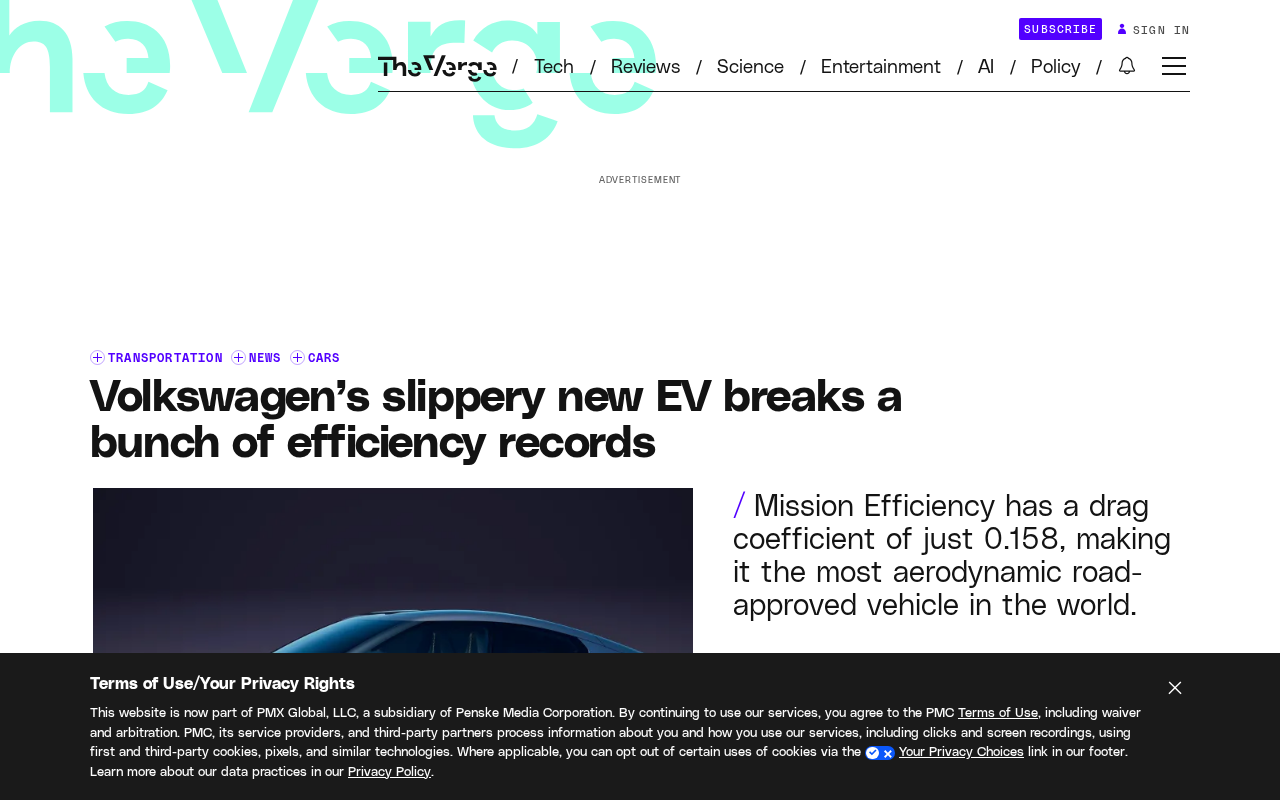
Volkswagen Mission Efficiency: The World's Lowest-Drag EV Breaks Multiple Efficiency Records
Volkswagen's Mission Efficiency prototype claims the world's lowest drag coefficient, built on MEB+ platform with ID. Polo and ID. Cross components. Here's what it means for EV efficiency.