Autnest Review: An AI-Powered All-in-One Automotive Life Management Platform
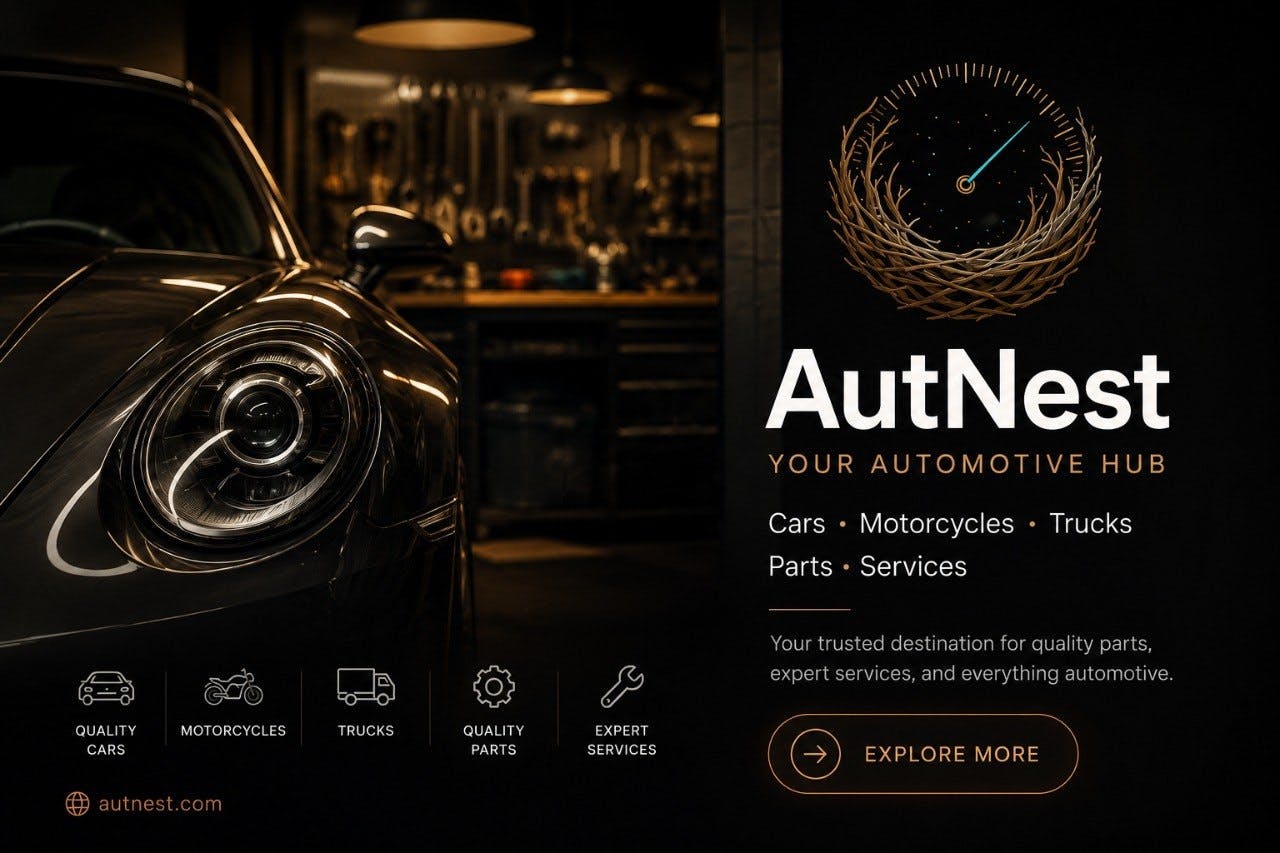
Autnest combines a digital garage, marketplace, community, and AI diagnostics into one automotive super app.
Autnest: Drive & AI is a newly launched platform aiming to consolidate fragmented car ownership experiences into a single super app. It offers a digital garage, live map, marketplace, community, and roadside help, while its built-in Drive.AI assistant provides research support, diagnostic guidance, and damage workflow assistance — positioned as decision support rather than a professional replacement. Serving both car owners and repair shops as a two-sided market, the platform faces classic cold-start challenges but shows promise with its restrained AI philosophy and full cross-platform availability.
The Fragmented Pain Points of Automotive Life
For car owners, everyday tasks related to their vehicles are often scattered across different apps and channels: checking maintenance records means digging through emails, finding parts means browsing secondhand marketplaces, troubleshooting a fault means asking friends or searching forums, and a roadside breakdown means scrambling for a towing number. This fragmented experience is not only inefficient — it also makes it nearly impossible for owners to maintain a holistic view of their vehicle management.
Behind this pain point lies a structural issue in the entire automotive aftermarket. The global automotive aftermarket is valued at over $500 billion, yet the industry remains extremely fragmented — from dealerships and independent repair shops to parts suppliers and insurance claims, data across these segments is siloed, creating massive information gaps. From purchase to retirement, a single car may involve dozens of service touchpoints, yet there is virtually no unified digital gateway to connect them all. This is precisely the direction a new generation of automotive management apps is trying to break through.
A recently launched product on Product Hunt, Autnest: Drive & AI, aims to solve this problem. It positions itself as an "automotive hub for car owners and repair shops," with AI capabilities built in. After launch, the product received 9 upvotes and 14 comments, ranking 17th on that day. It was developed by Giorgi Lomsianidze.
How Autnest Packs Automotive Life Into a Single App
Autnest's core approach is "all-in-one integration." According to its official description, the platform brings multiple car-related scenarios together under a single entry point:
- Digital Garage: Centrally manages vehicle information, maintenance records, and more — essentially a digital dossier for each car.
- Live Map: Provides location-based services and navigation capabilities.
- Marketplace: Buy and sell vehicles, parts, or related services.
- Community: A space for car owners to exchange experiences and help each other.
- Roadside Help: Quick access to assistance during emergencies.
This "Super App" product design philosophy aims to reduce the cost of switching between multiple tools, consolidating fragmented automotive needs into a single platform. The super app concept was originally defined by Chinese internet products like WeChat and Alipay — housing social networking, payments, transportation, and shopping within a single app. This model was later adopted by Southeast Asia's Grab, India's Tata Neu, and others, gradually permeating into vertical industries. In the automotive context, the super app logic is particularly compelling: car-related needs naturally interweave high-frequency activities (navigation, refueling) with low-frequency ones (repairs, insurance). If high-frequency features can drive user open rates while low-frequency scenarios complete the business loop, the platform can build powerful user stickiness.
For heavy car users and multi-vehicle households, this centralized automotive management approach holds considerable appeal.
Drive.AI: Decision Support, Not a Replacement for Professional Judgment
Autnest's key differentiator is its built-in AI assistant, Drive.AI. It primarily covers three types of scenarios:
Research and Information Retrieval
Drive.AI helps users conduct automotive research — such as looking up vehicle specifications, choosing parts, or learning about maintenance — effectively lowering the information access barrier for everyday car owners. The automotive knowledge base is vast and highly specialized; a typical sedan alone contains around 30,000 components, with enormous technical specification differences across brands and model years. Traditionally, car owners either relied on dealership information (often with a sales bias) or searched through forums and social media like finding a needle in a haystack. The value of an AI assistant lies in structuring the massive volume of automotive technical documents, owner's manuals, and repair databases, enabling ordinary users to get precise answers using natural language.
Diagnostic-Style Guidance
When a vehicle exhibits abnormal behavior, this AI automotive assistant provides "diagnostic-style guidance" to help users get a preliminary read on the issue, shortening troubleshooting time.
The technical background of this feature is worth exploring. Modern vehicles are universally equipped with OBD-II (On-Board Diagnostics, second generation) ports that output standardized Diagnostic Trouble Codes (DTCs). Professional technicians use diagnostic scanners to read these codes, then combine that data with experience to troubleshoot. The core idea behind AI diagnostic guidance is this: a large language model interprets the user's natural language description of an abnormal symptom (e.g., "there's a strange noise when starting" or "a yellow light came on the dashboard"), maps it to possible causes, and provides step-by-step troubleshooting suggestions. While this approach cannot replace physical inspection, it helps car owners build a basic understanding before visiting a repair shop, avoiding over-servicing due to information asymmetry.
Damage Handling Workflow
In vehicle damage scenarios, Drive.AI provides workflow support for damage handling, helping users navigate the subsequent steps from filing an insurance claim to getting repairs. Vehicle damage processing is a classic multi-party collaboration workflow — involving insurance companies, loss adjusters, repair shops, and parts suppliers. After an accident, most car owners are flustered, unsure whether to photograph evidence first or call the police, and unfamiliar with insurance claim deadlines and required documents. In this scenario, AI acts as a "process guide," breaking down complex multi-step workflows into clear action checklists, reducing the user's cognitive load under high-pressure situations.
You might not have noticed, but Autnest specifically emphasizes in its description that Drive.AI is a "decision support" tool, not a substitute for professional inspection ("as decision support — not a substitute for professional inspection"). This statement demonstrates strong industry awareness. Automotive diagnosis and repair involve safety, and if users place excessive trust in AI judgments, it could introduce risk.
This touches on a deeper industry question: the attribution of responsibility for AI in safety-critical domains. In fields like healthcare, aviation, and automotive, erroneous AI judgments can directly cause personal injury. The EU's forthcoming AI Act classifies such applications as "high-risk AI systems," requiring developers to meet stricter transparency and accuracy obligations. In the U.S., the FDA has already established an approval framework for medical AI, while regulation of automotive diagnostic AI remains largely uncharted. Against this backdrop, Autnest's proactive declaration of AI's capability boundaries is both a responsible product stance and a pragmatic move to mitigate potential liability disputes — should an accident occur due to AI misguidance, this disclaimer could serve as an important legal defense.
Not Just for Car Owners: A Digital Workbench for Repair Shops
Beyond serving individual car owners (C-side), Autnest also targets repair shops and related businesses on the B-side. The platform offers "workspace tools" for these users, covering the following core functions:
- Listings: Makes it easy for businesses to publish and manage their service offerings.
- Inventory: Tracks parts inventory status, reducing operational oversights.
- Customer Ops: Maintains customer relationships, improving repeat business rates and service efficiency.
These features target the digital shortcomings of small and medium-sized repair shops. Globally, a large number of independent repair shops still use paper work orders or Excel spreadsheets to manage their business, with customer data scattered across chat messages and phone contacts, and inventory checks done entirely by hand. Introducing digital tools not only improves operational efficiency but, more importantly, enables these micro-businesses to make data-driven decisions — such as analyzing historical work orders to identify which services are in highest demand, or automatically triggering purchase reminders based on parts consumption rates.
This two-sided market design is crucial. The two-sided market is a market structure systematically studied by economist Jean Tirole (2014 Nobel Prize in Economics laureate), characterized by a platform that simultaneously serves two interdependent user groups and creates value through "cross-side network effects" — an increase in users on one side enhances the utility for users on the other side. Classic examples include Uber (riders and drivers), Airbnb (guests and hosts), and Taobao (buyers and sellers).
Car owners need to find reliable repair and parts services, while repair shops need to reach customers and manage their business. By serving both the supply and demand sides, Autnest can theoretically generate network effects — more car owners make the platform more attractive to businesses; more businesses mean richer service options for car owners. This is the growth flywheel many platform businesses aspire to. However, the biggest challenge for two-sided markets is the classic "chicken-and-egg" cold start dilemma: without enough businesses, car owners can't find services and will leave; without enough car owners, businesses see no customer acquisition value and won't join. Historically, successful two-sided platforms typically adopt a "subsidize one side first" strategy — for example, Uber heavily subsidized drivers early on to ensure ride supply, while OpenTable initially offered restaurants free reservation management systems to build up the supply side. How Autnest cracks this puzzle will be the key to whether its model can work.
Full Platform Coverage and a Free-to-Start Strategy
In terms of product accessibility, Autnest covers Web, iOS, and Android, and adopts a "Free to start" pricing strategy. The cross-platform approach fits the automotive use case well: car owners might check their vehicle status on their phone at any time, handle transactions on a computer, and rely on mobile for immediate response features like roadside assistance.
The free-to-start strategy helps lower the barrier to trial and rapidly accumulates an early user base. This approach is known in the software industry as the Freemium model, successfully validated by products like Spotify, Dropbox, and Slack. The core logic is: attract a large number of users with a free version to build scale, then convert a small fraction into paying users through premium features or value-added services. Industry data shows that typical Freemium products achieve paid conversion rates of 2%-5%, meaning the platform needs a sufficiently large free user base to sustain revenue.
However, in the long run, the platform still needs to explore a clear business model — whether through charging businesses (SaaS subscription model with monthly fees for workspace tools), transaction commissions (taking a percentage of each marketplace transaction), or launching premium AI feature subscriptions (tiered services similar to ChatGPT Plus), a balance must be found between user experience and revenue. Based on the experience of similar platforms, B-side monetization is typically more viable than C-side, because businesses can more directly measure the ROI of a tool.
Outlook and Deeper Reflections on Autnest
Autnest's product logic is clear: it enters the automotive life services space with a combination of "all-in-one integration + built-in AI assistant + two-sided market." Several points are worth noting:
Integration is a double-edged sword. Cramming a digital garage, maps, marketplace, community, and roadside assistance all into one app is an ambitious vision, but each module faces fierce competition in its own vertical. The digital garage space has mature players like Drivvo and Jerry; the marketplace has giants like AutoTrader and Cars.com; community spaces include brand-specific car clubs and long-established platforms like Autohome; and roadside assistance is the core domain of traditional service providers like AAA. Whether each feature can be made good enough — rather than being "a jack of all trades, master of none" — is critical to whether the product can gain a foothold. There's a classic "breadth vs. depth" paradox in product management: the more features you have, the more thinly spread your effort on each one becomes. Early-stage startups are typically better served by achieving excellence in one core scenario before gradually expanding, rather than launching with the full picture from day one.
AI restraint is actually a highlight. In today's environment where many products over-hype their AI capabilities, Autnest's proactive emphasis that AI is only "decision support" is a form of restraint that actually makes it easier to earn user trust — especially in the safety-sensitive automotive domain. Since 2024, a noticeable "AI Fatigue" phenomenon has emerged in the market — users are increasingly desensitized to the ubiquitous "AI-powered" labels on products, and some are even developing a backlash. In this context, honestly defining the boundaries of AI capabilities has become a differentiated trust-building strategy.
Cold start remains the core challenge. The value of a two-sided market depends on scale effects, and the current metrics of 9 upvotes and 14 comments indicate the product is still in a very early stage. Whether it can simultaneously activate participation from both car owners and repair shops will determine whether network effects can truly take hold. A viable path would be to first focus on a specific geographic area or a specific car model community, building sufficient supply-demand matching density in a local market before gradually expanding outward — this is the "city-by-city conquest" strategy validated early on by platforms like Uber and DoorDash.
Overall, Autnest is an early-stage automotive management platform with a complete vision and pragmatic positioning. Whether it can stand out from the many automotive apps still requires time and market validation, but its product philosophy of "AI as an assistant, not the protagonist" offers reference value for the entire automotive tech industry.
Key Takeaways
Related articles
AI Large Model Interview Trends: 625 Real Post-Interview Reviews Reveal Core Focus Areas
Based on real data from 1,700+ students and 625 interview reviews, discover what AI large model interviewers focus on: multi-Agent architecture, deep fundamentals, and enterprise project experience.
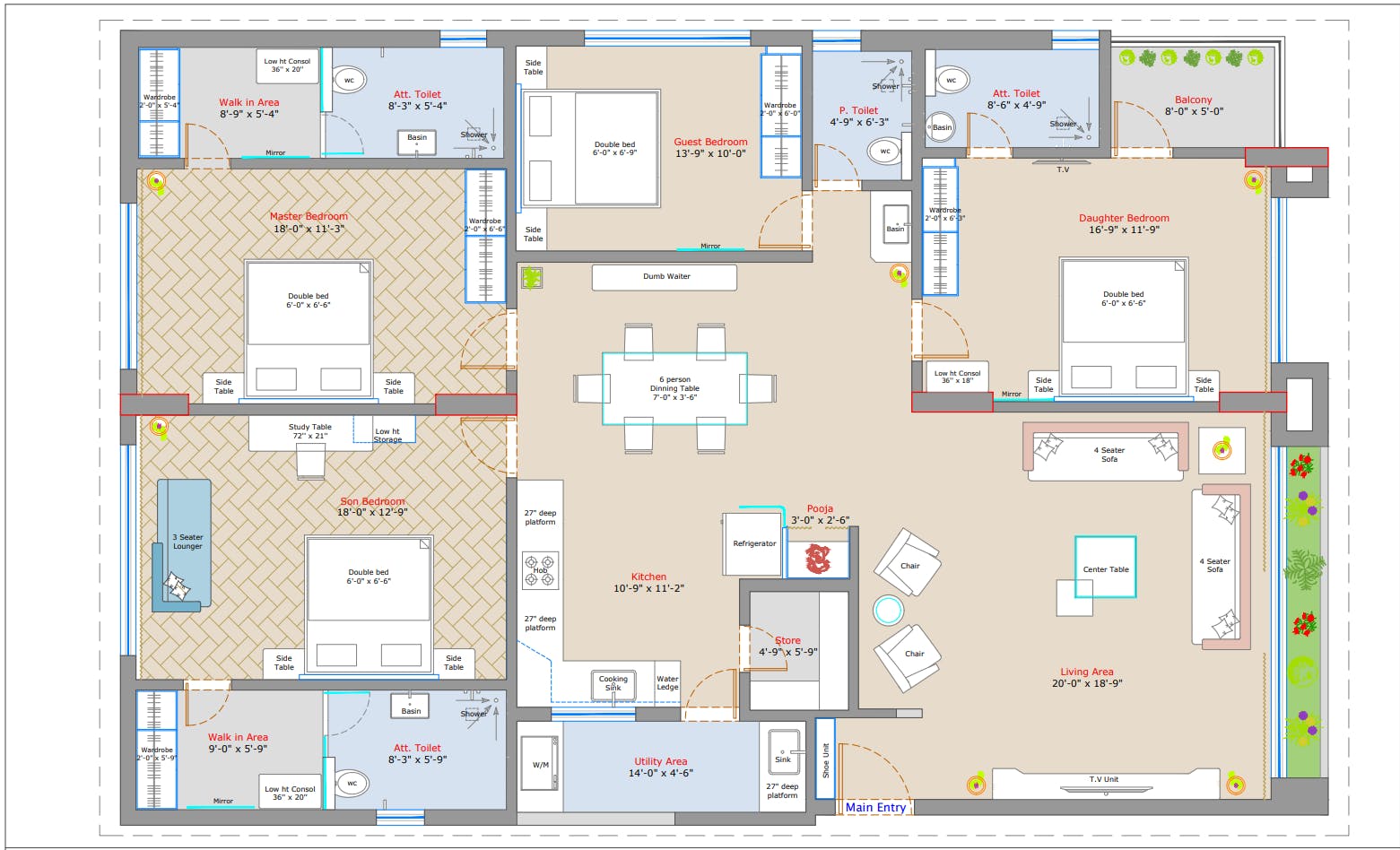
HouseSpaceAI: Upload 2D Floor Plans, AI Automatically Generates Interior Design Schemes
HouseSpaceAI is an AI interior design tool where users upload 2D floor plans or sketches and AI Agents generate multiple design schemes in minutes. Deep dive into its features, use cases, and real-world limitations.
Nathan Fielder Documentary Focuses on Elizabeth Holmes and the Theranos Scandal
Comedy director Nathan Fielder premieres documentary You Can See Everything at Telluride, offering a unique perspective on Elizabeth Holmes and the Theranos fraud scandal, exploring Silicon Valley's startup mythology and the boundaries of deception.