Automated Testing in Practice with Claude Code + Skills: Generate Complete Test Cases in 10 Minutes

Use Claude Code + Skills to auto-generate complete test cases from requirements in under 10 minutes.
This article demonstrates an automated test case generation solution using Claude Code and its Skills system. Through a three-stage pipeline — requirement decomposition, test point extraction, and case export — the approach transforms requirement documents into structured, traceable test cases in under 10 minutes, achieving over 10x efficiency gains compared to manual writing while maintaining comprehensive coverage and consistent quality.
Introduction
Writing test cases has always been one of the most time-consuming tasks in software testing. Manual creation is not only inefficient but also prone to missing edge cases and exception flows. This article presents an automated test case generation solution based on Claude Code and its Skills system — a three-stage intelligent processing pipeline that compresses what traditionally takes days of test case writing into under 10 minutes.
What Are Claude Code and the Skills System
Claude Code is an AI programming assistant developed by Anthropic, built on the Claude large language model. It can understand and generate code, documentation, and various other technical content. The Skills system is the core capability extension mechanism of Claude Code, allowing users to define structured skill templates (Skills) to automate domain-specific tasks. Each Skill is essentially a set of predefined prompt instructions and processing workflows that Claude Code can invoke. In the test case generation scenario, Skills act as a "task orchestrator" — defining the specific execution logic for each stage, including requirement decomposition, test point extraction, and test case export, enabling complex multi-step tasks to be automatically chained together. The key advantages of this mechanism are reusability and customizability: teams can tailor their own Skills templates based on their testing standards and workflow characteristics, achieving standardized automated test case generation.
Core Architecture: Three-Stage Processing Pipeline
This automation solution employs a clear three-stage processing architecture, with each stage serving a distinct purpose, progressively transforming requirement documents into executable test cases.
Stage 1: Requirement Document Decomposition and Review
The system precisely splits the original requirement document according to its chapter structure. For example, given a requirement document with 9 chapters, the AI automatically creates 9 corresponding folders while preserving the original requirement content. The system handles complex document elements, including tables and image-based requirement descriptions.
Technical Principles Behind Structured Requirement Processing
The automatic decomposition and conversion of requirement documents involves multiple Natural Language Processing (NLP) techniques. First is document structure recognition — the AI uses semantic analysis to identify chapter headings, paragraph hierarchy, table boundaries, and other document elements, leveraging the large language model's ability to understand document formatting. For table-to-text conversion, the system extracts row-column relationships and cell contents, transforming them into structured descriptions in a "field name: value" format. Processing flowcharts is more complex, involving image recognition (OCR) and process logic reasoning — the AI identifies nodes, connectors, and text annotations in diagrams, reconstructing them as textual flows like "Step 1 → Step 2 → Decision condition → Branch path." The requirement review functionality is based on pre-trained software engineering knowledge. The AI detects common issues such as ambiguous vocabulary (e.g., "appropriate," "as much as possible"), missing acceptance criteria, and incomplete exception handling descriptions, flagging them for attention. This structured processing is the foundation for ensuring accuracy in subsequent test point extraction.

Specifically, the system performs the following tasks:
- Converts tabular requirements into structured text descriptions
- Converts flowcharts into readable text-based steps
- Annotates each decomposed requirement with its original location (e.g., "Chapter 3 - Section 3.1")
- Includes contextual information such as module overviews and functional rules
- Automatically performs requirement reviews, flagging unclear or ambiguous requirement points
Stage 2: Test Point Extraction
After requirement decomposition, the system intelligently skips overview and descriptive chapters, focusing on extracting test points from actual functional requirements. Each test point follows a unified structured format:
- Associated module and chapter information
- Test point title and description
- Test steps and expected results
- Priority marking
- Test method description

Using "Guest Browsing Flow" as an example, the system generates multiple test points such as "Verify guest access to the mall homepage," with each test point automatically reviewed for completeness.
Stage 3: Test Case Generation and Export
The final stage invokes the export skill to transform test points into executable test cases. The system organizes cases by chapter and generates a summary document with case statistics, helping teams quickly grasp overall coverage.
Complete Test Case Elements and Industry Standards
A complete test case should contain multiple core elements — this is a universal standard in software testing. The test title and description enable quick identification of the case's purpose; the test type identifies categories such as functional testing, performance testing, or security testing; priority levels (P0/P1/P2/P3) guide test execution order, with P0 typically representing blocking issues in core flows; preconditions describe the necessary setup before test execution, such as user login status or database initial state; test data provides specific input parameters that should cover normal values, boundary values, and abnormal values; execution steps are actionable step-by-step instructions that must be clear and unambiguous; expected results define acceptance criteria and support automated assertions. Additionally, traceability is a critical principle in modern test management — each test case should be traceable to a specific requirement entry (Requirement ID) to enable requirement coverage analysis and change impact assessment. If AI-generated cases lack any of these elements, their usability in real projects is diminished.
Practical Case Study: From One Sentence to 8 Test Cases
Precision of Requirement Conversion
Taking Chapter 3 "Guest Browsing Flow" as an example, the original requirement contained just a single brief description:
Guests can browse the mall, view product details, add items to cart, bookmark products, and are guided to log in when attempting to place an order.
The system decomposed this sentence into 8 independent test cases:
- Verify guest can normally access the mall homepage
- Verify product category browsing functionality
- Verify search functionality
- Verify product detail page access
- Verify login guidance when adding to cart
- Verify login guidance when bookmarking products
- Verify login guidance when placing an order
- Verify login guidance when accessing user center

Each case includes complete elements: test title, test type, priority, preconditions, test data, execution steps, expected results, and even reserved columns for manual review and test point traceability.
Handling Complex Scenarios
For requirements like Chapter 4 "Product Details," which contain extensive tabular data, the system handles them equally well. It extracts page information, functional specifications, and other table contents, converts them into structured text, and automatically flags the following:
- Unclear requirement conditions
- Exception scenarios and boundary cases
- Acceptance criteria
This approach ensures that complex requirements aren't overlooked due to formatting issues.
Efficiency Comparison: 10 Minutes vs. Days
Time Cost
The entire automated pipeline — from issuing instructions to completing test case generation — takes less than 10 minutes. For a requirement document of the same scale, manually writing test cases typically takes several days. By conservative estimates, this represents an efficiency improvement of over 10x.

Quality Performance
The automatically generated test cases perform excellently across multiple dimensions:
- More comprehensive coverage: AI won't miss test scenarios due to fatigue or oversight
- Consistent formatting: All cases follow the same structural standards, making them easy to manage and execute
- Strong traceability: Every case can be traced back to its specific source in the original requirements
- Built-in review mechanism: Automatically flags ambiguous requirements, reducing rework later
Test Coverage and Scenario Completeness
Test Coverage is a key metric for measuring test adequacy, encompassing requirement coverage, code coverage, scenario coverage, and more. At the requirement level, test cases should cover all functional points, business rules, and acceptance criteria; at the scenario level, consideration should include happy paths, exception flows (e.g., network interruption, insufficient permissions), boundary conditions (e.g., null values, min/max values), and concurrency scenarios. When writing test cases manually, non-mainstream scenarios are often missed due to time pressure or cognitive blind spots — especially implicit business rules and system interaction scenarios. AI's advantage lies in its ability to systematically derive potential scenarios based on extensive software testing knowledge. For example, from the requirement "guest adds to cart," the AI automatically derives test points like "login guidance in unauthenticated state," "cart quantity limits," and "adding the same product repeatedly." This systematic thinking reduces the risk of testing blind spots, but manual reviewers should still focus on business-specific nuances to avoid generating overly generic cases that don't align with actual business logic.
Recommendations and Considerations
Suitable Scenarios
This solution is particularly well-suited for:
- Projects with clearly structured requirement documents
- Batch creation of functional test cases
- Maintenance and updates of regression test cases
- Phases where testing teams are short-staffed and need rapid case output
Key Reminders for Implementation
- Requirement quality is the foundation: The quality of input requirement documents directly affects the output. It's recommended to complete a round of requirement review before using the system
- Manual review is non-negotiable: AI-generated cases still require final review by test engineers, with a focus on business logic accuracy and contextual relevance
- Skills configuration needs tuning: The Skills for all three stages need to be tailored to project characteristics and team standards to achieve optimal results
Limitations of Automated Test Case Generation
Despite AI's impressive capabilities in test case generation, inherent limitations remain. First is depth of context understanding — AI's comprehension of business domain knowledge comes from training data, and it may not fully cover industry-specific implicit rules (such as regulatory requirements in finance or compliance processes in healthcare). Second is logical reasoning accuracy — for complex multi-system interaction scenarios and temporal dependencies, AI may produce logical contradictions or miss critical dependencies. Third is test data validity — AI-generated test data tends to be illustrative, and real projects require adjustments based on actual business data characteristics (such as ID validation rules or specific format constraints). Fourth is the gap in exploratory testing scenarios — AI excels at rule-based scenario derivation, but for exploratory testing and user experience testing that require creative thinking, human testers' intuition and experience remain essential. Therefore, AI-generated test cases are best used as a baseline, with test engineers supplementing business-specific scenarios and high-value exploratory cases on top of them.
Conclusion
The automated testing solution combining Claude Code with the Skills system achieves a high degree of test case automation through three stages: requirement decomposition, test point extraction, and case generation. It not only improves efficiency by an order of magnitude but also ensures case quality through structured processing and automatic review mechanisms. For testing teams, this is an AI implementation worth trying — it frees testers from repetitive documentation work, allowing teams to invest their energy in more valuable test strategy design and quality analysis.
Related articles
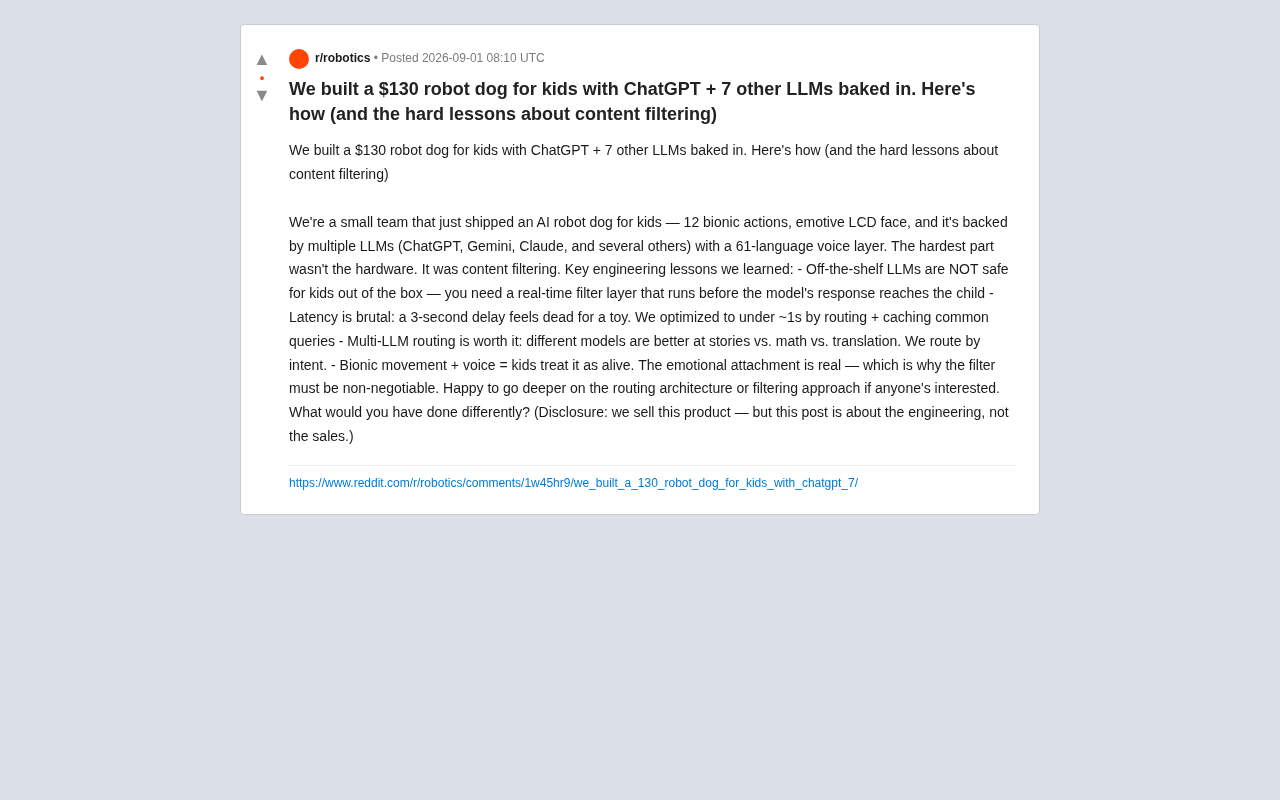
Building an AI Robot Dog for Kids: Multi-Model Routing, Content Filtering, and Latency Optimization
A $130 AI robot dog for kids integrates 8 LLMs with 61-language voice interaction. The team shares key engineering lessons on content safety filtering, multi-LLM intent routing, and sub-1-second latency optimization.

Can Omarchy Dominate the Sub-$1000 Laptop Market? An In-Depth Analysis
Omarchy, based on Arch Linux, shows unique advantages in the sub-$1000 laptop market. This analysis compares Windows and MacBook performance bottlenecks on low-spec hardware and examines why Omarchy enables cheap laptops to run smoothly, plus the ecosystem challenges and market prospects it faces.
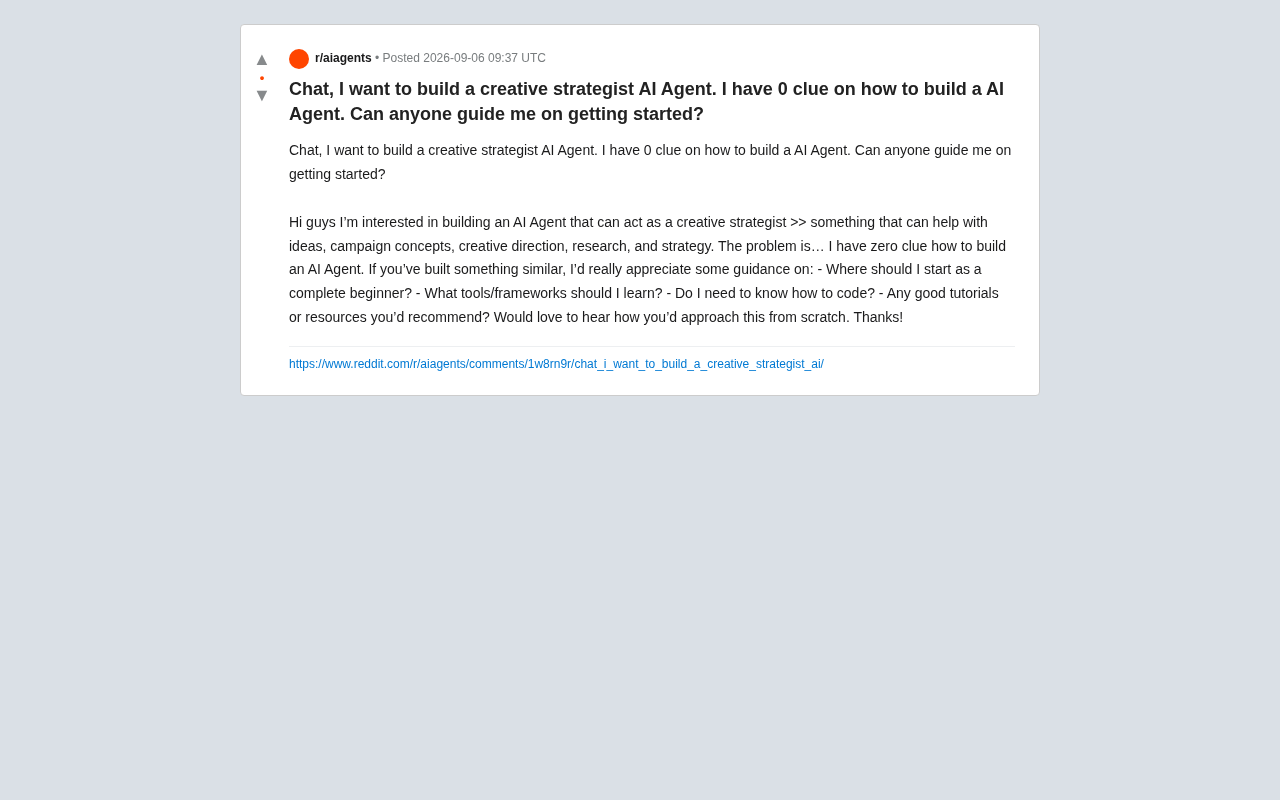
AI Agent Beginner's Guide: Building a Creative Strategy Intelligent Assistant from Scratch
A complete guide to building a creative strategy AI Agent from scratch. No coding required — use tools like Dify and Coze to quickly build an intelligent assistant.