AWS Agent Code Payments Explained: A Complete Guide to AI Agent Autonomous Payment Infrastructure
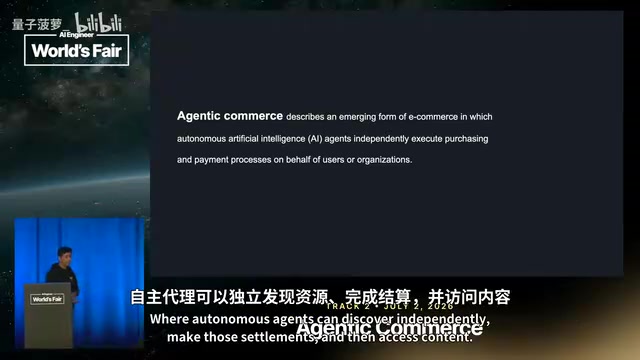
AWS Agent Code Payments enables AI agents to autonomously discover, authorize, and execute payments.
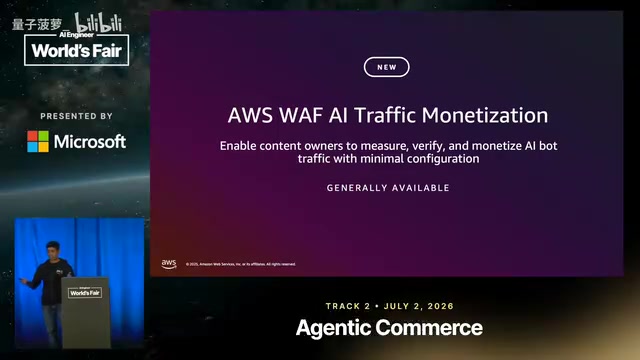
AWS Agent Code Payments, launched under the Bedrock suite, allows AI agents to autonomously handle payments via the X402 protocol with Coinbase and Stripe integration. Key features include KMS-protected wallet security, session-level budget controls, and protocol-agnostic design. Paired with WAF AI Traffic Monetization for edge-layer content monetization, the service addresses the critical gap between autonomous AI agents and paywall-gated resources, enabling a new era of machine-to-machine commerce.
The AI Agent Commerce Era: The Tipping Point Where Machine Traffic Surpasses Human Traffic
We are at a critical inflection point in AI development. Data shows that bot traffic has already surpassed human traffic on the internet, with 95% of it coming from AI Agents.
AI Agent Technical Overview: AI agents are intelligent software systems capable of autonomously perceiving their environment, making decisions, and executing tasks. Unlike traditional reactive AI, AI agents possess goal-oriented behavior, autonomous planning capabilities, and tool-use abilities. They can decompose complex tasks, invoke various APIs and tools, handle multi-step workflows, and even autonomously find alternative approaches when encountering obstacles. Current mainstream AI agent implementations include the ReAct (Reasoning-Action) framework based on large language models, AutoGPT-style autonomous loop architectures, and hybrid systems incorporating Retrieval-Augmented Generation (RAG). These agents are evolving from chat assistants into digital workers capable of independently completing complex business processes.
By 2027, an estimated 1 billion AI agents will be in operation, and 60% of enterprises will adopt agentic workflows.
But what happens when an AI agent hits a paywall? It stalls and can't proceed. The traditional solution is human intervention to input credit card information or API keys, but this manual friction fundamentally undermines the core value of autonomous agents.
For content providers, this creates a dilemma:
- Block bot traffic: Lose AI-driven content discovery and partnership opportunities
- Allow unrestricted bot access: Infrastructure costs skyrocket with no revenue or attribution
Traditional subscription models completely break down in the face of millions of microtransactions — a $0.25 minimum transaction fee plus 2.5% processing fees means costs are up to 250x higher for transactions measured in cents or sub-cents.
AWS Agent Code Payments: Enabling AI Agents to Complete Payments Autonomously
AWS officially launched Agent Code Payments at re:Invent 2024 as an innovative product under the Bedrock suite, allowing AI agents to autonomously discover, authorize, and execute payments with just a few lines of code. The service partners with Coinbase and Stripe, enabling developers to integrate wallets from both platforms.
Core Architecture
The design philosophy of Agent Code Payments is to decouple agent infrastructure from payment infrastructure. This architectural decision is critical because AI agent skills can be compromised and inputs can be maliciously manipulated. Through decoupling, the payment process operates at a deterministic layer without touching the agent's non-deterministic path.
Key technical features include:
Wallet Security Management: Agents can never access private keys. Keys used when importing wallets are stored in secure token wallets protected by KMS, eliminating the possibility of agents "splurging" by design.
KMS Security Mechanism Deep Dive: AWS Key Management Service (KMS) is a cloud-based key management infrastructure that provides FIPS 140-2 Level 2/3 validated Hardware Security Module (HSM) protection. KMS uses an Envelope Encryption mechanism: the data key that actually encrypts the private key is itself encrypted by a KMS master key, creating multiple layers of defense. In the Agent Code Payments context, wallet private keys never exist in plaintext in memory or storage. All cryptographic operations are completed within KMS's security boundary — even AWS operations personnel cannot access the original keys. This design adheres to zero-trust security architecture principles, ensuring that even if an AI agent is compromised, it cannot directly obtain payment credentials.
Session-Level Budget Controls: Developers can programmatically set maximum amounts and expiration times for each payment session. For example, you can limit an agent to spending no more than $5 within 30 days, with enterprise-grade budget guardrails fully under your control.
Protocol-Agnostic Design: Currently supports the X402 protocol (a modern implementation of HTTP 402 status codes), with plans to support additional emerging payment protocols in the future.
X402 Protocol Background: The HTTP 402 Payment Required status code was defined as early as 1997 in the HTTP/1.1 specification but remained in a "reserved for future use" state for decades. Originally envisioned for digital payment systems, it went virtually unused for over twenty years due to the lack of unified standards and payment infrastructure. The X402 protocol is a modern implementation specification of HTTP 402, managed by the Linux Foundation. It defines standardized payment request formats, authentication mechanisms, pricing information delivery methods, and settlement confirmation flows. The protocol design accounts for modern requirements including blockchain settlement, traditional payment gateway compatibility, and micropayment scenario optimization. With backing from tech giants like Coinbase, AWS, Google, Stripe, Anthropic, Cloudflare, and Circle, X402 is poised to become the de facto standard for machine-to-machine (M2M) payments.
Payment Workflow in Detail
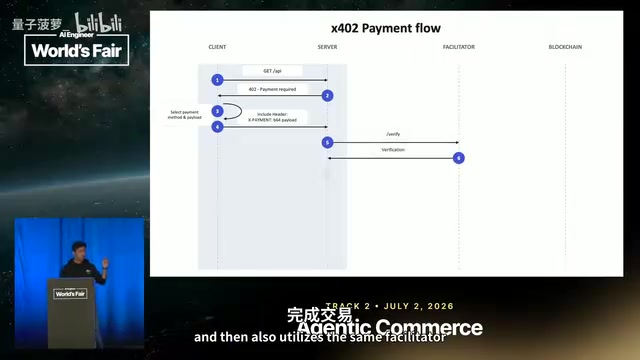
When a user sends a request to an agent and the agent receives an HTTP 402 response while calling a tool or accessing a resource, Agent Code Payments automatically steps in to handle the transaction. The entire process is completely transparent to the agent:
- Client initiates the request
- Server returns a payment requirement (402 response)
- Client automatically selects a payment method
- Server verifies through a facilitator and completes on-chain settlement
- Requested content is returned
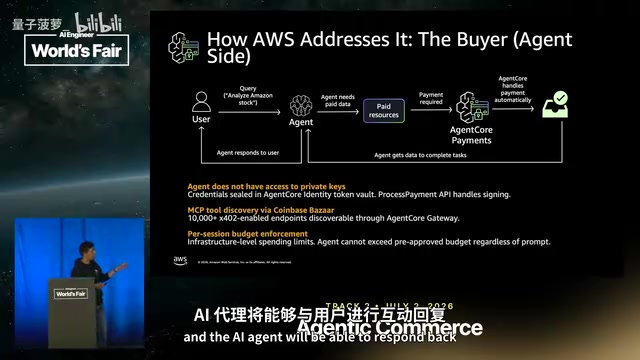
You may not have noticed, but the agent code requires zero modifications. Developers can use any model and framework — the payment layer operates independently. Through the Agent Code Gateway service, agents can also access Coinbase's discovery service, which contains over 10,000 tradeable endpoints.
WAF AI Traffic Monetization: A Powerful Tool for Content Providers
AWS simultaneously released the WAF AI Traffic Monetization service, enabling content providers to monetize AI traffic at the edge layer without modifying their origin server infrastructure.
Intelligent Bot Detection and Classification
AWS Web Application Firewall now supports detection of over 650 bot types, including major AI crawlers like Perplexity, GPTBot, ClaudeBot, and GoogleBot. The system not only identifies bot types but also understands access intent — whether for model training, RAG retrieval, or other purposes.
Going further, WAF supports bot verification. If you've established a partnership with an AI company, you can set differentiated pricing for verified bots.
Multi-Dimensional Flexible Pricing Strategies
WAF AI Traffic Monetization supports flexible pricing based on multiple dimensions:
- Path differentiation: The /blog path can have different rates than /research or API endpoints
- Identity differentiation: Verified and unverified bots use different pricing
- Intent differentiation: Model training usage can be charged more than search usage
- Human vs. machine differentiation: Human access can be free or use a different pricing model
These rules can be flexibly combined using AND/OR logic in WAF rules. Publishers retain 100% of revenue with no subscription fees or transaction charges.
Edge Deployment Architecture: Deployment only requires adding WAF to CloudFront (AWS's CDN service) and can be completed with a few clicks or through infrastructure as code. Amazon CloudFront is AWS's global content delivery network (CDN) service with over 450 edge locations worldwide. In the WAF AI Traffic Monetization context, CloudFront's edge locations serve not only for content delivery but also as enforcement points for traffic monetization. By integrating WAF rules at the edge layer, the system can complete bot identification, payment verification, and access control before requests even reach the origin server. This edge-processing architecture means that even when facing massive AI crawler traffic, origin infrastructure remains unaffected, and content providers don't need to modify existing application code or server configurations.
Market Data and Core Use Cases
Coinbase data shows that Agent E-commerce market transaction volume reached $50 million over the past 12 months, completing over 170 million transactions. On the Base chain, average settlement time is just 200 milliseconds, with per-transaction costs of approximately 0.1 cents — ideal parameters for micropayment scenarios.
Base Chain Technical Advantages: Base is an Ethereum Layer 2 blockchain launched by Coinbase, utilizing Optimistic Rollup technology. Layer 2 solutions achieve orders-of-magnitude throughput improvements and significant cost reductions by moving transaction execution off-chain and only submitting final state to the Ethereum mainnet. Base's 200-millisecond settlement time and 0.1-cent transaction costs make it an ideal choice for micropayment scenarios. By comparison, the Ethereum mainnet has an average block time of 12 seconds, and gas fees can reach several dollars during network congestion. Base inherits Ethereum's security while delivering performance approaching that of centralized systems. This performance profile is critical for AI agent commerce — agents need to complete payment verification in milliseconds and can't wait for block confirmations like human users.
Current primary use cases include:
- LLM Inference Resource Procurement: AI agents purchase compute resources on demand
- On-Demand Web Scraping Services: Agents autonomously pay for data access rights
- Research Agent Knowledge Base Access: Paid access to specialized data sources
- Inter-Agent Resource Exchange: Peer-to-peer transactions between AI agents
- MCP Service Monetization: Offering paid services through the Model Context Protocol
MCP Protocol Deep Dive: Model Context Protocol is an open protocol standard released by Anthropic in November 2024, designed to standardize how AI applications connect to external data sources and tools. MCP defines unified interface specifications for clients (AI applications), servers (tool/data providers), and the transport layer. Under the MCP architecture, developers can package internal APIs, databases, file systems, and other resources as standard MCP servers for any compatible AI application to invoke. This is analogous to RESTful API standards in web development but specifically optimized for AI context augmentation scenarios. MCP supports resource discovery, dynamic prompt engineering, and tool invocation capabilities. By monetizing MCP services through Agent Code Payments, content providers can sell data access rights directly to AI agents, creating a new B2A (Business-to-Agent) business model.
The Bedrock Agent Core Ecosystem at a Glance
Agent Code Payments is a key component of the AWS Bedrock Agent Core ecosystem. This ecosystem provides developers with a comprehensive suite of AI agent development and operations capabilities:
- Build AI agents using any model
- Enhance context through managed knowledge bases and web search
- Convert internal APIs to MCP format for external exposure
- Use Agent Core Runtime for large-scale isolated deployments (each request runs in an independent micro-virtual machine)
- Continuously optimize agent performance through evaluation tools
Micro-Virtual Machine Isolation Architecture: Micro-virtual machines (microVMs) are a lightweight virtualization technology popularized by AWS's open-source Firecracker project. Unlike traditional virtual machines that require seconds to start and hundreds of MBs of memory, microVMs can boot in 125 milliseconds with a memory overhead of approximately 5MB. They use KVM virtualization technology to provide full kernel-level isolation with security approaching that of traditional VMs. Bedrock Agent Core Runtime uses microVMs to create independent execution environments for each agent request. This "Function-as-a-Service" (FaaS) architecture ensures complete isolation between agent instances of different users or sessions, preventing data leaks and resource contention. Even if an agent instance is compromised by an attacker, the impact is confined to a single microVM and cannot spread laterally.
This marks a paradigm shift from "human-in-the-loop" to "human-on-the-loop" and even "human-out-of-the-loop." AI agent commerce is no longer a proof of concept — it's a reality backed by clear technical pathways and infrastructure support.
Key Takeaways
Related articles
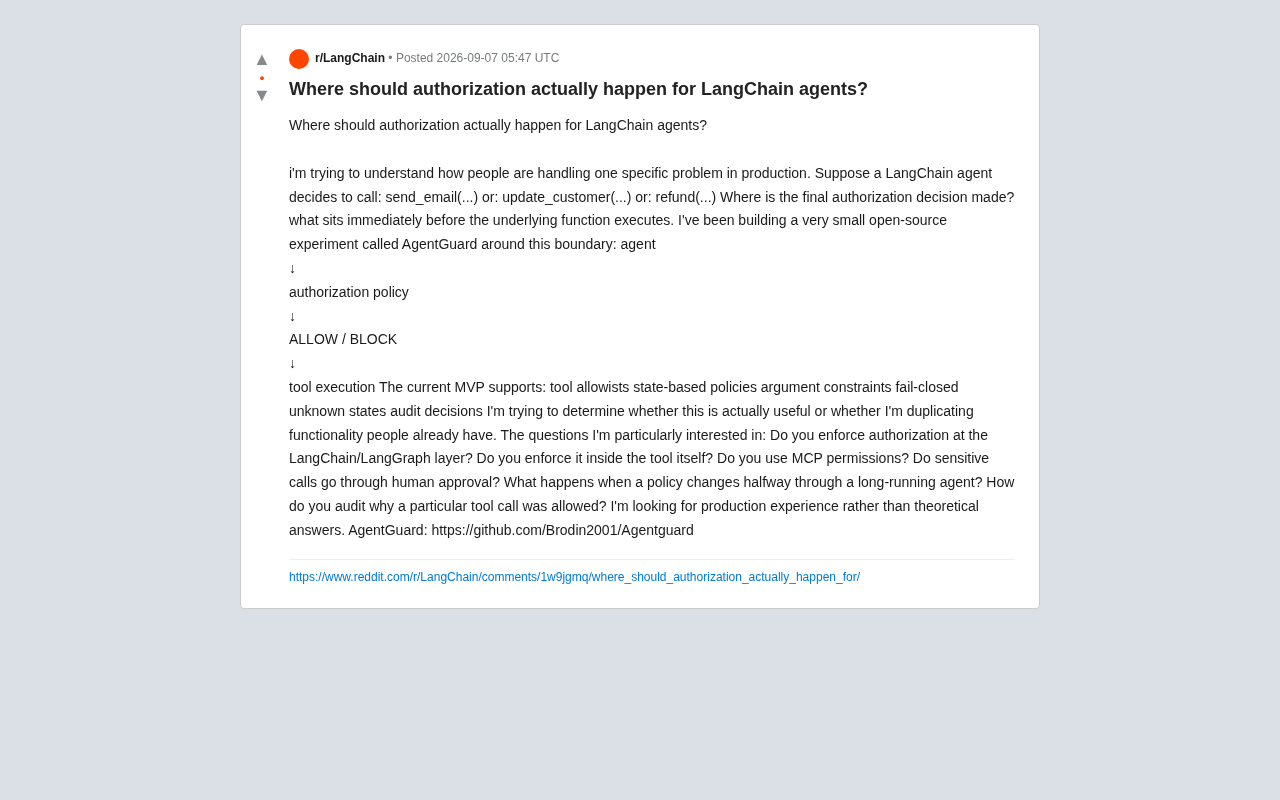
LangChain Agent Authorization Control: Four Strategies and Production Practices
Explore LangChain Agent authorization challenges in production, analyzing tool whitelisting, context-aware policies, and comparing four approaches: framework interception, tool self-validation, MCP permissions, and human-in-the-loop.
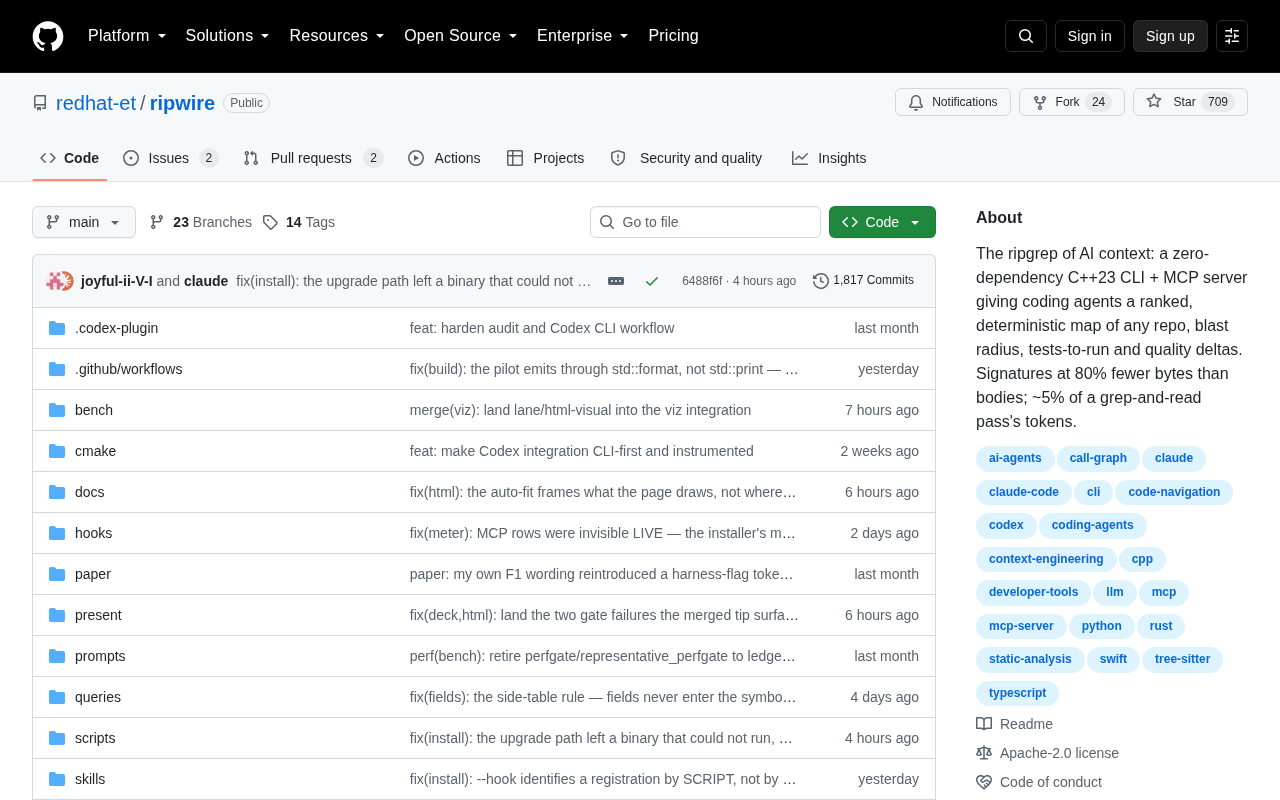
ripwire: An Open-Source Tool That Maps Codebases for AI Programming Assistants
ripwire is an open-source tool providing structured codebase context maps for AI programming assistants via CLI and MCP protocol, addressing AI's lack of global vision in large codebases.

Q&A Chunking for RAG in Practice: Design Insights for a Tax Compliance Assistant
Deep dive into Q&A-based chunking for RAG systems: building high-accuracy domain-specific Q&A systems through semantic unit chunking, similarity threshold filtering, and mandatory source attribution. Complete technical implementation included.