B7R Round Table Air Combat: Virtual Battlefield Narratives in the Age of AI Video Generation
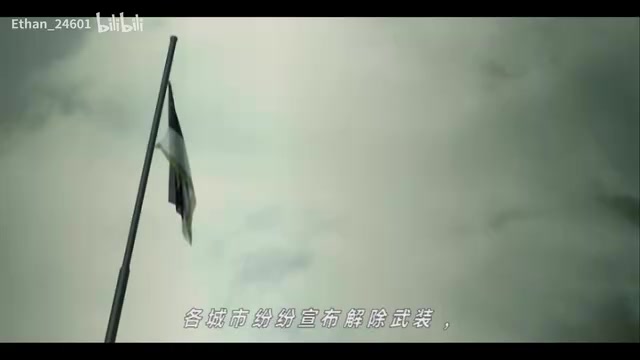
Using the B7R Round Table Air Combat video as an example, this explores the collaborative boundaries between game narrative and AI video generation.
Using a Bilibili Ace Combat Zero B7R Round Table Air Combat video as a starting point, the article analyzes the similarity between its multi-source recollection narrative and AI multi-source information fusion, noting that highly visual textual descriptions are ideal input for AI video generation, while emotional logic and generational narrative arcs still require human design. It further discusses practical paths for AI-ifying game material, including fine-tuning models to understand specific visual language and encoding generation parameters such as the round table motif, emphasizing that maintaining narrative tone and visual style consistency is the core challenge. It ultimately proposes a collaboration framework where humans handle emotional depth and AI handles visual efficiency.
When Game Narrative Meets AI: The Video Expression of B7R Round Table Air Combat
"Time to dive into the fireworks"—this title from a Bilibili video, paired with the description "Second Round Table Air Combat," takes us back to the fate-laden B7R airspace of Ace Combat Zero. Set against the Belkan War, the video pieces together the legendary image of the "Demon" mercenary pilot through the recollections of multiple ace pilots. This type of content has a stable audience on Bilibili, and today it is producing a fascinating chemical reaction with AI video generation technology.
The "round table" motif that recurs throughout the video material—B7R airspace as a symbol of Belka's political, military, and industrial power—happens to correspond to a core proposition of AI-generated content: how to use technical means to construct virtual battlefield narratives with emotional depth.
Ace Combat Zero is an air combat simulation game released by Namco (now Bandai Namco) in 2006, with its story revolving around the fictional Belkan War. B7R airspace, called the "Round Table" by players because of its circular terrain, is the stage for many ace duels in the game and symbolizes Belka's political and military core. The game is known for its "interview-style" narrative, piecing together the truth through post-war interview fragments with pilots from various countries. This nonlinear structure of memory fragments holds iconic status in the history of game narrative and provides natural material for secondary creation by video creators.
Narrative Puzzle from Multiple Perspectives: How AI Understands War Memory
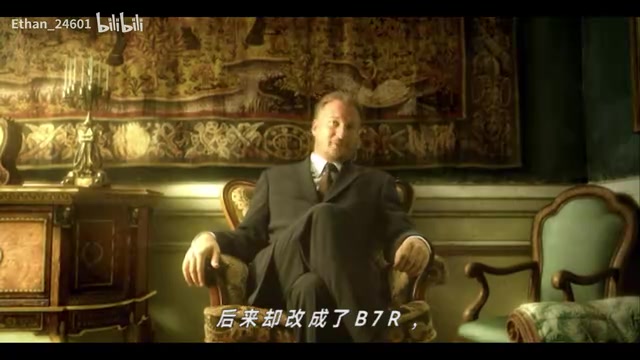
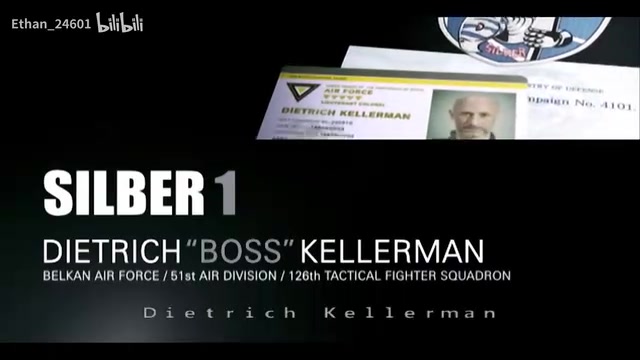
The video's core technique is "multi-source recollection"—through the testimonies of former Belkan ace pilots such as Dimitri Heinrich ("Blue Heron"), Reiner Altman ("Gelb T 2"), and Dietrich Kellerman ("Silver Team Commander"), the image of the "Demon" mercenary is cross-verified. This narrative structure is highly similar to current AI analysis models of multi-source information fusion: fragmented information from different sources, after cross-validation, forms a three-dimensional understanding of the same event.
According to "Blue Heron's" recollection in the video, when he first faced the "Demon," he sensed the other's hesitation—"a weakness that could be exploited"—but was ultimately shot down. The "Silver Team Commander" offers a more mature judgment: "What matters is letting go of hatred, surviving, and holding fast to the rules you set for yourself." This difference in generational perspective precisely reflects the multi-layered semantic information AI must process when understanding complex narratives.
"Multi-source information fusion" in the AI field generally refers to aligning, associating, and verifying information from different sensors, databases, or text sources to reduce the uncertainty of any single source. In natural language processing, this resembles multi-document summarization or fact-checking: the model must identify consensus and conflict among different accounts and assess source reliability. The cross-verification of pilot testimonies in the video is essentially a manually completed narrative fusion, and current large language models can already perform similar tasks at a preliminary level—extracting consistent entities and events from multiple text fragments and generating a synthesized narrative—though their ability to identify "unreliable narrators" remains limited.
From Text to Image: The "Air Combat Aesthetics" of AI Video Generation
The air combat scenes described in the video—"just two aircraft, him and an eagle, yet our main force had no chance of winning"—are exactly the type of highly visual textual description that current AI video generation models handle best. From missile warning sounds to dogfights over the city, the text provides rich sensory cues, and AI models can generate coherent visual sequences based on them.
Interestingly, the video script repeatedly uses the phrase "I could have ended that battle sooner." This emphatic narration may be processed in AI video generation as visual prompts for rhythm reinforcement or emotional layering. For content creators, understanding how AI parses such literary descriptions is key to improving generation quality.

Real Emotions on the Virtual Battlefield: The Boundaries and Possibilities of AI Narrative
The "Demon" is called "one blessed by the goddess of war," and ground personnel rush to watch him sortie—these descriptions give the virtual character real emotional weight. Through interview-style narrative, the video creator transforms the game's fictional war into memory fragments with a sense of historical texture.
For AI content creation, this narrative strategy offers an important lesson: technology can generate images, but emotional logic still requires human design. In the video, "Blue Heron" sighs that "a new generation has taken over the sky," while the "Silver Team Commander" admits that "my era is over." These narrative arcs of generational succession are deep structures that current AI struggles to construct autonomously.
The AI Path of Content Creation: From Game Material to Generative Narrative
The popularity of this type of Bilibili video content reveals the application potential of AI video generation tools in vertical domains. Game background material, character dialogue text, recollection-style narration—these elements can be decomposed and recombined by AI models into new video content. But the core challenge lies in how to maintain the original work's narrative tone while generating a consistent visual style.
From a practical perspective, creators can use such video scripts as training material and fine-tune AI models to understand a specific game's visual language. B7R airspace, the round table motif, the historical feel of the Belkan War—these concepts need to be encoded as reproducible generation parameters. And the repeatedly emphasized phrases in the video provide anchors for emotional tagging by AI.
Fine-tuning refers to continuing training a pretrained model on a small, domain-specific dataset so that the model adapts to a particular style or task. For game video creation, creators can collect screenshots, cutscenes, and scripts from the game to build an "image-text" paired dataset, and use lightweight fine-tuning techniques such as LoRA to let the generative model learn the terrain features, aircraft liveries, and color atmosphere of B7R airspace. However, copyright and fair use boundaries must be noted: derivative generation from game material may involve the original work's copyright, and the scope of authorization should be confirmed before commercial use. In addition, maintaining visual consistency also requires fixed random seeds, reference images, and style prompts.
Conclusion: When the Virtual Battlefield Becomes a Testing Ground for AI Narrative
"Time to dive into the fireworks" is not only an air combat command but also seems like a call to action for AI content creators. B7R Round Table Air Combat, a classic scene in gaming history, is being reinterpreted jointly by video creators and AI technology. On this virtual battlefield, humans are responsible for emotional depth and narrative logic, while AI handles visual generation and efficiency gains—the boundary of their collaboration is precisely one of the most worthwhile areas to explore in content creation today.
Background Supplement
Current mainstream AI video generation models (such as Sora, Kling, Runway Gen-3, etc.) typically take text prompts as input and generate consecutive frames through diffusion models or spatiotemporal Transformer architectures. The model's handling of sensory descriptions such as "missile warning sounds" and "dogfights" depends on the distribution of text-visual pairs in the training data. However, the model does not truly "understand" air combat physics; it imitates visual patterns in the training data. Therefore, creators need to decompose literary descriptions into specific cinematic language (such as camera position, lighting, direction of motion) to obtain controllable generation results. Repeated sentence patterns can serve as weight reinforcement in prompts, guiding the model to increase visual density or rhythm changes in specific passages.
Related articles

Doha DECC New Year's Eve Fireworks on Camera: Crowds, Drones, and the Metro Station Scene
A Bilibili creator films the Doha DECC New Year's Eve fireworks—from the metro underground passage to the DECC viewing area—documenting crowd density, the drone show, and the real restrictions on filming in public spaces, with on-site screenshots and observations.

Three-Way All-In Showdown: A 43K Pot Collision in Texas Hold'em
In No Gamble, No Future, a three-way all-in creates a 43K pot. Wolfgang's KK, Marcus's 10-9 suited, and Randy's A-Q clash; running it twice splits the pot. Analysis of key decisions and player psychology.

Custom AI Interpretation Methods: Why Can't ChatGPT and Claude Learn Them?
A Reddit user shared an experiment with a custom AI interpretation method, trying to get ChatGPT and Claude to apply unique rules but failing, exploring the limits of general large models in learning highly customized methodologies and the possibility of fine-tuning.