Backend to AI Agent Engineer: Breaking Down Core Competencies for P7 Interviews
Backend to AI Agent: P7 interview core competencies and Anthropic ecosystem advantages decoded
For backend developers with 6-8 years of experience, transitioning to AI Agent engineer requires more than learning Prompt Engineering. P7 interviews at major companies focus on three core areas: strong validation with tools like Pydantic, semantic caching for cost optimization, and state persistence with checkpoint mechanisms. The Anthropic ecosystem offers unique advantages through Skills, MCP protocol, and Context Caching. Success lies in applying engineering thinking to manage model uncertainty.
The Cognitive Trap Behind Career Anxiety
In the current AI wave, many backend developers with 6-8 years of experience find themselves in career anxiety: their existing architecture experience seems to be depreciating, while the emerging AI Agent field feels overwhelming.
AI Agent Technical Background: AI Agents (intelligent agents) are AI systems capable of perceiving their environment, making autonomous decisions, and executing tasks. Unlike traditional single-turn Q&A large model applications, Agents possess capabilities like Tool Use, multi-step reasoning, and state memory, allowing them to complete complex multi-turn tasks like human assistants. Current mainstream Agent frameworks include LangChain, AutoGPT, MetaGPT, and others, while enterprise applications focus more on Agent controllability, stability, and cost efficiency. From a technical architecture perspective, Agents typically comprise three core modules: Planning, Memory, and Tool Use—highly aligned with backend system layered architecture thinking.
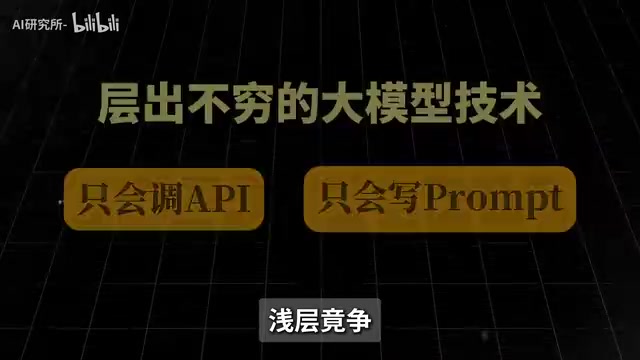
Many mistakenly believe that learning to call APIs and writing a few Prompts is sufficient for successful transition. This is a typical cognitive trap. The limitations of Prompt Engineering are evident: while useful in prototype development, it has obvious problems—heavily dependent on trial-and-error experience, lacking engineering safeguards; Prompts may fail after model upgrades, with high maintenance costs; unable to fundamentally solve model randomness and uncontrollability; difficult to handle complex business logic and edge cases. In production environments, over-relying on Prompt optimization is like patching a leaking pipe with duct tape—treating symptoms, not the root cause.
In fact, when major companies interview P7-level AI Agent engineers, the core assessment is not about how many prompts you can write, but how to leverage backend engineering thinking to manage large model uncertainty. If you have solid backend experience but spend all your time studying Prompt techniques, you're missing the forest for the trees.
The Essential Positioning of AI Agent Engineers
From API Consumer to Infrastructure Builder
AI Agent engineers are not simple "package users" but AI infrastructure builders. The core problem this role needs to solve is: how to make a probabilistic model that fundamentally "drops the ball at any moment" run stably and reliably in production environments.
This requires engineers to possess the following core capabilities:
- Engineering stability mindset: Design fault tolerance mechanisms and degradation strategies
- Strong type constraint capability: Constrain model outputs through code logic
- Cost optimization awareness: Reasonably use caching to reduce inference costs
- Security boundary control: Prevent model behavior from crossing boundaries and causing business risks
Backend Experience as the True Competitive Moat
The value of six years of backend experience lies not in how many lines of code you can write, but in your deep understanding of system stability, maintainability, and scalability. These capabilities are precisely the most scarce in current AI Agent engineering—those who can truly stabilize systems in production are far more valuable than those who can merely call APIs.
Three Core Assessment Areas in P7 Interviews
Assessment Area 1: Strong Validation and Format Fallbacks
Large model JSON outputs frequently have errors—an extra comma or missing bracket can cause parsing failures. The junior approach is to continuously optimize Prompts, while P7 engineers should discuss engineering-level solutions:
Use strong validation tools like Pydantic to enforce constraints: Pydantic is the most popular data validation library in the Python ecosystem, implementing runtime strong type checking based on Python type hints. In AI Agent scenarios, its value lies in: defining strict Schema constraints on model output formats; automatic type conversion and data cleansing; providing detailed error messages for debugging; deep integration with frameworks like FastAPI. For example, defining a UserInfo model class—even if the large model returns age as the string '25' in JSON, Pydantic can automatically convert it to integer 25, throwing clear exceptions if conversion fails. Define strict Schemas at the code level; model outputs must pass type validation before entering business logic.

Design logical fallback mechanisms: If the model fails to output the correct format three times, you need a deterministic fallback logic to catch the business case rather than letting the system crash directly.
This reflects backend engineers' defensive programming mindset—never trust external inputs, even if that "external" is a multi-billion-dollar large model.
Assessment Area 2: Semantic Cache
Many people only know about vector databases when RAG is mentioned. RAG (Retrieval-Augmented Generation) is the current mainstream technology for solving large model knowledge timeliness and domain-specific problems. Its workflow involves: chunking documents and converting them to vectors stored in vector databases (like Pinecone, Milvus); when users ask questions, first retrieve relevant document fragments; inject retrieval results as context into Prompts; large models generate answers based on augmented context. Core challenges include chunk granularity control, similarity threshold setting, context window limits, and retrieval result ranking.
But semantic caching is a high-frequency topic in P7 interviews, addressing the more practical issue of cost.
Core Problem: If two users ask essentially the same question with different wording (like "how to reset password" and "what to do if I forgot my password"), should you make the model reason again? This wastes computational costs and reflects architectural design negligence.
Solution:
- Perform vectorized similarity matching on user inputs. Vectorization (Embedding) is the process of converting text into high-dimensional vectors, enabling computers to perform semantic understanding. Mainstream Embedding models like OpenAI's text-embedding-3 and Zhipu's embedding-2 can encode a sentence into 1536-dimensional or higher-dimensional vectors.
- Set thresholds; directly return cached results if similarity exceeds 85%. Semantic similarity is typically calculated using Cosine Similarity, with values ranging from [-1,1]—closer to 1 indicates higher semantic similarity. Setting a threshold of 0.85 means: only when the cosine of the vector angle between a new question and a cached question exceeds 0.85 do we consider them semantically close enough to reuse answers. This threshold needs tuning based on business scenarios—setting it too high reduces cache hit rates, while too low may return irrelevant answers.
- Combine business logic to design cache invalidation strategies
Semantic caching can not only reduce inference costs by 90% but also significantly improve response speed—an essential cost optimization capability for P7 engineers.
Assessment Area 3: State Persistence and Resume from Checkpoint
What happens when an Agent executing a long task gets interrupted? Never say "retry with time.sleep"—this will make interviewers think you're still at the script kiddie stage.
Correct Approach:
- Design a state machine, breaking task execution into multiple Stages
- Create Checkpoints after each Stage completes, serializing state into Redis
- After abnormal interruptions, resume from the most recent Checkpoint rather than restarting from scratch
Checkpoint is a classic design pattern in distributed computing and fault-tolerant systems. In stream computing frameworks (like Flink, Spark Streaming), systems periodically serialize processing state to persistent storage (like HDFS, S3); upon failure, they can recover from the most recent Checkpoint. Applied to AI Agent scenarios: decompose long tasks into multiple Stages (like information collection → data analysis → report generation), serialize current state (including intermediate results, execution progress, model outputs) into Redis or databases after each Stage completes. If Stage 3 fails, the system can directly resume from Stage 2's Checkpoint, avoiding repeated calls to expensive large model APIs.
This reflects the reliability engineering mindset of distributed systems—the core competitive advantage for backend engineers transitioning to AI Agent roles.
Hardcore Advantages of the Anthropic Ecosystem
Anthropic is an AI safety company founded by former OpenAI Research VP Dario Amodei. Its flagship Claude series models are known for long context windows (up to 200K tokens) and stronger safety alignment. Compared to OpenAI's GPT series, Claude performs better in refusing to generate harmful content, following complex instructions, and understanding long documents. Unique advantages of the Anthropic ecosystem include innovations like the Skill mechanism, MCP protocol, and Context Caching. For enterprise applications, Claude's controllability and cost optimization capabilities make it a preferred choice for building production-grade Agents.
Skill Mechanism: Atomized Capability Encapsulation
The Skill mechanism provided by Anthropic's Claude platform is one of the most research-worthy directions currently. A Skill is essentially an atomized execution script with Schema, valuable because it:
- Encapsulates complex capabilities into standardized interfaces
- Constrains inputs and outputs through Schemas, reducing model error probability
- Supports permission control, preventing model misoperations
Practical Scenario: Develop a static analysis Skill for the company's internal codebase, allowing AI to safely scan code quality issues while never accidentally deleting code due to improper permission control.

MCP Protocol: Plug-and-Play Thinking
While Model Context Protocol (MCP) is still evolving, it has already demonstrated enormous potential. MCP is a standardized protocol proposed by Anthropic to solve the problem of large models securely accessing enterprise private data. Traditional approaches directly inject sensitive data into Prompts, risking data leakage and making fine-grained permission control difficult. MCP's design philosophy is: encapsulate data sources as independent Servers, exposing standardized CRUD interfaces; models access data through protocol calls to these interfaces rather than directly touching raw data. Each MCP Server can implement its own authentication logic, audit logging, rate limiting, etc.
Its core is encapsulating private data into standardized Servers, allowing models to access enterprise internal resources safely and controllably.
Backend Engineers' Natural Advantage: You already understand microservice architecture, interface design, and permission isolation—these capabilities directly transfer to MCP Server development as a dimensional reduction strike. This is highly similar to BFF (Backend for Frontend) and API Gateway patterns in backend development—engineers familiar with microservice architecture can seamlessly migrate these design experiences to quickly build secure and controllable enterprise-grade AI applications.
Context Caching: Key to Cost Control
Anthropic's context processing fees are substantial; P7 engineers must master caching at the API call layer:
- Identify frequently repeated context fragments
- Create Break Points at the request layer, reusing processed Tokens
- Design reasonable caching strategies that can save companies up to 90% of inference costs
This is not just an optimization technique but cost awareness—essential business sense for P7-level roles.
The Right Path for Transition
Create AI Results Within Your Existing Team
The smartest transition approach is not suddenly switching jobs but using AI to solve your team's existing dirty work:
- Find an old module full of if-else statements
- Leave the original code untouched, encapsulate it as a Skill through Tool Use
- Record a demo showing effectiveness improvements

This is giving your team the political achievement of "embracing AI"—leadership will proactively let you lead the charge in new directions.
Three Hardcore Capabilities Essential for Interviews
If you cannot answer the following three points when interviewing for P7, the probability of passing is extremely low:
1. Context Caching
The core cost optimization technology mentioned earlier—you must be able to draw architecture diagrams on the spot and clearly explain cache hit strategies and invalidation mechanisms.
2. Persistent State Machines
If a task gets interrupted halfway, how to implement resume from checkpoint through Checkpoint mechanisms—this is a fundamental skill in reliability engineering.
3. Automated Evaluation Systems
Stop judging effectiveness by eye—learn to use Ragas or DeepEval to set KPIs for each Agent step, establishing quantitative quality assurance systems.
Quality assurance for AI systems cannot rely on manual spot checks; automated evaluation systems are needed. Mainstream frameworks include: Ragas (focused on RAG system evaluation, providing metrics like Context Relevance and Answer Faithfulness), DeepEval (supporting multi-dimensional evaluation including G-Eval and Hallucination Detection), and LangSmith (LangChain's official observability platform supporting trace tracking and performance analysis). Evaluation workflows typically involve: preparing annotated datasets (including questions, standard answers, scoring criteria) → automated test set execution → calculating multi-dimensional metrics → generating evaluation reports. P7 engineers need to treat automated evaluation of AI systems as seriously as unit testing, establishing quality gates in continuous integration (CI).
Engineering Capability is the Scarce Resource
The AI Agent field is developing rapidly but also mixed with good and bad players. 70% of real work is actually writing extremely important but extremely tedious backend fault-tolerant code. Engineers who can truly stabilize systems are far more scarce than those who can merely call packages.
If you have solid backend experience, don't be misled by those superficial "Prompt Engineer crash courses." Your value lies in using engineering thinking to manage AI uncertainty, building reliable production-grade systems, and saving companies real computational costs.
Find a module that makes you want to throw your keyboard, try encapsulating it with a standard MCP interface, or design a complete fault tolerance and degradation solution. This is the correct path to extending your career longevity and achieving differentiated competition.
Key Takeaways
Related articles

GPT-6 Astra Completes All 48 Levels of 'I'm Not A Robot' Game
GPT-6 Astra successfully completes all 48 levels of the 'I'm Not A Robot' game, demonstrating remarkable visual understanding, logical reasoning, and task adaptation. This article analyzes the technical capabilities behind this breakthrough and its implications for CAPTCHA verification and AI safety.
Stuxnet Source Code Reconstruction: Dissecting the Attack Chain of History's Most Complex Cyber Weapon
In-depth analysis of the Stuxnet source code reconstruction open-source project, examining how this cyber weapon targeting Iranian nuclear facilities exploited four zero-day vulnerabilities, stole digital certificates, covertly manipulated PLC centrifuges, and exploring industrial security lessons and ethical controversies of open-source reconstruction.

Minimalist Aesthetic Puzzle Game Development: Insights from Independent Creation
An in-depth analysis of an independent developer's aesthetic puzzle project shared on Hacker News, exploring minimalist design philosophy, Show HN community culture, and aesthetics-first product thinking in independent development.